










Just 90 miles away US ramps up pressure on Cuba
In recent weeks, the Island of Freedom has once again found itself at the centre of U.S. policy, with the key development being the publication by the U.S. Department of State of a comprehensive 100-page report, "Cuba: The Capital of 21st Century Communism," which accuses Havana of engaging in intelligence and subversive activities against the United States for many years. Almost simultaneously with the release of this document, Secretary of State Marco Rubio once again described Cuba as a matter of U.S. national security, reminding that the island lies just 90 miles from the American coast.
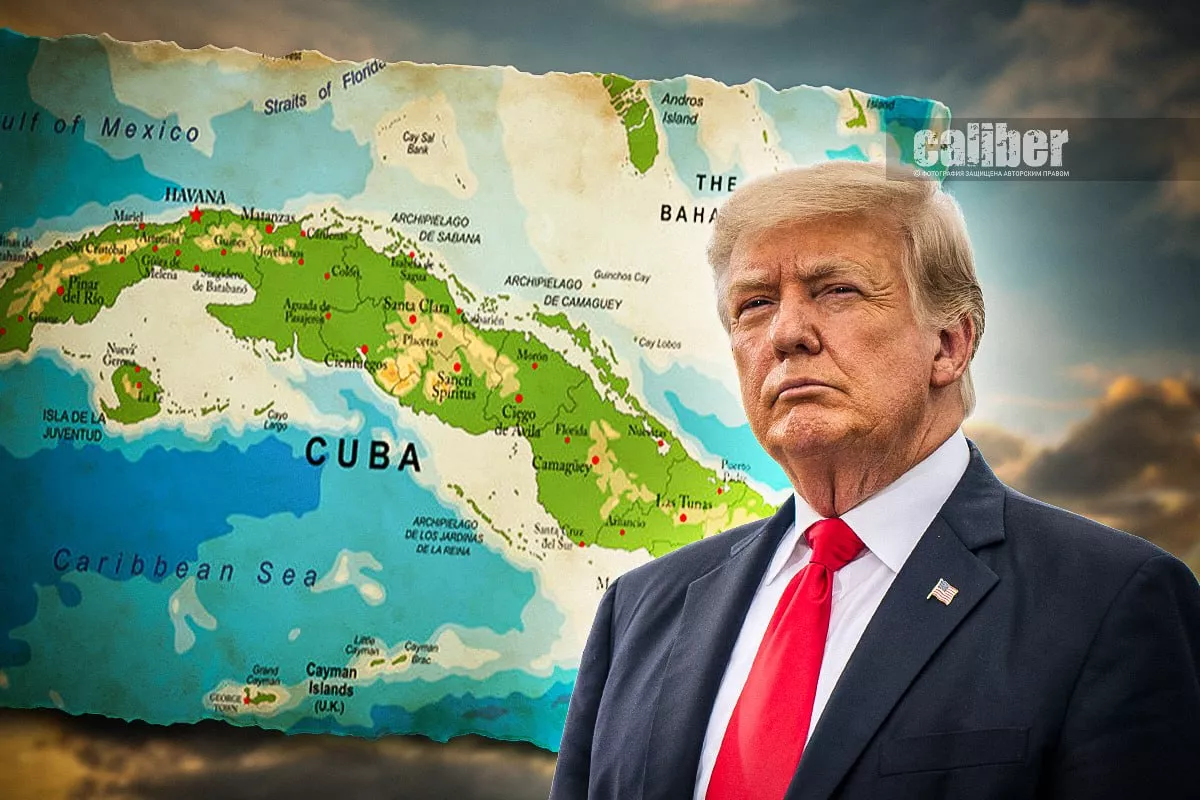
If one looks at the developments of recent months, it becomes clear that the Trump administration is gradually changing its very approach to the Cuban issue. Until quite recently, sanctions remained its primary instrument of pressure. Following the U.S. operation in Venezuela, Havana lost its main source of oil supplies, while the subsequent restrictions on fuel imports from third countries significantly worsened the island's already difficult economic situation. Washington's calculation, apparently, was based on the assumption that the economic crisis would gradually push the Cuban leadership toward concessions or create conditions for internal political change. It was during this period that reports emerged of informal contacts between representatives of the two countries, while the White House repeatedly hinted that it would prefer to achieve its objectives without the use of military force.
However, the expected effect did not materialise. Despite the large-scale energy crisis, chronic power outages, and growing social discontent, the political system of the Island of Freedom remained resilient. Moreover, the prolonged Middle East crisis diverted Washington's attention from the Caribbean region, and the Cuban issue virtually disappeared from the international agenda for some time. Now, however, it is returning in an entirely different capacity: the theme of national security is becoming increasingly dominant in the White House's rhetoric, culminating, at least for now, in the State Department's programmatic report, which portrays Cuba as a long-term threat to U.S. security.
The authors of the report claim that Cuban intelligence services conducted intelligence operations against the United States for decades while maintaining ties with various left-wing organisations and movements. A significant portion of the report is devoted to the Island of Freedom's cooperation with Russia, China, and, to a lesser extent, Iran. For example, it alleges China's involvement in certain infrastructure projects, including the development of signals intelligence facilities in Cuba.
Particular attention is devoted to Havana's alleged interference in the domestic political life of the United States. The authors assert that Cuban intelligence services spent decades building a network of political influence within the country and succeeded in infiltrating U.S. government institutions with their agents. The report links Cuban activities to support for a number of far-left movements and individual activists, including Black Lives Matter, Antifa, and participants in pro-Palestinian campaigns on university campuses. Among the organisations alleged to have close ties with Cuban structures are the Democratic Socialists of America (DSA) and the anti-war movement Code Pink.
Many of the above-mentioned allegations have not yet received independent confirmation. However, in this case, the political significance of the document itself is no less important. For the first time in many years, Washington is attempting to portray Cuba not as a local problem of the Western Hemisphere, but as one element of a broader geopolitical confrontation.
This is precisely where the main difference between the current stage of the crisis and previous ones lies. Whereas U.S. policy was previously presented as being driven by the need to promote democracy in Cuba or protect human rights, it is now increasingly framed in the language of strategic rivalry. The Cuban issue is gradually being integrated into the broader picture of the United States' confrontation with Russia, China, and Iran. In doing so, the White House is creating a much broader political foundation for its policy toward the island.
At the same time, it would be premature to speak of the inevitability of a U.S. military operation against Cuba. Despite the noticeable hardening of its rhetoric, the United States remains engaged in addressing a wide range of foreign policy challenges, and under these circumstances, any military scenario involving the Island of Freedom would inevitably entail serious consequences, ranging from military to reputational. Nevertheless, it is troubling that Washington is increasingly adopting language reminiscent of the rhetoric of the Cold War era. And although a real military conflict likely remains a considerable distance away, the political atmosphere surrounding Cuba is changing far more rapidly than it was just a few months ago.







 editor@caliber.az
 +994 55 444-88-98
 Азербайджан, Баку, ул. Низами, 203, Af Business House, 5-й этаж