










UN: Attacks on education hit record high worldwide
Seven years after the first International Day to Protect Education from Attack, armed conflicts continue to escalate around the world, with attacks on schools and other educational facilities rising sharply, according to a new UN report.
A total of 8,566 attacks on education were reported over the past two years, compared with about 6,000 in 2022 and 2023.
This year’s global observance is being held under the theme, “Can Education Survive Attack? The Resilience of Human Communities.”
The figures come as UNESCO steps up efforts to protect education during conflicts and other crises. In April, the agency approved a Preventative Plan of Action to Protect Education from Attack, setting out practical measures to help schools prepare for attacks, respond to them and recover afterwards.
UNESCO also works with countries to keep education running before, during and after crises. Its work includes assessing the impact of conflict on schools and learners, providing safe and inclusive learning spaces, supporting teachers, repairing damaged schools and helping education systems prepare for future emergencies.
The wider impact of conflict on children is also highlighted in the UN Secretary-General’s Annual Report on Children and Armed Conflict.
The report says children faced “shocking” levels of violence in 2025, with the UN verifying 38,558 violations affecting 24,174 children. It was the highest number of children affected since monitoring under the mandate began.
Killing and maiming were among the most widespread violations, affecting 14,224 children. Others were recruited or used in conflict, abducted or denied humanitarian assistance.
The UN said fighting increasingly took place in densely populated areas, exposing children to air strikes, artillery and explosive drones. Homes, schools, hospitals and other civilian infrastructure were damaged or destroyed, while children faced further risks while fleeing violence or seeking food, water and medical care.
The highest number of grave violations was verified in Israel and the Occupied Palestinian Territory, followed by the Democratic Republic of the Congo, Nigeria, Myanmar and Somalia. Government forces were responsible for the majority of verified grave violations.
The UN has also warned that emerging military technologies are creating new risks for children.
The growing use of drones and artificial intelligence in targeting processes has enabled faster and more frequent strikes, including in densely populated areas, sometimes with limited human oversight. The UN says stronger safeguards, transparency and accountability are needed to ensure such technologies comply with international law and protect children’s rights.
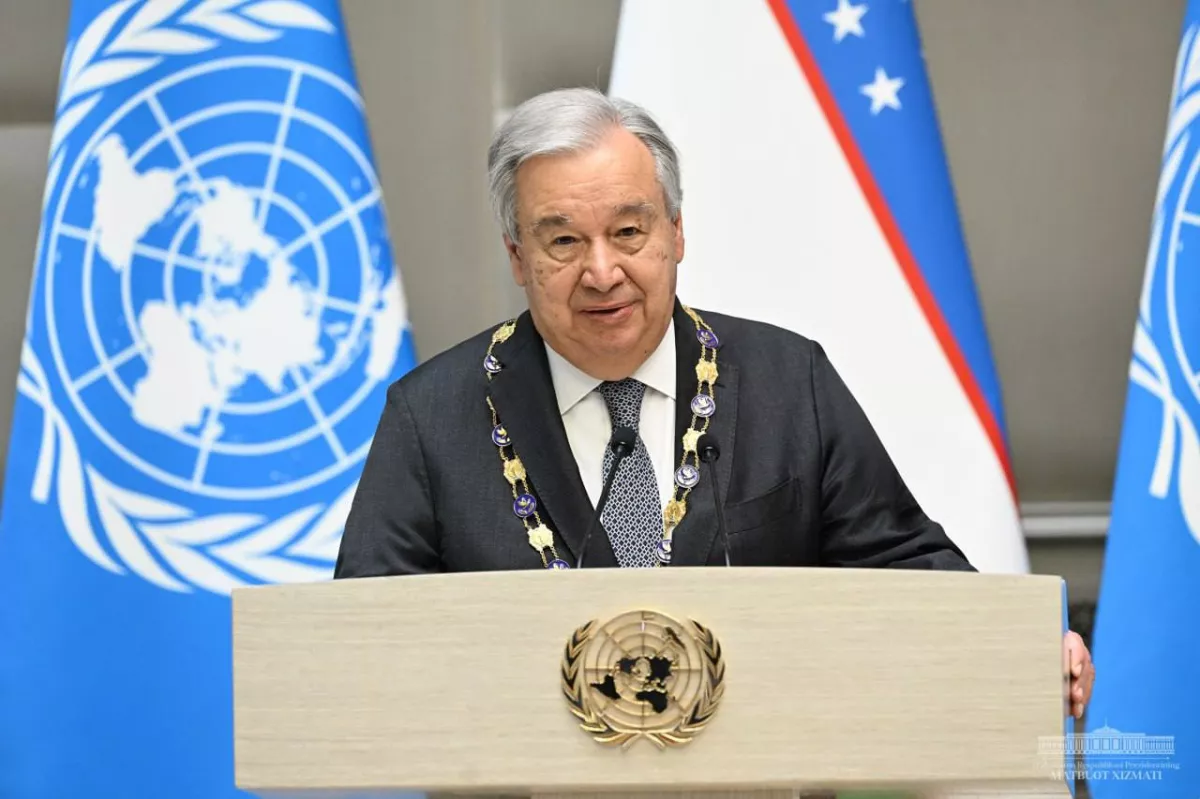
In his final recommendations, Secretary-General António Guterres called for new military technologies, including drones and artificial intelligence, to remain under human control and comply with international law.
At the same time, efforts are continuing to help children affected by armed groups rebuild their lives. More than 13,000 children formerly associated with armed forces or groups received protection or support to help them reintegrate into their communities in 2025.
However, funding cuts and the withdrawal of some UN peace operations have reduced efforts to monitor violations, protect children and provide reintegration support.
Guterres has called for children associated with armed groups to be treated primarily as victims, with detention used only as a last resort. He has also urged greater funding for child protection, education and reintegration programmes, alongside action by technology and social media companies to prevent their platforms from being used to recruit or exploit children.
The International Day to Protect Education from Attack was established by a unanimous decision of the UN General Assembly. The resolution, presented by Qatar and co-sponsored by 62 countries, called on UNESCO and UNICEF to raise awareness of the plight of millions of children living in conflict-affected countries.
The resolution affirms that governments have the primary responsibility to protect learners and provide inclusive, equitable and quality education at all levels, particularly for those in vulnerable situations.
It also calls for greater efforts and funding to create safe school environments during humanitarian emergencies and to protect schools, pupils and education workers from attack.
UNESCO and UNICEF facilitate the annual observance in cooperation with partners inside and outside the UN system, while continuing to support countries affected by conflict in maintaining access to quality education during times of crisis.
By Aghakazim Guliyev







 editor@caliber.az
 +994 55 444-88-98
 Азербайджан, Баку, ул. Низами, 203, Af Business House, 5-й этаж