










Why Iceland’s EU referendum could reignite Norway’s long-running membership debate
A knife-edge referendum is taking place in Iceland on August 29 on whether the country should resume negotiations to join the European Union. Importantly, the outcome is being closely watched not only in Brussels but also in Norway, another European country outside the EU, as a “Yes” vote could put Norway in an increasingly uncomfortable position and pressure Oslo to reconsider its own relationship with Brussels — a question with a long and deeply divisive history.
Norway is arguably the non-EU country with the most at stake, particularly if the “Yes” side prevails, Euronews notes in their latest article on this issue.
The government in Oslo has openly acknowledged these concerns, with the outlet citing Foreign Minister Espen Barth Eide as saying in May that “an Icelandic membership process will pose special challenges for Norway as an European Economic Area country.”
Iceland’s referendum has been described by polling analysts as too close to call. A Gallup poll published one day before the vote suggested that a narrow majority of Icelanders opposed reopening accession talks, which were suspended 13 years ago.
While the geopolitical landscape of the region has been marked by turbulence in recent years, Iceland’s accession debate is less about integration into defence structures and more focused on the island’s vital fishing industry, economic interests and national sovereignty.
Tilting negotiation power
Norway’s government has so far maintained that the European Economic Area (EEA) should remain the foundation of its relationship with Brussels. However, the implications of an Icelandic “Yes” vote would be difficult for Oslo to ignore.
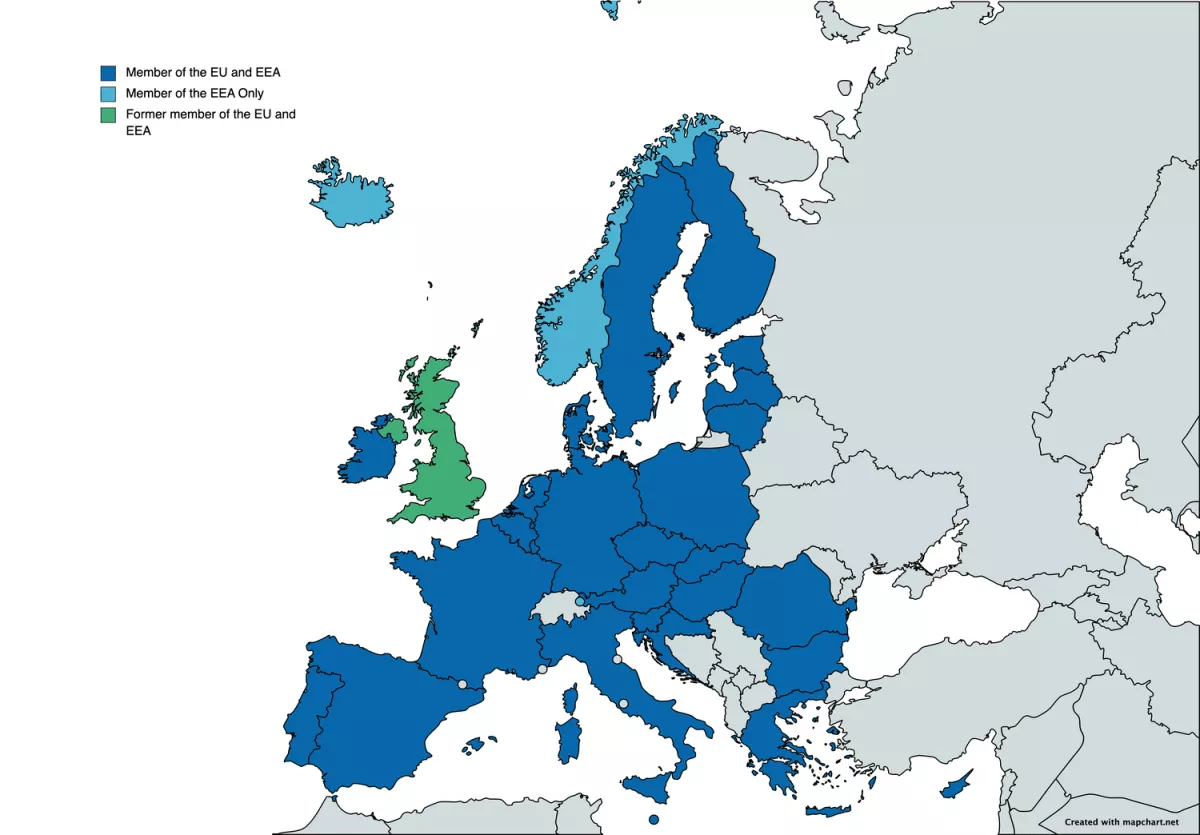
The EEA extends the EU single market to three non-EU countries: Iceland, Liechtenstein and Norway. If Iceland were to join the Union, the EEA would effectively be reduced to two members, one of which is Liechtenstein, a country of only around 40,000 people whose economy is closely linked to neighbouring Switzerland, which is itself outside the EU.
The news agency argues that the EEA would become a largely bilateral arrangement between the EU and Norway in practical terms, leaving Norway as the only major country participating in the European single market without a seat at the EU’s decision-making table.
Iceland would not be the first country to move from EEA membership to full EU accession. When the agreement entered into force in 1994, it also included Austria, Finland and Sweden, all of which subsequently joined the Union following positive referendums.
Technically, the EEA would remain in place if Iceland joined the EU. Politically, however, it would become considerably harder to argue that the arrangement remains a meaningful alternative to full EU membership.
“If Iceland should become a member of the EU, the balance of power between the parties to the EEA Agreement – originally 12 countries to 7 – will become 28 to 2,” Eide said.
That imbalance explains why Norway’s government, while continuing to defend the EEA as the foundation of its relationship with Brussels, cannot simply ignore the consequences of a “Yes” vote.
“Whatever path Iceland takes, we must work to strengthen our cooperation with the EU,” Eide added.
Iceland’s Prime Minister Kristrún Frostadóttir struck a similar tone after meeting her Norwegian counterpart, Jonas Gahr Støre, in February.
“We will keep the EEA Agreement active whatever happens,” she said. “Because if a yes comes out of this referendum on our side, there is still a decision to be taken on full membership. If a no comes out of it, we need to rely on the EEA Agreement being strong and active.”
Fraught history
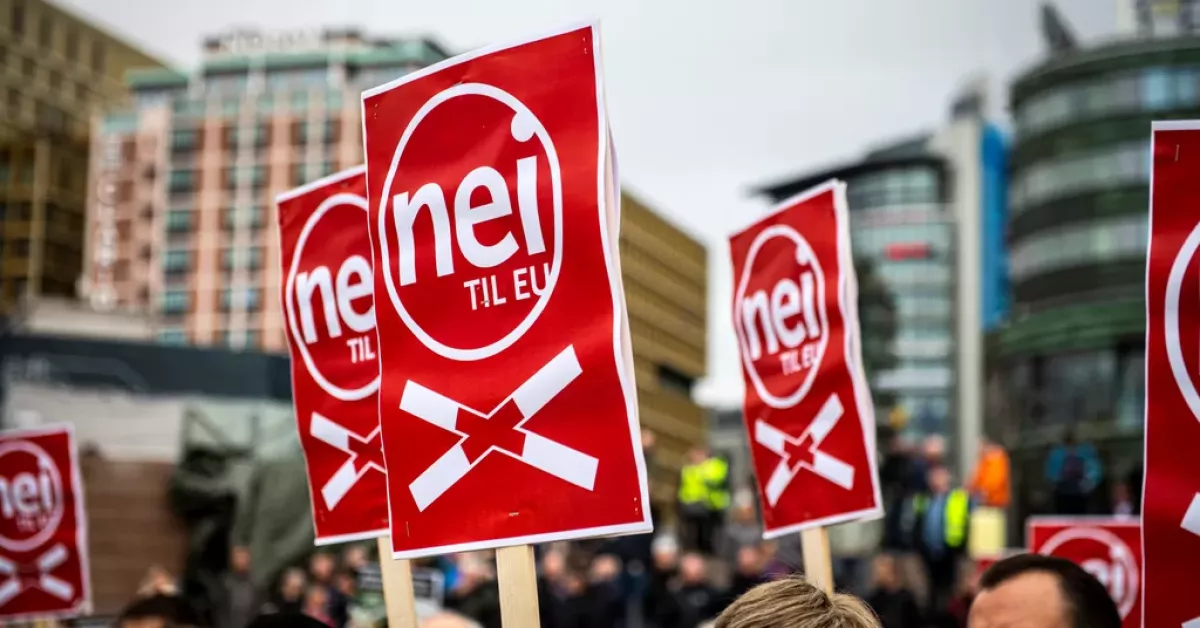
The EEA was partly a product of Norway’s complicated relationship with the European integration project. Norwegians have twice rejected EU membership in national referendums, in 1972 and 1994. On both occasions, Norway was the only candidate country to vote against joining, with 53.5% and 52% respectively voting “No”.
According to Euronews' observation, that scepticism remains evident today, citing a poll published earlier this month by Norwegian daily ABC Nyheter, which found that 49% of respondents would vote against EU membership, compared with 37% who would vote in favour.
The underlying concerns — particularly over fisheries, agriculture and the reluctance to surrender elements of national sovereignty in exchange for a limited say within a much larger bloc — have changed little since the 1990s.
Norway’s concerns have therefore changed little since EU membership was last seriously debated, and neither have the positions of the country’s main political parties.
There has been little serious discussion about reopening the membership question, partly because politicians and voters remain wary of the divisions left behind by the previous referendum campaigns.
In the current geopolitical climate, there is also an argument that reopening such a sensitive issue — one that has divided the country and even families in the past — is the last thing Norway needs.
Iceland shares many of those concerns. But the current referendum is not a vote on EU membership itself. Instead, it asks whether the government should be given a mandate to resume accession negotiations, which were suspended in 2015. A second referendum would then be held to decide whether voters approve any eventual membership agreement. That means Iceland’s negotiations will be closely watched in Oslo and could potentially weaken the position of Norway’s EU sceptics.
Hallgrimur Oddsson, director of the think tank Evrópustraumar, told Euronews that Norwegians would “follow very closely” how the negotiations develop, particularly on issues such as fisheries.
He expects pro-EU parties to use any momentum generated by Iceland’s process to revive Norway’s own membership debate, while acknowledging that the country has already held two referendums on the issue.
By Nazrin Sadigova







 editor@caliber.az
 +994 55 444-88-98
 Азербайджан, Баку, ул. Низами, 203, Af Business House, 5-й этаж