










A new balance in the Middle East: What will the “Mecca Pact” change? Expert opinions on Caliber.Az
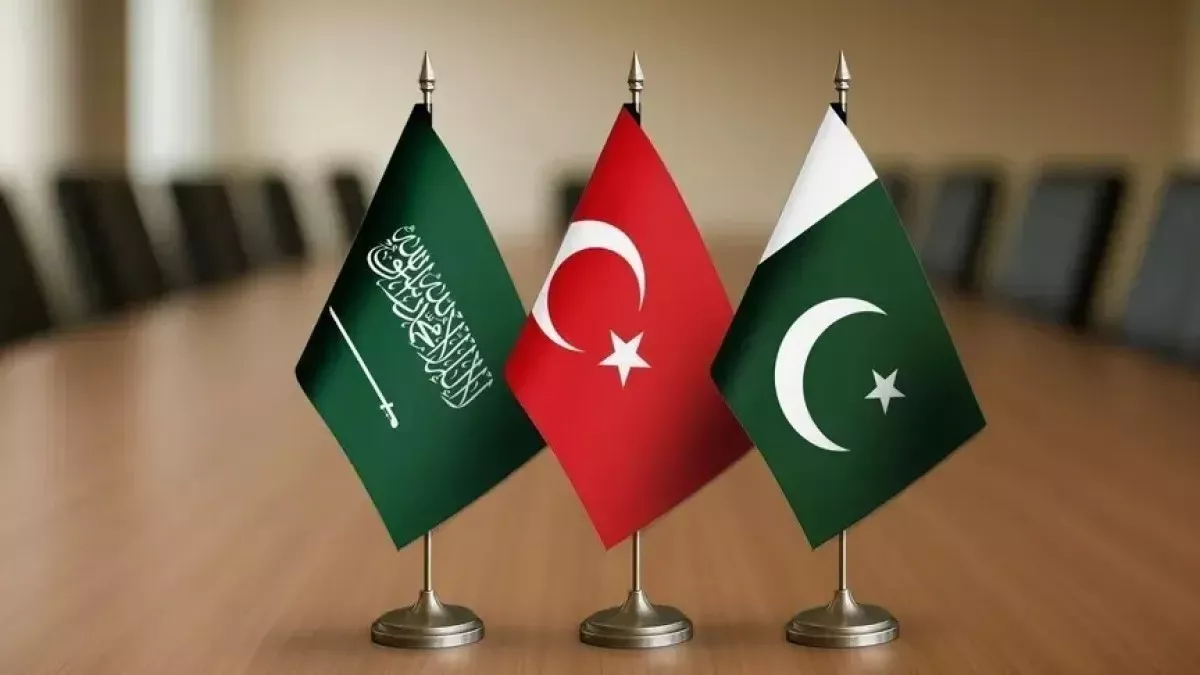
The Middle East region has recently witnessed the formal establishment of a new alliance: Saudi Arabia, Türkiye, and Pakistan have signed a defense agreement amid the escalation in the Middle East, dubbed the “Mecca Pact.”
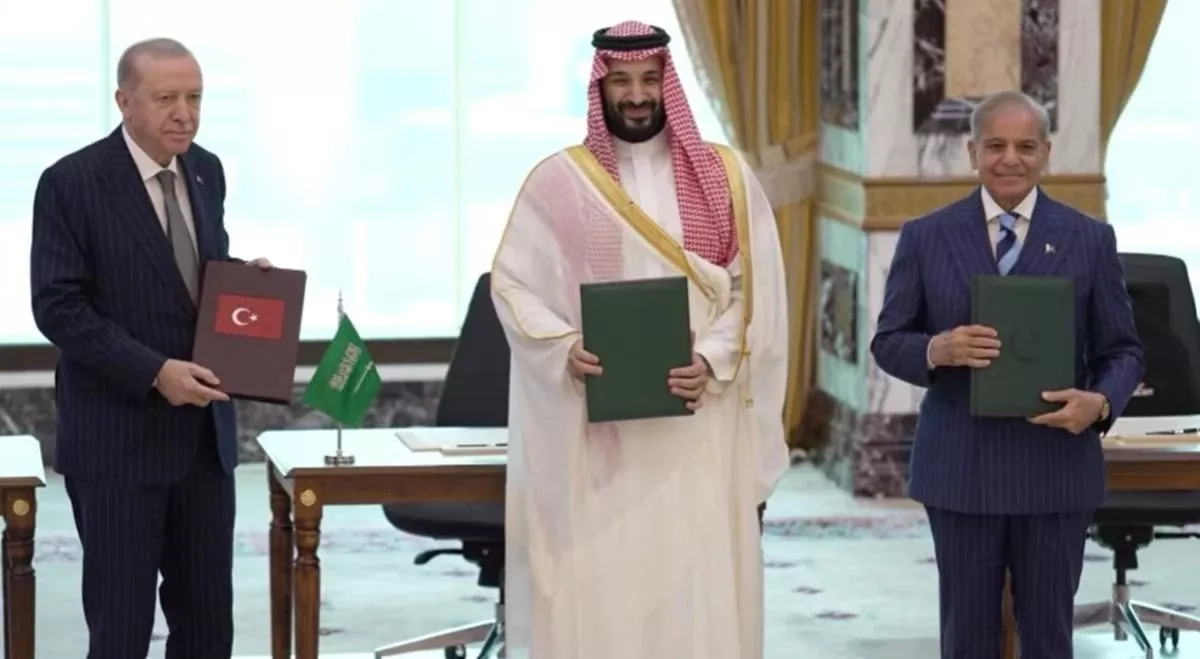
Under the agreement, an armed attack against any of the three countries will be regarded as aggression against all signatories. At the same time, Turkish Vice President Cevdet Yılmaz stressed that the agreement is not directed against any particular country, while a Turkish official explained that it is strictly defensive in nature and does not supersede any existing agreements these countries have concluded with other states.
How is the “Mecca Pact” being interpreted across the region? What challenges should be prioritized by the new defense agreement, and how could it ultimately affect the balance of power in the Middle East? Foreign experts shared their views on these questions with Caliber.Az.

Turkish political analyst Kerim Has believes that the signing of the trilateral defense agreement came as no surprise, as military and military-technical ties between Ankara, Riyadh, and Islamabad have been actively developing in recent years, making the formation of such a triangle a natural continuation of their existing cooperation.
“Türkiye and Pakistan have actively developed military and military-technical relations, including through cooperation with Azerbaijan. On several occasions, the leaders of the three countries — Recep Tayyip Erdoğan, Shehbaz Sharif, and Ilham Aliyev — have met at various platforms. The trilateral format they established can, in fact, be seen as a kind of precursor to the current defense agreement. In addition, Pakistan and Saudi Arabia signed a mutual defense agreement last year. As for Türkiye and the Kingdom, in recent years President Erdoğan has managed to build fairly close and trust-based relations with Riyadh, despite the serious tensions between the two countries from roughly 2018 to 2021. Given all this, it is hardly surprising that military cooperation among the three countries has now been taken a step further,” he said.
The expert also noted that in order to understand the potential direction of the new defense framework, it is necessary to take into account the military and political weight of each of the three countries, as well as the existing balance of power in the region.
“Türkiye has the second-largest army in NATO, and therefore I believe that the alliance between Ankara, Islamabad, and Riyadh is in no way directed against NATO member states or their allies. Pakistan, in turn, is the only Muslim nuclear power, and in my view, the trilateral alliance cannot be an opponent of another nuclear-armed country. In this context, I primarily mean Israel. Moreover, Saudi Arabia and Israel have established partnership relations, including in the security and defense spheres, although Riyadh prefers not to publicize them.
At the same time, the Kingdom is the world’s largest oil exporter and one of the key actors in the Arab world. Therefore, the defense alliance cannot be directed against any other Arab country. This leaves Iran as the most obvious common challenge, and here the issue is more about preventing the Islamic Republic from expanding its influence. In my view, this is a latent but quite obvious component of the agreement.
The main objective here is to demonstrate to Tehran that the three countries — Türkiye, an important military power; Pakistan, a member of the ‘nuclear club’; and Saudi Arabia, one of the leaders of the Arab world and an energy powerhouse — are prepared to act together. In other words, they possess considerable potential, and in the event of a large-scale war in the Middle East, these states could find themselves on the same side in a confrontation with Iran and forces aligned with it,” Has said.

Meanwhile, Farhad Kasenov, head of the A+Analytics research center and a Kazakh political analyst, noted that military ties between Pakistan, Saudi Arabia, and Türkiye have existed for a long time, but the principle of collective defense gives the new agreement particular significance.
“A similar principle is enshrined in Article 5 of the North Atlantic Treaty, and in this respect, the ‘Mecca Pact’ does indeed come very close to the logic of the alliance. However, I would emphasize that it is by no means an analogue of NATO. Rather, it should be viewed as an additional element of the regional security architecture,” he said.
According to the expert, the agreement is particularly significant because it brings together and complements the defense capabilities of three states, each of which already possesses considerable military and political potential.
“Türkiye has one of the strongest military capabilities in NATO and is a member of the alliance. Saudi Arabia is a key US partner in the Middle East, with substantial financial resources and close military-technical ties with Washington. Pakistan has a strong defense capability and is the only Muslim country with nuclear weapons. Thus, the combination of Ankara’s military potential, the Kingdom’s financial and strategic capabilities, and Islamabad’s nuclear potential creates a very significant alliance indeed. I believe the Iranian factor also played a certain role here.”
The expert also noted that for Riyadh, the creation of such a framework represents a significant diplomatic success, as Türkiye’s participation strengthens its security architecture: “Saudi Arabia now has an additional security umbrella: on the one hand, a de facto Pakistani nuclear umbrella, albeit a very distant one, and on the other, a Turkish one. Türkiye’s contribution is not limited to ground forces; it also has strong air defense capabilities and highly capable combat units. At the same time, I would view this alliance primarily as a preventive defense initiative. It is not intended for aggression or offensive operations. Its main purpose is deterrence: few would want to attack a country knowing that such a conflict could immediately draw three states into it.”
In his view, the new framework can easily coexist with NATO and bilateral alliance relationships.
“Türkiye remains a NATO member, while the ‘Mecca Pact’ can complement the security system in the East. There are no fundamental contradictions here, as working relations exist between Washington and Ankara, Riyadh, and Islamabad. However, this is a new force in the region that could affect the balance of power and force the Iranian authorities to think twice before launching strikes against Saudi Arabia, since other regional players could potentially become involved in such a confrontation.
Thus, I believe we are talking about a collective security mechanism whose creation has long been in the making in the region, with recent events merely accelerating its formation,” Kasenov concluded.







 editor@caliber.az
 +994 55 444-88-98
 Азербайджан, Баку, ул. Низами, 203, Af Business House, 5-й этаж