










Baku in the big game: What does Azerbaijan’s invitation to the G20 mean? Israeli and Azerbaijani political analysts on Caliber.Az
Azerbaijan’s official invitation to the 21st G20 Leaders’ Summit, which will be held on December 14–15, 2026, in Miami, Florida, has confirmed the country’s high international standing.
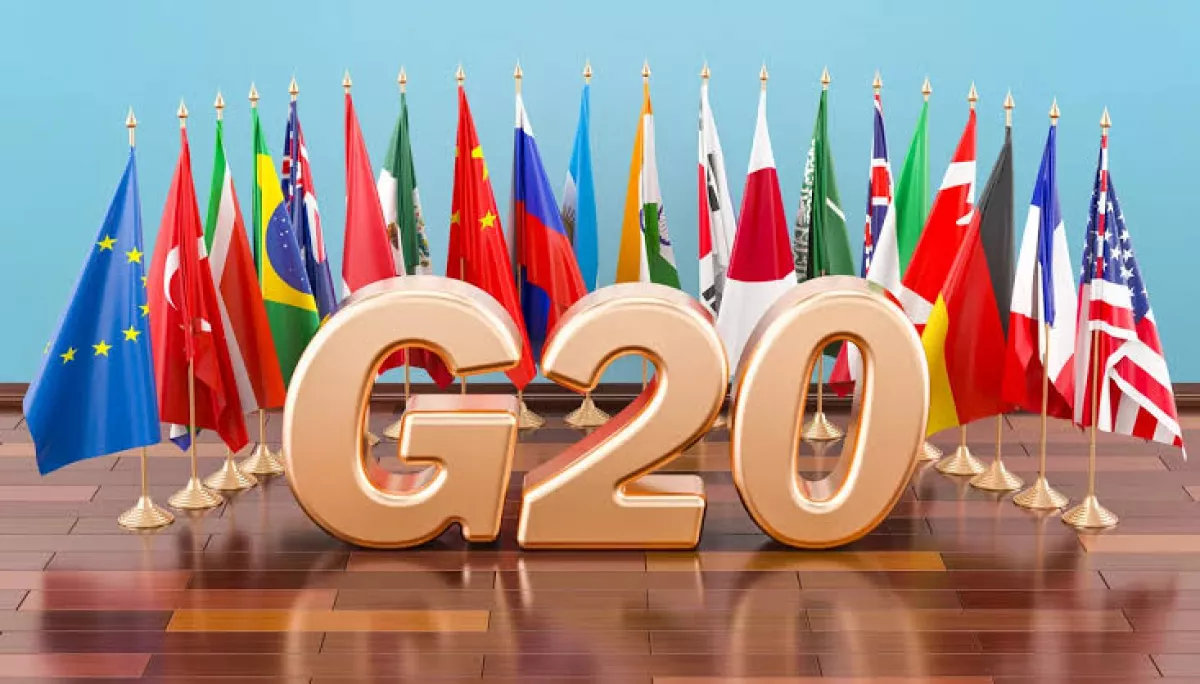
The G20 summit is one of the world’s most representative international events, bringing together countries that collectively account for around 85% of global GDP and approximately two-thirds of the world’s population. Under the current US presidency, the invited guest countries also include Kazakhstan, Uzbekistan, the UAE, Qatar, Singapore, Spain, the Netherlands, Norway, Finland, Ireland, Poland and Vietnam. Thus, Azerbaijan will take part in a forum that brings the leaders of the world’s leading economies and countries playing a significant role in shaping the international agenda around the same table.
But how is this development viewed by the expert and political community? Israeli and Azerbaijani political scientists and international affairs experts shared their views on the matter with Caliber.Az.

Thus, Dr Mikhail Finkel, a law graduate of the University of Pittsburgh (US), believes that Azerbaijan’s invitation to the G20 summit represents unequivocal recognition of its growing role on the international stage, as well as evidence of the effectiveness of Baku’s multi-vector foreign policy.
“Azerbaijan’s detractors have for many years ‘assigned’ the country a multitude of questionable labels. But now, when President Donald Trump has personally invited the Republic of Azerbaijan to participate in the G20 summit, it will be quite difficult for all these critics to explain what is happening in the same terms, because this fact shows that Baku is perceived as a significant international player that must be reckoned with. At the same time, it is important to understand that the G20 brings together the world’s leading economies. Therefore, Azerbaijan’s invitation in this format is itself an indication of its international weight.
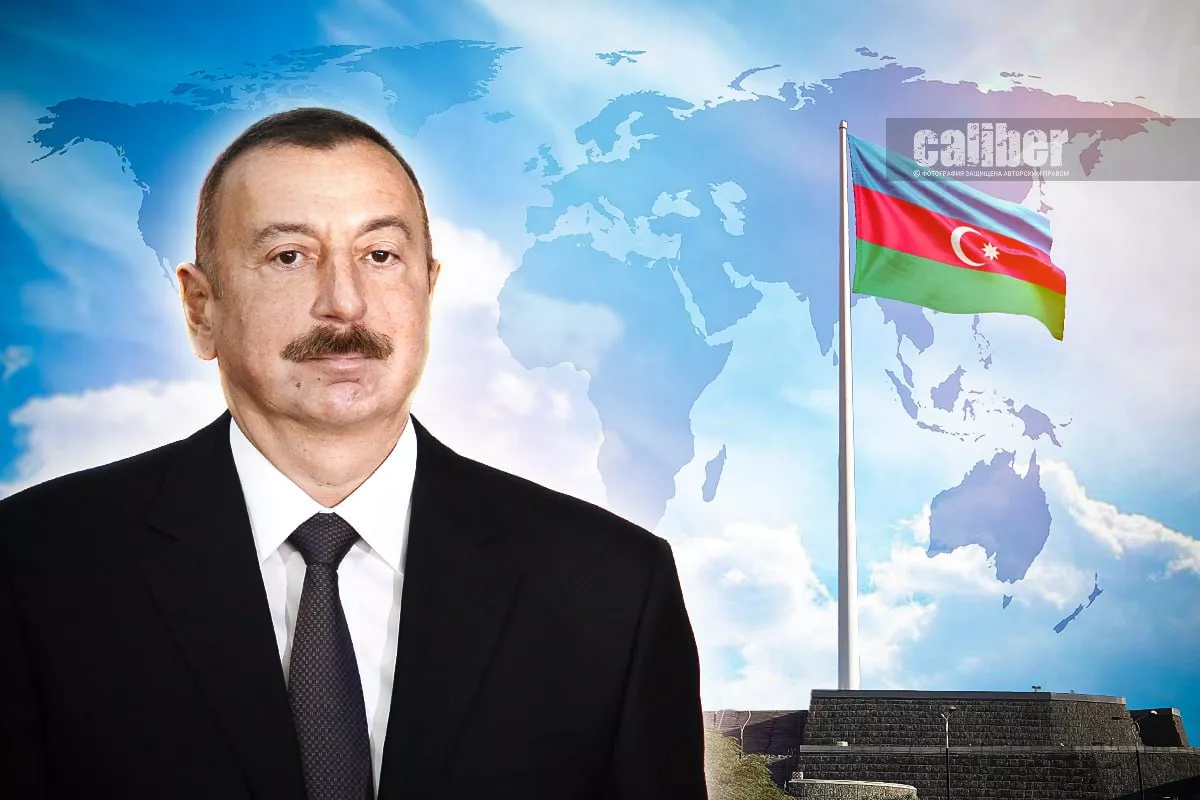
A natural question arises here: ‘Why is Azerbaijan receiving such attention in particular?’ In my view, this is linked to the multi-level and consistent policy pursued by President Ilham Aliyev, who has never placed his bets on a single country or a single foreign-policy direction. Azerbaijan maintains relations with Türkiye, the Turkic and Muslim world, and the Arab East. At the same time, Baku has developed close relations with Israel despite the extremely complex regional situation. Relations with Russia have also been maintained, with Azerbaijan always seeking to engage with Moscow on an equal footing. Meanwhile, despite periodic criticism from certain European countries, Baku is developing relations with the European Union and also strengthening cooperation with China.
Thus, what we see is a state that works across all directions, pragmatically assessing both its immediate neighbours and more distant partners. The ability to maintain a broad range of international ties without setting one direction against another is one of the important advantages of Azerbaijan’s foreign policy,” the expert stressed.
He also linked Azerbaijan’s international recognition to its ability to adapt to the changing geopolitical environment while simultaneously defending its national interests.
“Such a foreign policy reflects considerable diplomatic experience and foresight. It is not a policy designed solely for today or the next decade; rather, it reflects a long-term vision and an effort to establish sustainable positions for the country within a changing international system. Azerbaijan possesses significant resources and a strong diplomatic corps and, most importantly, demonstrates a willingness to engage with different countries. This can be characterised as openness to the world, skilfully combined with a pragmatic approach.
Moreover, an important factor is the country’s reputation as a partner that keeps its word. In other words, Baku does not radically alter its approaches in response to short-term shifts in the international environment and does not seek to act as a political weather vane. It is precisely this kind of approach that is highly valued in international relations, as evidenced by Baku’s invitation to the G20 summit,” Finkel said.

In turn, Kamal Makili-Aliyev, Doctor of Law, Associate Professor and Senior Lecturer at the University of Gothenburg (Sweden), believes that Azerbaijan’s participation in the G20 should be viewed as an important indicator of its growing international weight and its emergence as a middle power.
“At the G20 summit, we can expect serious reconsideration of the alliances and formats that currently exist in the world. There are trends towards a certain divergence in the foreign-policy approaches of European states within the European Union, as well as increasing differences between European policies and those of the United States. Therefore, Eurasian security will be among the main issues discussed, particularly in the context of developments in the Middle East and the Russian-Ukrainian war. However, in my view, it is unlikely that the forum will produce any breakthrough decisions, but the level of international tensions will certainly be gauged during the summit, which will serve as a kind of barometer of the current state of geopolitics.
Issues concerning what to do with international supply chains will certainly be raised. I mean the supply of food, energy resources and services, as well as the transfer of essential information needed for the subsequent development of infrastructure. These chains are currently under threat because of developments in the Middle East. This is having a serious impact on international markets, and it is in no one’s interest.
Against this backdrop, Baku has an opportunity to further strengthen its role as a link between East and West. I believe that amid global turbulence, Azerbaijan can and should attract more international supply chains, energy and goods infrastructure, as well as the corresponding flows of information.
In this context, our country is emerging as a highly significant player, since a stable state such as Azerbaijan is capable of creating a more predictable corridor between East and West in both directions. The Azerbaijani side has been working consistently towards this goal for a long time, and today we are seeing the results, such as Baku’s invitation to the G20 summit. I believe this trend will continue in the future,” Makili-Aliyev concluded.







 editor@caliber.az
 +994 55 444-88-98
 Азербайджан, Баку, ул. Низами, 203, Af Business House, 5-й этаж