










Houthis tighten grip on Bab el-Mandeb: Who can rein them in? Expert opinions on Caliber.Az
The Yemeni Houthis have tightened their grip on parts of the Red Sea coast and strategic positions near the Bab el-Mandeb Strait, including Perim Island and the port of Mocha. Amid continued drone and ballistic-missile attacks across the region, the developments are creating new risks for commercial shipping and global energy markets, while leaving Saudi Arabia exposed on two critical maritime fronts: the Bab el-Mandeb and the Strait of Hormuz.
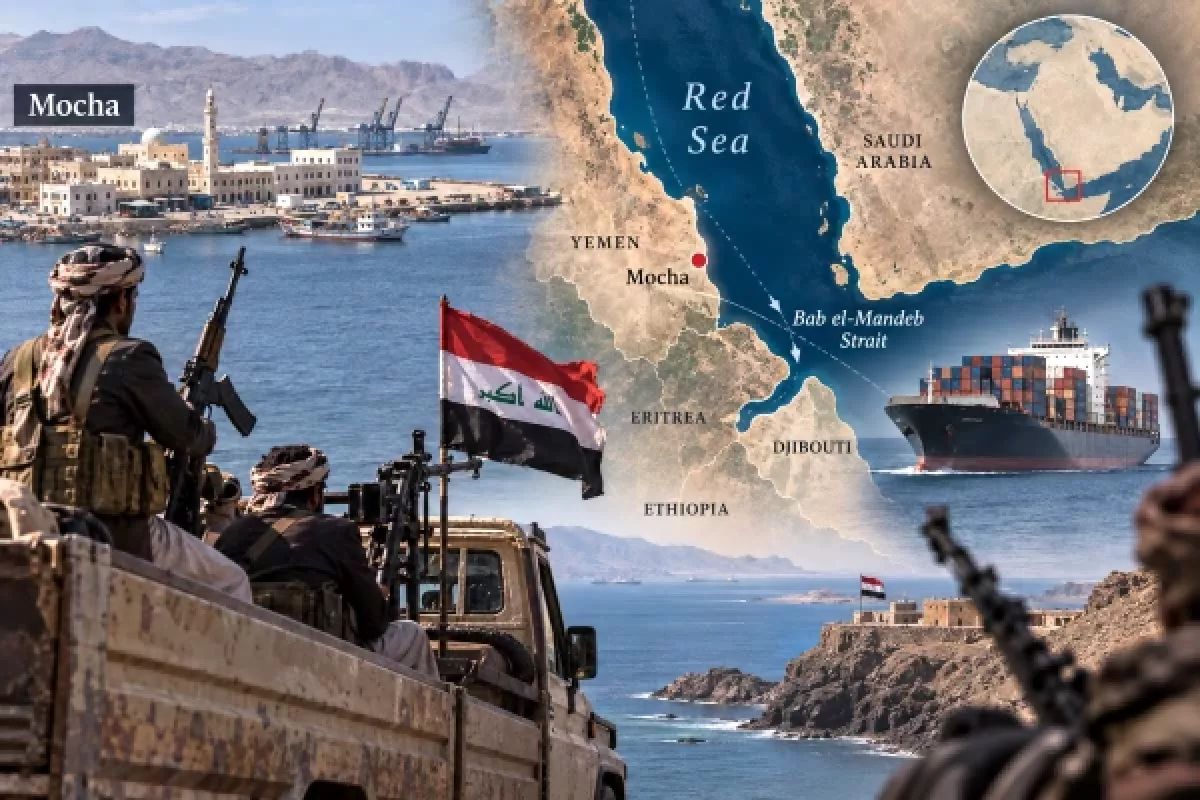
Iran and its regional allies are gaining additional leverage over some of the world’s key maritime corridors, while Houthi attacks continue to threaten shipping through the Red Sea and the Suez Canal. Against the backdrop of a possible Yemeni counteroffensive, the crisis could put the Mecca Agreement to the test and further intensify tensions between the United States and Iran.
Caliber.Az spoke to a Turkish political analyst and a military expert from Kazakhstan for their assessment of the situation.
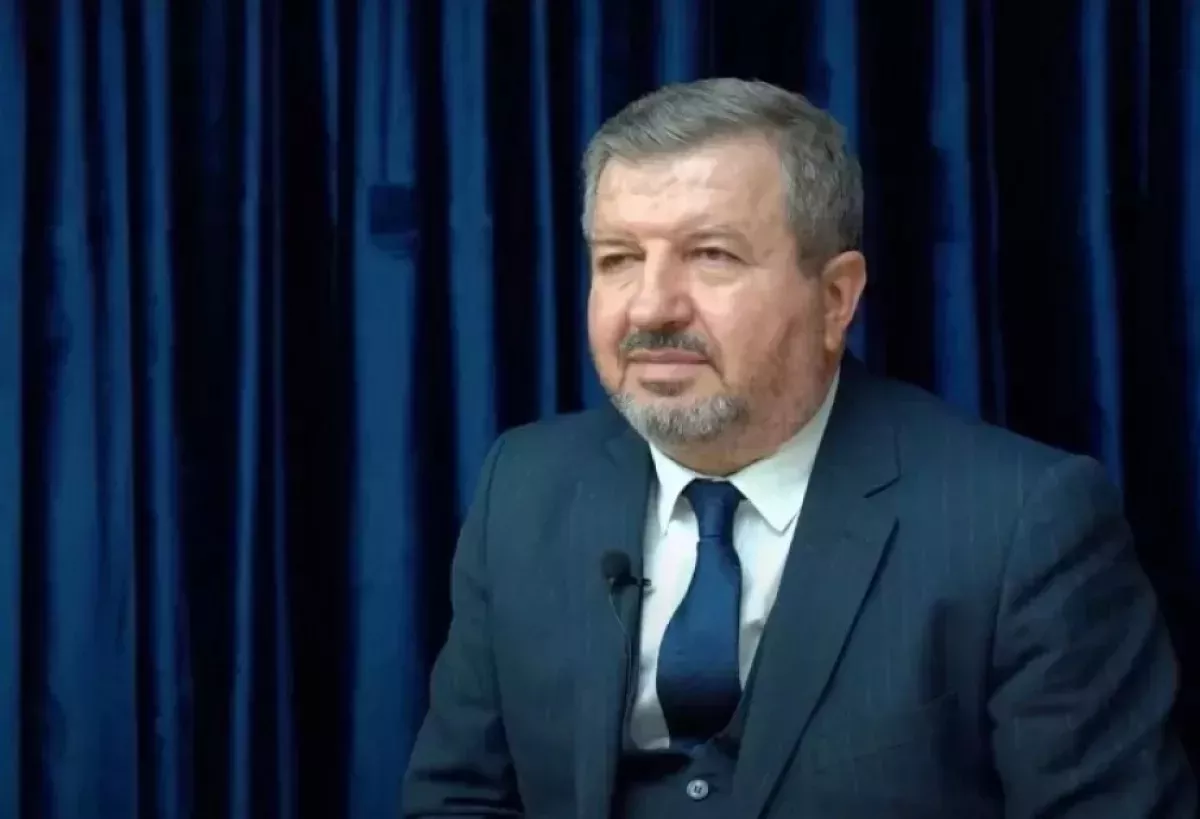
Professor at Kahramanmaraş Sütçü İmam University Toğrul İsmayıl believes that developments around the Bab el-Mandeb Strait go beyond the Yemeni conflict and are creating a new strategic front in the confrontation between the US and Iran.
“The Houthis’ capture of the port of Mocha, Perim Island and other key positions is qualitatively changing the situation. They are gaining the ability not only to strike commercial vessels but also to pose a sustained threat to shipping. At the same time, it would be legally incorrect to speak of full territorial control over an international strait. However, control over key islands and stretches of coastline allows the Houthis to influence the maritime space around this corridor,” the political analyst noted.
Therefore, in his view, the significance of the Bab el-Mandeb Strait has increased substantially. If the Strait of Hormuz is becoming a tool of pressure for Iran, the Bab el-Mandeb is turning into a similar lever for the Tehran-linked Houthis.
The political analyst outlines three possible scenarios. The first is limited escalation: the US is likely to seek not a large-scale ground operation in Yemen, but rather to destroy the Houthis’ missile, drone and command capabilities. Washington’s main objective would be to restore freedom of navigation without opening another major military front.
The second scenario is the expansion of the regional conflict. If the Houthis continue attacking vessels and Saudi Arabia’s oil infrastructure, the US will face a choice: accept a shift in the balance of power in the Red Sea or move towards more extensive strikes. Riyadh has already turned to Washington for additional military support.
“The third and most dangerous scenario is the synchronisation of several crises: in the Strait of Hormuz, the Bab el-Mandeb, Iraq and Yemen, as well as around the infrastructure of the Gulf states. In that case, this would no longer be simply an Iranian-American conflict, but a crisis affecting the entire energy and maritime security architecture of the Middle East.
Tehran denies directly commanding Houthi operations, but reports of arms supplies, financing and military advisory support point to Iran’s significant role. For Tehran, this is an effective asymmetric strategy that allows it to exert pressure simultaneously in the areas of the Strait of Hormuz and Bab el-Mandeb without directly entering into conflict with the US.
However, this strategy has its limits. If Houthi actions result in mass casualties among US military personnel or civilians, or completely paralyse international shipping, the US could move to direct strikes against Iranian targets. Iran therefore also needs to control the level of escalation,” the political analyst noted.
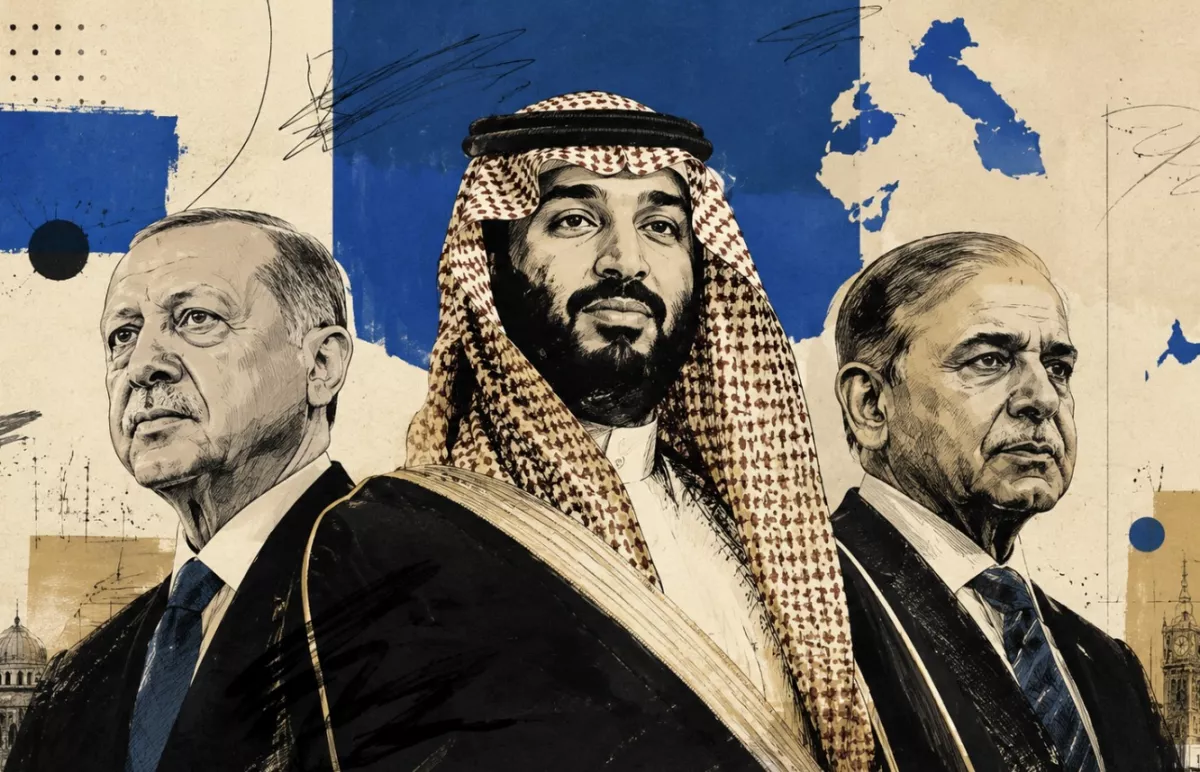
According to İsmayıl, the Mecca Agreement is now facing its first serious strategic test. It provides for collective defence and mechanisms for military and political coordination between Türkiye, Pakistan and Saudi Arabia.
“However, I would not automatically compare it with NATO. The key question is whether the parties are genuinely prepared to implement its provisions in wartime. If an attack on Saudi Arabia is viewed as a direct threat to its territorial integrity, the agreement could become a mechanism for coordination. But this does not mean that Türkiye and Pakistan would automatically participate in any military operation conducted by Riyadh. That is precisely why the current crisis will test the real substance of the Mecca Agreement,” the expert believes.
In his view, Türkiye should not become a party to the Iranian-American conflict, but neither can Ankara remain a passive observer. The security of the Red Sea is directly linked to international trade, energy, the Suez Canal, the Mediterranean and Eurasian logistics.
“Therefore, Türkiye should act along three main lines: diplomacy, the security of maritime communications, and the development of the Mecca Agreement. Ankara should use its channels of communication with Iran, Saudi Arabia, Pakistan and the US to prevent the further expansion of the conflict, while simultaneously strengthening cooperation on freedom of navigation.
The Mecca Agreement needs to be transformed from a political symbol into a fully fledged collective security mechanism, primarily in the areas of missile and drone defence, intelligence, naval coordination and the protection of critical infrastructure. Türkiye’s main task is not to choose between Washington and Tehran, but to leverage its own strategic autonomy.
Ultimately, the Bab el-Mandeb is no longer merely a Yemeni problem but part of a new geopolitical configuration in the Middle East. If the Strait of Hormuz and the Bab el-Mandeb are destabilised simultaneously, the consequences will extend far beyond the region: energy markets, global trade and European supply chains will all be at risk.
Therefore, the key question today is no longer whether the Houthis are capable of threatening shipping, but whether the US, Iran, Saudi Arabia, Türkiye and Pakistan can manage the escalation without allowing the two strategic straits to become permanent instruments of global economic pressure,” İsmayıl stressed.

Kazakh military analyst Amangeldy Kurmetuly noted that this is not the first time the Houthis have seized key positions in the Bab el-Mandeb Strait.
“In 2014–2015, they captured the ports of Hodeidah and Mocha. In 2017, Yemeni government forces and the Arab coalition regained control of Mocha. Therefore, if Saudi Arabia manages to form a coalition, it could well retake key positions around the strait from the Houthis. The US is likely to provide intelligence and logistical support and may even launch strikes from aircraft carriers.
I do not think Iran would intervene directly if the Houthis came under attack. However, if the situation begins to develop extremely unfavourably for them, Tehran could launch several missile strikes,” the expert believes.
In his view, Türkiye and Pakistan are also unlikely to carry out direct airstrikes.
“Ankara and Islamabad are unlikely to intervene directly in the events in Yemen, but they could provide engineering and technical support.
I believe the Mecca Agreement will not be fully operational in the near future. The organisation, whose secretariat is still being established, is not yet at a level where it can respond swiftly to regional conflicts.
In my view, the Houthis will not be able to fully control the strait. They have seized Perim Island and concentrated forces along the coast, but this does not mean they control the entire strait. Riyadh will likely do everything possible to concentrate its forces. If a coalition can be formed, it could drive the Houthis from key positions within several months, possibly in around six months,” Kurmetuly concluded.







 editor@caliber.az
 +994 55 444-88-98
 Азербайджан, Баку, ул. Низами, 203, Af Business House, 5-й этаж