










France is tired of paying: Bardella wants more in return for Ukraine aid Expert opinions on Caliber.Az
Jordan Bardella, leader of France’s National Rally, has called for a reassessment of French and European financial support for Ukraine, arguing that France, “drowning in debt and deficits,” cannot continue funding Kyiv indefinitely without guarantees or economic returns.
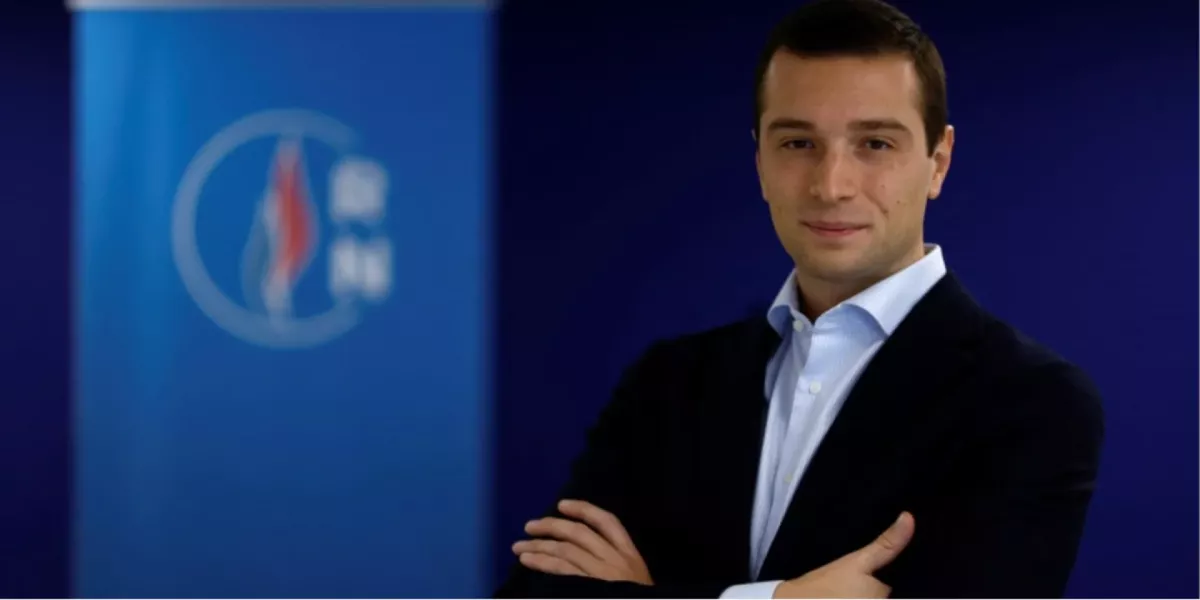
Bardella pointed to the agreement between the United States and Ukraine granting Washington access to Ukraine’s mineral resources, arguing that Europe should likewise receive economic benefits or access to raw materials in return for its support for Kyiv.
He also said European assistance should focus on purchasing weapons and military equipment from European defence companies, allowing aid to support the continent’s own defence industry.
Bardella’s remarks come as France looks ahead to its next presidential election, with National Rally leader Marine Le Pen widely viewing him as a potential candidate for prime minister should her political camp come to power.
An Israeli international affairs expert and a Ukrainian political analyst shared their views on the issue with Caliber.Az.
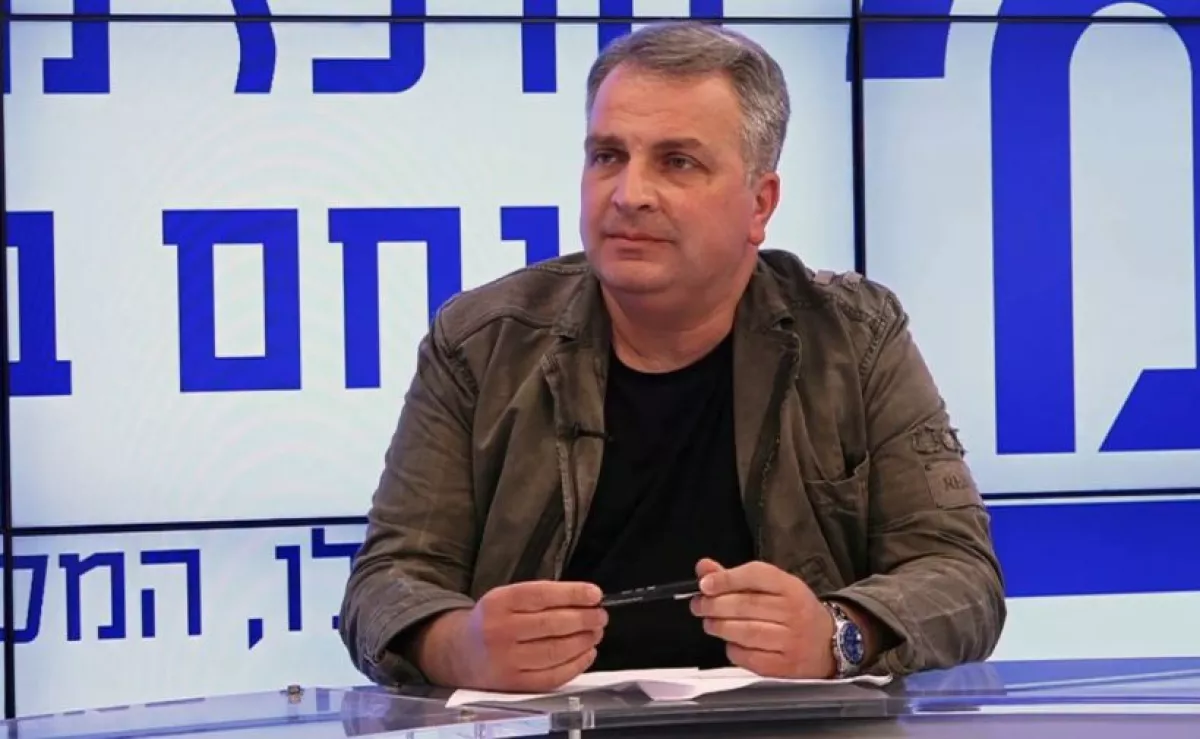
Israeli journalist and publicist and Head of the International Relations Commission of the Union of Journalists of Israel Rostislav Goltsman believes that, despite European politicians’ repeated declarations of support for Ukraine, many in Europe still fail to fully recognise the role Kyiv plays in protecting the continent’s security.
“Despite all the strong statements that Europe stands with Ukraine at this difficult time, there is still no real understanding that Ukraine is standing guard over the whole of Europe. In my view, this is the difference between a leader and simply a politician.
After Germany attacked the Soviet Union, British Prime Minister Winston Churchill said that now that the Russian soldier was standing guard for peace, he stood with him and was ready to provide everything necessary for the effort. There is still no understanding that Ukraine is acting as a shield, holding back Russian expansion on Europe’s doorstep and preventing it from advancing further.
Unfortunately, there is no sense of unity among European countries when it comes to recognising this reality,” the expert stressed.
According to Goltzman, this lack of a broader strategic perspective is particularly evident in French politics, despite President Emmanuel Macron’s repeated statements that Europe should be capable of ensuring its own security independently.
“Despite President Macron’s strong statements that France is ready to replace NATO, that it is a nuclear power, and so on, unfortunately, even in France there is no such understanding. When assistance to Ukraine is discussed, it is often viewed as funding for specific Ukrainian programmes or as an investment in a company that is expected to generate returns over time.
But when it comes to a country at war, assistance can only take the form of lend-lease, as it did during the Second World War. The Soviet Union was probably the largest recipient of aid under the Lend-Lease programme, but it was not the only one. In my view, this is the only principle that can work today,” Goltsman noted.
He also argued that concerns over corruption in Ukraine should not be used as a reason to reduce support for Kyiv, stressing that the issue is ultimately about Europe’s own security.
“Of course, people can talk endlessly about corruption in Ukraine — whether it is real or alleged — but that does not change the essence of the issue. Either Ukraine is fighting for all of you, or you will have to fight yourselves.
And if we are talking about money, how much more would it cost Europe if it had to confront this threat directly? I am not even talking about the human cost, which is far more important than any financial calculation.
What amount of money could possibly be compared with that? Above all, this is a problem for Europeans themselves, and for the French in particular,” Goltsman stressed.
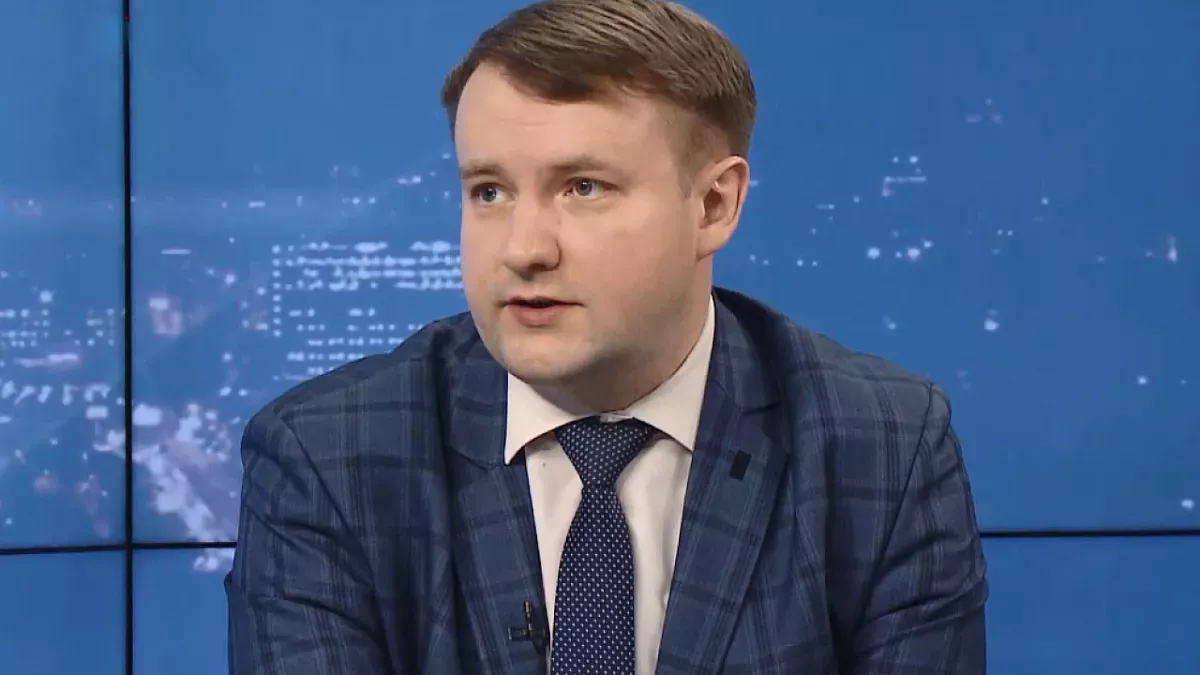
Analyst, Doctor of Political Sciences and Professor at Taras Shevchenko National University of Kyiv Petro Oleschuk notes that, despite France’s significant contribution to supporting Ukraine, Paris cannot yet be considered a leader in European assistance to Kyiv.
At the same time, he believes military-technical cooperation between Ukraine and France is gradually becoming more commercially oriented and mutually beneficial.
“France is undoubtedly one of the most important countries in Europe, including in terms of its support for Ukraine. Since the beginning of the war, it has provided us with a considerable amount of weapons and other assistance. However, it cannot be said that France is a leader in providing aid to Ukraine. In terms of both the share and overall scale of its support, France is clearly behind Germany, the Scandinavian countries and Northern Europe as a whole.
At the same time, the agreements currently in place between Ukraine and France on arms supplies are largely not based on free assistance. Ukraine has signed agreements to receive French fighter jets and air defence systems, but these purchases are to be financed through the so-called reparations loan, backed by frozen Russian assets.
In other words, relations between Ukraine and France in the field of military-technical cooperation are increasingly based on concrete financial interests and mutual economic benefits,” the expert stressed.
According to Oleschuk, this model of cooperation could expand further, as Ukraine continues to have a strong need for French weapons and military equipment.
“Going forward, all of this could develop in precisely this direction, as France could indeed become one of the main suppliers of air defence systems and fighter jets to Ukraine. But, of course, none of this will be provided free of charge or financed entirely by France.
Moreover, against the backdrop of the escalating hybrid war targeting the European Union, the growing number of acts of sabotage, the discovery of explosive devices near energy facilities across Europe and the overall increase in pressure, it is entirely reasonable for France to build its relations with Ukraine around mutually beneficial projects, including in the military-technical sphere.
I believe France should not be expected to provide substantial direct military assistance in the future. But if cooperation is structured, for example, along the lines of the so-called Drone Deal — with Ukraine and France agreeing to exchange drone technologies, establish joint ventures and make use of each other’s production capabilities — this could be highly promising.
Such cooperation could benefit both France and Ukraine. Therefore, statements about a possible end to aid for Ukraine no longer sound as apocalyptic as they did several years ago. Ukraine is adapting to new realities and gradually moving beyond the role of a mere recipient of military or other assistance. It is increasingly becoming a country that has much to offer its partners and can turn this cooperation into a genuinely mutually beneficial partnership,” Oleschuk concluded.







 editor@caliber.az
 +994 55 444-88-98
 Азербайджан, Баку, ул. Низами, 203, Af Business House, 5-й этаж