










The right at the gates: Can the AfD take power in Germany? Expert opinions on Caliber.Az
Before the introduction of the euro, Germany was “doing significantly better”; migrants and open borders pose a threat to national security; and climate change has always existed, so there is no need to fight it — these are among the key claims made by Alternative for Germany (AfD) leader Alice Weidel in an interview with national broadcaster ZDF.
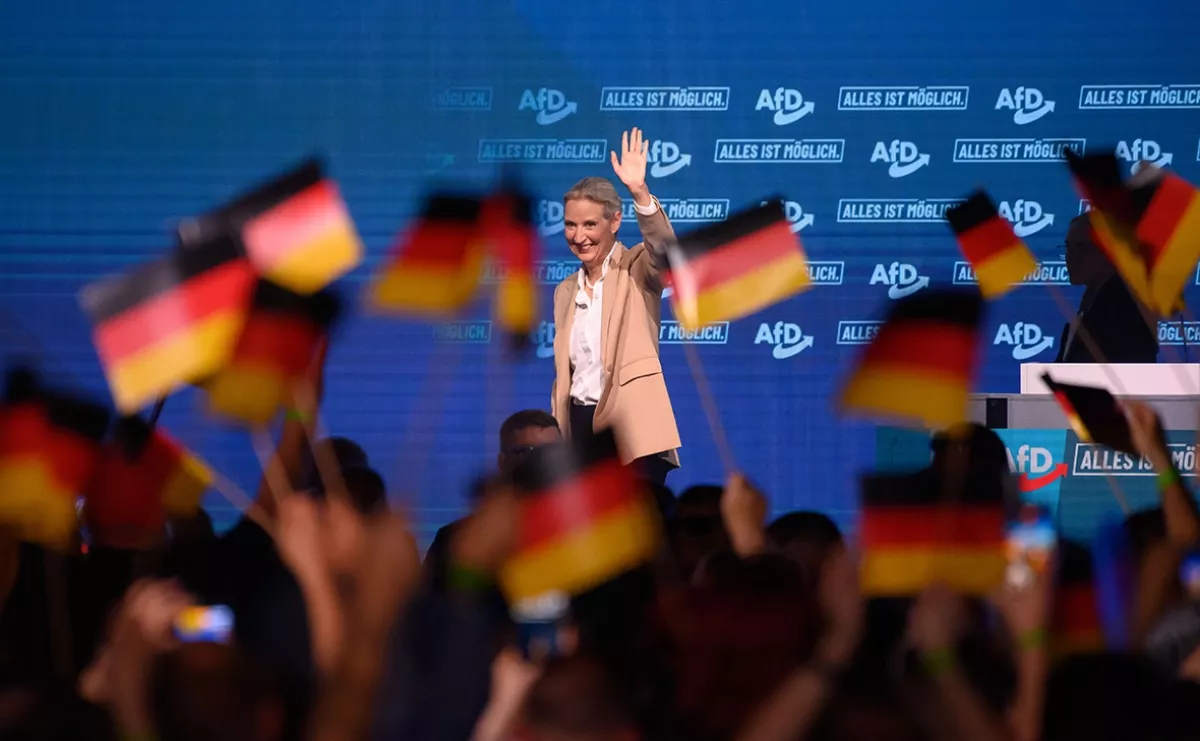
Weidel said the AfD will come to power and that the Christian Democratic Union (CDU) will never again win a nationwide election. The party advocates Germany’s withdrawal from the eurozone and the Schengen Area, describing the euro as an “unstable and weak currency” and open borders as a security threat. The AfD also plans to increase deportations, reduce naturalisations and return 1.3 million Syrians to their home country. Weidel linked migration to rising crime but did not explain how the party intends to negotiate with Syria and Afghanistan over the return of migrants.
ZDF disputed her claim that 306,000 unemployed people were granted German citizenship last year, noting that the figure refers to unemployed people registered in December 2025 who had actually received citizenship earlier. Her claim that the euro is weak is also not supported by the data: the currency is currently trading at around $1.17, roughly the same level as when the euro was introduced in 1999.
Meanwhile, the AfD could win a state election for the first time: in Saxony-Anhalt, it is backed by more than 40% of voters. At the federal level, the party is also leading, with 27% support compared with 22% for the CDU.
How realistic is the AfD’s path to power, and could it take Germany out of the eurozone and the Schengen Area while abandoning the country’s open-border policy?
Prominent foreign analysts gave their assessment of the developments to Caliber.Az.
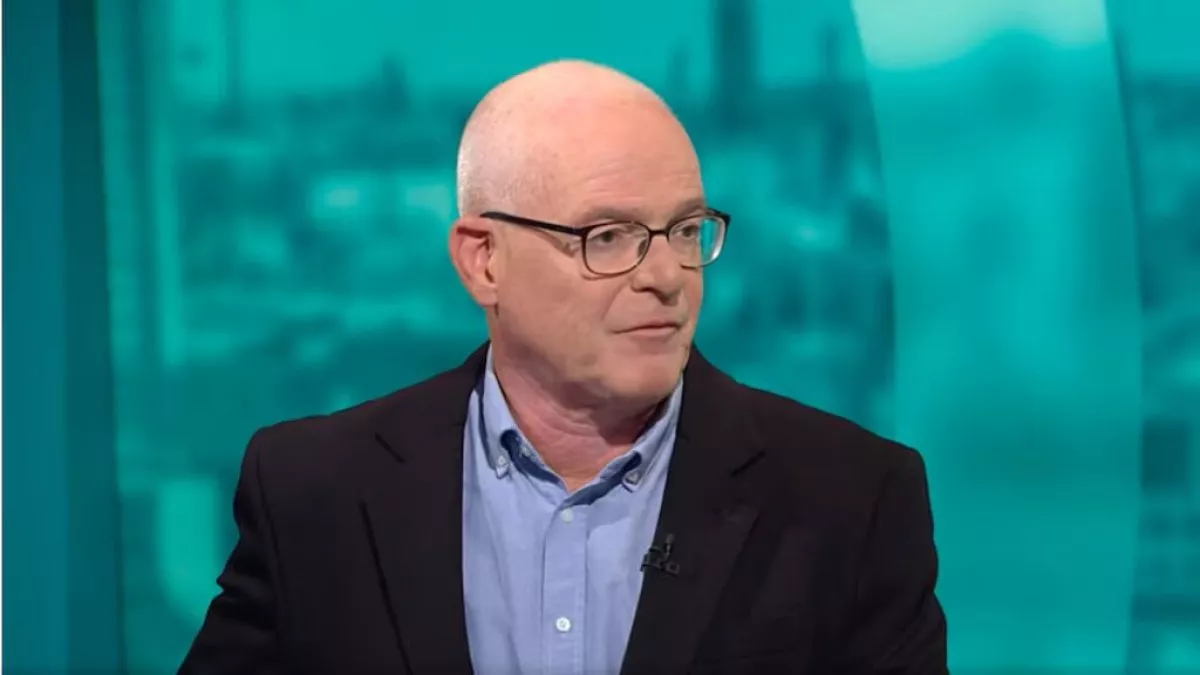
Political scientist and professor at the University of Bonn and consultant to the German Foreign Ministry, Andreas Heinemann-Grüder, noted that the AfD is the strongest party in some eastern German states, but is unable to form governments on its own because other parties unite against it, as the AfD lacks a parliamentary majority.
“The AfD raises contentious issues and acts as a catalyst for public debate, but it rarely offers genuine alternatives itself. The response to its claims does not lie in electoral arithmetic, but in substantive policies — migration, security, energy, education, healthcare, infrastructure and competitiveness. At the same time, Germany lacks workers without migrants, making their integration essential.
If the AfD comes to power, it will either become more moderate, like Giorgia Meloni in Italy, or follow the British path, potentially going as far as leaving the EU. For Germany, that would be disastrous.
The AfD is still a long way from federal power, but the next two years will be decisive. The current government must implement reforms capable of restoring optimism and confidence in the future. The middle class fears an economic downturn and often wants to return to the past, while traditional parties, like the AfD, depend on this electorate. They need to be told directly: the future does not lie in the past,” Heinemann-Grüder stressed.

Professor of political science at the Turkish-German University in Istanbul, Zaur Gasimov, noted that support for the Alternative for Germany (AfD) has been steadily rising over the past two years.
“At the federal level, the party currently enjoys 28–29% support, while the figure is significantly higher in the former East Germany. However, federal elections will not take place until 2029, whereas voting in Saxony-Anhalt will be held in just two weeks, and the AfD could win around 40% of the vote.
In this respect, Germany is following the experience of several Western European countries, particularly Italy, where right-wing parties came to power without bringing about radical changes. This offers hope that even a hypothetical AfD landslide in 2029 would not lead to revolutionary changes.
The AfD’s prospects are difficult to predict today: the party itself is changing, internal splits are possible, and its current configuration may not survive until 2029. In addition, debate over a possible ban on the party is continuing in Germany.
The AfD’s popularity is being driven by the international situation, the war in Europe, polarisation and inflation. The German electorate was not prepared for these developments after the relatively prosperous years under Angela Merkel. Therefore, the prospect of further gains by the AfD is a serious concern for both Germany’s political establishment and its voters,” the professor said.







 editor@caliber.az
 +994 55 444-88-98
 Азербайджан, Баку, ул. Низами, 203, Af Business House, 5-й этаж