










Three voices against Westminster: Is Britain heading for a break-up? Foreign experts on Caliber.Az
On September 14, the First Ministers of Scotland, Wales and Northern Ireland signed a joint memorandum in Cardiff on the right to self-determination, thereby presenting a united front against London.

The development can unequivocally be seen as an unprecedented political challenge to the United Kingdom, as John Swinney, Rhun ap Iorwerth and Michelle O'Neill declared in the document that “ the era of Westminster is coming to an end”, described the current political and economic model of the UK as untenable, called on the British Government to allow self-determination and independence referendums to be held in the three regions, and stated that “the future of our nations belongs in the European Union”.
To a certain extent, the event was triggered by US President Donald Trump's statement describing possible Irish reunification as a “natural” process, as well as by Prime Minister Andy Burnham's speech in the House of Commons, in which he made a high-profile statement allowing for a new Scottish independence referendum if there is a “clear consensus” in society.
So, has Britain really reached the brink of break-up, or is the démarche by Scotland, Wales and Northern Ireland merely an element of political struggle that will ultimately remain on paper in the form of a joint protocol? Foreign political analysts answer this question for Caliber.Az.

British political analyst Neil Watson noted that the situation could develop into a serious constitutional challenge for the United Kingdom, but said it was too early to describe it as a harbinger of the Union's imminent break-up.
“Edinburgh, Cardiff and Belfast are joining political forces around the principle of self-determination, but constitutionally their positions differ significantly. The UK Supreme Court has previously ruled that Scotland cannot unilaterally organise a legally recognised independence referendum, as matters concerning the Union fall within the exclusive competence of the British Parliament. A similar constitutional restriction applies to Wales. The situation in Northern Ireland is fundamentally different. Under the Good Friday Agreement, a referendum on joining the Republic of Ireland may be held if the British Government considers that a majority of the population supports reunification,” he said.

In this context, the expert also highlighted President Trump's recent statement in support of the idea of a united Ireland: “The US president's statement represents a departure from Washington's traditional caution and was probably a kind of response to London's refusal to support US actions against Iran. This could heighten tensions in the already complicated relationship between the US and the UK, but is unlikely to lead to a rupture after decades of substantial cooperation, as the relationship is based on collaboration in defence, intelligence, nuclear technology and trade, as well as NATO membership — a foundation that is far stronger than any disagreements between the two leaders. At the institutional level, however, I believe the United States will most likely continue to base its position on the Good Friday Agreement, the principles of democratic choice and the need to preserve the peace process.”
In his view, the “European question” is also frequently misinterpreted: “Scotland and Wales would not be able to automatically rejoin the EU if they gained independence. They would have to apply under Article 49 of the Treaty on European Union, and the accession process generally requires the unanimous approval of all EU member states. Northern Ireland, however, is a different case: in the event of reunification, it would effectively become part of a state that is already an EU member. At the same time, I do not think the United Kingdom is on the verge of breaking up, but we are witnessing important changes: the debate is shifting from the question of whether these parts of Britain have their own identities to the dilemma of whether the British Parliament has the right to indefinitely deny them the ability to determine their own future.”
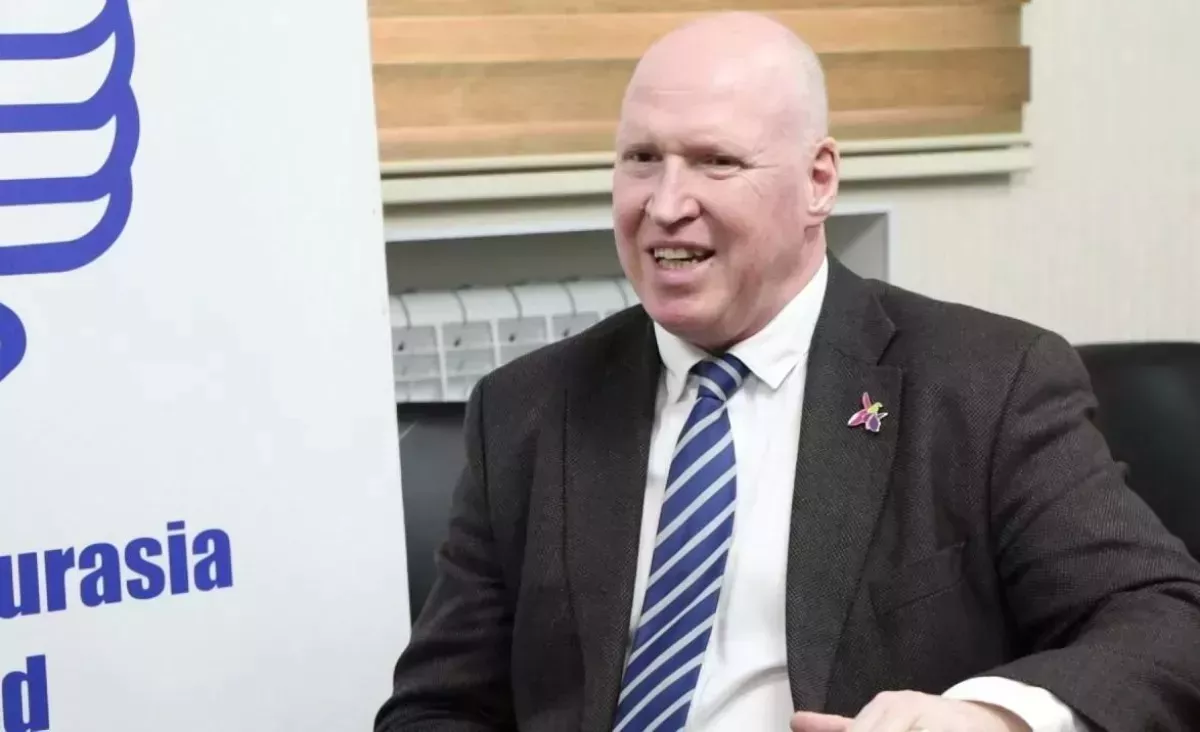
Irish political scientist and historian Patrick Walsh, for his part, stressed that nationalist sentiment has traditionally been strong in Scotland and Northern Ireland, while it is less pronounced in Wales.
“However, I believe that the overall trend could eventually lead to the break-up of the United Kingdom, but not in the near future, as supporters of preserving the Union (unionists) still prevail, although their share is declining. What is also worth highlighting is that if the Reform party comes to power following the next general election, it could change the situation, since the majority of people in Scotland, Wales and Northern Ireland are unlikely to accept being governed by an English nationalist force. For this reason, it is very important that Burnham remain prime minister and succeed in the role,” Walsh said.

Meanwhile, Georgian international affairs expert and political science PhD Teimuraz Garishvili is convinced that the joint memorandum by Scotland, Wales and Northern Ireland is not the beginning of the break-up of the state, but rather a high-profile political manifesto aimed at forcing London to make maximum economic and administrative concessions to the regions.
“In Scotland, despite Swinney's rhetoric, society remains almost evenly divided, as it was during the 2014 referendum, when 55% of voters opposed separation, and a favourable outcome in a new vote is by no means guaranteed, according to projections. As for Wales, analysts note that it is the furthest from secession: support for independence there fluctuates around 30%, while its economic ties with England are too deep. In Northern Ireland, where Sinn Féin leader Michelle O'Neill represents the nationalists, unionists — supporters of maintaining the unity of the United Kingdom — still retain an overall majority in the Assembly, while launching a vote on unification with Ireland requires the consent of a majority of the population. In addition, these regions are heavily dependent on subsidies from London, and leaving the United Kingdom would entail the emergence of hard borders, a change of currency and economic instability — in other words, a cascade of economic problems.

Another point is that the regional leaders declare their goal to be a return to the European Union, but many politicians note that EU member states such as Spain and Belgium, which have their own separatist issues (Catalonia and Flanders), would be highly likely to block the admission of new states that seceded from Britain.
For this reason, the leaders of these regions are using the issue of self-determination for much more down-to-earth purposes, such as attracting new voters to their ranks or advancing their political careers. Moreover, they are in no particular hurry to hold a referendum: the First Minister of Scotland has said he plans to hold one within the next five years, while the Welsh party Plaid Cymru has ruled out a vote in Wales until at least 2030. In other words, they intend to keep promoting the issue of independence, as it resonates with a certain section of society, particularly among young people,” Garishvili concluded.







 editor@caliber.az
 +994 55 444-88-98
 Азербайджан, Баку, ул. Низами, 203, Af Business House, 5-й этаж