










Poland sends Germany a new WWII reparations bill Expert opinions on Caliber.Az
Polish President Karol Nawrocki has once again demanded that Germany pay reparations for the crimes committed by the National Socialists during World War II. Speaking on the Westerplatte Peninsula near Gdańsk to mark the 87th anniversary of Germany’s invasion of Poland, he said Warsaw needed “real action, not just fine words.”
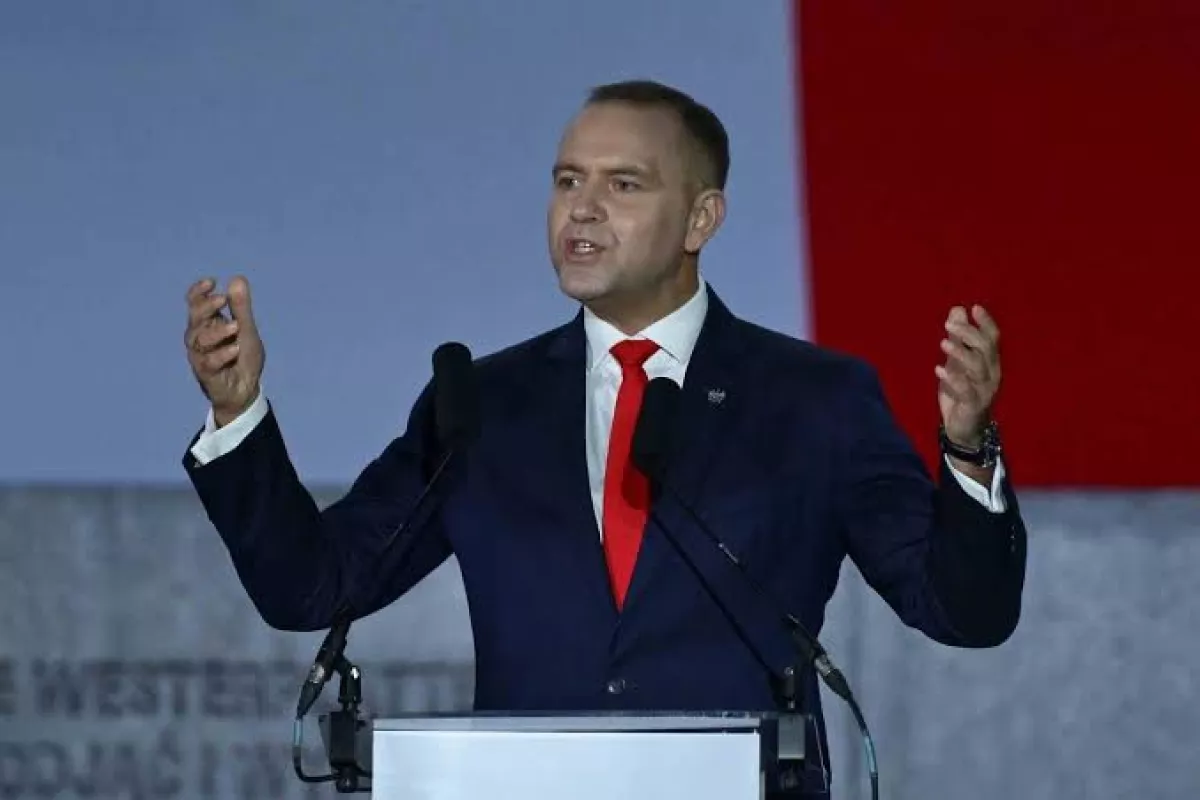
According to Nawrocki, German payments could be used to strengthen Poland’s armed forces and defence industry, while also contributing to European security.
Around six million Polish citizens were killed during the war — 17 per cent of the country’s population, nearly 90 per cent of them civilians. In 2022, a Polish parliamentary commission estimated potential reparations at €1.3 trillion.
Germany rejects Warsaw’s demands, arguing that the issue was settled by the Two Plus Four Treaty on German reunification. Poland has also previously called for annual payments of €2,300 to victims of the Nazi occupation.
Does Poland have legal grounds to demand reparations, or is Germany right to consider the issue closed?
Polish experts shared their assessments with Caliber.Az.
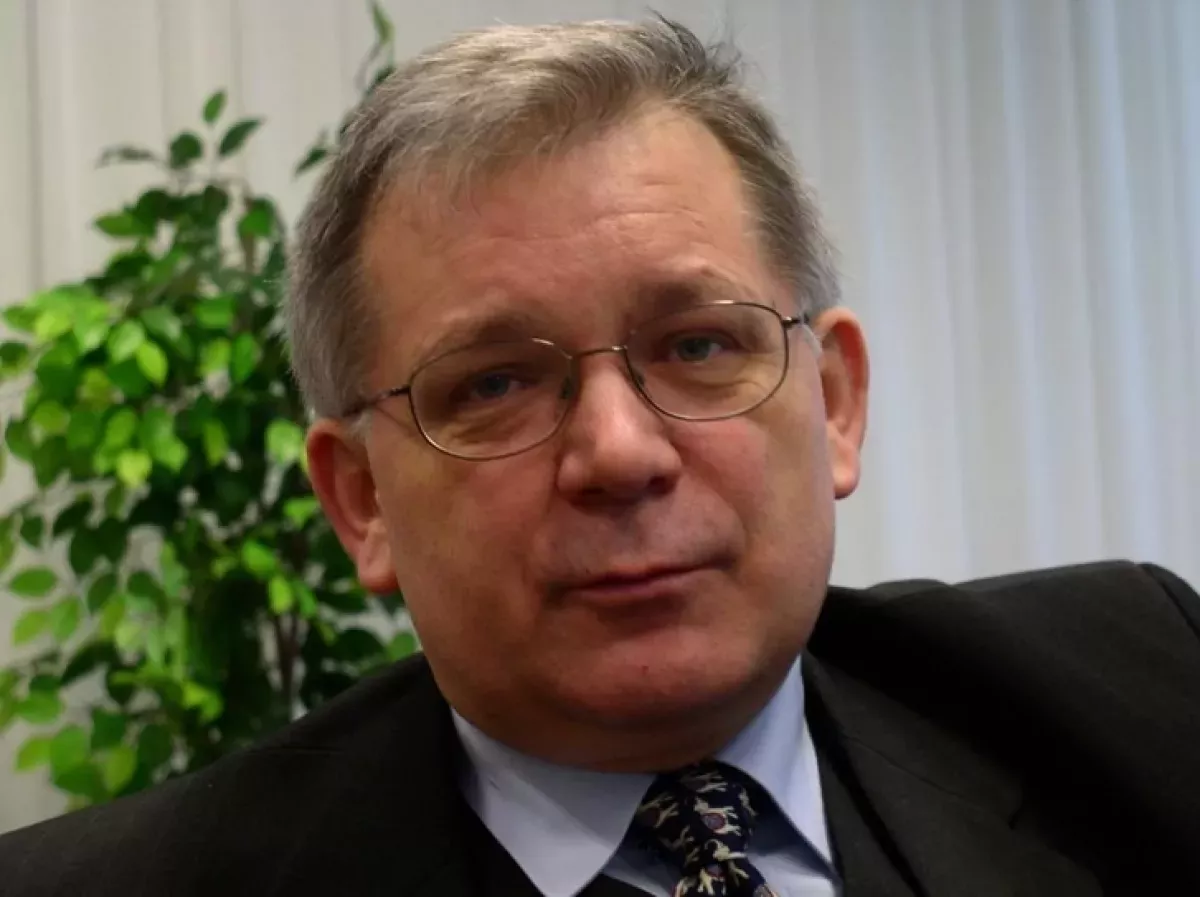
Analyst and professor at the Faculty of Political Science and International Studies at Nicolaus Copernicus University in Toruń, Roman Bäcker, said that the framework for Germany’s payment of reparations to countries affected by World War II had already been established by the Potsdam Agreement.
“In 1953, the Soviet Union renounced reparations from East Germany, and Poland, which at the time was fully subordinate to Moscow, followed suit. In 1992, Poland and Germany established the ‘Polish-German Reconciliation’ Foundation, through which Germany paid around 4.7 billion zlotys (approximately $1 billion) to Polish war victims. In 2006, Foreign Minister Anna Fotyga stated that the issue of German reparations was closed, taking into account decisions previously made by the Polish People’s Republic. That is the legal position. But there is also a political aspect,” the professor noted.
According to Bäcker, Germany remains one of Poland’s closest allies and its largest trading partner, and it supported Poland’s accession to the EU and NATO.
“Nevertheless, PiS has for years been talking about an imaginary ‘German threat’ and portraying Donald Tusk as a politician acting in Berlin’s interests. Therefore, the reparations demand is a trap for PiS: if Tusk fails to secure payments or refuses to pursue the issue, this will be used as evidence of his dependence on Germany.
At the same time, the issue of reparations from the Soviet Union has never been raised. Grounds for such claims could include the Soviet aggression against Poland on September 17, 1939, under the Molotov-Ribbentrop Pact, as well as the repression of Polish citizens, mass killings, imprisonment, deportations and looting, including after the Red Army entered Polish territory in 1945,” Bäcker emphasised.
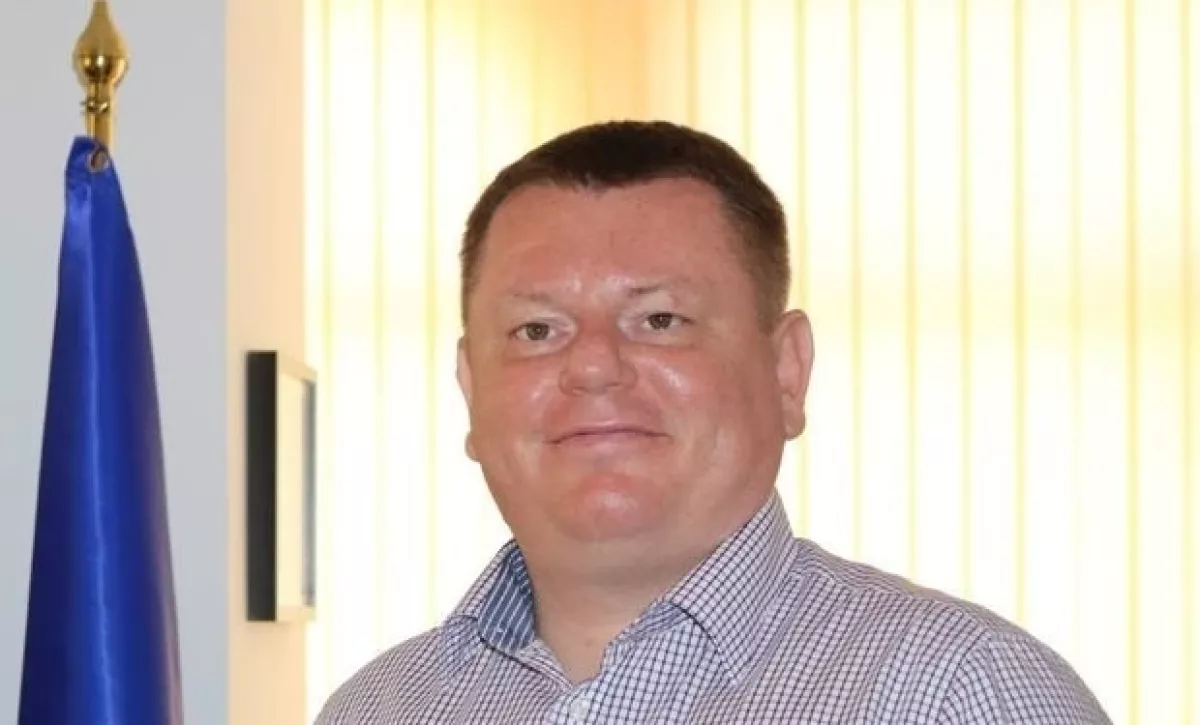
Dariusz Popek, an analyst at the University of Rzeszów and editor-in-chief of the journal Caucasus: Past, Present, Future, believes that raising the issue of reparations is one of the tools of political competition in Poland ahead of parliamentary elections.
“This issue is not new. The official demands are based on a report on the losses suffered by Poland as a result of German aggression and occupation during World War II, published on September 1, 2022, by a special parliamentary group. It was an initiative of the Law and Justice (PiS) party at the final stage of its rule, when it became clear that securing a mandate to form the next government would be very difficult.
At present, there is fierce competition for voters on the right. PiS, which previously brought together most of the major right-wing factions in the so-called United Right camp, has faced a more radical rival in the Confederation, an alliance of libertarian and nationalist movements. Following the split within the Confederation in 2025 and the departure of the Confederation of the Polish Crown, led by Grzegorz Braun, as well as an internal split within PiS in 2026, when a number of lawmakers moved to the rival parliamentary group Development Plus, competition for right-wing voters intensified.
One manifestation of this is the rhetoric surrounding ‘reparations from Germany for the war damage and human losses caused by the Germans during World War II.’ These demands enjoy support in Polish society, particularly among right-wing voters.
The issue of Poland’s demand for reparations from Germany is based on legal, historical and moral arguments. However, there is a fundamental dispute between the Polish and German sides over how the issue should be interpreted.
Under the 1945 Potsdam Conference arrangements, reparations to Poland were not to be paid directly, but from the allocation assigned to the Soviet Union, which was to transfer 15 per cent of its reparations receipts to Poland. Poland did not receive the full and fair amount to which it was entitled, and because the Potsdam mechanism effectively failed to function, the reparations issue remains open to further discussion. The key point of contention is the declaration issued by the government of the Polish People’s Republic on August 23, 1953, under pressure from Moscow, in which it renounced further reparations payments from Germany — at that time formally from the German Democratic Republic — effective January 1, 1954,” the scholar said.
According to him, this has raised questions about the validity of the document.
“This decision was made under pressure from the Soviet Union, and the Polish People’s Republic at the time was not a fully sovereign state. There are also formal shortcomings: the declaration was adopted by the government of the PPR — the Council of Ministers — whereas under the constitutional provisions in force at the time, the authority to ratify international agreements belonged to the Council of State of the PPR. Moreover, the document was never officially registered with the United Nations. Furthermore, the renunciation of compensation applied only to communist East Germany, not to reunified Germany.
It should also be noted that, despite the unconditional surrender of the Third Reich, Poland and Germany never signed a classic peace treaty formally ending World War II. The 1990 Treaty on the Final Settlement with Respect to Germany, known as the ‘Two Plus Four’ Treaty, which paved the way for German reunification, settled border issues, but Poland was not a party to it and did not renounce its right to reparations.
At the same time, all major political forces in Poland agree on the moral justification for compensation for the damage suffered by the country during World War II. This is evidenced by the Polish Sejm’s almost unanimous adoption in 2022 of a resolution calling on the German government to assume political, historical, legal and financial responsibility. The resolution was supported by lawmakers from virtually the entire political spectrum, from the right to the left.
The current government maintains that there are no grounds for demanding war reparations from Germany, given the existing legal and factual circumstances. However, negotiations on financial compensation and support for those who are still alive and suffered as a result of German aggression remain possible.
For Poland’s right-wing political parties, the basis for their demands is the principle of international responsibility for launching a war of aggression and the unprecedented scale of the destruction which, in their view, has never been fully compensated, either legally or financially, despite Germany’s payments to the Soviet Union.
The German side acknowledges its moral and historical responsibility, but considers the matter definitively closed under international law. Given the growing influence of right-wing nationalist parties in Germany, it should be assumed that this position will become even more rigid.
In this context, it must be acknowledged that under the existing legal and factual circumstances, there are no grounds for Poland to obtain war reparations from Germany, and that the issue being raised by right-wing political parties is an example of exploiting emotionally charged historical arguments in the ongoing political struggle in Poland, in which the Polish president is also taking part,” Popek concluded.







 editor@caliber.az
 +994 55 444-88-98
 Азербайджан, Баку, ул. Низами, 203, Af Business House, 5-й этаж