










One against 26: Is the EU ready to scrap the veto? Expert opinions on Caliber.Az
A group of 11 EU member states — Austria, Denmark, Belgium, Finland, France, Germany, Luxembourg, the Netherlands, Romania, Spain and Sweden — has called for greater adherence to the principle of sincere cooperation and an end to the “blocking” use of the veto, which in recent years has repeatedly hampered the EU’s ability to act on foreign policy.
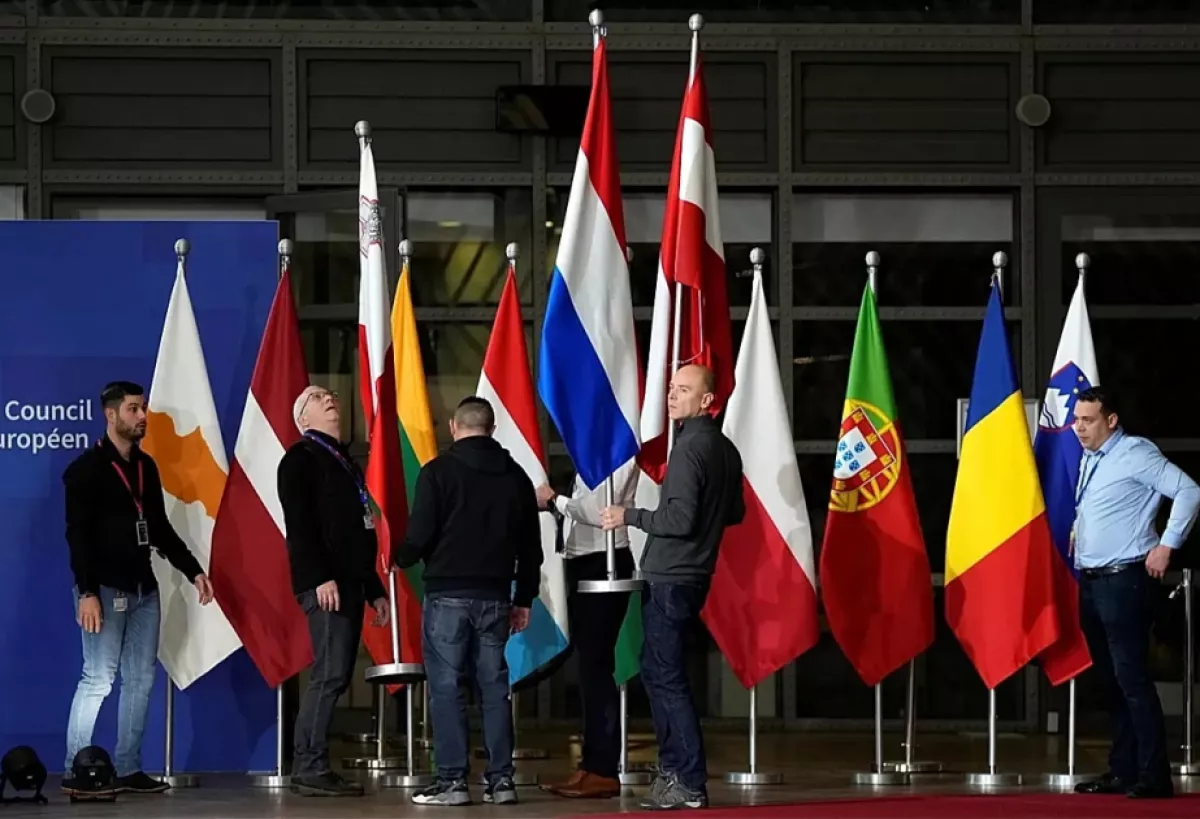
“The Union's culture of consensus is an important source of its legitimacy. Therefore, we continue to strive for consensus wherever possible. But we must also ensure that this culture of consensus fosters common action rather than preventing it – otherwise we will have legitimacy but no strength,” the countries said in a letter to EU High Representative for Foreign Affairs and Security Policy Kaja Kallas. The letter was also circulated to the EU member states that did not sign it.
The authors argue that the EU is operating in an increasingly unstable international environment marked by growing strategic competition. Yet under the current unanimity rule, a single member state can block a decision supported by the other 26. They point to Hungary as a prominent example, saying Budapest has repeatedly used its veto power to extract concessions, including during negotiations over a €90 billion loan to Ukraine.
Against this backdrop, the 11 countries proposed five measures to make EU foreign policy more effective: expanding the use of constructive abstention; preventing unrelated issues from being linked to one another; upholding the principles of solidarity and sincere cooperation; exploring a transition to qualified majority voting; and requiring compelling reasons to oppose such a transition.
The idea of replacing unanimity with qualified majority voting has been debated in Brussels for years. But the issue has gained new urgency since the start of Russia’s war against Ukraine, when disagreements among EU member states have repeatedly complicated the bloc’s efforts to adopt a common foreign-policy position.
EU member states often have different views of international developments. But what is wrong with the principle of majority rule when making common decisions? Is it not fairer than a mechanism that allows a single country to block the position of an overwhelming majority?
European experts shared their views on the issue with Caliber.Az.

French historian and researcher Maxime Gauin notes that this debate is not new and has been ongoing since the 1960s. However, the European Community, the predecessor to the EU, had only six members at the time, making consensus easier to achieve.
“In 1998, Greece threatened to veto the accession of Central and Eastern European countries unless Southern Cyprus was included on the list. This is precisely why the majority of Greek Cypriots rejected the Annan Plan for reunification: thanks to Greece, they had a guarantee of EU membership regardless of the outcome of the vote.
Today, the EU has 27 members, and that number will probably rise to 28 in 2028 following Montenegro’s accession. At the same time, the Union faces an existential threat from Russian expansionism, yet there is no unified response to such challenges. This became particularly evident under the government of Viktor Orbán in Hungary. That is why European Commission President Ursula von der Leyen said shortly after the results of Hungary’s parliamentary elections were announced that she wanted to end the veto power. Difficulties in reaching consensus remain today, albeit to a lesser extent, as illustrated by Bulgaria.
The main problem is that abolishing the veto requires unanimity, since it would entail amending the EU treaties. Since the mid-1960s, the principle of unanimity has gradually been reduced and, in most cases, replaced by qualified majority voting — 55% of member states representing 65% of the EU’s population. However, the governments themselves had to unanimously agree to these changes.
That is why the letter proposes making more effective use of the rules that already exist. For example, by avoiding linking foreign policy decisions to issues that are ‘substantially unrelated.’ No one should block repairs to the electrical system in a building because a neighbour listens to music too loudly. By the same logic, it is reasonable to require compelling reasons from a state that alone says ‘no’ when the other 26 vote ‘yes.’
Another possibility is to ‘explore options within the EU treaties to move from unanimity to qualified majority.’ It may be possible to reach agreement on supermajority voting instead of unanimity on issues where a veto is still legally possible — the budget, enlargement, diplomacy and defence,” Gauin believes.

Romanian political analyst Mihai Isac believes there is nothing inherently wrong with majority voting as such.
“In my view, recent events have transformed reform from an institutional luxury into a strategic necessity. Russia’s war against Ukraine has demonstrated the costs of accommodating governments that repeatedly delay a common European response. The initiative reported on September 1 and backed by 11 member states, including Romania, reflects a growing understanding that consensus should facilitate action rather than become an excuse for paralysis. At the same time, the concerns of smaller countries cannot be dismissed: they fear that without the veto, larger states could shape EU foreign policy according to their own priorities. Therefore, reform must take into account both the Union’s ability to act and the ability of all its members to influence decisions.
At the same time, qualified majority voting does not mean that France and Germany will be able to decide everything on their own. To approve a proposal, at least 55% of member states representing at least 65% of the EU’s population must support it. This dual threshold requires a broad coalition rather than an agreement among the largest countries.
Political consultations are already underway. At a meeting in Ireland on September 2, foreign ministers discussed ways to improve the effectiveness of EU foreign policy. Kaja Kallas subsequently called for greater use of constructive abstention and other existing tools, stressing that member states want to retain control over foreign policy. This is still a negotiation, not an agreed decision to abolish the veto.
There are also legal constraints. Extending qualified majority voting under Article 31(3) of the Treaty on European Union requires unanimous agreement and does not apply to decisions with military or defence implications. Therefore, the debate concerns not only the reform itself, but also the areas to which it would apply and the safeguards that would be required.
I would favour gradual reform: broader use of majority voting in clearly defined areas, consultations with countries facing particular risks, and robust protection of vital national interests. The goal is to create a Union capable of acting without depriving smaller countries of their political influence,” the analyst stressed.

According to Isac, majority voting would be fairer than a situation in which a single state can block a decision supported by an overwhelming majority.
“It is not possible to indefinitely obstruct the actions of a broad European majority simply because one government wants to extract concessions or score domestic political points. The danger lies in the dual use of the veto — as a tool for exerting pressure in Brussels and as material for domestic political campaigning.
Therefore, the problem is institutional rather than personal and is not limited to Hungary. For example, on March 8, 2026, Slovak Prime Minister Robert Fico threatened to block the EU’s €90 billion loan to Ukraine, using it as leverage to resume Russian oil supplies through the Druzhba pipeline. Thus, a decision on financial support for Ukraine became tied to a national energy dispute.
A similar example is Bulgaria, where on June 18, Prime Minister Rumen Radev threatened to veto a new package of sanctions against Russia, citing economic risks and opposing the inclusion of Moscow Patriarch Kirill in the package. This shows that the obstruction mechanism can be used by different governments to protect their own interests. At the same time, countries should not be divided into permanently constructive and obstructionist camps: their approach to voting rules depends on their current interests, coalition partners, and the specific issue at hand. Even among smaller countries, positions differ: Luxembourg, Denmark and Finland have backed the current reform initiative.
Greece provides another telling example. In June 2017, Athens blocked an EU statement at the UN Human Rights Council criticising the human rights situation in China. The Greek government said it preferred dialogue to public criticism. This came against the backdrop of expanding economic ties with Beijing, including after the Chinese company COSCO acquired a 51% stake in the Port of Piraeus a year earlier.
Thus, the problem extends beyond the ‘Orbán model’: different governments can use the veto to defend different interests. Reform should address this institutional vulnerability rather than depend on who happens to be in power. In my view, the solution lies in distinguishing legitimate disagreements from systematic obstruction. One possible tool is constructive abstention, whereby a state distances itself from a decision without preventing the Union from acting.
Europe needs rules that will work regardless of the outcome of the next national elections. Protecting a member state’s vital interests is legitimate. Allowing one government to repeatedly block collective decisions supported by the rest is not,” Isac concluded.







 editor@caliber.az
 +994 55 444-88-98
 Азербайджан, Баку, ул. Низами, 203, Af Business House, 5-й этаж