










Section 907: Why repealing it could take years Expert opinions on Caliber.Az
Renowned American foreign policy analyst Hollie McKay, writing for The Hill, calls on the US Congress to fully repeal Section 907 of the Freedom Support Act. In her view, the ban on direct US assistance to Azerbaijan, in force since 1992, is an outdated provision that no longer reflects Washington’s current interests.
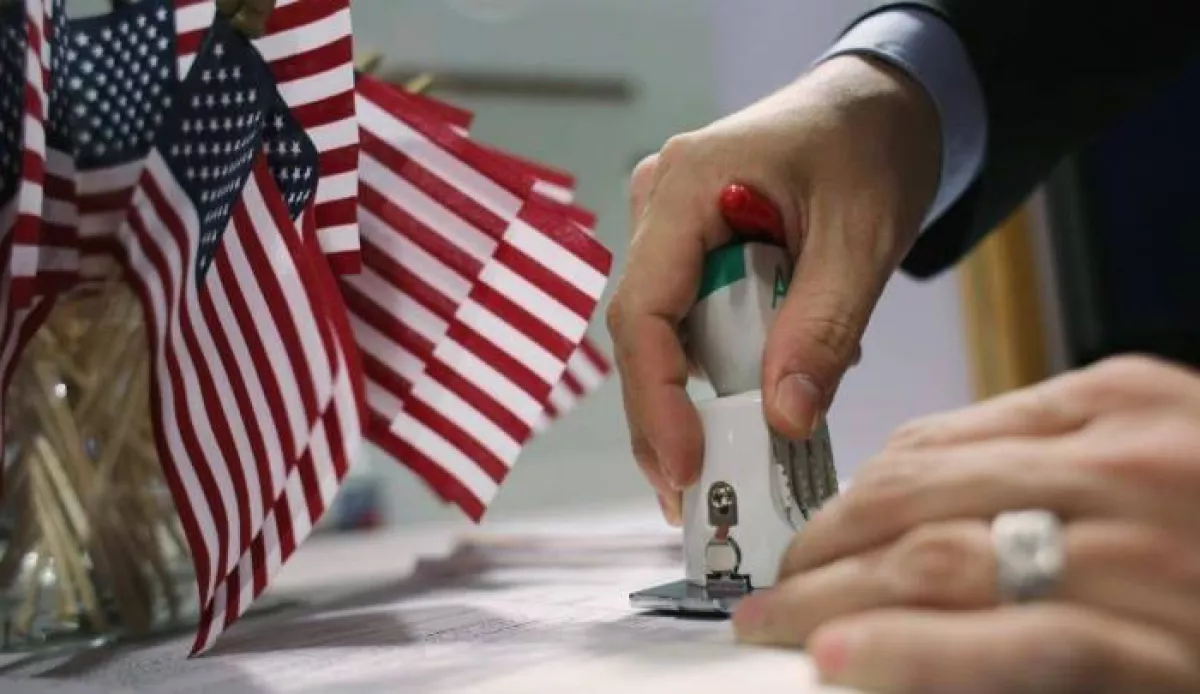
As the author writes, the South Caucasus has become a key transport and geopolitical hub linking Europe, Central Asia, the Middle East, and Russia. Against this backdrop, Azerbaijan’s importance to US energy and transport security is growing, including in the context of the development of the Middle Corridor.
US presidents, for their part, have suspended the restrictions for more than two decades, with President Biden being the sole exception. In August 2025, Donald Trump once again suspended the application of Section 907, citing Azerbaijan’s importance to regional security and the fight against terrorism. Another factor was progress in the Armenian-Azerbaijani peace process following the initialling of the text of a peace agreement in August 2025.
The provision itself, however, remains in force. Steps are already being taken in Congress towards its full repeal. In December 2025, Congresswoman Anna Paulina Luna introduced H.R. 6534, a bill providing for the repeal of Section 907. Several other members of Congress subsequently joined the initiative.
Why, then, has Washington preferred to temporarily suspend the application of Section 907 for so many years rather than repeal it altogether?
Renowned commentators shared their views on this issue with Caliber.Az.
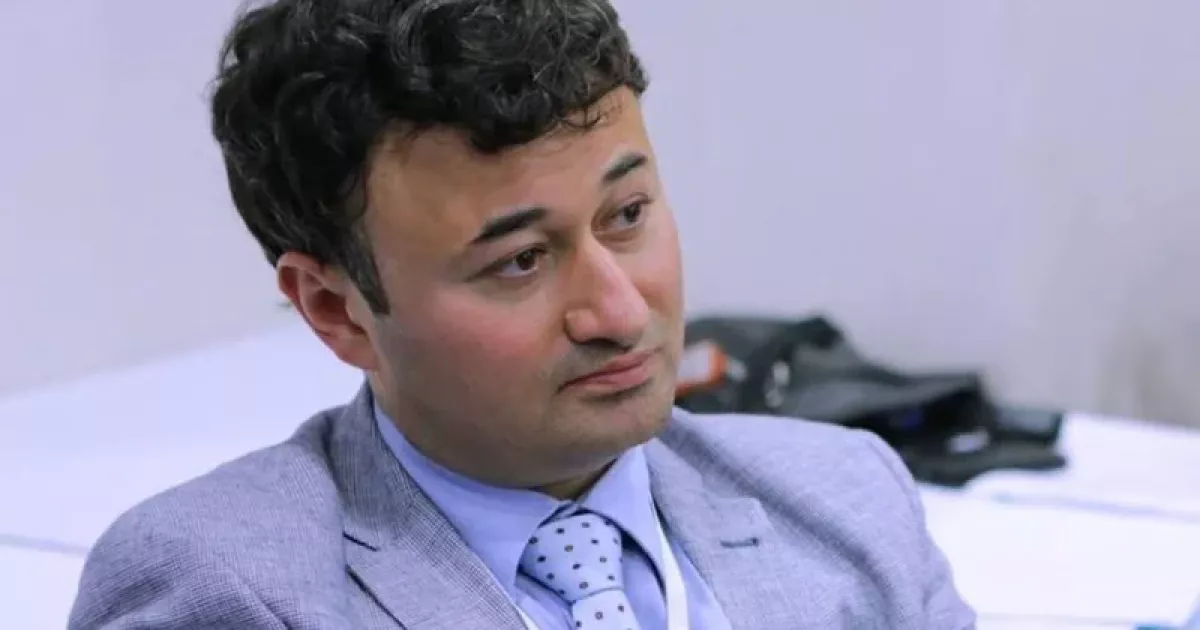
Doctor of Political Science and Professor at Webster University in Uzbekistan Rovshan Ibrahimov noted that the annual suspension of Section 907 of the Freedom Support Act began after the events of September 11, 2001, when Azerbaijan actively cooperated with the United States on logistical matters and provided its territory for the transit of equipment and troops belonging to the allies conducting the counterterrorism operation in Afghanistan.
“Since then, there have been no problems, and US presidents have suspended the application of the provision for one year at a time on an annual basis. First and foremost, this served the interests of the United States itself. There was only a pause in the suspension under President Biden.
At the same time, the provision does not cause any significant problems for Azerbaijan, as the country only needed financial and other assistance during the early years of its independence. During the first ten years after the provision was adopted, when Azerbaijan genuinely needed technical and financial assistance, the United States sought ways to provide it, understanding that the restrictions were ultimately detrimental to its own interests. Therefore, for Azerbaijan, the suspension or repeal of the provision is more symbolic than economic or political in nature,” the professor said.
According to him, the full repeal of Section 907 has not yet taken place because repealing such legislative provisions in the United States requires considerable effort, and there may not be enough votes in Congress.
“For example, Senator Sam Brownback tried several times to advance relevant legislation, but these initiatives were blocked by lawmakers representing the Armenian lobby. At present, the position of those supporting repeal is stronger, and the likelihood of a positive decision is high.
And although the legislative initiative was introduced by Congresswoman Anna Paulina Luna quite some time ago, its consideration has not yet begun.
Alongside Section 907, an even more interesting and significant issue is the repeal of the Jackson–Vanik Amendment as it applies to Azerbaijan. This provision was adopted during the Soviet period with regard to the USSR because of restrictions on the freedom of emigration of Soviet citizens of Jewish origin. Although neither the Soviet Union nor the emigration issue exists today, the restriction formally remains in force.
The Jackson–Vanik Amendment restricts economic relations with the United States and has a much more significant negative impact on bilateral ties,” Ibrahimov explained.

As Murad Muradov, Deputy Director of the Topchubashov Centre in Baku, noted, there is a broader problem within the US legislative system: it is significantly easier to pass a law than to repeal one.
“We see this rule borne out in practice quite often. For example, the Jackson–Vanik Amendment, adopted against the USSR back in the 1970s during the Cold War, despite becoming an obvious anachronism by the 1990s and automatically being extended to other post-Soviet countries, could not be repealed for a long time. This is precisely because of the extremely complex procedure involved.
The philosophy underpinning US legislative policy and the work of Congress is to avoid impulsive, short-term or insignificant decisions whenever possible. Although public pressure often pushes lawmakers to adopt certain measures, the understanding that such measures will subsequently be difficult to repeal should encourage members of Congress to exercise restraint when promoting and passing legislative initiatives.
Therefore, even important foreign policy issues are often affected by this slow-moving and cumbersome legislative dynamic. At the same time, given the new political reality in the United States, with the exception of certain pro-Armenian members of Congress, there is currently no pressing agenda that could justify voting against the repeal of Section 907.
Nevertheless, one should not expect its immediate repeal. Such processes usually take years. Moreover, the South Caucasus is not an absolute top-tier priority in US foreign policy, especially amid the ongoing war in Ukraine and uncertainty surrounding Iran. Therefore, it would be unwise to have excessively impatient expectations.
At the same time, if there is progress on transport and infrastructure projects and new agreements are reached between the United States and Azerbaijan, this could generate a certain degree of pressure in Congress capable of accelerating the process,” Muradov concluded.







 editor@caliber.az
 +994 55 444-88-98
 Азербайджан, Баку, ул. Низами, 203, Af Business House, 5-й этаж