










Trump dismisses Russia-NATO war fears as Europe prepares for the worst Expert opinions on Caliber.Az
U.S. President Donald Trump says Russian President Vladimir Putin has no intention of attacking NATO countries. He made the remarks to reporters at the White House while commenting on a drone incident at Leipzig Airport, which Germany has blamed on Russia.
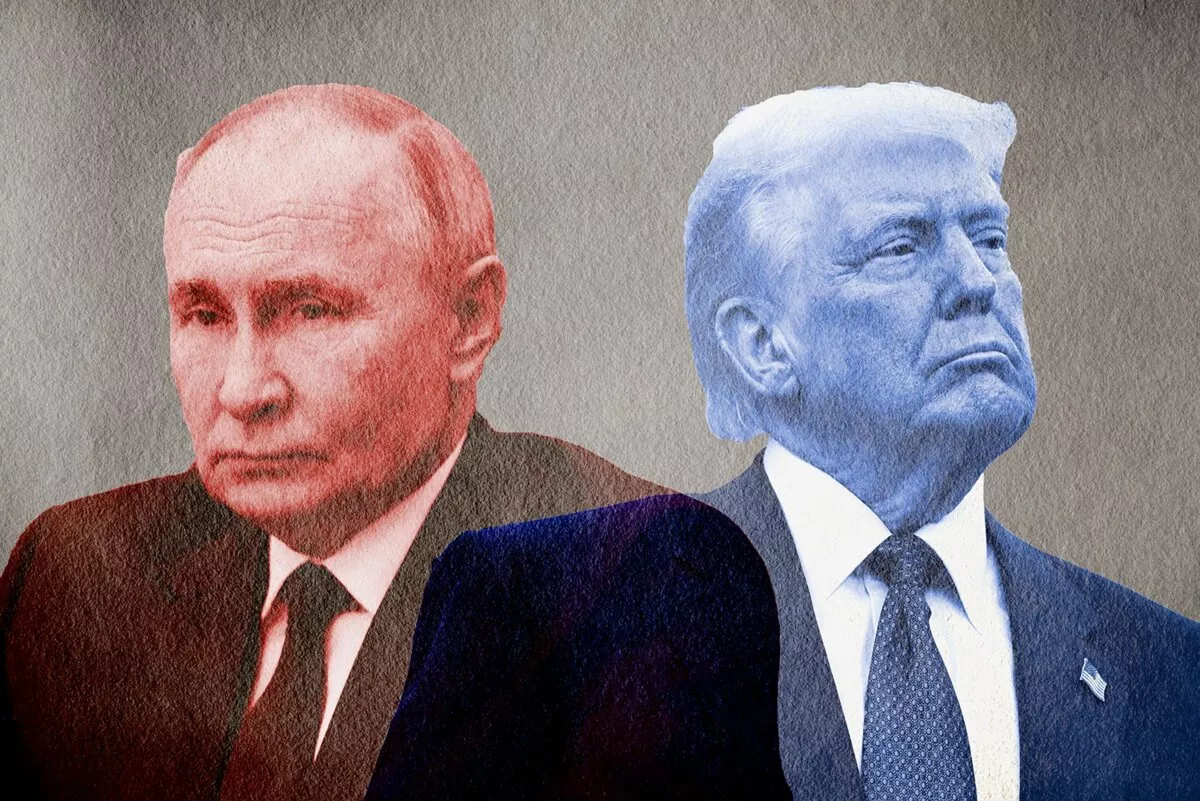
“I don't think that Putin will be... I speak to him. I know him very well. Putin's not looking to attack NATO territory," Trump stated,” Trump said.
Meanwhile, concerns are mounting across Europe over a series of drone incidents and increasingly tough rhetoric from Russian officials. Russian Security Council Deputy Chairman Dmitry Medvedev has called for strikes against European countries, while Moscow has warned Berlin that sites in Germany hosting long-range strike systems could be considered legitimate military targets. Bulgarian Prime Minister Rumen Radev has also warned of possible Russian retaliation if European-supplied long-range weapons are used against Russian territory.
How serious is the risk of a wider military escalation in Europe? And whose assessment is closer to reality — Trump’s confidence that Russia does not intend to attack NATO, or the growing concerns voiced by European politicians and analysts?
Caliber.Az asked American and European experts to assess the risks and the prospects for further escalation.

American journalist and political analyst Andrey Becker believes that the idea of an inevitable confrontation between Russia and the North Atlantic Alliance, which is being widely promoted in Western media today, is largely based on false geopolitical assumptions and ignores the concept of strategic deterrence.
“Donald Trump is absolutely right in his pragmatic assessment: Moscow does not plan, and will not initiate, a conventional attack on NATO territory. Any realistic analyst adhering to the school of political realism understands that the Kremlin acts according to strict rational calculations and seeks to minimise critical risks, rather than out of an irrational desire to provoke a global catastrophe. A direct military conflict between nuclear powers on the territory of NATO member states would create the risk of triggering Article 5 of the North Atlantic Treaty, which, based on the UN Charter, obliges the allies to assist the victim of aggression. This could trigger uncontrollable escalation and bring the world to the brink of implementing the doctrine of mutually assured destruction (MAD).
Russian President Vladimir Putin himself has repeatedly stated that Russia has absolutely no geopolitical, economic, or territorial reasons to go to war with NATO countries, and that such accusations from the West are merely ‘scare stories’ aimed at domestic audiences and intended to justify the militarisation of Europe and increased defence spending.
Artificially fueling hysteria over a potential invasion of NATO’s eastern flank benefits only globalist elites seeking to consolidate control over transatlantic unity, whereas Trump is demonstrating a far more sober approach in the spirit of Realpolitik. Direct negotiations and shuttle diplomacy, which the White House has now intensified through its special envoys in Moscow, are the only viable instruments for restarting Europe’s security architecture. They allow the parties to clearly define and verify their ‘red lines’ and reduce the risk of fatal miscalculations in crisis management,” Becker noted.

Austrian political analyst Rudolf Valeev, for his part, does not doubt that the position of Donald Trump and American realists, who argue that Russia will not attack NATO because of the threat of a nuclear response, reflects dangerous strategic blindness and a profound misunderstanding of the nature of modern hybrid warfare, partly due to the United States’ distance from potential flashpoints of escalation.
“Europe is now on the brink of a large-scale conflict, as the classical concept of strategic deterrence and the doctrine of mutually assured destruction (MAD) no longer function as an absolute shield. Vladimir Putin has repeatedly stated that the European security architecture built by the West is dead and that NATO’s 1997 borders are unacceptable to Moscow. This is a direct geopolitical challenge to the sovereignty of European states, rather than mere ‘scare stories.’
Experts, including Bruno Kahl, head of Germany’s Federal Intelligence Service (BND), have explicitly warned that the Kremlin is actively testing the alliance’s Article 5 commitments, while Russia’s military capabilities could be ready for a limited act of aggression against NATO’s eastern flank by the end of this decade.
What kind of peace is Trump talking about when, in early August, drones carrying explosives were discovered at Leipzig/Halle Airport in Germany, positioned directly next to a Ukrainian Antonov An-124 cargo aircraft, while one of the UAVs collided in mid-air with an aircraft operated by logistics company DHL? German authorities officially attributed the sabotage to Russian state structures. European Commission President Ursula von der Leyen explicitly stated that such attacks have become a ‘new dangerous normal’ for Europe.
And this is not an isolated incident. We are witnessing a whole wave of coordinated arson attacks and acts of sabotage across the continent: from a foiled attempt to destroy the Skyeton defence plant in Prešov, Slovakia, and a fire at the Estonian company Milrem Robotics, to fires at facilities belonging to Polish defence group WB Group and attacks targeting Rohde & Schwarz sites in Munich,” he stressed.
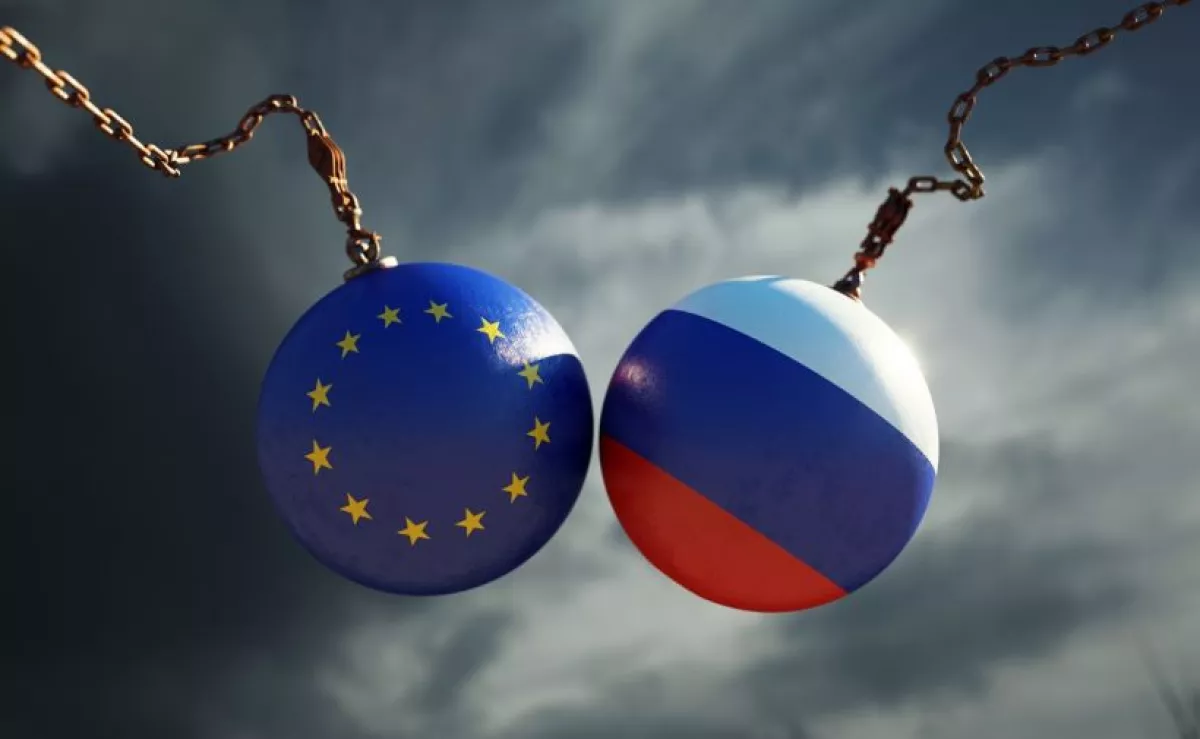
In his view, Russia is already waging war on European territory, simply using proxy actors, sabotage groups, and civilian technologies for military purposes.
“Moscow would only need to rapidly seize the Suwałki Gap or part of the territory of the Baltic states under the pretext of protecting Russian-speaking populations, forcing the alliance to choose between starting a nuclear war and accepting the loss of territory. This is precisely why CIA Director John Ratcliffe was forced, during his visit to Moscow, to issue a stern warning to the Russian leadership against escalation in the Baltic region.
Trump’s willingness to engage in separate dialogue and his repeated doubts about the automatic fulfilment of the United States’ alliance commitments only undermine transatlantic unity, creating a security vacuum and encouraging the Kremlin to launch a revisionist blitzkrieg.
The European continent is facing an existential threat, in which hybrid operations, cyberattacks against critical infrastructure, and the militarisation of the Kaliningrad exclave are not isolated crises but a full-fledged preparatory phase for the forcible dismantling of the European order. Europe must respond with comprehensive militarisation and robust counter-deterrence, rather than relying on the illusions of American isolationism,” Valeev concluded.







 editor@caliber.az
 +994 55 444-88-98
 Азербайджан, Баку, ул. Низами, 203, Af Business House, 5-й этаж