










Ancient burial mound unearthed in Azerbaijan’s Yardimli district PHOTO
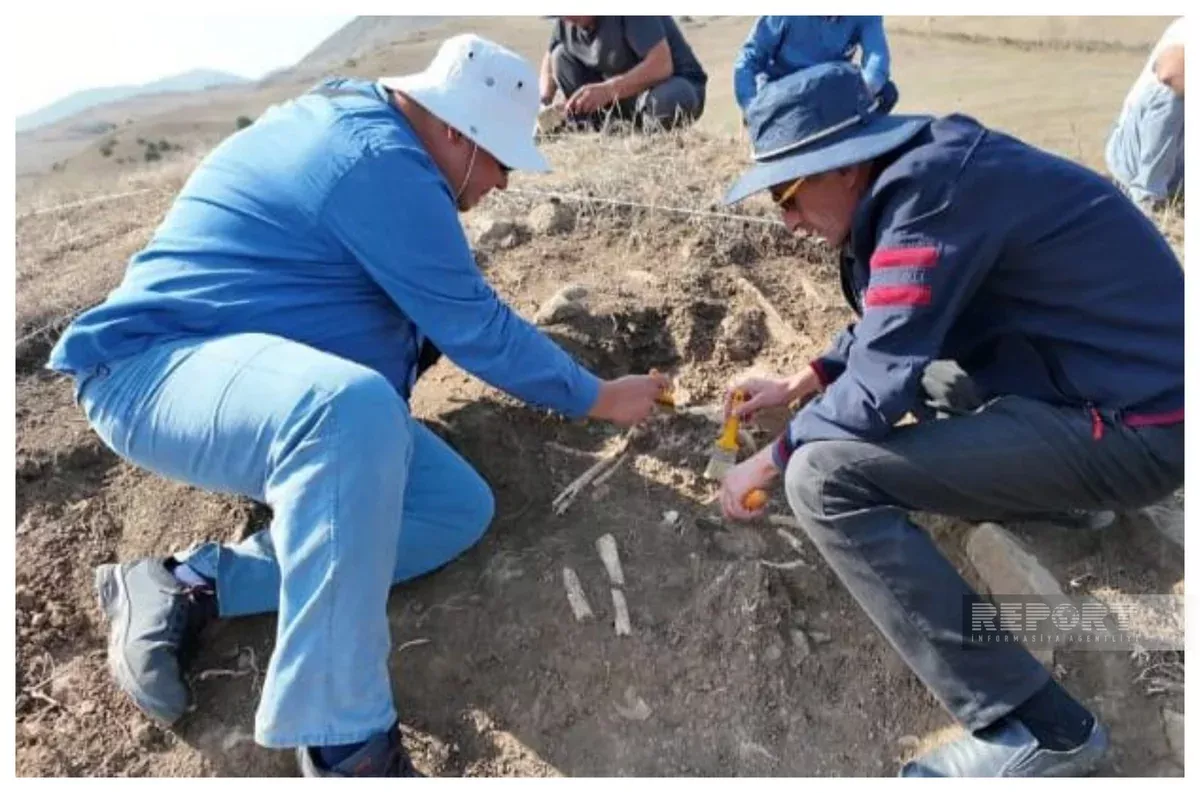
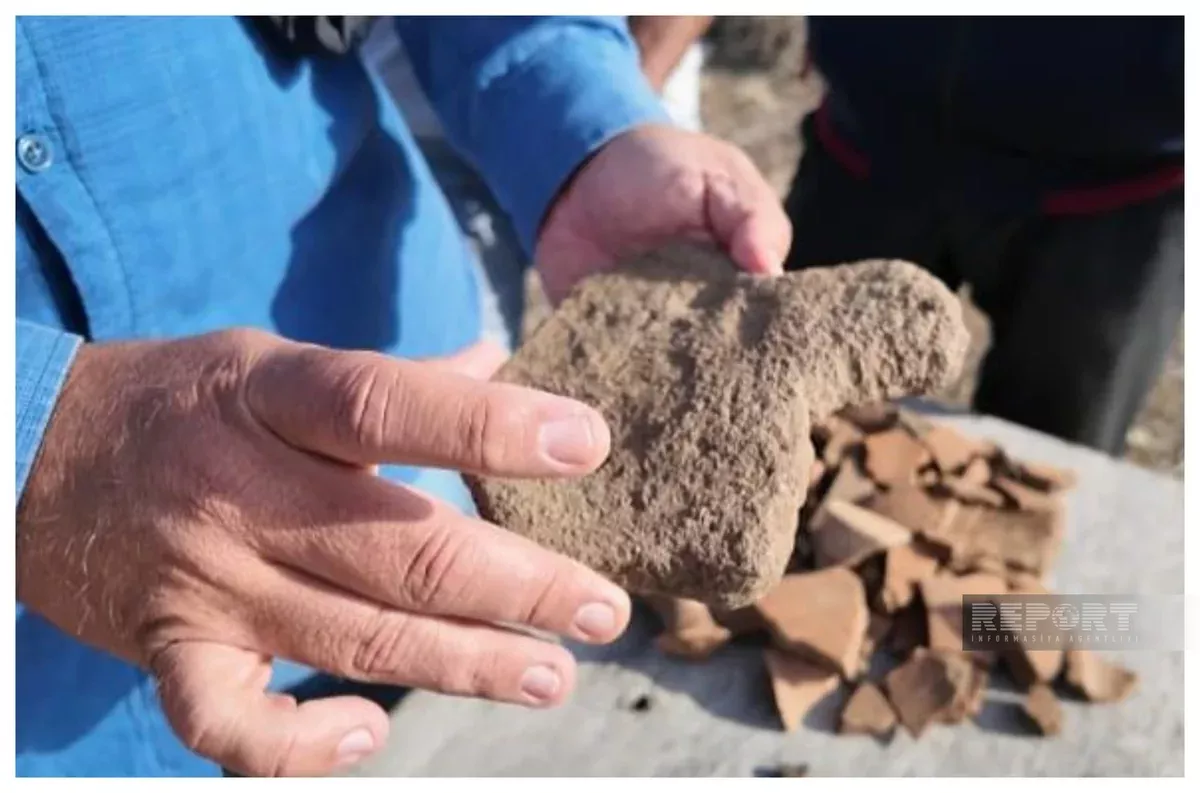
Archaeologists excavating an ancient burial mound in Azerbaijan’s mountainous Yardimli district have uncovered human remains believed to belong to a young individual, along with pottery and objects thought to have been used in rituals.
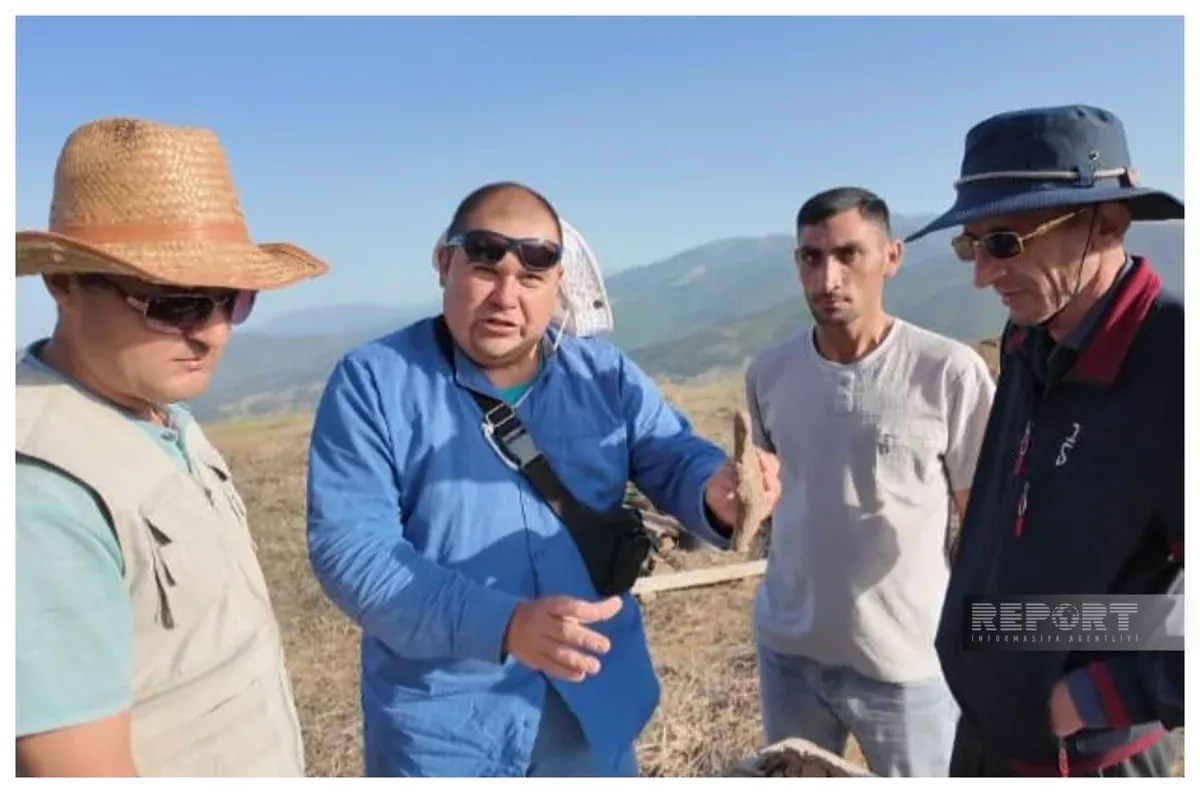
Anar Aghalarzada, a leading researcher at the Institute of Archaeology and Anthropology of the Azerbaijan National Academy of Sciences (ANAS), said the discoveries at the Ogu kurgans could provide new insights into the burial traditions, daily life and beliefs of communities that lived in the region during the Late Bronze and Early Iron Ages, Caliber.Az reports via local media.
A 12-member archaeological team began excavations at the site in late August. Human skeletal remains and pottery fragments were discovered approximately 40 centimetres below the surface.
Aghalarzada said the main objective of the research is to examine the funerary practices of ancient highland communities, as well as their production methods, crafts and everyday life.
Preliminary evidence suggests that the kurgan was used between the 10th and 9th centuries BC, although archaeologists say deeper excavation could reveal evidence of even earlier burials.
Anthropologist Dmitry Kirichenko, also from ANAS, said an initial examination indicates that the remains belonged to a young person, possibly a woman.
The researchers also identified dental calculus and physical stress markers on the bones, which may indicate that the individual was highly active and accustomed to moving through mountainous terrain.
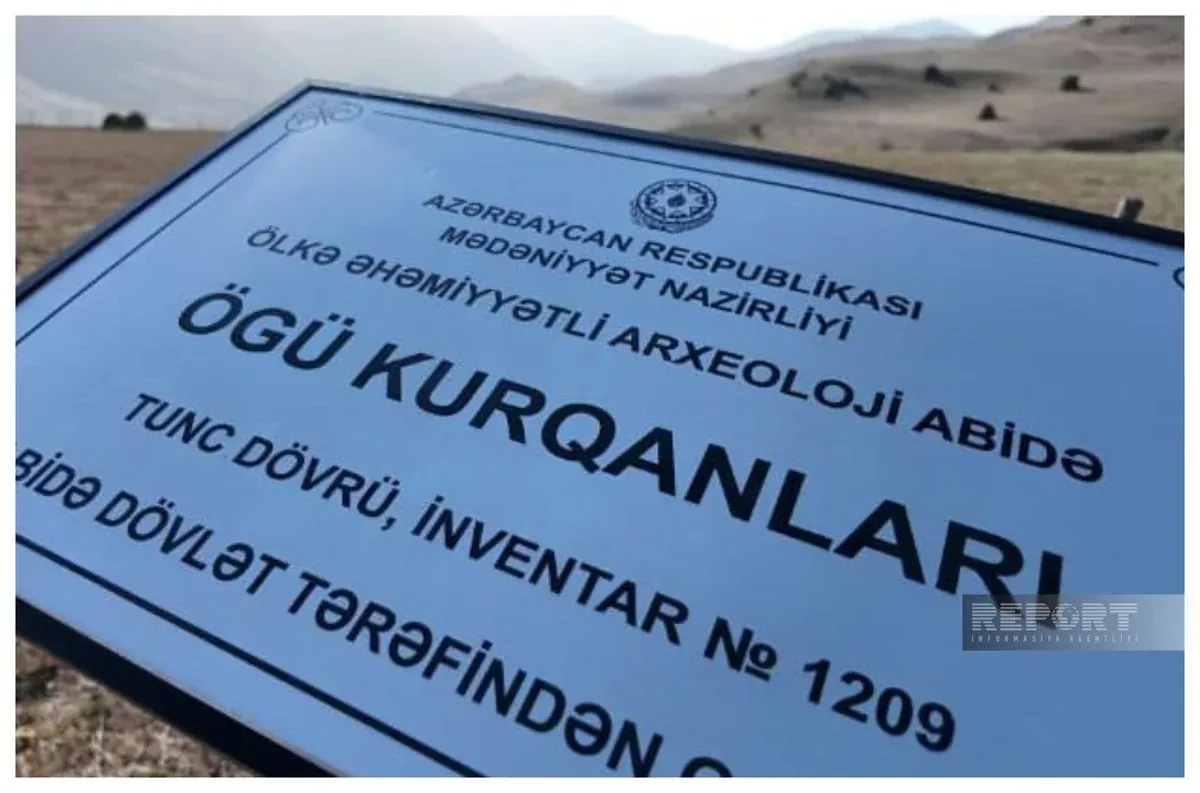
The Ogu kurgan is particularly significant because it is the first large-scale burial mound to undergo archaeological study in the highlands of the area. Around 10 similar burial mounds have been identified nearby.
In addition to the human remains and pottery, archaeologists discovered a stone tool and a thin stone slab that they believe may have had a ritual purpose.
Researchers expect the findings to contribute new evidence about the culture and social practices of communities inhabiting the region during the Late Bronze and Early Iron Ages.
Excavations will continue, with the duration of the work depending on the size of the site and the nature of further artefacts discovered.
By Sabina Mammadli







 editor@caliber.az
 +994 55 444-88-98
 Азербайджан, Баку, ул. Низами, 203, Af Business House, 5-й этаж