










Belgium, France and Europe’s unfinished colonial legacy Empires gone, influence lives on
On August 23, the world marked the International Day for Remembrance of the Slave Trade and its Abolition. Established at the initiative of UNESCO, the date commemorates the uprising of enslaved people on the island of Saint-Domingue, now Haiti, on the night of August 22–23, 1791. The revolt marked a turning point in the struggle to dismantle the global system of slavery.
Unfortunately, not all European states have fully come to terms with their colonial past. France, for example, continues to pursue what critics describe as a neocolonial policy in Africa, while Belgium’s colonial history remains the subject of controversy, including debates over restitution and the display of objects held at the AfricaMuseum.
An article published by Belgian outlet The Brussels Times focuses on an exhibition that has opened at the House of European History in Brussels. Rather than portraying independence as a complete break with the past, the exhibition examines what remained after colonial rule formally ended.
The article notes that for Haitians, the price of independence proved far higher than many might imagine. To secure recognition from France, Haiti was required to pay compensation amounting to 150 million gold francs until 1947. Unable to meet the demand, the country took out loans from French banks, giving rise to what became known as the “double debt.” According to The New York Times, Haiti ultimately paid an amount equivalent to approximately $560 million in today’s money.
Haiti, however, was not the only former colony forced to bear the economic consequences of colonialism, the author argues. Indonesia made debt payments to the Netherlands, Congo inherited debts associated with Belgian rule, while countries across West and Central Africa remained tied to the French currency through the CFA franc. Similar forms of financial dependence also emerged in the Caribbean and the Americas.
The author stresses that the exhibition is not solely concerned with the financial burden left by colonialism. It raises a deeper question: to what extent are former colonies genuinely free to make their own decisions and chart their own course in a world that continues to be shaped by Western institutions and standards?
The material draws three main conclusions about Europe’s colonial legacy. First, colonialism was not a marginal episode but a central part of European history. Second, empire affected not only the countries that formally possessed colonies but Europe as a whole, which benefited from the system. Third, colonialism became embedded in family histories and continued to shape subsequent generations.
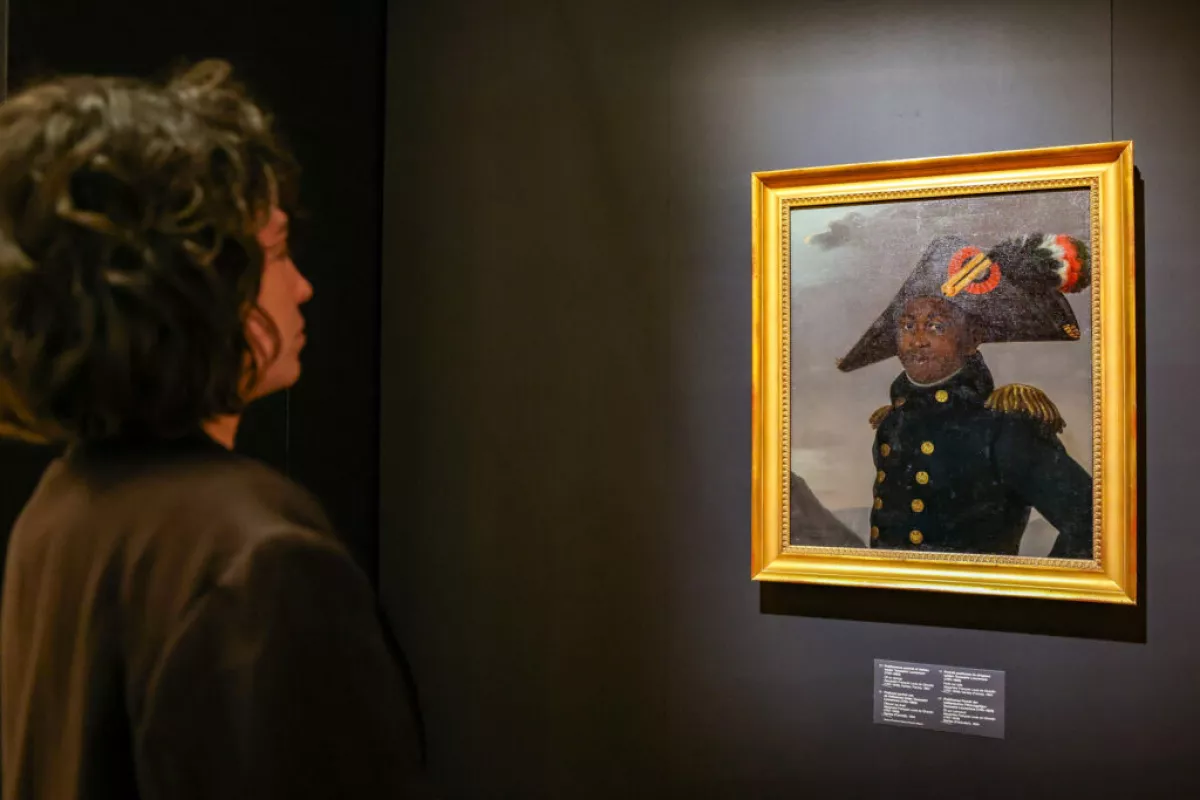
The author argues that the location of the exhibition gives this point particular significance. The House of European History is located in Parc Léopold, behind the European Parliament’s Altiero Spinelli building, and was opened at the initiative of the European Parliament in 2017 to explore European history and integration.
The article goes on to argue that Europe has yet to fully reconcile itself with its colonial past. In Belgium, colonial history remains the subject of controversy, including debates over statues of King Leopold II, the restitution and display of objects held at the AfricaMuseum, and the limited place colonialism occupies in schools and public institutions.
The author believes the consequences extend far beyond museums and memorials. In both former colonies and European societies, colonial history continues to shape debates over racial inequality, economic dependence and political representation. Colonialism helped create structures through which wealth, opportunities and power remain unevenly distributed.
The piece also emphasises that enslaved and colonised peoples were not merely victims, but leaders of resistance and creators of political, intellectual and cultural movements. According to the author, their influence can be traced through Brazilian samba and frevo, jazz and reggae, Garifuna traditions in Central America and the Caribbean, as well as Cuba’s Tumba Francesa, which developed through the arrival of migrants from Saint-Domingue.
The article raises practical questions about the present: Who holds positions of power? Whose history is taught? Whose knowledge is recognised? And who gets a seat at the decision-making table? The author argues that these questions go far beyond the issue of restitution. They concern the representation of African, Caribbean and other former colonial countries, as well as their ability to independently determine their own development priorities.
“From Portugal and the Netherlands to Belgium, France and the United Kingdom, disputes over education, restitution, responsibility and representation remain unresolved. The persistence of these debates, and of the inequalities connected to them, suggests that Europe’s colonial past is not only a matter of memory. It remains part of the present,” the author concludes.
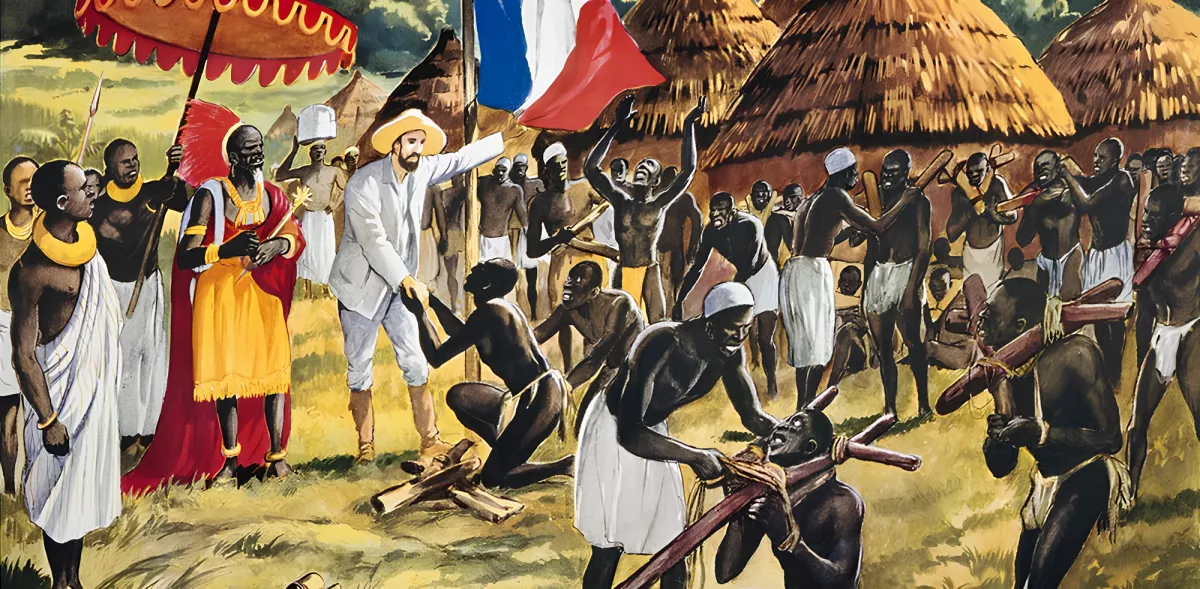
Meanwhile, an article published by Rwanda’s Kigali Today examines a dispute over the historical presence of the Banyamulenge, an ethnic Tutsi community, in eastern Congo and the role of colonial archives in determining the historical belonging of different communities. The author refers to a Belgian administrative document from 1909 that is now being used in debates over which population groups can be considered indigenous to the region.
The author acknowledges that the document is likely authentic, but stresses that it was a working colonial administrative list, not a citizenship register, a scientific census or a legal instrument determining which communities were entitled to be considered indigenous to Congo. It therefore cannot be treated as a final arbiter of contemporary questions of citizenship and belonging.
According to the article, colonial archives have effectively become a kind of “court” in contemporary African political disputes. If a community is mentioned in a document, this may be presented as evidence of its historical presence in a particular territory; if it is not mentioned, the absence of a record is sometimes interpreted as evidence that the community itself did not exist there. The author considers this approach flawed, noting that colonial surveys were incomplete and primarily designed for administrative purposes.
The history of the region’s population, the author argues, cannot be reduced to the administrative categories created by Belgian officials. Migration patterns, oral traditions, links between communities and other forms of historical memory also played a role.
Using the Banyamulenge as an example, the article demonstrates how complex questions of origin and historical presence are in South Kivu and the Great Lakes region. The author argues that the history of the region’s communities cannot be established through a single document.
For this reason, the question of “who was here first?” is described as a dangerous political tool. Depending on the answer, it can be used to determine claims to land, traditional authority, political representation and citizenship.
The author proposes separating the historical question of the origins of communities from the contemporary question of citizens’ rights. Historical claims, in the author’s view, must indeed be investigated using colonial archives, oral testimony, archaeology, linguistics, demography and genealogies. But contemporary human rights, citizenship, land rights and political representation should be determined by current law, rather than by which group can produce the oldest document.







 editor@caliber.az
 +994 55 444-88-98
 Азербайджан, Баку, ул. Низами, 203, Af Business House, 5-й этаж