










Target: Yerevan AnewZ documentary
The main storyline of the new documentary film by the AnewZ television channel, “TARGET: Yerevan”, is not analysis or commentary from invited experts, but a covert recording in which former Chief Prosecutor of the International Criminal Court, Luis Moreno Ocampo, in his own voice, explains why he became involved in the South Caucasus game. According to his own admission, he analysed the situation after the signing of the Prague agreements, concluded that the issue of so-called “Artsakh” was closed and buried, and decided to make a profit.
This position, published by the Minval Politika portal, became the structural backbone of the entire AnewZ investigation. What follows—methods, actors, budgets, routes—is merely a breakdown of how exactly a man who once held a senior position at the International Criminal Court set out to undermine the peace process between Armenia and Azerbaijan.
The AnewZ investigation is structured not in the form of a conventional documentary long-read with invited analysts, but in an evidence-based format grounded in primary audio materials. The footage featuring Ocampo, Eduard Melikyan — the political coordinator of billionaire Samvel Karapetyan — and related figures was obtained from a dataset published by Minval Politika and assembled here for the first time into a coherent narrative.
What previously existed as scattered episodes is transformed in the film into a continuous chronology of an operation with named participants, financial figures, recruited operatives, and clearly defined objectives.
According to Ocampo’s own account, his setup consisted of three young individuals managing social media, and a wave of 6,500 mobilised activists instructed to publish daily hashtags. The selection was calculated: “COP29”, “Stop the Genocide”, “Free Armenian Hostages”.
The underlying logic was that mass, synchronised activity on social networks would push the issue into the mainstream agenda and, through it, exert pressure on European policymakers. This was not a by-product of diaspora activism, but a deliberately designed information operation with a funnel of influence running from Telegram channels and social platforms to editorial offices and then to decision-making circles in Brussels.
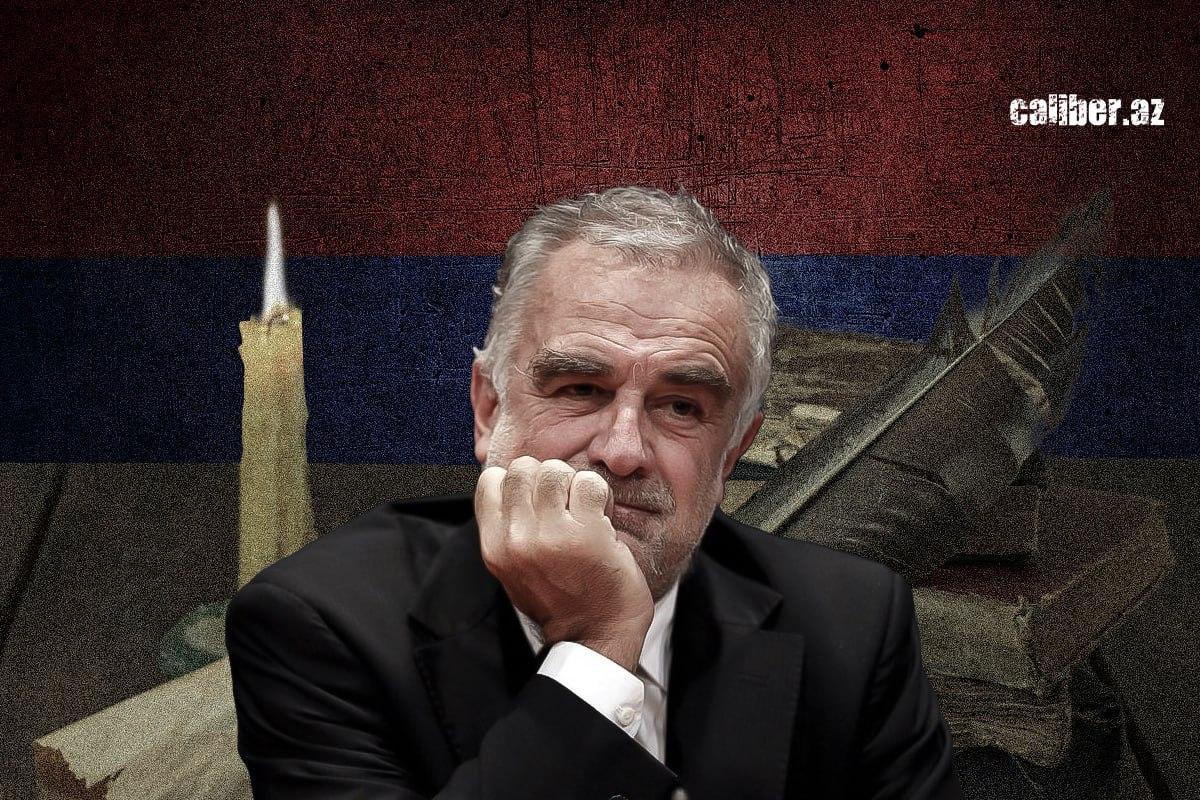
The most disconcerting detail obtained from the recordings is Ocampo’s claim that a former legal adviser to Josep Borrell had been working in the European Parliament and, according to him, was placed on the campaign’s payroll in order to directly pressure European Commission President Ursula von der Leyen.
If this part of the testimony is confirmed — and AnewZ reportedly possesses audio material in which it is stated — it would point to a recruited agent of influence operating within a European legislative structure, working in the interests of a network allegedly financed by Russian-Armenian capital.
In terms of the depth of penetration into the institutional fabric of Brussels, this would be far more serious than previously known cases of lobbying.
The source of funding is presented with the same level of specificity. In the recordings, Melikyan refers to his employer — Karapetyan — as the “big boss” and notes that the party has “too much resources.” The “big boss” himself, according to the same recording, has a “bigger boss” above him in Moscow.
This hierarchy leaves little room for ambiguity: the Armenian opposition structure, which includes Ocampo, Melikyan, lobbyists in Washington, and diaspora activists, is, at its upper level, linked to Russian political interests. Karapetyan appears here as a node where capital accumulated in Russia, a Russian passport, access to Moscow’s political circles, and a portfolio of assets in Armenia converge — including electricity networks through which he has for years maintained leverage over the country’s internal dynamics.
It is precisely this asset that has now become the legal focal point of proceedings against Karapetyan. In Armenia, a series of criminal cases is being investigated related to his control over the state electricity networks. Formally, the case appears economic in nature, but the political logic is clear: Prime Minister Nikol Pashinyan is stripping the “big boss” of his internal leverage at the same time as he attempts to mobilise a political infrastructure against the prime minister through financial means.
This is not repression or a witch hunt, as the opposition portrays it, but rather an asymmetric response by the state to an asymmetric attack: one side operates with money and networks, the other with law and prison sentences.
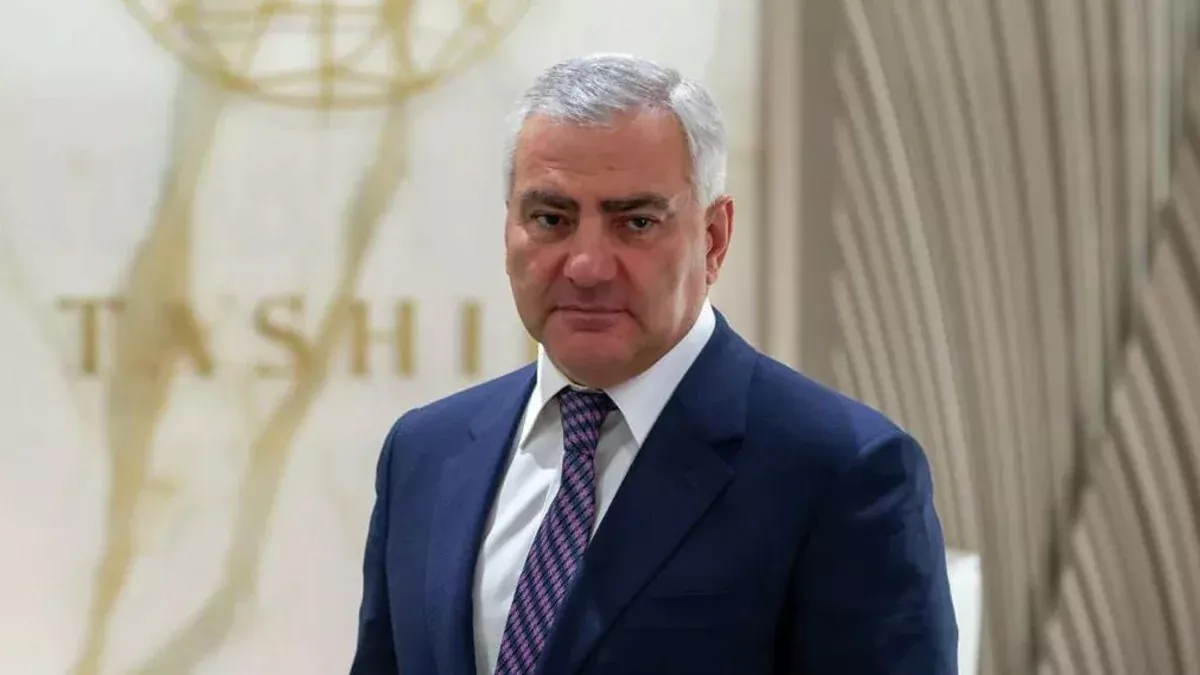
In parallel to the European component, an American branch of the structure is presented, this time personified by the figure of Ara Papyan — a former Armenian ambassador who now operates in Washington as a lobbyist.
According to the recordings, Papyan coordinated with Ocampo a strategy of pressure on U.S. senators, and issues of financial and electoral support in exchange for political loyalty were discussed explicitly.
This scheme has its own institutional infrastructure: the Armenian National Committee of America (ANCA), ideologically closely aligned with the Armenian Revolutionary Federation (Dashnaktsutyun), has long operated in Washington as a separate political actor.
Papyan fits into this structure as a coordinator synchronising actions with the European part of the operation — ensuring that pressure on Washington and pressure on Brussels proceed in the same rhythm.
Originally, according to the logic of the recordings, the primary target was May 2026, when the European Political Community summit and the EU–Armenia summit were held in Yerevan, during which a coordinated protest and media campaign was planned.
That window has now passed, and the opportunity has closed. As a result, the entire propaganda machine has been reoriented toward the upcoming parliamentary elections and a possible constitutional referendum.
The current scenario is designed to mobilise the street under slogans of defending the “rights of the people of Artsakh”, create a constitutional deadlock, and secure the so-called blocking third of parliamentary mandates that would allow the peace treaty with Azerbaijan to be stalled.
The emergence of a pro-Russian coalition in power in Yerevan is presented as the end point of this scenario.
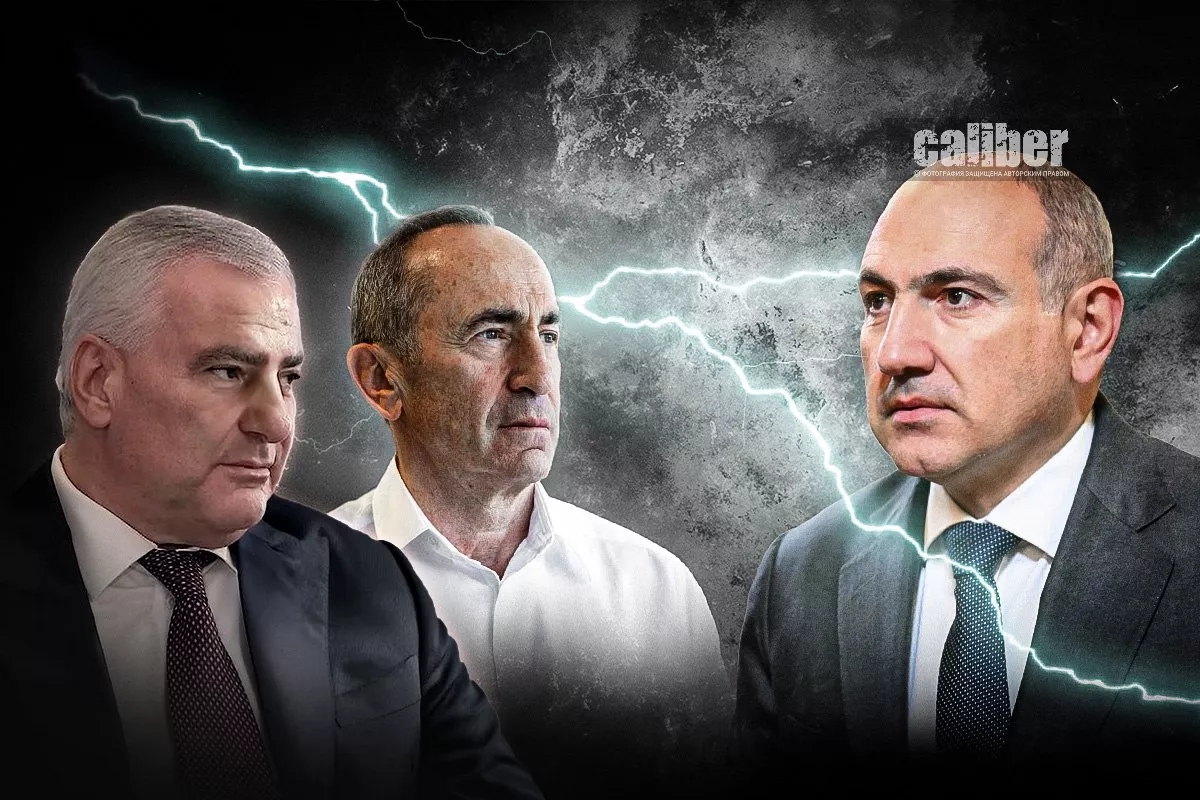
This picture has an obvious counterargument: Armenian dissatisfaction with Pashinyan is real — the accusations of “traitor” are voiced by living people, not paid actors. The film does not deny this.
However, it shows how this discontent becomes raw material for an external operation: how radical sentiments are amplified and brought to a political boiling point through covert media manipulation, agenda injection, and the selective amplification of opinion leaders.
Russia, in this framing, does not create dissatisfaction in Armenia — it captures it and repackages it into a tool. Without conflict in the South Caucasus, Russia’s presence in the region gradually loses strategic relevance.
And that is precisely why the conflict must be kept alive — just long enough for Moscow to remain “indispensable.”
A separate chapter of the operation concerns the Armenian Church. In the same recordings, it is stated that Karapetyan generously financed church structures, thereby reinforcing the loyalty of their leadership to his political positions.
As tensions escalated, the head of the Church turned to him personally for protection — a gesture that effectively shifted the hierarchy from public neutrality into a position of dependence on an oligarchic patron.
Pashinyan’s response was uncompromising: the Prime Minister moved toward the arrest of bishops whom he believed were acting in Moscow’s interests. The episode is presented in the film without rhetorical embellishment — simply as part of the factual matrix in which the Church becomes another arena of a hybrid campaign.
Pashinyan himself has long ceased to refer to his opponents in general terms. He named Karapetyan and Kocharyan publicly and warned that they were living through the final month of their political lives and should expect to spend the coming years in prison.
For the Armenian voter, the choice is narrowed down to a stark binary: a difficult peace pursued by Pashinyan, or a return to conflict promised by the old elites, financed by a country unwilling to let Armenia go.
“TARGET: Yerevan” makes this choice visible not through essayistic interpretation, but through authentic recordings in which the organisers of the scenario themselves explain why they came and who pays them.
The direct speech assembled by AnewZ into a single narrative turns the film into a document — one that, in the coming months, will be revisited by anyone seeking to understand what lies behind Armenia’s 2026 electoral season.







 editor@caliber.az
 +994 55 444-88-98
 Азербайджан, Баку, ул. Низами, 203, Af Business House, 5-й этаж