










Can “Mecca Pact” become new centre of military power? Shereshevskiy examines three-nation strategic alliance
The “Mecca Pact” signed by Saudi Arabia, Türkiye and Pakistan on August 7 continues to dominate international attention. The nature of the agreement has prompted many observers to speculate about the emergence of a Middle Eastern equivalent of the North Atlantic Treaty Organisation — a so-called “Muslim NATO.”
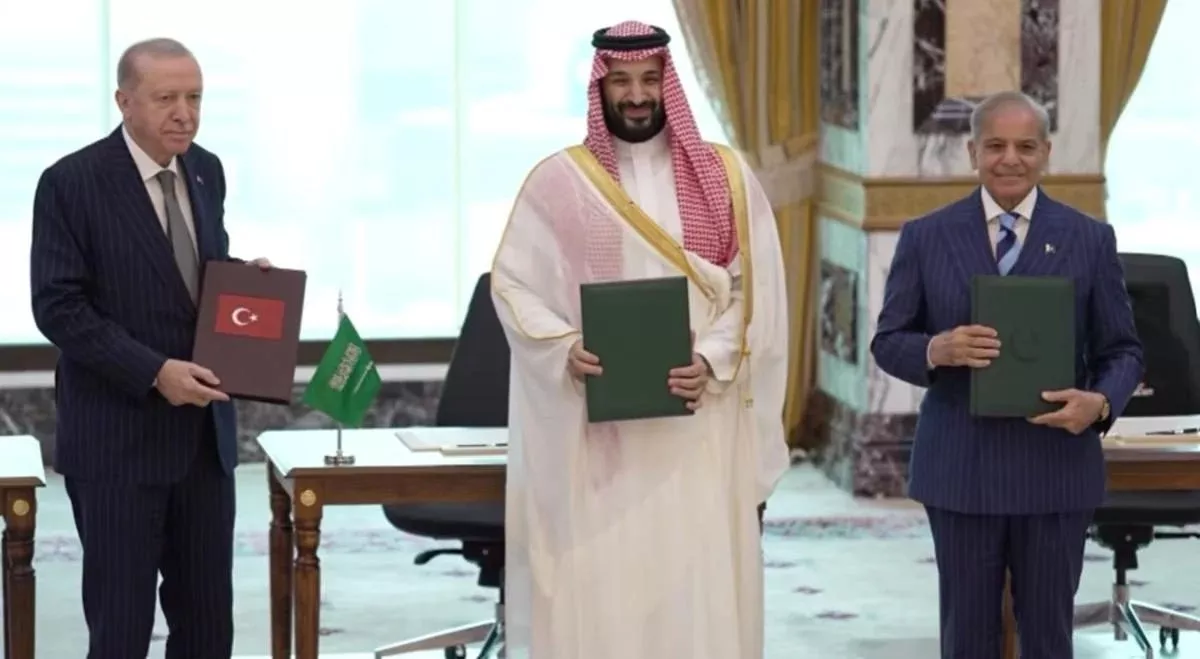
The document establishes a principle of collective defence under which an attack on any one of the three signatories is to be treated as aggression against all three. However, it does not specify concrete mechanisms for providing assistance in such a situation. This raises a broader question: What does this new defence configuration mean for the Middle East as a whole?
Saudi Arabia is one of the wealthiest countries in the Gulf and provides substantial assistance to other states. It is also home to Islam’s principal holy sites, giving the Kingdom a claim to a leading role in the Muslim world. The foundation of its economic power is oil exports, although these have been severely affected by the war in the Middle East, which has effectively blockaded the Strait of Hormuz and contributed to instability in the Red Sea.
At the same time, Saudi Arabia possesses a powerful air force but does not have ground and naval forces of comparable strength.
Türkiye and Pakistan, meanwhile, possess capabilities that Saudi Arabia lacks. Türkiye has the second-largest army in NATO and a rapidly expanding defence-export sector, including the production of drones, warships, tanks and other military equipment.
Pakistan, for its part, maintains an army of nearly 700,000 personnel and is the only Muslim-majority state that belongs to the world’s “nuclear club.”
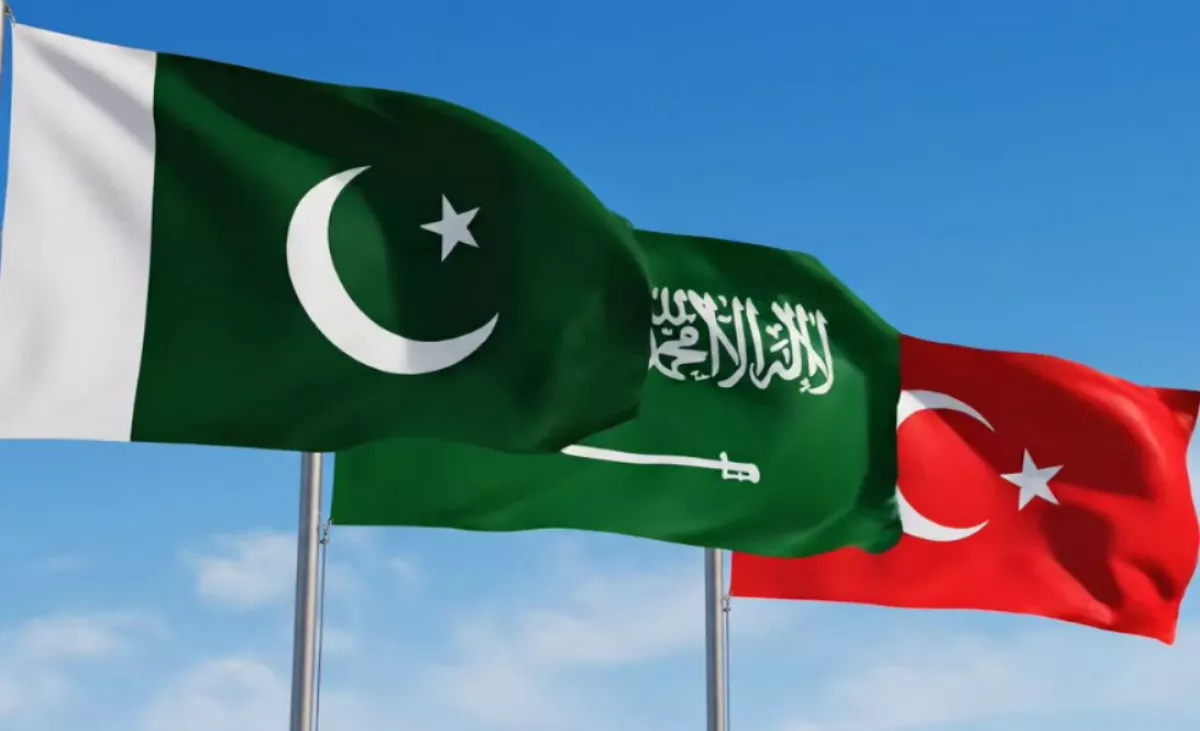
Apparently drawing on these factors, experts at The National Interest argue that the Mecca agreement could alter the military balance of power in the Middle East as well as the global arms market. They suggest that the combination of Turkish defence industry capabilities, Saudi investment and Pakistan’s military expertise could, over time, create a powerful new cluster of defence companies.
According to the analysts, each of the three countries has its own area of specialisation: Türkiye brings advanced technologies, Saudi Arabia provides substantial financial resources, while Pakistan contributes manufacturing, maintenance and logistical capabilities.
Israeli analysts, meanwhile, note that the three countries could eventually establish a joint export platform in which each would focus on its respective area of specialisation.
Indian media and experts, however, view the agreement as a direct threat, arguing that it would give Pakistan even greater access to Saudi financing and Turkish technology. They have called for “deterrence, innovation and deeper ties with the Gulf states.”
Chinese media have described the alliance as a combination of “money, weapons and nuclear capabilities,” seeing in it an opportunity for regional countries to become more self-reliant in terms of security.
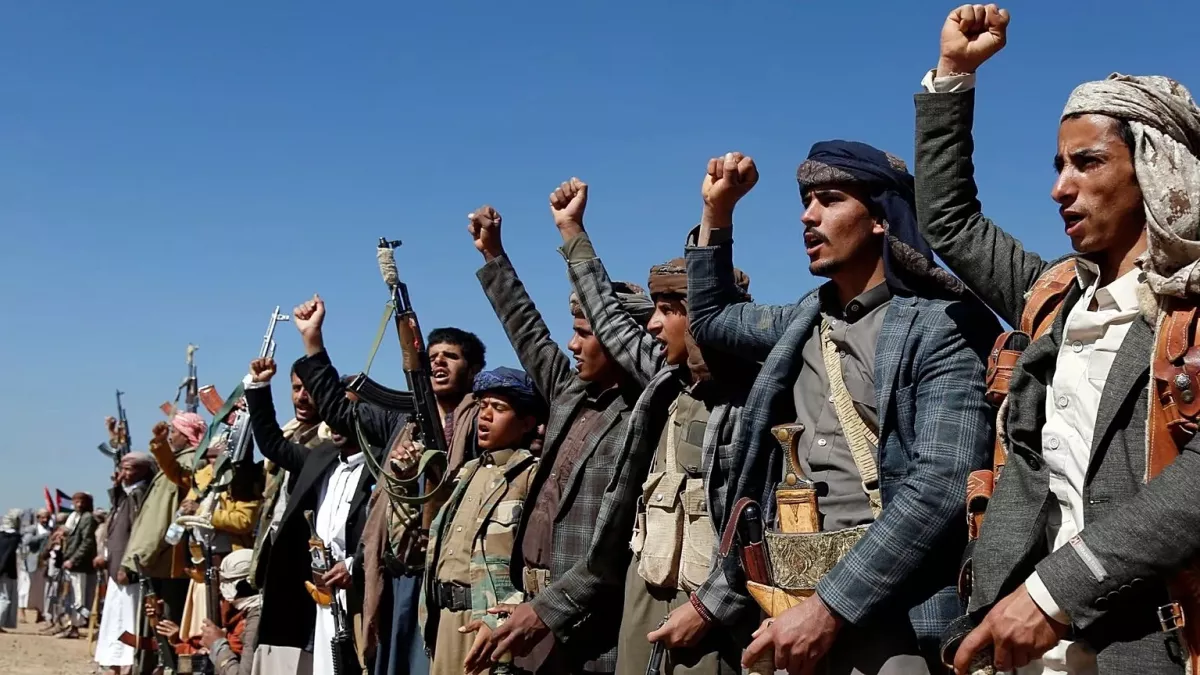
At the same time, the situation in the Middle East, including developments in the Red Sea, is deteriorating by the day. According to Reuters, Saudi oil exports through the Red Sea are increasingly disappearing from tracking systems as tankers switch off their tracking signals to avoid attacks by the Houthis. The group has announced that it is imposing a maritime embargo on Saudi Arabia over Riyadh’s cooperation with the United States.
According to data from analytics firm Vortexa, loading activity at the Yanbu oil terminal on Saudi Arabia’s Red Sea coast fell over the week of August 3 from 2.71 million barrels per day to 2.38 million barrels per day. Kpler recorded an even sharper decline, from 4.04 million barrels per day to 1.78 million barrels per day.
At the same time, reports indicate that Riyadh is redirecting oil supplies in an effort to completely bypass the dangerous Bab el-Mandeb Strait, where the transit of Saudi crude has fallen almost to zero. To achieve this, Saudi Arabia is making extensive use of Egypt’s SUMED pipeline. According to Kpler, shipments from the Sidi Kerir terminal, the Mediterranean endpoint of the SUMED pipeline, surged to a record 2.4 million barrels per day in early August.
However, the Houthis continue to intensify their attacks. In recent weeks, Saudi tankers have come under attack in the Red Sea, while drone strikes against oil infrastructure inside Saudi Arabia have also been reported, including attacks on refineries and other oil-processing facilities. Overall, the Houthis claim to have carried out dozens of operations against Saudi targets in recent weeks.
The area affected by the attacks is also expanding. For example, two U.S. tankers were recently attacked in the Egyptian port of Damietta, although neither Iran nor the Yemeni Houthis has claimed responsibility for the incident.
The objective of Iran and the Iran-led “Axis of Resistance,” which includes the Houthis, Hezbollah, Hamas and armed groups operating in Iraq, appears clear: to restrict shipping through these strategically important waterways. Such disruptions would inevitably destabilise global energy supplies and, in turn, drive fuel prices higher both worldwide and in the United States. The latter would work to Tehran’s advantage in its confrontation with Washington.

Saudi Arabia cannot remain under sustained attack indefinitely. At some point, the other signatories of the Mecca Pact will have to respond — either by taking action to demonstrate that the alliance has real military substance, or by making clear that they are unwilling to become directly involved and have other priorities.
But there is an important reality to consider. In the Middle East, military capability — and, crucially, the willingness to use it — remains the decisive factor, at least for now.







 editor@caliber.az
 +994 55 444-88-98
 Азербайджан, Баку, ул. Низами, 203, Af Business House, 5-й этаж