










From fragmentation to connectivity: How Azerbaijan is reshaping the region’s Geography Overview by Teymur Atayev
International forums held in Azerbaijan serve not merely to highlight global challenges and risks, but also to offer concrete ways to overcome them successfully. The 2nd International Investment Forum was no exception, with its agenda centred on rebuilding trust in a fragmented world by presenting the South Caucasus as a pillar of global connectivity and investment stability.
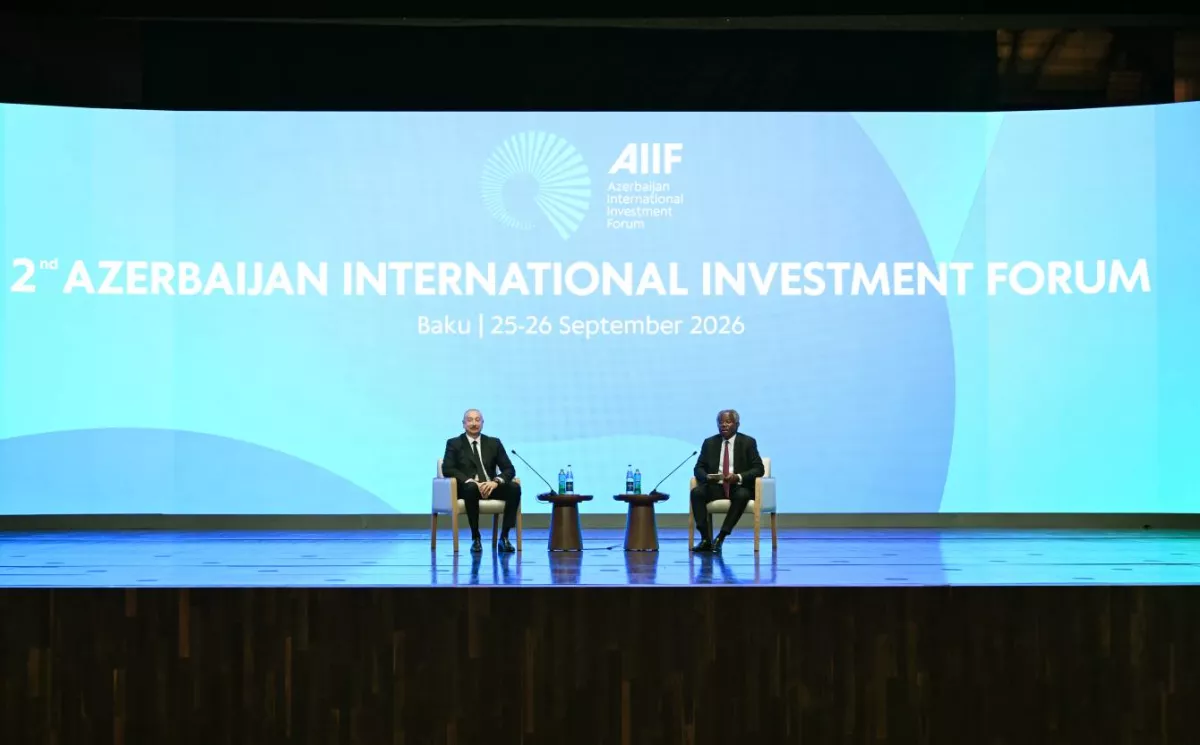
The world today has indeed taken on a fragmented character. Some interpret this primarily in terms of blocs, albeit not necessarily military ones. Others focus more on the economic fragmentation of the world. In any case, the broader pattern of developments at this stage of history is clear to everyone.
The subtle point, however, lies in Azerbaijan’s experience, which clearly demonstrates how this very fragmentation can be transformed into regionalisation of a fundamentally different kind. And this is by no means about promoting some artificial concept on a global scale. Quite the opposite is happening: Baku is confidently pursuing a new approach to transforming the fragmentation experienced by the world into a form of regionalisation that, if one may put it this way, expands geography.
Some readers may be surprised: how can geography be expanded or narrowed? And they would be right. Geography is not subject to such changes. But that is only if it is not viewed from the perspective of transport connectivity and interdependence, which, according to the words of Azerbaijani President Ilham Aliyev delivered at the 2nd International Investment Forum, have a broad reach.
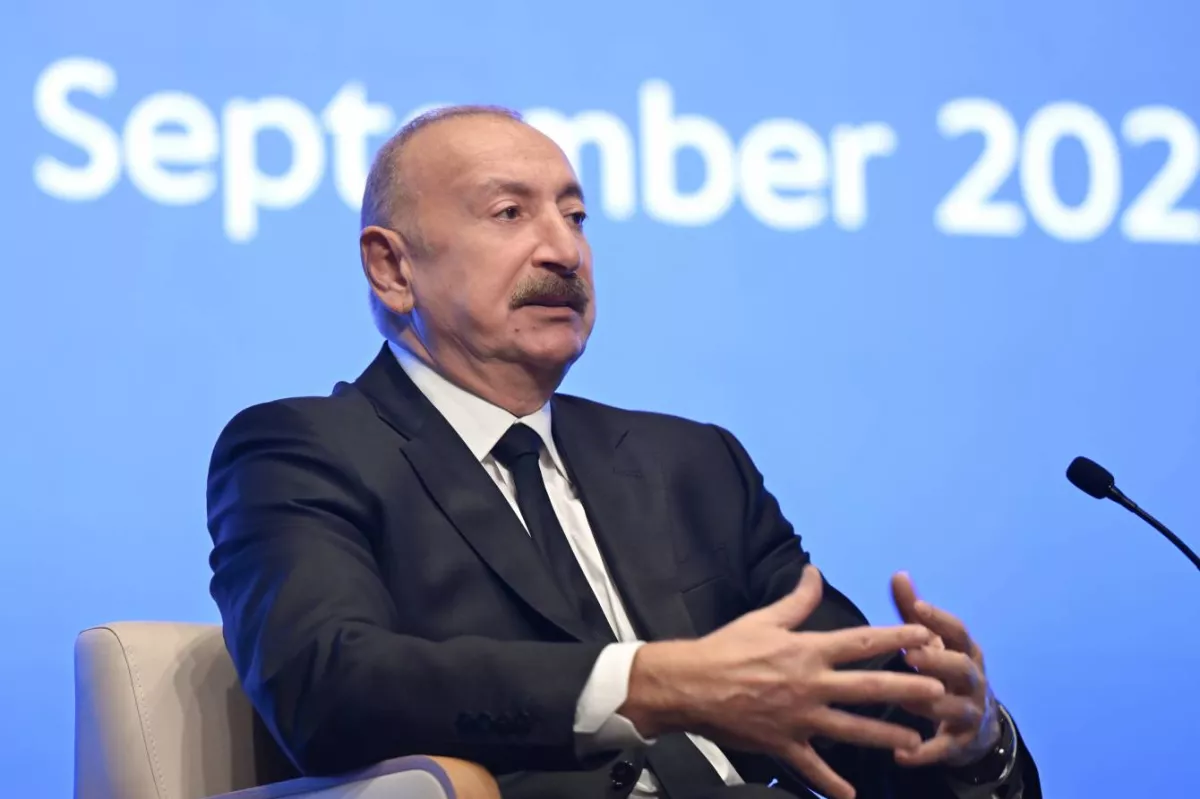
In the head of state’s formulation, logistics, transport and connectivity themselves become some of the most important drivers of the economy — areas in which Azerbaijan has been taking the necessary steps to develop for many years. This has resulted in the creation of physical infrastructure that enables investors to see for themselves that the country has a genuine business climate and encourages them to invest in the implementation of various projects.
No less significant has been Baku’s efforts to build special relations with neighbouring countries. In this context, President Ilham Aliyev has repeatedly stressed that, given Azerbaijan’s lack of access to the open sea, it is important not merely to define itself as a transit country, but to become one in reality. And this cannot be achieved without the necessary relations not only with neighbouring states, but also with their neighbours — particularly against the backdrop of the disruption of traditional supply chains, which has demonstrated the risks to which major routes of regional and global significance can be exposed.
This approach has become one of the defining factors behind Baku’s efforts to strengthen its position as a state that not only possesses natural resources but can also guarantee their smooth delivery to any destination around the world. Hence Baku’s policy of protecting the country’s national interests without harming third countries — based on transparency, openness and predictability, and, most importantly, on respect for all the norms and principles of international law, which are routinely violated by many countries that regard themselves as first among equals.
This raises the question: is this vision of the world articulated by Azerbaijan not a prototype of precisely the kind of regionalisation that expands the conventional understanding of the term “geography”? In this model, a single region encompasses not only countries that share borders, but also states located on different continents. Against this backdrop, transport, logistics and route connectivity emerge as a paradigm for bringing countries together around shared economic goals. And today, it is increasingly clear that the economic dimension effectively becomes a political configuration. As Azerbaijan’s experience demonstrates, with the country situated at the crossroads of the East–West and North–South routes, a “line of connectivity” of this kind emerges as a crucial link in fostering understanding between civilisations and cultures.
So let us be objective. Had Baku not taken the steps outlined above, could Azerbaijan, whose 2026 state budget provides for revenues of approximately $22.71 billion and expenditures of $24.53 billion, have achieved the signing of 23 documents at the 2nd International Investment Forum covering projects with a total value of $10.8 billion? Taking into account the initiatives announced as part of Baku Energy Week in June, the figure rises to almost $17 billion.
The question is, of course, rhetorical, but it offers a different perspective on President Ilham Aliyev’s repeated statements about Azerbaijan’s readiness to share its experience with the world — an experience of building, bringing people and countries together, and creating a new format of relations with neighbours that extends far beyond a shared geography.
This is why Azerbaijan today constitutes a force on the international stage, reshaping the way fragmentation is viewed through its own decisions and presenting the world with a new interpretation of regionalisation. This, in turn, strengthens the country’s position as a serious middle power.







 editor@caliber.az
 +994 55 444-88-98
 Азербайджан, Баку, ул. Низами, 203, Af Business House, 5-й этаж