










A new route for capital: Azerbaijan shifts focus to the non-oil sector Overview by Khazar Akhundov
The Azerbaijani government’s planned “Socio-Economic Development Strategy for 2027–2030” is set to focus on accelerating industrialisation, advancing agricultural reforms, and developing the economy through digital and green technologies. These measures are expected to give fresh impetus to the non-oil sector and strengthen its role as a key driver of economic growth. Achieving these goals, however, will require more than public funding. It will also depend on attracting foreign direct investment (FDI) and bringing in the expertise and know-how needed to develop the non-resource sector. Statistics for January–August 2026 point to some positive developments in this area, although the share of FDI going to the non-oil sector remains relatively modest.
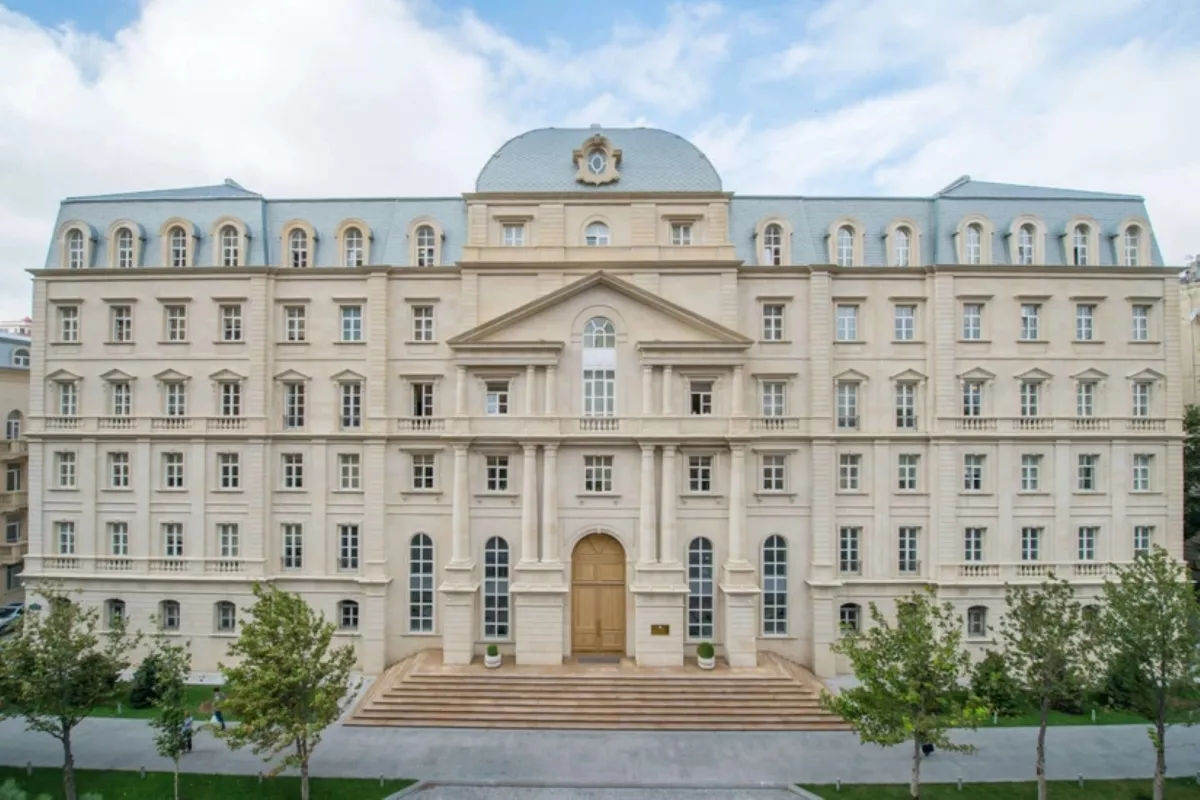
In a document published by the Ministry of Finance several days ago, titled “On the Preliminary Indicators of Azerbaijan’s Consolidated and State Budgets for 2027”, the need to increase investment in industries focused on innovative development is identified as one of the key priorities, alongside support for the non-oil industry, agriculture, tourism and other traditional sectors. In particular, the government plans to accelerate digitalisation, promote the adoption of artificial intelligence (AI) technologies, establish data centres, and advance the green agenda across the national economy and financial sector.
These plans form part of a broader policy aimed at developing Industry 4.0 and making the non-oil sector the main driver of economic growth. As part of this strategic objective, non-oil exports are expected to increase 1.8-fold over the next few years, while non-oil GDP is projected to grow 1.3-fold and the private sector’s share of GDP is expected to rise to 88%.
Achieving these goals is closely linked to increasing investment in the economy’s most promising import-substitution and export-oriented sectors. In the aforementioned document, the Ministry of Finance forecasts a 2.4% increase in investment in fixed capital in 2027. Meanwhile, average annual growth in capital investment in Azerbaijan’s economy is projected to reach 2.2% over the 2027–2030 period.

However, this level of investment is not sufficient to implement large-scale reforms or shift the country’s economic and investment policy away from reliance on its oil and gas potential towards an economic model based on the production of high-value-added goods. In other words, Azerbaijan now faces a far more complex challenge: attracting FDI directly into advanced segments of the non-oil economy in order to achieve a technological breakthrough.
It is worth noting that total FDI inflows into Azerbaijan’s economy exceeded $6.595 billion in 2025, down 6.4% from the $7.3 billion recorded in 2024, including the repatriation of investments. According to the Central Bank of Azerbaijan’s report, “Foreign Direct Investment Attracted into Azerbaijan’s Economy and Directed into the Foreign Economy in the First Half of 2026”, foreign investment inflows amounted to $3.667 billion in the first half of this year, an increase of 13.8%.
This growth points to a strengthening of positive trends in the domestic economy, with FDI accounting for around 25.8% of total investment in the country during the reporting period. However, despite the increase in FDI inflows in the first half of 2026, the figures remain below the levels recorded in previous years. Moreover, foreign investment in Azerbaijan’s oil and gas sector continues to far exceed investment in other sectors: the oil industry accounted for 78.1% of all foreign capital attracted in 2025.
There is therefore a pressing need to rebalance FDI inflows in favour of the non-oil sector, and there are some modest signs of movement in this direction. In the first half of 2026, around $2.8 billion of total FDI went to the oil and gas sector, while just over $867 million was directed to the non-oil and non-energy sector.

Further changes will depend both on external conditions and on a range of domestic factors affecting FDI flows.
Among the negative factors are unfavourable global conditions. Amid trade and tariff disputes, energy crises, and military and political conflicts, the global economy is moving towards greater regionalisation and fragmentation, while disruptions to global supply chains are becoming increasingly pronounced. This is having a particularly significant impact on developing countries’ ability to attract foreign capital. A report published by the United Nations Conference on Trade and Development (UNCTAD) in January this year noted that global investment flows, particularly in high-tech sectors, were once again likely to bypass developing and poorer countries, while investment activity would remain constrained by geopolitical tensions.
However, a number of domestic factors are also holding back FDI into Azerbaijan’s non-oil sector. According to the World Bank and other international financial institutions, these include the high concentration of capital in the oil and gas sector, which limits the spillover of capital, technology and skills into the non-oil economy. Other factors include weak transparency in corporate governance and insufficient competition in the domestic market.
Capital inflows also remain uneven due to the underdevelopment of Azerbaijan’s domestic securities market, which limits foreign portfolio investors’ access to familiar instruments for exiting investments and diversifying their portfolios. For potential foreign investors — particularly software and other high-tech companies — strengthening Azerbaijan’s legal and administrative mechanisms for protecting intellectual property is also crucial.
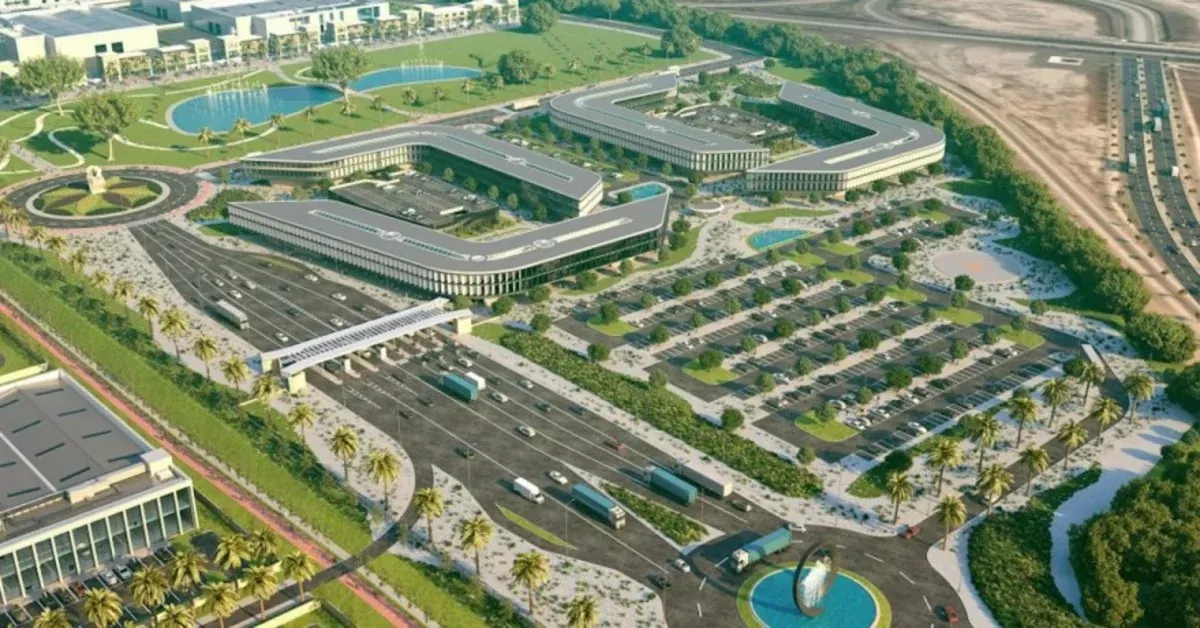
According to the document “On the Preliminary Indicators of Azerbaijan’s Consolidated and State Budgets for 2027”, a key focus of reforms in the coming years will be overcoming structural inertia and enhancing the investment attractiveness of the domestic economy, particularly its leading industrial clusters and the Alat Free Economic Zone (FEZ). A significant increase in foreign investment in 2027–2030 is expected to come from a range of renewable energy projects. Azerbaijan also plans to extend the duration of existing tax incentives and exemptions while introducing new, results-oriented incentives for investors.
In addition, since last year, the strategy of attracting FDI into strategically important, knowledge-intensive sectors has gained momentum. A key element of this strategy was the Strategic Partnership Charter signed between Azerbaijan and the United States in February this year, which, among other areas, covers high-tech sectors associated with Industry 4.0. The two countries are expected to jointly develop regional projects in transport, transit and renewable energy, while US capital is also expected to contribute to Azerbaijani projects involving digital transformation and AI, telecommunications, and the development of data centres.
The impact of these agreements is already becoming evident. In the first half of 2026, US FDI in Azerbaijan increased by 47% to $131.6 million. Meanwhile, Dutch FDI into the Azerbaijani economy reached $60.089 million during the same period, a 3.04-fold increase. Looking ahead, these trends could gain further momentum as Azerbaijan implements similar agreements with Türkiye, China, Israel and several Gulf countries covering projects in the industrial, green energy and IT sectors.







 editor@caliber.az
 +994 55 444-88-98
 Азербайджан, Баку, ул. Низами, 203, Af Business House, 5-й этаж