










Zelenskyy’s forty days The illusion of control and Ukraine’s reality
On Sunday, September 20, Ukrainian President Volodymyr Zelenskyy made yet another high-profile statement that may well end up being nothing more than a promise.

In his speech at a summit in Zakarpattia, which was also attended by representatives of Romania, Serbia, Poland, Slovakia, the Czech Republic, Austria and Hungary, the head of state said that Ukraine needed another 40 days to force Russia to halt hostilities. According to him, the period is to involve an active increase in drone strikes against targets on Russian territory.
Against this backdrop, it becomes quite clear that the powerful Ukrainian strike carried out precisely on the night of September 20 against Russian oil-industry enterprises and logistics facilities in Moscow Region was intended to create the necessary backdrop for Zelenskyy’s address. It should be recalled that, according to the Ukrainian Unmanned Systems Forces, three technological facilities at the Moscow Oil Refinery were hit in the attack: the AVT-6 primary oil refining unit, a combined oil-processing unit and an isomerisation unit. According to Ukrainian strike-drone manufacturer Fire Point, the attack resulted in the plant completely halting operations.
This will undoubtedly create even greater difficulties for Russia and exacerbate the petrol crisis, but does what has happened provide grounds for assuming that Ukraine will force Russia to end the war within the next 40 days? Personally, I have serious doubts about this, primarily because Zelenskyy has made similar statements far too often in the past, only for them to ultimately remain just words.
For example, at the end of June, he said that he had approved a plan by the Security Service of Ukraine (SBU) for a 40-day operation intended to put pressure on the Russian side with the aim of ending the war. In the end, nothing even remotely resembling what had been announced materialised. Moreover, Sunday’s Ukrainian Armed Forces attack will, with a very high degree of probability, be followed by a powerful Russian missile and drone strike on Kyiv, Odesa, Dnipro and other Ukrainian cities.
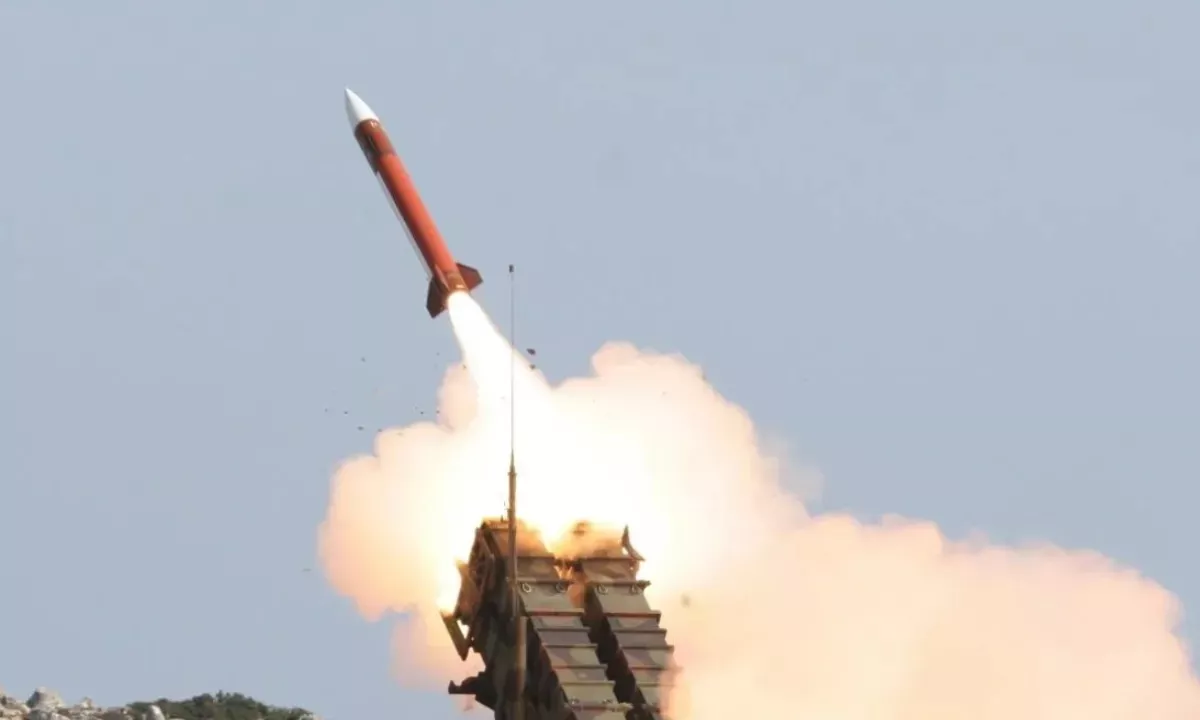
I should also note that I am writing this article amid a continuous stream of air-raid alerts, and it is frightening even to imagine what may happen next. This is particularly concerning given the assessment of aviation expert Kostiantyn Kryvolap, who said that Ukraine currently lacks enough missiles not only to counter ballistic threats but also to deal with conventional aerial targets. The problem has been exacerbated by jet-powered Shahed drones and, according to the analyst, around 80% of such drones have to be intercepted by fighter aircraft. This means that Ukraine is using up AIM-9 and AIM-120 missiles, whose stocks are also rapidly dwindling.
“We have now used up a very large part of our stocks. So we are facing an overall shortage of all these missiles,” he said, describing Germany’s announcement that it would transfer 10 interceptor missiles as “an imitation of vigorous activity”. I have to admit that such a remark is highly inappropriate, since Berlin is under no obligation to Kyiv. That said, the brazen nature of statements made by Ukrainian politicians and experts of various stripes has long ceased to be surprising.
In this context, I would point out that the next 40 days could prove to be a test not for Russian, but for Ukrainian energy infrastructure. Russia does not necessarily need to destroy the entire power system; it would be enough to systematically knock out the remaining key electricity generation, distribution and transmission facilities. As a result, if there is insufficient capacity to intercept all incoming missiles and drones, every new mass strike becomes a lottery, with consequences for millions of people.
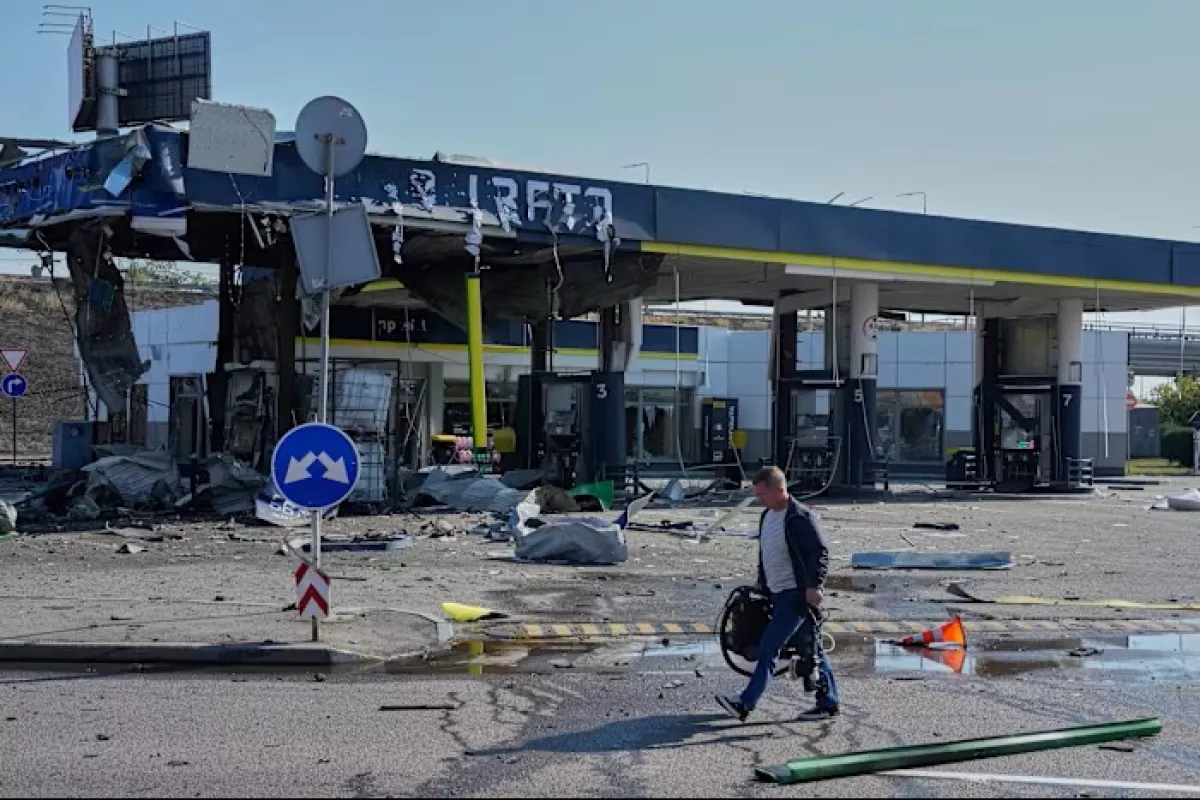
Meanwhile, the influential Financial Times reports that Russian ballistic missiles have already knocked three major metallurgical plants out of operation. Together, they accounted for around 90% of Ukraine’s steel production. The newspaper also notes that 2.1 million square metres of the country’s 5 million square metres of modern warehouse space have already been destroyed. Along with warehouses, distribution centres, retail chains and other logistical infrastructure are also coming under attack, without which goods simply cannot reach shops.
The newspaper also stresses that businesses have been forced to overhaul their entire logistics systems: moving stocks to smaller warehouses, distributing goods among individual stores and looking for new routes. For example, following the destruction of its new distribution centre, Budynok Ihrashok decided to process online orders through 67 stores instead of a single large hub.
Russian strikes are also hitting the budget. According to Ukrainian authorities, the state could lose around $1.5 billion in tax revenue as a result of the attacks. In addition, as we previously reported, a $27 billion “hole” has emerged in Ukraine’s state budget. In this regard, it is worth citing the words of Artur Herasymov, a member of the Verkhovna Rada representing the European Solidarity party.
“At one of the recent meetings in parliament, the prime minister of the Zelenskyy government said that the situation with money in our country was catastrophic. This raised two questions for the opposition: ‘How is it that, if the situation is catastrophic and there is not enough money for the military, the Zelenskyy government allocated 26 billion hryvnias for roads on August 21, 2026?’ and ‘How is it that you have budgeted 62 billion hryvnias for roads this year?’ So, is your financial situation catastrophic, or do you continue engaging in ‘grand theft’? It reminds me of January 2022, when European Solidarity warned about the need to allocate funds to the security and defence sector, but instead all the money was being redirected to roads,” the parliamentarian said.
He also pointed out that, formally, state-budget spending on weapons procurement is increasing by just over 1 billion hryvnias, “while at the same time almost 2 billion hryvnias is being allocated to the telemarathon, which is propagandistic in nature and which the European Union has repeatedly called on Ukraine to shut down”. In this context, I would also cite a shocking fact reported by European Pravda: Ukraine has still not submitted the signed contracts for the purchase of interceptor missiles for Patriot air-defence systems to the European Commission. As a result, Brussels has so far been unable to disburse funds for their financing from the €90 billion large-scale loan.
Thus, after all the facts cited above, it becomes absolutely clear where the answer lies to the question of whether Zelenskyy’s words about the 40 days needed to force Russia to halt hostilities should be believed.







 editor@caliber.az
 +994 55 444-88-98
 Азербайджан, Баку, ул. Низами, 203, Af Business House, 5-й этаж