










Russia is returning to the realm of fear
The Russian Interior Ministry has launched an investigation into Grigory Zaslavsky, rector of the Russian Institute of Theatre Arts (GITIS), and at first glance, the case might appear to be yet another bureaucratic power struggle. However, behind it lies something far more serious. It shows just how far Russia’s system has gone — a system in which simply being loyal to the authorities is no longer enough. People are now expected to demonstrate their loyalty openly and emphatically. Not merely agreement and obedience, but enthusiasm, unconditional support, and fanaticism.
And here lies the particularly striking paradox: this is not a dissident or an opponent of the Kremlin. Zaslavsky has openly supported Russia’s war against Ukraine, yet apparently even that was not enough.
The rector’s “crime” — in quotation marks, of course — is that he did not turn the university entrusted to him into a military recruitment office, did not drive his students to the front at the point of a whip, and did not display the highest possible degree of zeal. And this is where a deeply disturbing question arises: If even loyalty no longer guarantees a person’s safety, then who in Russia today can feel safe at all?
History has seen a similar system of values before. During the Stalinist era, yesterday’s allies could become “enemies of the people” within a matter of months. Bukharin, Rykov, and Kamenev were committed communists. But the system demanded ever more proof of loyalty, and eventually even membership in the Communist Party ceased to offer protection from repression.
The system taking shape in Russia today inevitably brings to mind those long-forgotten mechanisms of destroying people, killing the human being within them, and turning them into slaves of the system.
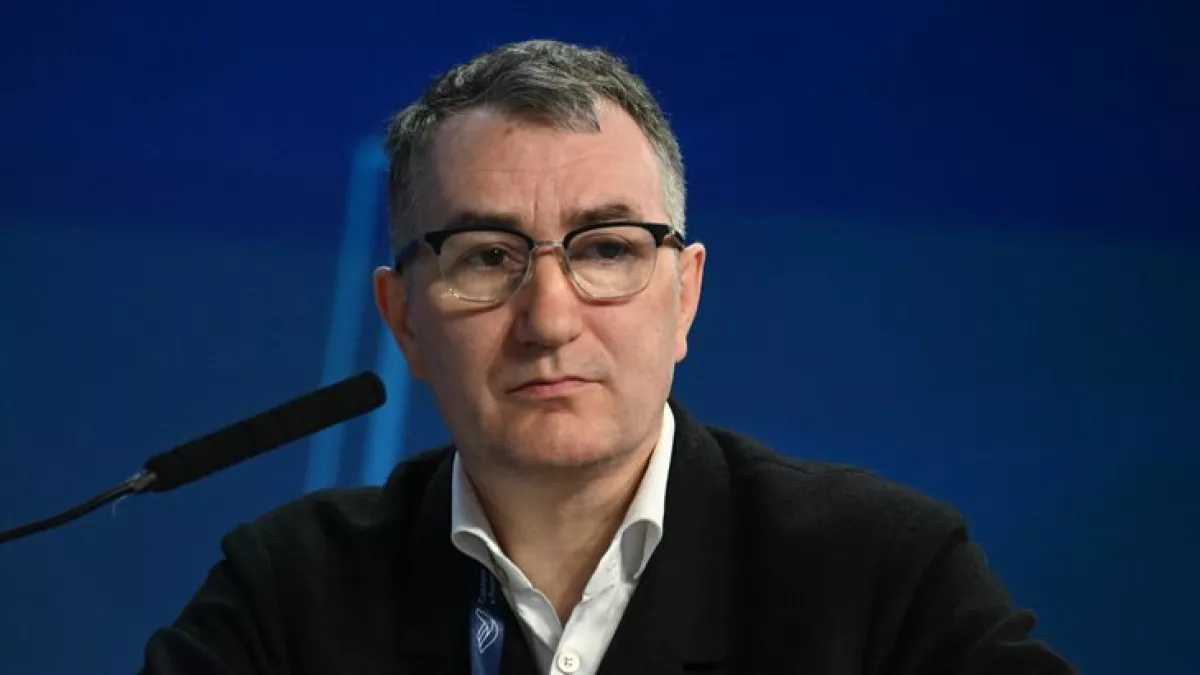
For Azerbaijan, the Zaslavsky case carries another important meaning. During one of the most difficult periods in Azerbaijani-Russian relations, he remained among those representatives of Russia’s cultural community who sought to preserve a humanitarian bridge between the two countries. GITIS hosted events dedicated to the great Azerbaijani composer Uzeyir Hajibeyli, as well as to Azerbaijani culture and art. This was the language of culture. The language of dialogue. A language capable of bringing people together.
And today, it is particularly troubling that a person who supported such humanitarian ties has himself come under pressure from the state system. This raises a broader question about what kind of future is being prepared for Russian culture, education, and science.
And the GITIS case does not exist in a vacuum. At the same time, pressure is mounting on political émigrés, independent civic activity, the Internet, businesses, cultural figures, and the academic community. The space for state coercion is expanding. New categories of “unreliable” people are emerging.
And this is where the most dangerous development occurs — the way the past is being viewed is changing. Public admiration for Stalin is returning. Monuments to the dictator are being erected. In the public sphere, there are increasingly frequent attempts to portray the Soviet era not as a time of mass repression and fear, but as a period of greatness and strength.
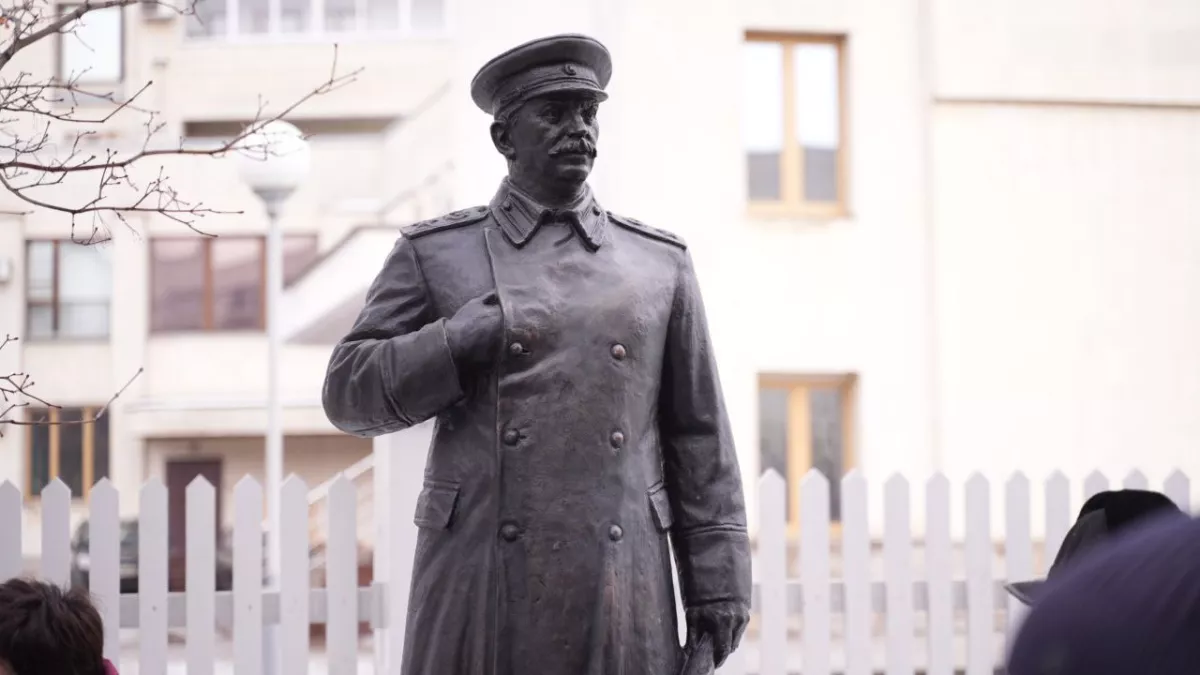
When a state begins to romanticize dictatorship, it is a political signal. A command to “sic ’em.” The security services are gaining ever greater influence, much like the NKVD once did. The law is increasingly giving way to political expediency. Independence is becoming suspicious and dangerous to the system, and a person who was considered “one of us” yesterday may find himself tomorrow accused of a fabricated “Trotskyist conspiracy.”
Against this backdrop, reports about the fate of members of Azerbaijan’s diaspora in Russia — Shahin and Mutvali Shikhlinski — are particularly alarming. Any such cases demand the utmost attention to the rule of law, human dignity, and human rights. Although what human rights are we talking about — especially for members of an ethnic minority — when even an ordinary Russian citizen can find themselves without rights?
Azerbaijan knows all too well the price of imperial thinking. We know what it means to live under a system in which a people’s fate is decided for them. We know what it means to suppress the national will and attempt to force a free society to live by rules imposed from outside.
That is precisely why Azerbaijan has already made its historic choice. We chose independence. Statehood. National dignity. The right to determine our own future.
And that choice is irreversible.
Because history offers a warning: when a state demands not simply loyalty, but worship, freedom is under threat. When a security officer with a baton or a thug from the “Russian Community” is placed above the law, society is moving toward lawlessness. When a dictator is turned into a national hero, the past ceases to be a warning and becomes a justification for the future.
Azerbaijan will never return to that past. Never. And freedom-loving nations must not — and will not — return to the place they once fought their way out of.







 editor@caliber.az
 +994 55 444-88-98
 Азербайджан, Баку, ул. Низами, 203, Af Business House, 5-й этаж