










Between Washington and Paris: Why Finland wants two nuclear umbrellas ANALYSIS BY MATANAT NASIBOVA
After several European countries, including Germany, Poland, Greece, Denmark, Sweden, the Netherlands and the United Kingdom, endorsed the concept of “advanced deterrence” (dissuasion avancée) put forward by French President Emmanuel Macron in March 2026, Finland has also signalled interest in the initiative.

Finnish Prime Minister Petteri Orpo and Foreign Minister Elina Valtonen said on the eve of the announcement that Helsinki was prepared to discuss the French proposal and seek further information on how it could be implemented in practice.
In an interview with Kyodo, Valtonen said Finland was open to discussing, over the longer term, the possibility of using France’s nuclear capabilities as part of a deterrence strategy.
“Unfortunately, nuclear weapons still exist in the world, and as long as they do, NATO, as a defensive alliance, uses nuclear deterrence,” Valtonen said. She stressed, however, that “Finland does not intend to station nuclear weapons on its territory, despite the recent changes in national legislation, because the country is not a nuclear-weapon state.”
The remarks come against the backdrop of changes to Finland’s legal framework governing nuclear weapons and related materials. In March, the Finnish government proposed amendments to the Nuclear Energy Act and the Criminal Code that would lift the existing ban on the import, possession and transport of nuclear devices and materials.
The amendments were approved by parliament in June and formally entered into force on July 1, marking a significant change in Finland’s longstanding legal restrictions concerning nuclear weapons.
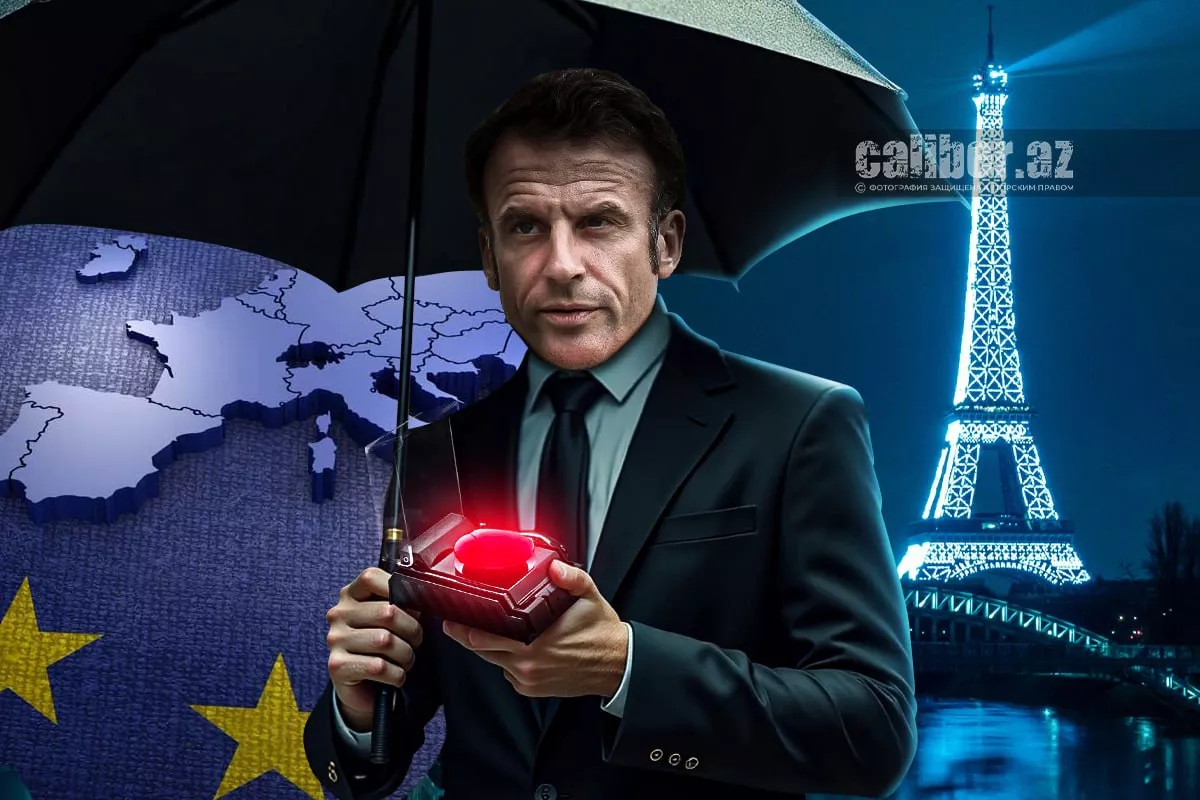
Before weighing the potential benefits and drawbacks of the French initiative for Finland, one distinction is essential: Paris is not proposing to transfer nuclear weapons to other states or create a single “EU nuclear arsenal.” France intends to retain full control over its nuclear forces, while its allies could participate in consultations, exercises and selected aspects of nuclear planning. Paris has also left open the possibility of temporarily deploying French dual-capable aircraft on the territory of allied states.
The initiative is therefore not an attempt to reproduce the US-led NATO Nuclear Sharing model under a French flag. Its ambition is narrower but potentially significant: to add a European layer of nuclear deterrence to the continent’s existing security architecture. The idea has emerged as Europe faces a sharply deteriorating security environment, growing uncertainty over the durability of the US nuclear umbrella and mounting pressure to strengthen European defense with greater involvement from non-nuclear EU and NATO members.
For Finland, the appeal is straightforward. Its roughly 1,340-kilometre border with Russia puts the country in direct proximity to Russia’s military sphere, making any debate over the future of European deterrence more immediate in Helsinki than in many other European capitals.
Moscow, meanwhile, has made clear that it opposes any additional nuclear capability being brought closer to its borders. Russia has warned Finland that lifting restrictions on the import of nuclear materials and discussing a French “nuclear umbrella” could further strain bilateral relations and lead to adjustments in Russia’s military and political planning. In practical terms, Moscow appears to view Helsinki’s moves as a potential rationale for increasing military pressure in the vicinity of Finland.
Yet the French proposal is not being considered in a political vacuum. Finnish public opinion appears relatively receptive to the idea of strengthening Europe’s own deterrence capabilities. Polls show that 59% of Finns support the creation of a European nuclear deterrence system, while about half favour Finland’s participation in the dissuasion avancée concept.
Crucially, Helsinki is not treating the French initiative as an alternative to the US nuclear umbrella. The logic is more one of reinforcement than replacement. American extended nuclear deterrence is likely to remain the central pillar of Finland’s security policy, given the country’s NATO membership and the broader historical and geopolitical weight of the US security commitment. French nuclear capabilities could instead provide an additional layer of deterrence.
That approach gives Finland a distinctly pragmatic option: it does not have to choose between Washington and Paris. It can seek to make the two complementary.
The underlying calculation is that Europe should develop additional means of strategic deterrence of its own while preserving the American nuclear umbrella. If Helsinki embraces that model, Finland could become an early indicator of how Northern Europe’s security architecture is changing. Its decision could also influence Sweden, Denmark and Norway as they consider how to respond to the same uncertainty over Europe’s long-term strategic dependence on the United States.
Over time, this could give rise to a Franco-Nordic dimension of nuclear deterrence — not a European nuclear arsenal under French control, but an additional layer of security built around France’s independent nuclear capability and greater participation by its northern European allies.
For Finland, the attraction of that model lies precisely in its redundancy: if transatlantic security guarantees were to weaken substantially, Europe would have another source of strategic deterrence to fall back on without having to abandon the US nuclear umbrella altogether.







 editor@caliber.az
 +994 55 444-88-98
 Азербайджан, Баку, ул. Низами, 203, Af Business House, 5-й этаж