










Localisation as priority: Azerbaijan’s pharma industry finds its momentum Economic focus by Khazar Akhundov
The global pharmaceutical market has faced mounting cost pressures in recent years, with pharmaceutical products becoming increasingly expensive amid escalating logistics costs and the substantial expenditures associated with the development and production of sophisticated, innovative medicines. Against this backdrop, Azerbaijan is pursuing a concerted drive to reduce its reliance on external pharmaceutical supplies by advancing the localisation of medicine production within the country. The strategy is already beginning to yield tangible results, underscoring the growing momentum behind the development of domestic pharmaceutical manufacturing. According to data from the State Statistics Committee, pharmaceutical production in Azerbaijan expanded by 53.9% in January-July of the current year, pointing to a significant acceleration in the country's efforts to build up local production capacity and strengthen the domestic pharmaceutical sector.
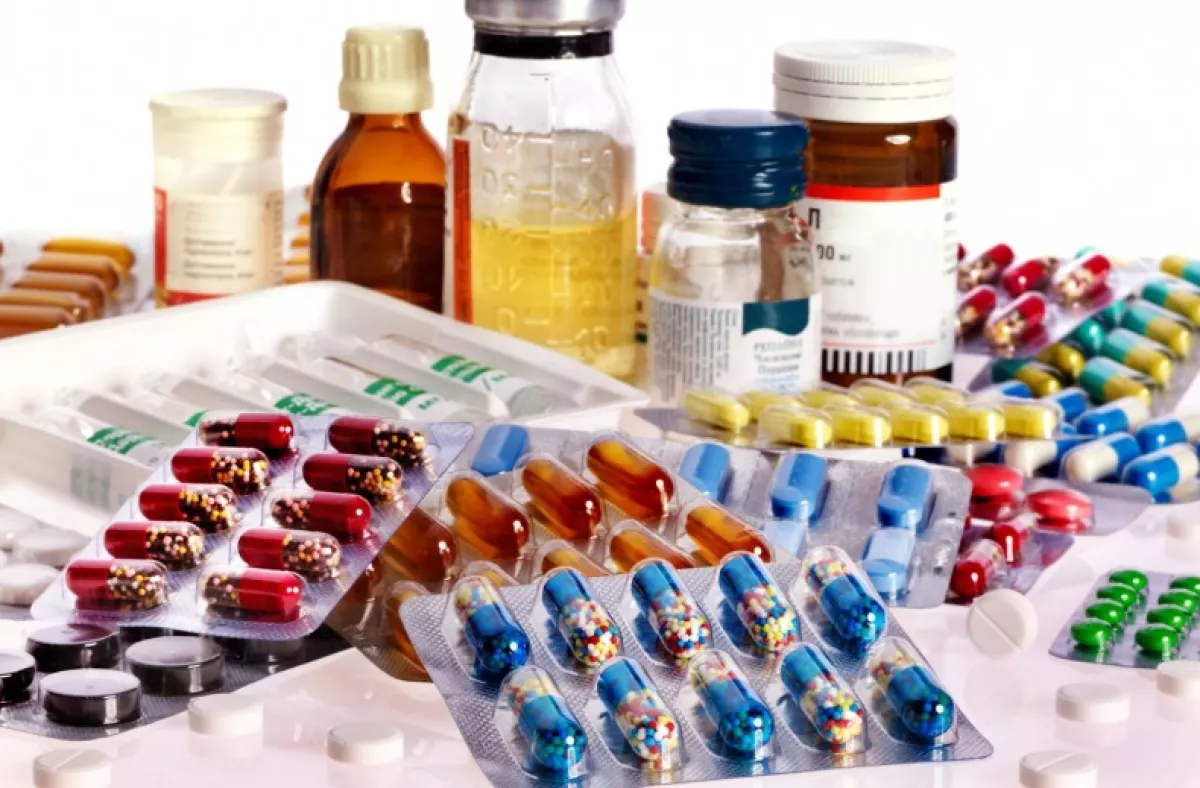
The World Health Organisation (WHO) and other specialised UN agencies have repeatedly highlighted the global increase in the prices of medicines and medical products. The underlying factors include inflation and currency fluctuations, as well as rising logistics costs associated with transporting pharmaceutical active ingredients from major production hubs such as India, China, the European Union and the United States. At the same time, the cost of raw materials used to manufacture these substances has also been rising, while the development of new biotechnology-based and gene therapies requires investments on an entirely different scale.
More broadly, in the aftermath of the COVID-19 pandemic, which triggered global shortages of a number of medicines, and the exceptionally high imported inflation recorded in 2022-2023, prices for imported pharmaceutical products have continued to rise annually. As a result, the WHO estimates that access to essential medicines has been deteriorating in some regions of the world.
These trends are also increasingly evident in Azerbaijan, where household expenditure on imported medicines has risen substantially in recent years. This is indirectly reflected in data from the State Statistics Committee, which shows that pharmaceutical products and medical supplies worth nearly 1.080 billion manats were sold through the country’s retail pharmacy network in January-July 2026, representing a 23.8% increase from the corresponding period last year. Much of this growth is attributable not to a rise in the volume of medicines sold, but to higher prices.
Such circumstances are prompting an increasing number of countries, including Azerbaijan, to pursue import substitution. The localisation of pharmaceutical production can help bring down prices while also mitigating excessive price pressures in domestic markets.
For Azerbaijan, however, localisation does not imply the construction of chemical plants capable of producing pharmaceutical active ingredients. Investments required for such facilities can run into hundreds of millions or even billions of dollars, while the plants themselves are technologically sophisticated and typically involve lengthy payback periods.
The experience of numerous countries in Eastern Europe, the Middle East and Southeast Asia demonstrates that a competitive and economically viable pharmaceutical industry can also be established through comparatively small-scale manufacturing facilities producing medicines from imported active ingredients and other components. Azerbaijan is following this path as well, supported by a series of legislative initiatives adopted over the past decade.
The localization of pharmaceutical production in Azerbaijan began a decade ago, following a presidential order to establish the Pirallahi Industrial Park, a specialized industrial zone dedicated to the manufacture of medicines, medical products and hygiene goods. Covering 30 hectares, the park was equipped with the necessary road, energy, utility and telecommunications infrastructure through state funding, providing the foundation for the development of pharmaceutical manufacturing.
According to the latest data from the Economic Zones Development Agency (İZİA), operating under Azerbaijan’s Ministry of Economy, the industrial park currently has six residents, with a combined investment portfolio of 175.64 million manats, equivalent to approximately $103.32 million. Of this amount, 98.23 million manats (approximately $57.78 million), has already been invested in the implementation of the respective projects.
The park is home to facilities producing disposable syringes, baby diapers, blood-storage and testing containers, among other products. It also hosts an Azerbaijani-Russian joint venture manufacturing anti-diabetic and other pharmaceutical products, as well as a production facility operated by Gen Pharma Caucasus Manufacturing Operations LLC.
Overall, the park’s residents have so far manufactured products worth a total of 76.3 million manats ($44.88 million). The development of the pharmaceutical industry in Pirallahi has also generated 515 permanent jobs, further reinforcing the industrial park’s role as a platform for the expansion of domestic pharmaceutical manufacturing.
At the same time, virtually the entire territory of the industrial park has now been taken up by residents, prompting İZİA to consider expanding the industrial zone and establishing new pharmaceutical manufacturing clusters in other parts of the country.
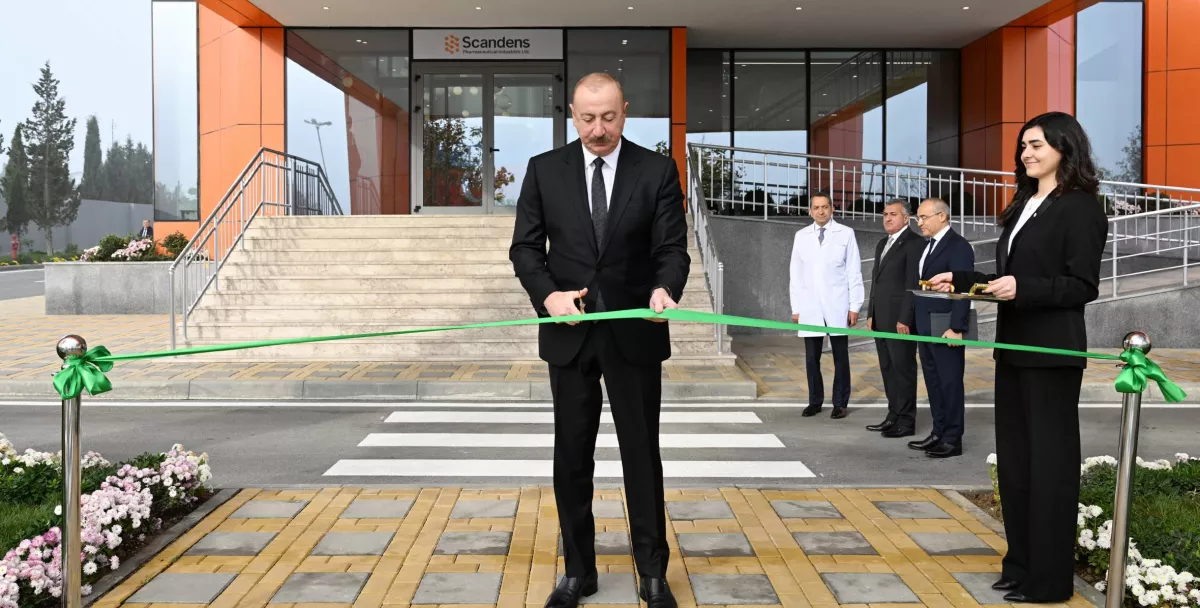
This process is already gaining traction. In November last year, a pharmaceutical manufacturing facility operated by Scandens Pharmaceutical Industries Ltd was inaugurated in the settlement of Khokmali in the Absheron district. The company is gradually establishing production of antibiotics, as well as medicines used in diabetology, hepatology, cardiology, andrology, allergy treatment and gastroenterology.
Accordingly, Azerbaijan has taken a number of steps in recent years to advance the import substitution of pharmaceuticals, with domestic production demonstrating a distinctly positive trajectory. The scale of this progress is reflected in data from the State Statistics Committee, according to which the country’s pharmaceutical industry increased its output by 53.9% in January-July 2026. This is particularly significant given that, over the same reporting period, production growth in Azerbaijan’s non-oil sector amounted to just 4.4%, while output in the chemical industry contracted by 9.7%.
The trajectory suggests that pharmaceutical import substitution is likely to gather further momentum in the coming years. In particular, the Alat Free Economic Zone (FEZ) is expected to commission next year a pharmaceutical plant operated by Biopharmax Afezco, backed by Israeli investors. The facility is slated to manufacture a biosimilar insulin, antibiotics, vitamins, saline solutions and medicines for the treatment of cancer, with the overall product range comprising 50 items.
Under the legislation governing the FEZ, residents that export around 75% of their output are eligible for a favourable regime of tax and customs incentives. This framework is therefore expected to attract investors prepared to orient pharmaceutical production toward the markets of Caspian littoral states and other post-Soviet countries.
At the same time, as the Pirallahi Industrial Park and the Alat FEZ continue to develop, and with additional pharmaceutical clusters envisaged for the future, the Ministry of Economy and the Ministry of Health are continuing negotiations aimed at attracting investment and technological know-how from major international pharmaceutical companies in Türkiye, Israel, Pakistan, Belarus, Ukraine, Hungary and a number of other countries.







 editor@caliber.az
 +994 55 444-88-98
 Азербайджан, Баку, ул. Низами, 203, Af Business House, 5-й этаж