










Migration outsourcing How US is sending deportees to third countries
Liberia’s decision to accept up to 1,200 people deported from the United States is the latest example of how the White House is changing the very logic of U.S. immigration policy. The first 20 people are due to arrive on August 20, and the program is set to run for one year. Those deported will include citizens of African countries as well as countries in the Western Hemisphere. Liberia says they will be able to seek asylum or leave the country voluntarily.
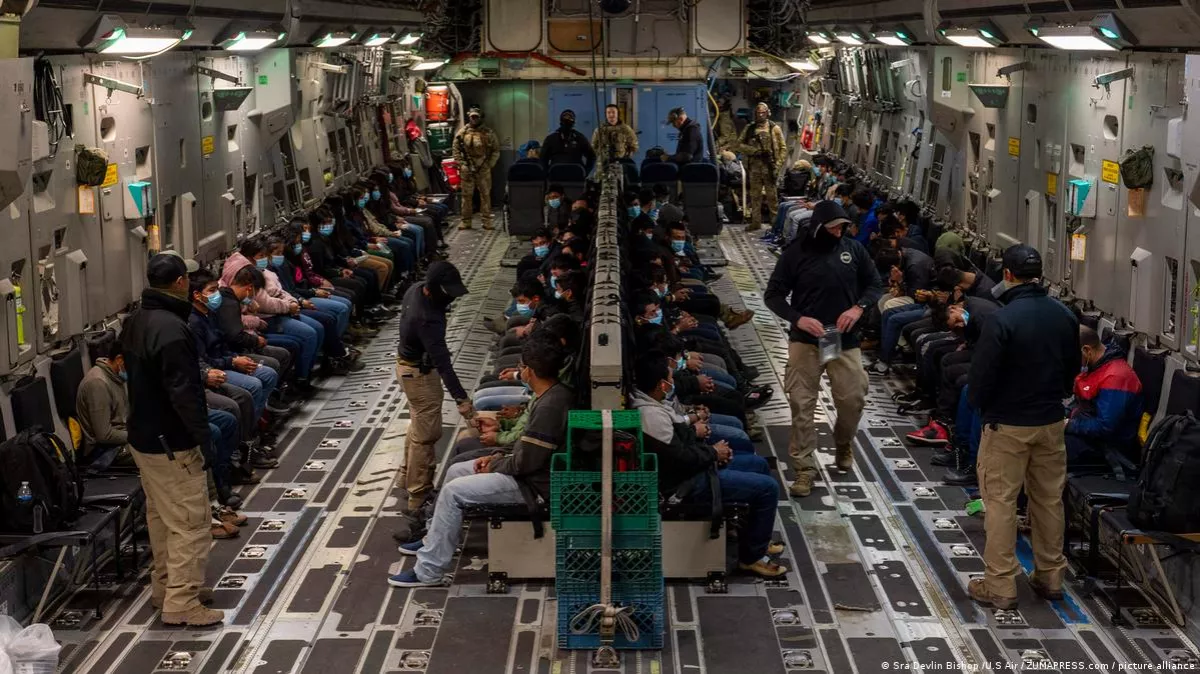
The policy is known as third-country removals — the deportation of migrants to countries other than their countries of origin. The mechanism allows Washington to deport people who cannot legally be returned to their home countries.
This primarily applies to people who have received special humanitarian protection from removal in the United States, known as Withholding of Removal, or protection under the U.N. Convention Against Torture (CAT). In such cases, a U.S. court has formally determined that returning a person to their home country could expose them to persecution, torture or death.
At the same time, U.S. law does not prohibit Washington from sending such a person to another country. According to the Migration Policy Institute, by spring 2026 the United States already had agreements with dozens of governments and was continuing to expand their geographic reach.
The process has been particularly active in Africa. In addition to Liberia, the Democratic Republic of Congo, the Central African Republic, Equatorial Guinea, Cameroon, Ghana, Sierra Leone and other countries have already been involved in, or considered for, such arrangements.
For African countries agreeing to receive deportees, such agreements provide an opportunity to obtain financial resources and additional political leverage in relations with the White House.
The financial terms of the arrangements vary. The agreement with Monrovia, for example, provides Liberia with $124 million in targeted assistance for healthcare and infrastructure. Eswatini, meanwhile, agreed to accept up to 160 people in exchange for $5.1 million for the development of border and migration infrastructure.

At the same time, the issue has an equally important humanitarian dimension. The U.S. administration considers diplomatic assurances from receiving countries sufficient grounds for deportation. Human Rights First advocates point out that, in practice, it is difficult to monitor whether such assurances are being honoured. In a third country, deported migrants may find themselves without money, housing, knowledge of the local language or full legal status. This creates a risk of refoulement — the return of a person to a country where they could face danger, through the territory of a third country.
Human rights advocates are seeking to challenge such agreements as contrary to international refugee protection standards. U.S. courts have restricted certain elements of the policy, while the Supreme Court in 2025 allowed the temporary resumption of sending migrants to third countries. In February 2026, a federal court in Massachusetts required deportees to be given notice and an opportunity to object to a specific destination country. As a result, legal disputes over the practice continue within the United States.
More broadly, the policy reflects a crisis in the international migration system itself. In a world where prolonged conflicts and economic inequality continue to generate sustained migration flows, countries facing the largest influxes of migrants, including European Union states, are being forced to resort to increasingly radical measures. Liberia's 1,200-person quota shows that this mechanism is also becoming an established part of U.S. migration policy.







 editor@caliber.az
 +994 55 444-88-98
 Азербайджан, Баку, ул. Низами, 203, Af Business House, 5-й этаж