










Mecca Pact: How Riyadh, Ankara, and Islamabad are redrawing the rules of the game Analysis by Matanat Nasibova
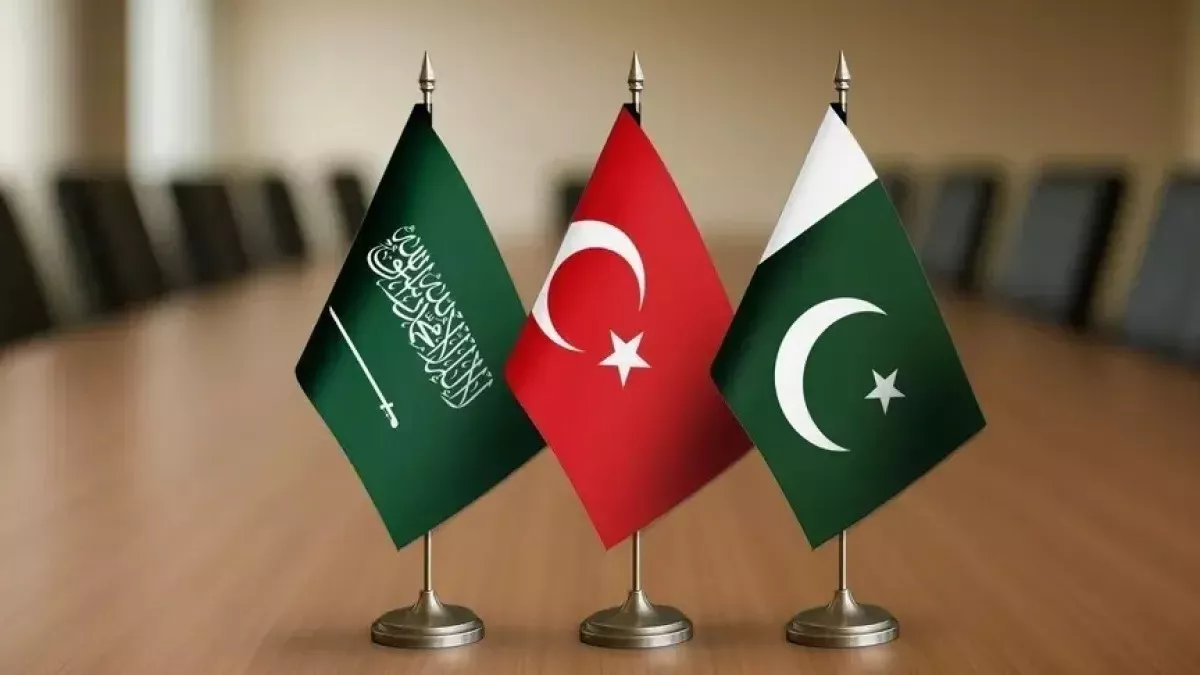
The agreement on joint defense signed by Saudi Arabia, Türkiye, and Pakistan, which has come to be known as the Mecca Pact, continues to attract international attention and generate a wide range of commentary.
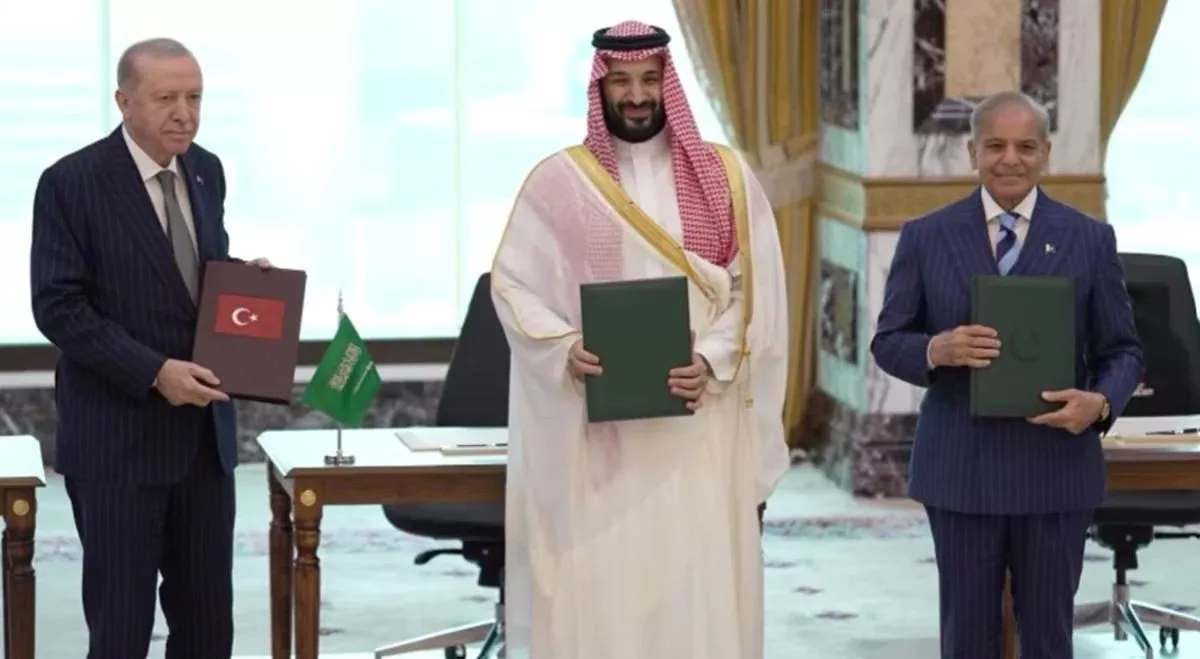
Some analysts have concluded that the Mecca agreements marked the beginning of the creation of what has been dubbed an “Islamic NATO,” prompting speculation of various kinds and shades. The alliance has also caused significant concern among key actors in the Middle East and South Asia. Israel has expressed serious concern that the trilateral agreement is directed against the Jewish state and could undermine prospects for expanding the Abraham Accords. India, meanwhile, began carefully assessing the agreement’s implications for its national security almost immediately after it was signed, despite having no concrete evidence to substantiate its geopolitical concerns.
Against this backdrop, the views of the United States and the Islamic Republic of Iran on this alliance are of particular interest, largely because of the actions of these two countries, which helped pave the way for the Mecca Pact. It is their respective approaches that we will examine in detail.
From security guarantor to arbiter
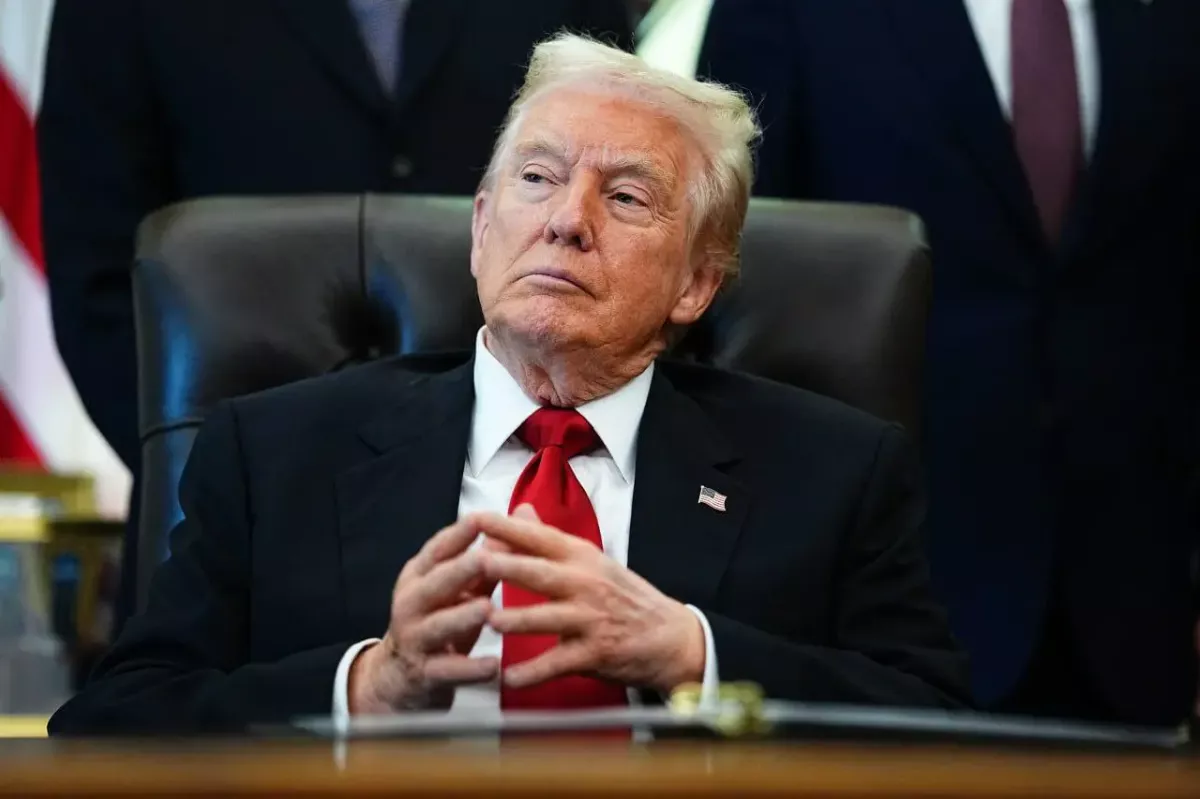
Strange as it may sound, the United States has welcomed the conclusion of the collective defense agreement between Riyadh, Ankara, and Islamabad. In particular, President Donald Trump wrote on his Truth Social account: “Very happy to see that Saudi Arabia, Turkey, and Pakistan have recently, and finally, signed the Mecca Joint Defence Agreement. It shows that the Middle East is coming together and how Countries will finally be able to defend themselves in a more meaningful way.”
The first conclusion to be drawn from the White House chief’s remarks is that Washington does not view the new military agreement as a challenge to American interests, even though the Mecca Pact envisages the creation of a defense mechanism without direct US involvement. On the contrary, Donald Trump sees the defense alliance between Ankara, Islamabad, and Riyadh as an additional pillar of regional stability—essentially in line with the Monroe Doctrine, under which the United States retains its role as the principal external partner while its allies invest more heavily in their own security.
In this light, it is worth highlighting the fundamental differences between the US position during Donald Trump’s first presidency (2017–2021) and his current term. During his first term, Trump sought to maintain the United States’ position as the principal security guarantor in the Middle East. Today, however, his administration is far more interested in seeing regional states assume greater responsibility for their own security. In other words, in 2017, the White House’s logic was essentially as follows: the United States arms and protects its allies, while the latter rely on American military power, allowing Washington to retain its central position.
Today, the approach is fundamentally different. The US is guided by the principle: “We remain the strongest player, but our allies must invest in their own security, build regional coalitions, and stop expecting the American military to automatically solve all their problems.” This does not mean that the United States intends to leave the Middle East. Rather, it is shifting from the role of “security guarantor” to that of a military-political arbiter in the region, while acting strictly in accordance with its own national interests.
Donald Trump’s favorable attitude toward the Mecca Pact is also driven by the fact that all three signatories are US allies. Despite the crisis of confidence stemming from the US-Iran confrontation, Saudi Arabia remains one of Washington’s important partners in the Middle East. In July, the two sides concluded an agreement on cooperation in the peaceful use of nuclear energy, with Trump linking further progress on the deal to the possibility of Riyadh joining the Abraham Accords. In addition, Washington granted the Kingdom major non-NATO ally status in January of this year, while the two countries are also actively expanding their multibillion-dollar economic cooperation.
Türkiye, meanwhile, remains a key US ally within NATO, with the alliance’s second-largest army and a strategically important position on its eastern flank. Moreover, relations between the two presidents have been notably warm. Donald Trump has never concealed his respect for Recep Tayyip Erdoğan, as demonstrated by his presence at the NATO summit in Ankara.
Pakistan, for its part, is the only nuclear-armed state in the Muslim world and also holds major non-NATO ally status. Admittedly, dialogue between Washington and Islamabad was reduced to a minimum following the withdrawal of US troops from Afghanistan in 2021. However, relations began to thaw in 2025, and Pakistan currently serves as a mediator in US-Iran negotiations.
All of this suggests that the White House views the Mecca Pact as a regional burden-sharing arrangement, under which the United States provides strategic support while the major regional powers develop their own response mechanisms.
Should Iran be concerned?
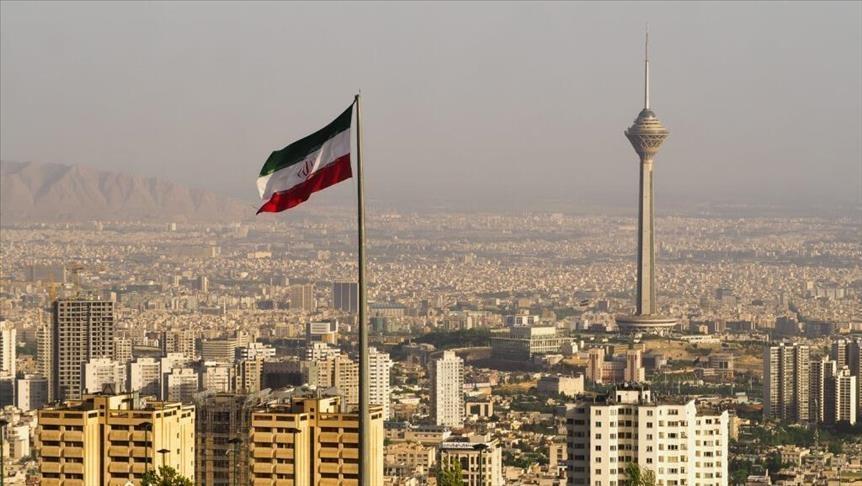
The Mecca Pact emerged against the backdrop of a major restructuring of the security architecture in the Persian Gulf, cementing a shift by regional powers away from exclusive reliance on external security guarantees. Perhaps for this reason, Tehran has interpreted the pact as an attempt by regional states to rely on their own capabilities. Iranian officials have explicitly emphasized that the creation of such an alliance without Washington’s participation “reflects Riyadh and Ankara’s disappointment with US policy.”
It is unlikely that Iran overlooked statements by Turkish officials emphasizing that the trilateral alliance is purely defensive in nature. To some extent, Tehran may also have been reassured by Saudi Arabia’s decision not to admit Egypt to the alliance, which, in the Iranian view, undermines claims made by some analysts that the three countries have “created a Sunni alliance against Shiite Iran.”
Thus, the international community is watching with undisguised surprise as two currently irreconcilable states, whose confrontation has shaken the entire world and the global economy, have nevertheless—despite some sharpness in their rhetoric—effectively and almost simultaneously supported the creation of a defensive alliance by three countries from the Middle East and South Asia: Saudi Arabia, the Republic of Türkiye, and Pakistan. This configuration opens the door to the possibility that these three actors could play a role in helping resolve the protracted conflict between the United States and Iran.







 editor@caliber.az
 +994 55 444-88-98
 Азербайджан, Баку, ул. Низами, 203, Af Business House, 5-й этаж