










The old nuclear order is crumbling. What comes next? Pundits weigh in
As the previous arms-control system comes under increasing strain and tensions among the major powers rise, the world is entering a new phase of the nuclear arms race. The Doomsday Clock was set this year at 85 seconds to midnight — the closest it has ever been to symbolic catastrophe, according to a statement by the Bulletin of the Atomic Scientists.
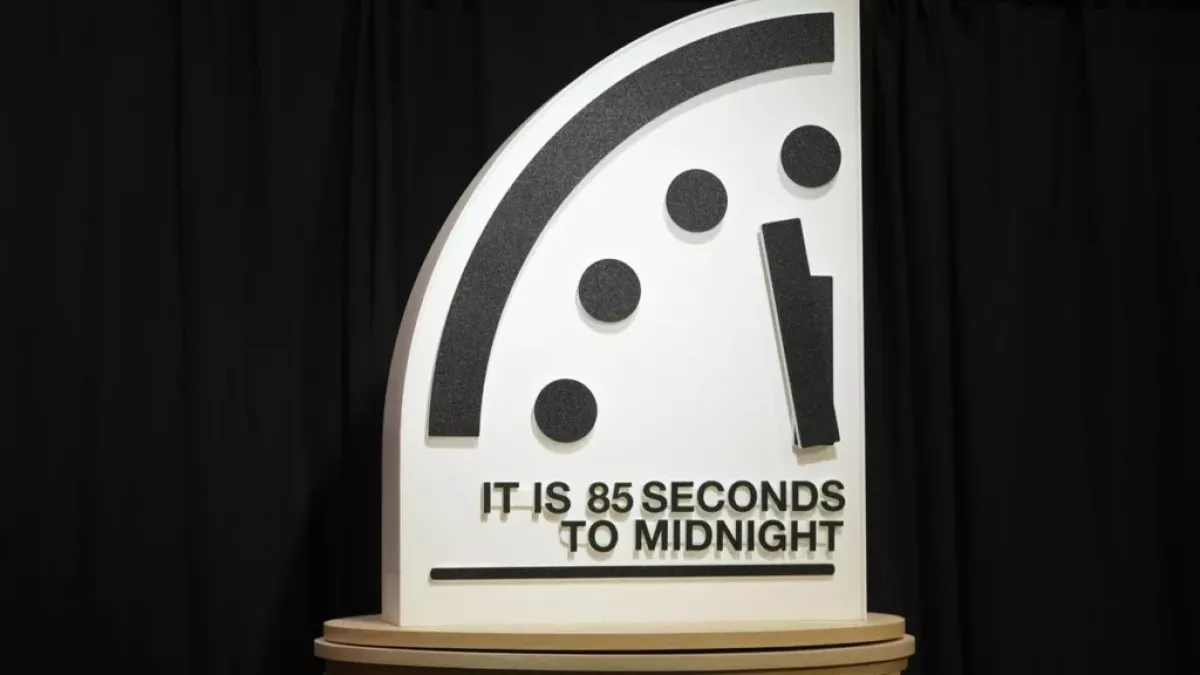
The United States and Russia, which together control almost 86% of the world's nuclear arsenal, have meanwhile been left without an active treaty limiting strategic weapons for the first time in decades.
The New START treaty, signed in 2010 under President Barack Obama and extended in 2021 under President Joe Biden, expired on February 5, 2026. President Donald Trump has said he intends to negotiate a new agreement.
At the same time, the previous bilateral arms-control system increasingly fails to reflect the changing balance of power.
China is rapidly expanding its nuclear arsenal, while North Korea continues to develop its nuclear program. In South Korea, support for the idea of developing its own nuclear weapons is growing, while debate over nuclear deterrence has also intensified in Japan, although Tokyo officially continues to adhere to its Three Non-Nuclear Principles.
Against this backdrop, large-scale negotiations on nuclear disarmament appear increasingly difficult to achieve. Experts have therefore proposed focusing on measures aimed at reducing nuclear risks, including mutual notifications of missile launches and military exercises, greater transparency regarding nuclear arsenals, international inspections, and the creation of hotlines between the militaries of nuclear powers.
But can such measures reduce nuclear risks?
How realistic is the prospect that countries that are not currently members of the world's "nuclear club" could develop their own nuclear weapons, and what consequences could this have for global security?
Representatives of the expert community shared their views on these issues with Caliber.Az.
In particular, Greg Simons, a political scientist, PhD, and professor at Daffodil International University in Dhaka, Bangladesh, doubts that establishing communication channels between militaries would be enough to move the Doomsday Clock back, primarily because of the lack of trust between the parties.
“Today, the world is entering a more competitive and conflict-prone phase. This is linked to the weakening of the ‘American peace’ and the unwillingness of countries of the Global South to remain objects of international politics and the risks associated with such a status. At the same time, there are now virtually no effective international mechanisms capable of preventing the further proliferation of nuclear weapons, as the United States has undermined many of them, particularly those that operated during the Cold War. The rapid rearmament we are witnessing, disregard for international law, the weakening of international institutions and the rise of unpredictable competition are reminiscent of the 1930s, when the weakening of the League of Nations was accompanied by the growing principle that ‘might makes right.’ Let us hope that, despite the serious obstacles, such a scenario can be avoided. However, today political decisions within the framework of Pax Americana and among the countries of the Global North are too often driven by ambitions rather than by considerations of national security and common sense,” Simons said.

Meanwhile, Murad Muradov, Deputy Director of the Topchubashov Centre in Baku, believes that the modern nuclear balance is largely rooted in the security architecture established during the Cold War.
“Almost all states in today’s ‘nuclear club’ acquired these weapons during the period of bloc confrontation or immediately afterwards. The principle of parity lay at the heart of proliferation: the possession of nuclear weapons by one country created an incentive for a key rival to acquire them as well. After 1945, the foundation of the global system was the ‘nuclear five’ — the United States, the Soviet Union (Russia), the United Kingdom, France and China. Israel found itself in a special position: the Israeli side does not officially acknowledge possessing nuclear weapons, but the international community effectively takes into account the country’s presumed nuclear status.
In the 21st century, this paradigm began to change. North Korea, despite sanctions and international isolation, developed its own nuclear capability, while Iran, according to available assessments, has the capacity to move rapidly toward developing nuclear weapons. Overall, the current level of scientific and technological development allows states with the necessary capabilities to develop nuclear weapons within a relatively short period. Therefore, countries such as South Korea, Saudi Arabia and Brazil are increasingly seeking to strengthen their positions. Recep Tayyip Erdogan’s assertion that ‘the world is bigger than five’ reflects a broader process: the countries of the Global South have grown stronger, while the traditional centres of power are losing their monopoly on military and technological superiority,” the expert said.
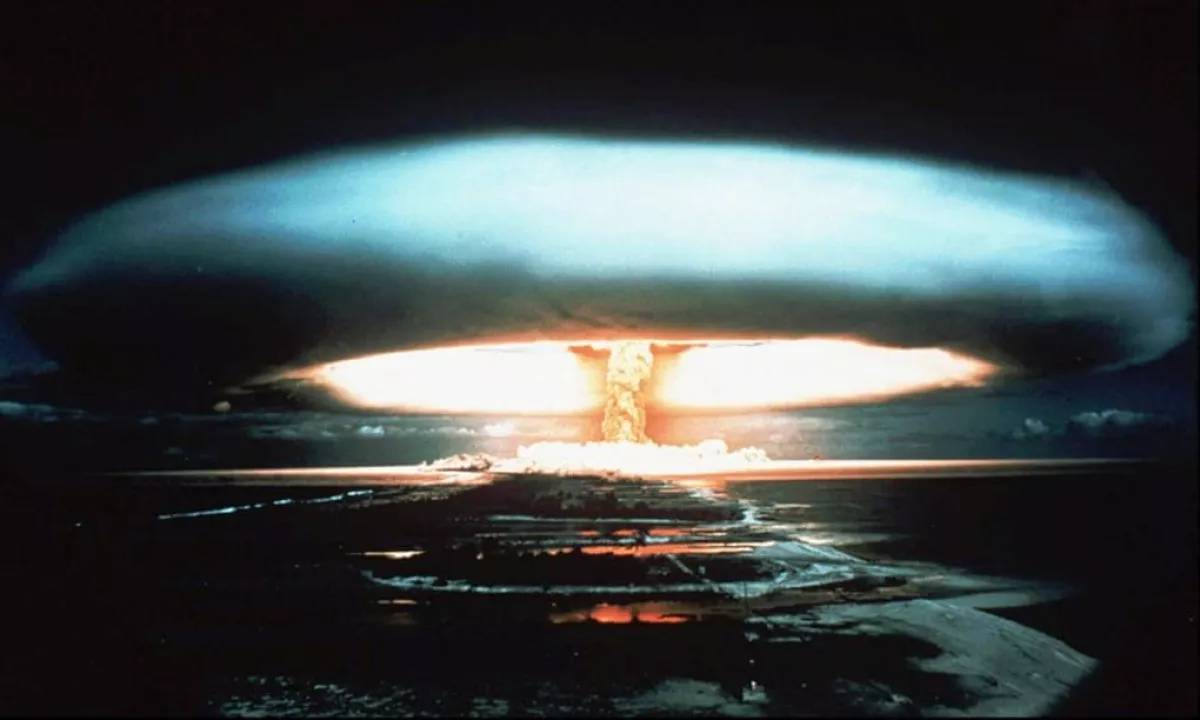
“Meanwhile, negotiations on reducing nuclear arsenals have effectively reached an impasse. If major powers are unwilling to exercise self-restraint, other states may view acquiring nuclear status as a means of survival as the world transitions from unipolarity to multipolarity. In such circumstances, the number of regional conflicts may increase while confidence in security guarantees provided by allies declines. The experience of Ukraine and the Budapest Memorandum has led some experts to ask whether retaining Kyiv’s nuclear capability could have prevented the conflict. For weaker states, nuclear weapons may be perceived as a matter of survival, and the threshold for their potential use could therefore be lower.
At the same time, the India-Pakistan example shows that one side’s acquisition of nuclear weapons can prompt the other to take a similar step in order to preserve the balance. There could be more such regional deterrence systems in the future. At the same time, however, the risk of accidental incidents and uncontrolled escalation will increase.
A particular problem is the absence of new negotiating mechanisms that take the changed balance of power into account. Unlike during the Cold War, when there were relatively clear decision-making centers in Moscow and Washington, the international system is now becoming more fragmented, while the level of coordination among different centers of power is significantly lower. New rules have yet to be established, and until they are, the natural drive of states to ensure their own survival could lead to further nuclear proliferation. This could strengthen strategic deterrence, but at the same time bring the world closer to a dangerous threshold — including the risk of tactical nuclear weapons being used,” Muradov concluded.







 editor@caliber.az
 +994 55 444-88-98
 Азербайджан, Баку, ул. Низами, 203, Af Business House, 5-й этаж