










The voice against the chorus Azerbaijan and what the European Parliament is silent on
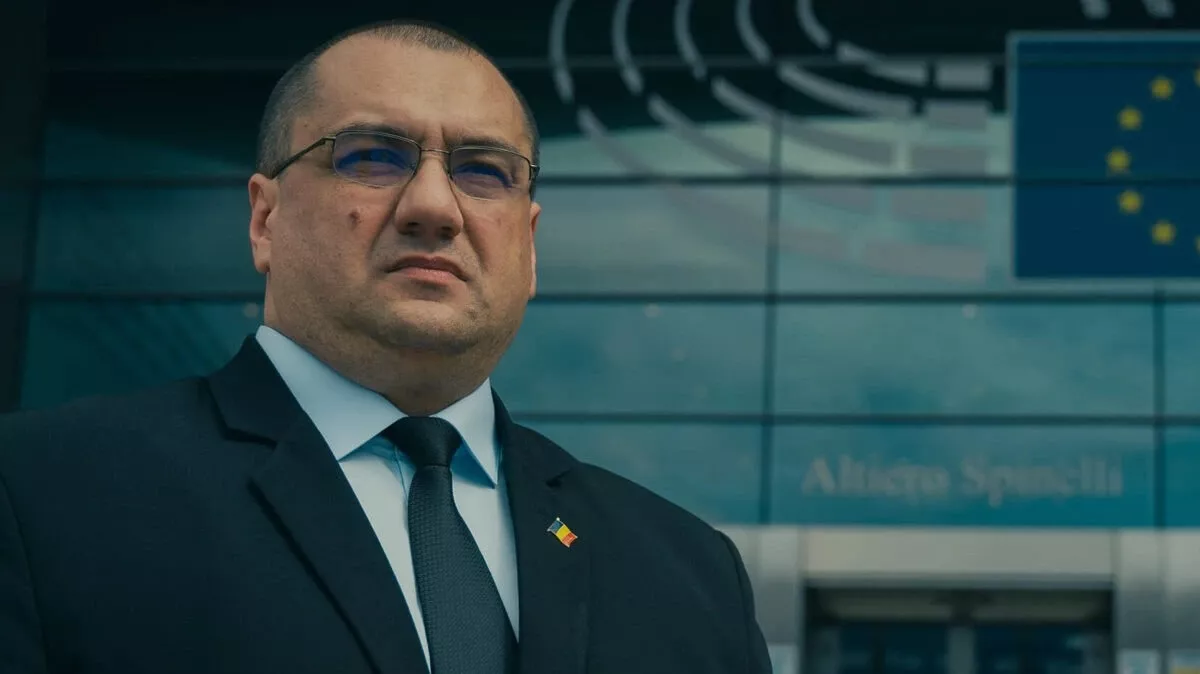
Cristian Terheș, a Member of the European Parliament from Romania’s National Conservative Party and a member of the Bureau of the European Conservatives and Reformists group, gave an interview to the Azerbaijani television channel Real TV.
His name is familiar to the Azerbaijani public: Terheș is one of the few voices in Strasbourg who, in recent years, has consistently opposed anti-Azerbaijani rhetoric within the European Parliament and has publicly articulated what most of his colleagues tend to leave unspoken. His conversation with Real TV offers a more detailed presentation of his views — and within them are several theses that EU institutions would prefer not to voice aloud.
The diagnosis Terheș begins with is blunt and uncompromising: “Some politicians believe that criticising certain countries from the European Parliament’s rostrum helps them gain political points at home.”
Within this logic, the Azerbaijani direction turns into political fuel for electoral needs: in capitals with active Armenian lobbying and among those who build their careers on the platform of “defenders of small nations,” criticism of the country is converted into internal political dividends.
Terheș himself proposes a different approach: “I believe we should engage in diplomacy. And for successful diplomacy, first of all, one must be able to listen — to listen to the arguments of each side.” For Strasbourg, this sounds almost like science fiction — there, the habit of listening and hearing has long been lost.
Terheș’s right to such a tone is reinforced by the country from which he was elected. “Romania became the second state after Türkiye to recognise Azerbaijan’s independence,” he recalls. We, in turn, may add to his words that this took place on December 11, 1991.
For the Romanian lawmaker, this is not an encyclopedia entry but a matter of his own political approach. From it follows a second observation, which Terheș formulates without circumlocution: many of his colleagues in the European Parliament simply are not familiar with the subject.
“Unfortunately, many Members of the European Parliament cannot boast of that. I come from a country that historically has very close ties with Azerbaijan. Therefore, I have knowledge of history and geography. But unfortunately, many Members of the European Parliament do not.”
Speaking about global-scale politicians, Terheș highlights those individuals who possess a unique ability to look beyond the horizon.
“President Ilham Aliyev looks to the future, not the past,” he says, offering a concise assessment. He then expands: “Just like his father, he has a strategic vision. And we should work with such leaders — people who are ahead of their time.” In the European parliamentary vocabulary, this phrase — working with those who are ahead of their time — sounds almost subversive: in today’s Strasbourg, the prevailing tendency is the opposite — to lecture those who are ahead, explaining to them in what exactly they are supposedly lagging behind.
Terheș turns the optics upside down and adds an observation that is rarely voiced in Europe:
“States that were at war with each other just a few years ago can today jointly develop business and cooperate in diplomacy.” An approach built on engaging with reality rather than preserving grievances is still considered exotic in Brussels and Strasbourg.
The most striking moment of the interview is his assessment of the latest European Parliament resolution on Armenia: “As for the resolution on Armenia, in my view, it was the last straw.” He then breaks down its structure. The document was originally intended to support democratic processes in Armenia, and in that form most MEPs were ready to support it. But anti-Azerbaijani language was inserted into the text.
“I was one of the few — perhaps even the only one — who actively fought to remove those points from the text,” he admits. And he adds a suspicion that, in his words, sounds like an accusation: “I think many MEPs did not even read the text in full.” Voting on autopilot creates the most convenient environment for smuggling someone else’s agenda into someone else’s document.
Terheș breaks down the “technology of substitution” with procedural precision.
“If there are complaints about Azerbaijan, they should be reflected in a separate thematic resolution or report on Azerbaijan, not in a document concerning Armenia,” he states, outlining a basic rule.
The logic here is straightforward: a state accused in a country-specific report has the right to respond — that is procedure. A country accused in a report about its neighbour is deprived of that right. “Imagine a situation where Azerbaijan has to justify itself on points included in a document about Armenia,” the MEP continues. He then sets the diplomatic tone more sharply: “Such treatment of a sovereign state is unacceptable. Your parliament’s reaction to the actions of the European Parliament should serve as a warning signal.”
A warning signal is usually what Strasbourg sends to others. In this case, Terheș turns the direction around: it is the European Parliament itself that should start paying attention to the alarm bells.
The interview then shifts into its energy-policy dimension, where Terheș attributes responsibility directly to Europe — without qualifiers and without the usual Brussels ambiguity.
“Europe itself has sufficient resources — coal, gas, oil, and so on. However, some left-wing parties, the ‘Greens’ and several other political forces decided that if these are abandoned, the world would become cleaner. This decision ultimately made Europe fully dependent on Russian gas,” Terheș states.
He then moves to the most uncomfortable point: “Russia used the policy of cheap energy resources as a geopolitical weapon.”
In Brussels, this formulation is spoken more quietly and less frequently, as it requires acknowledging the scale of Europe’s own strategic blind spots.
And at this point, Baku enters the picture.
“Azerbaijan played a crucial role, which once again confirms the foresight of President Aliyev. He could have refused cooperation, but instead chose to demonstrate that Azerbaijan is a reliable partner for the European Union,” Terheș says.
From this observation, he derives a demand that sounds unusual in Strasbourg: “Europeans must understand that they, too, are obliged to be equally reliable partners for Azerbaijan.” In his interpretation, partnership is a two-way street.
Terheș is one of a limited number of voices, and precisely for that reason, he functions as a symptom — showing that European criticism of Azerbaijan is not a consensus, and that among MEPs there are those who distinguish between real geopolitics and empty rhetoric. The louder such voices become in Strasbourg, the harder it is for yet another anti-Azerbaijani resolution to present itself as the unified opinion of Europe. In that sense, the Real TV interview performs a precise task: it gives a platform to someone who is rarely granted one in Strasbourg.







 editor@caliber.az
 +994 55 444-88-98
 Азербайджан, Баку, ул. Низами, 203, Af Business House, 5-й этаж