










Tracing back origins of “Aryan” race mythos by Third Reich DW recounts Hitler’s French, British inspirations
The beginning of May marks the period when much of the world commemorates the surrender of Nazi Germany, effectively bringing the Second World War in Europe to an end — an occasion observed in many countries on May 8 or 9.
To mark the anniversary, the Deutsche Welle network traditionally publishes a series of articles exploring different aspects of that era to keep the lessons learnt in the contemporary minds of our time. One of this year’s features examines how Adolf Hitler and the Nazi regime reshaped the meaning of the word “Aryan” to fit their racial ideology, as well as shining light on the less-known inspirations they had within Europe.
Although today the term is widely associated with the Nazis, its roots stretch back more than two millennia to ancient civilizations in India and Persia.
Interestingly, Nazi “race scientists” themselves rarely used the word “Aryan” in official terminology, instead preferring phrases such as “German or kindred blood.” They were aware that the term originally referred to linguistic and cultural connections rather than inherited physical characteristics.
Archaeological evidence shows the term existed long before modern Europe. Persian King Darius I had an inscription carved into his tomb at Naqsh-e Rostam in modern-day Iran declaring: “I am Darius, the great king … a Persian, son of a Persian, an Aryan, of Aryan descent.”
The word also appears in Sanskrit texts from ancient India, where “Arya” was used to mean “noble” or “honorable.”
According to historians, these groups were likely descended from nomadic peoples who migrated from regions that today include parts of Ukraine, Kazakhstan and southern Russia.
Later, after scholars discovered similarities between European languages and languages such as Persian and Sanskrit, the term became linked to the broader Indo-European linguistic family.
Rise of racial reinterpretation before Hitler
A little-known fact today is that the racist reinterpretation of the word “Aryan” in modern times did not begin with the Nazis, but with 19th-century European racial theorists — particularly in neighbouring France.
According to the DW, French writer and diplomat Joseph Arthur de Gobineau played a central role in reshaping the concept. In his four-volume work An Essay on the Inequality of the Human Races, he divided humanity into white, yellow and black “races,” claiming the white “Aryan” race possessed “immeasurably superior intelligence” and was destined to dominate others. Gobineau also warned against “racial mixing,” arguing it threatened both Aryan “purity” and civilization itself.
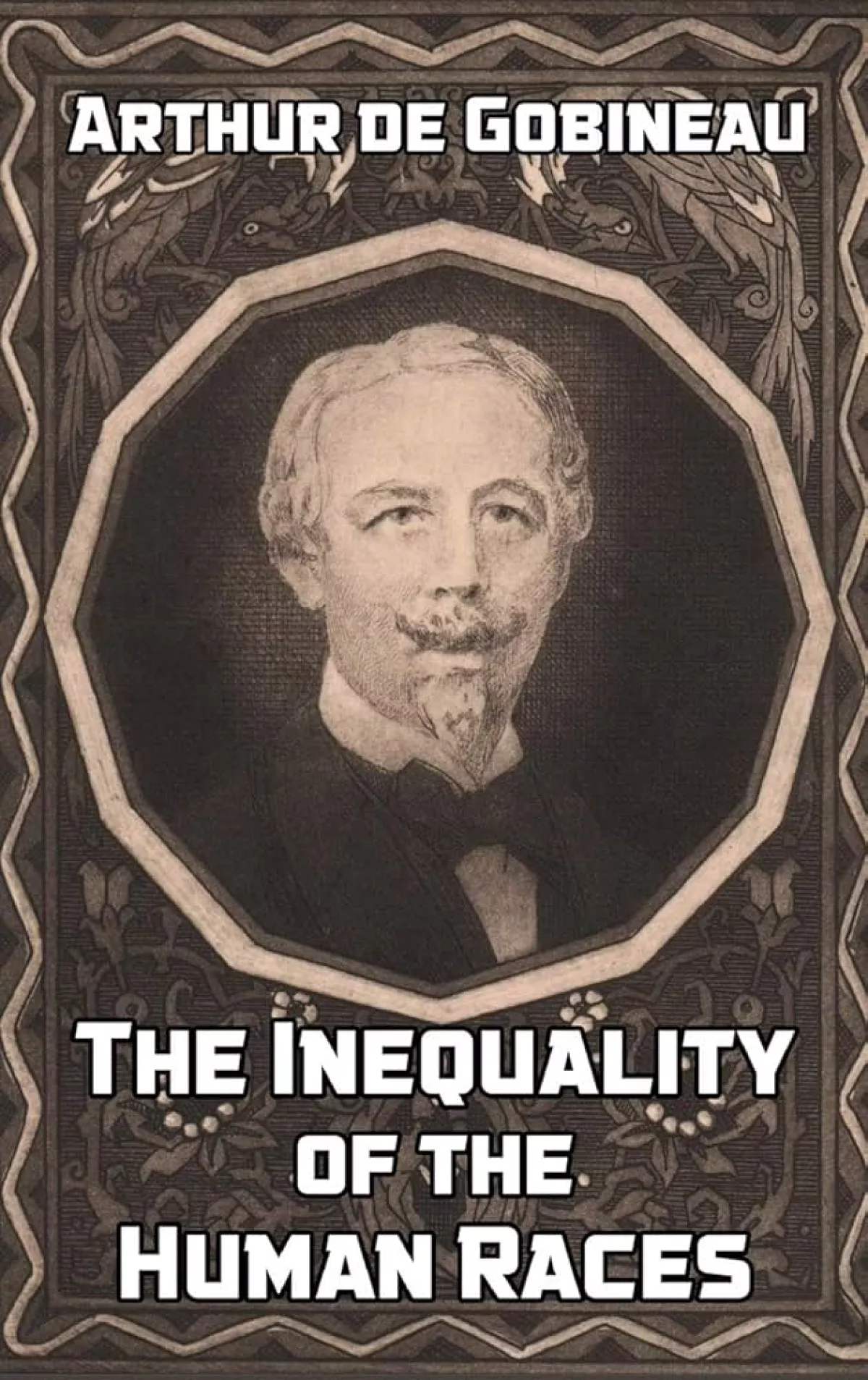
Although his ideas were largely dismissed at the time, they later gained influence among nationalist and far-right thinkers.
One of the most influential figures to adopt and expand these theories was British-born writer Houston Stewart Chamberlain, who later became the son-in-law of famed German composer Richard Wagner.
In his 1899 book The Foundations of the Nineteenth Century, Chamberlain elevated Gobineau’s racial ideas into a broader nationalist ideology.
"Chamberlain glorified the ‘Germanic race’. However, he was aware that not all Germans matched the physical ideal Aryan type described by Gobineau, so he based his claims on so-called German virtues that he believed were inherited through blood: honesty, loyalty and diligence. He characterized the ‘Jewish race’ as lacking creativity and idealism and as being driven solely by material interests, thereby posing a threat to the ‘Germanic Aryans.’ While Chamberlain did ascribe a certain ‘noble disposition’ to individual Jews, he simultaneously emphasized their alleged ‘incapacity and inferiority’ in comparison to the ‘Aryan race,’" the article states.
Among Chamberlain’s admirers was Kaiser Wilhelm II, the last emperor of the German Empire who would rule until 1918, who reportedly invited him to the royal court multiple times.
In 1917, Chamberlain joined the far-right German Fatherland Party and later came into contact with Hitler himself.
Hitler regarded Chamberlain as one of the ideological “evangelists” of his worldview. In his "Mein Kampf" manifesto, Hitler repeatedly praised Chamberlain and promoted the supposed superiority of the “Aryan race.”
Nazi ideology and the “Aryan ideal”
As Deutsche Welle notes, Hitler himself did not even fit the stereotypical Nazi image of the ideal Aryan — blond, blue-eyed and tall — yet the regime aggressively promoted that appearance as racially superior.
In practice, relatively few people in either Germany or Austria actually matched this idealized image.
Shortly after Hitler became chancellor, civil servants, doctors and lawyers were among the first groups required to provide an “Ariernachweis,” or “Aryan certificate,” proving they had no Jewish or Romani ancestry for at least three generations.
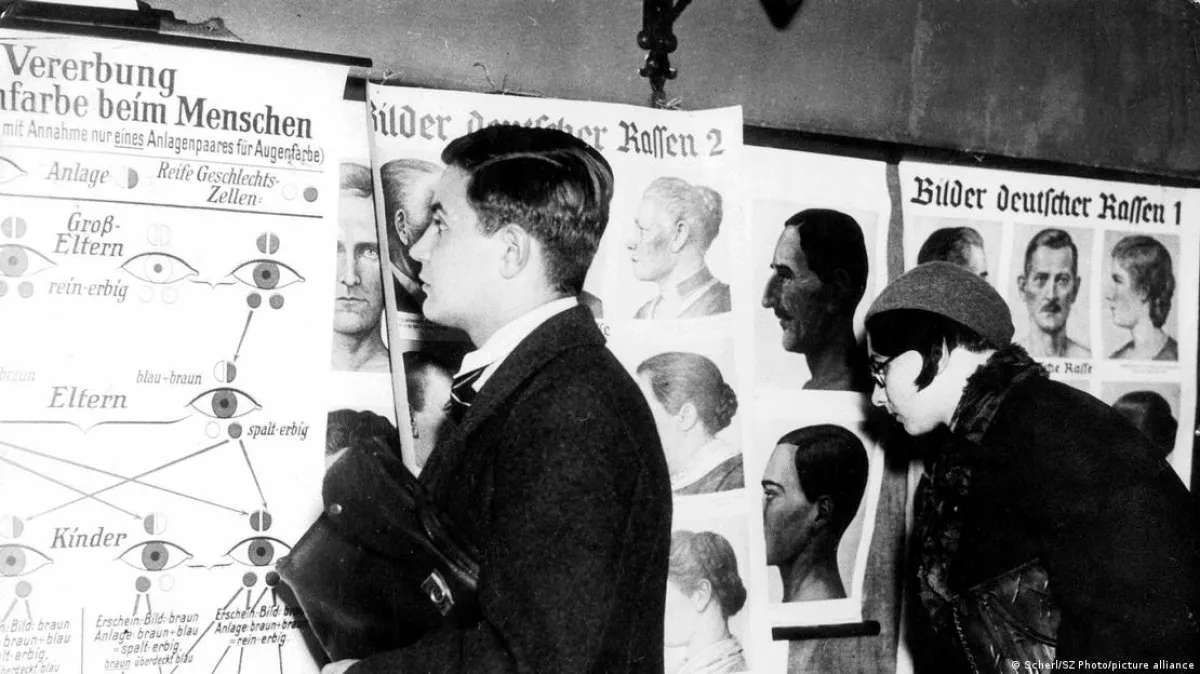
Within two years, similar racial documentation requirements had expanded to much of the population of the Third Reich.
The Nazi regime also attempted to apply its racial ideology in occupied territories.
When German forces encountered blond-haired, blue-eyed children in countries such as Poland and Latvia, many were abducted and sent to facilities tied to the regime’s Lebensborn program.
According to Deutsche Welle, around 200,000 children deemed “racially pure” were placed in German children’s homes as part of a broader campaign of “Germanization.”
The project was overseen by Heinrich Himmler, leader of the Nazi SS, who sought to expand what the regime considered a “racially valuable” population.
By Nazrin Sadigova







 editor@caliber.az
 +994 55 444-88-98
 Азербайджан, Баку, ул. Низами, 203, Af Business House, 5-й этаж