










EU–Azerbaijan dialogue: Kallas’ visit sets the tone Analysis by Matanat Nasibova
In late April and early May, Azerbaijan once again became a focal point for visits by senior representatives of the European political establishment. These included the presidents of Latvia, Edgars Rinkēvičs, and Ukraine, Volodymyr Zelenskyy, as well as the prime ministers of the Czech Republic, Andrej Babiš, and Italy, Giorgia Meloni. Against this backdrop, on May 5, Baku also hosted a delegation led by Kaja Kallas, the European Union’s High Representative for Foreign Affairs and Security Policy and Vice-President of the European Commission.
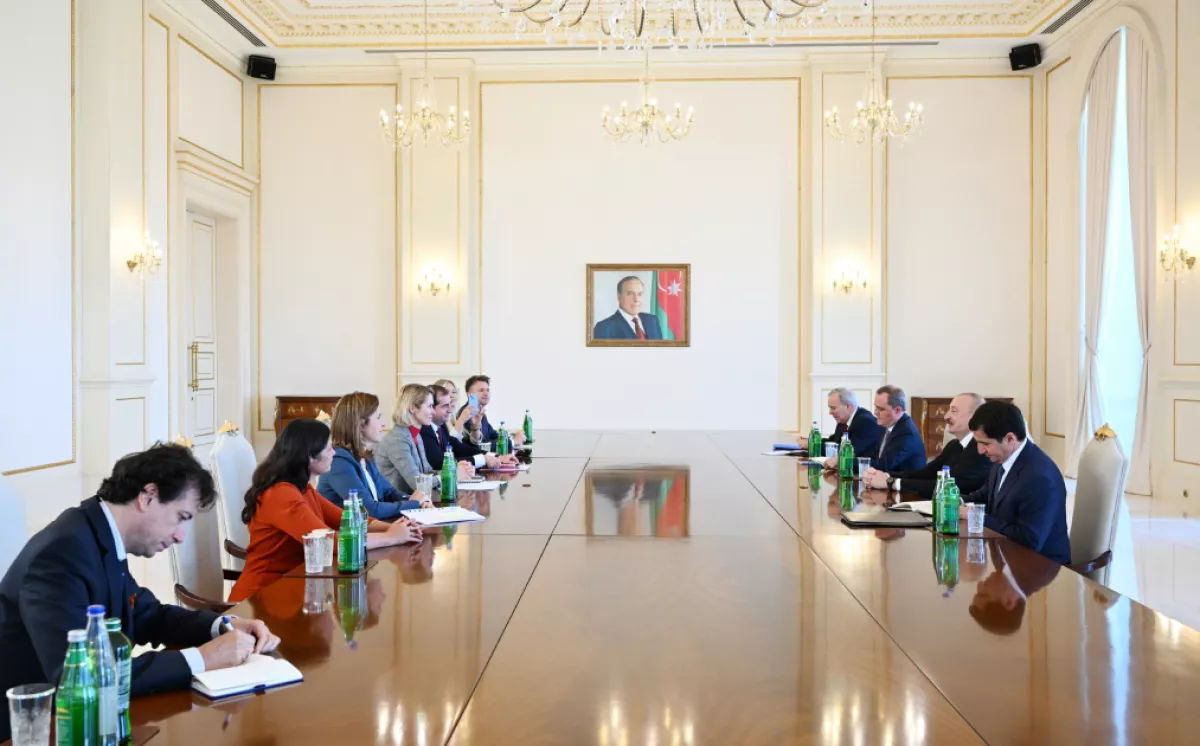
In Baku, the head of European diplomacy was received by President Ilham Aliyev, and she also held a meeting with Foreign Minister Jeyhun Bayramov. A significant part of the talks was devoted to the peace process between Baku and Yerevan, with particular emphasis placed on the steps taken by Azerbaijan to strengthen the peace agenda, as well as the fact that trade and economic ties between the two countries have already been established. The importance of lifting restrictions imposed by Baku on the transit of goods destined for Armenia across Azerbaijani territory was also highlighted.
Special attention on the European side was given to the participation of the Azerbaijani head of state, via video link, in the 8th Summit of the European Political Community held in Yerevan, which was described as a historic event. This concludes the official part.
Overall, the visit of the EU’s top diplomat to Azerbaijan can be viewed through several dimensions, the first of which is political. In particular, Kallas’s arrival in Baku immediately after the summits of the EPC and EU–Armenia suggests that Brussels continues to recognise Azerbaijan’s leading role in the South Caucasus. This point was also confirmed by the Vice-President of the European Commission, who, during her meeting with Ilham Aliyev, specifically emphasised that Azerbaijan is an important partner of the European Union.
The second aspect is the energy factor. Today, when the global economy in general and the European economy in particular are experiencing shock from the sharp rise in oil prices triggered by the de facto blockade of the Strait of Hormuz — a consequence of the recent military confrontation between the US–Israel bloc and Iran — Azerbaijan’s importance in ensuring Europe’s energy security has increased even further. This is also reflected in the statement made by Kallas upon her arrival in the Azerbaijani capital.
“Azerbaijan is a valued and reliable energy partner for the European Union, so it’s good to be in Baku today. There is clear scope to deepen our cooperation, particularly on trade, transport and digital. Strengthening connectivity between the EU, the South Caucasus, and Central Asia, is in our shared strategic interest and we’re open to discuss a more structured partnership with Azerbaijan,” she said, according to the EU Delegation in the country.
Thus, it can be said that Kallas’ visit served as a kind of confirmation of the agreements previously reached during the visits to Azerbaijan by European Commission President Ursula von der Leyen and European Council President António Costa, as well as of Brussels’ intention to further expand and strengthen dialogue with Azerbaijan.
This becomes even more telling against the backdrop of the European Parliament’s anti-Azerbaijani stance, as over a relatively long period, it has taken provocative steps against the Azerbaijani state.
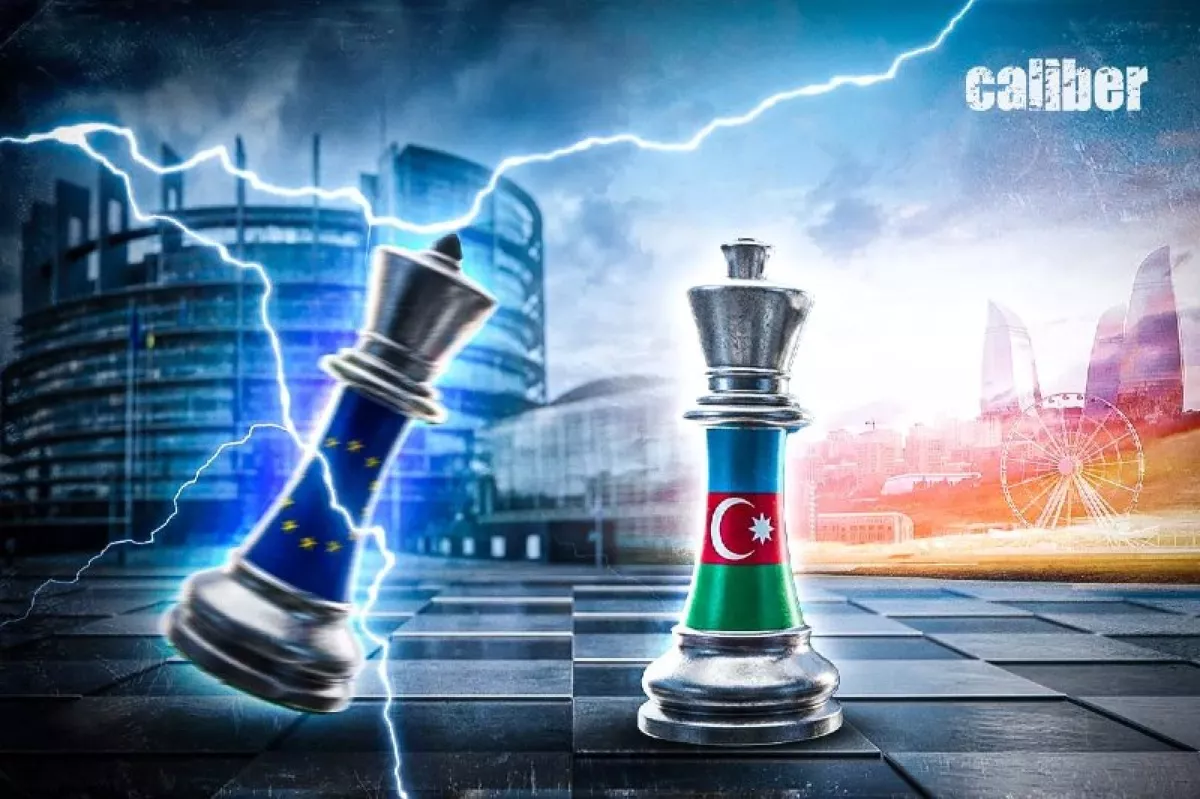
It is sufficient to recall that the European Parliament has adopted a series of resolutions directed against Azerbaijan, with a total of 14 such “documents” over the past five years. The resolution of April 30 of this year became the final straw for official Baku: the Azerbaijani parliament officially suspended cooperation with this legislative body of the European Union. The firm reaction of the Azerbaijani side to yet another provocation by the European Parliament simultaneously served as a signal both to Brussels and its institutional structures that Azerbaijan is no longer willing to tolerate double standards and biased approaches, and is ready to respond proportionately.
In addition, through this step, Azerbaijan made it clear to the EU that by indirectly distancing itself from the policies of its legislative body, it is effectively allowing the European Parliament to create “favourable conditions” for the promotion of anti-Azerbaijani narratives, which could negatively affect the fragile balance of interests in Baku–EU relations.
It may be assumed that Brussels is fully aware of the likelihood of such a scenario, and the visit of Kaja Kallas to Azerbaijan — which, as noted above, took place immediately after the European Political Community summit in Yerevan — can be seen as a kind of indicator of this understanding.







 editor@caliber.az
 +994 55 444-88-98
 Азербайджан, Баку, ул. Низами, 203, Af Business House, 5-й этаж