










Closed Europe Türkiye’s geopolitical weight and Brussels’ double standards
The issue of Türkiye’s European integration remains an important element of Ankara’s state policy.
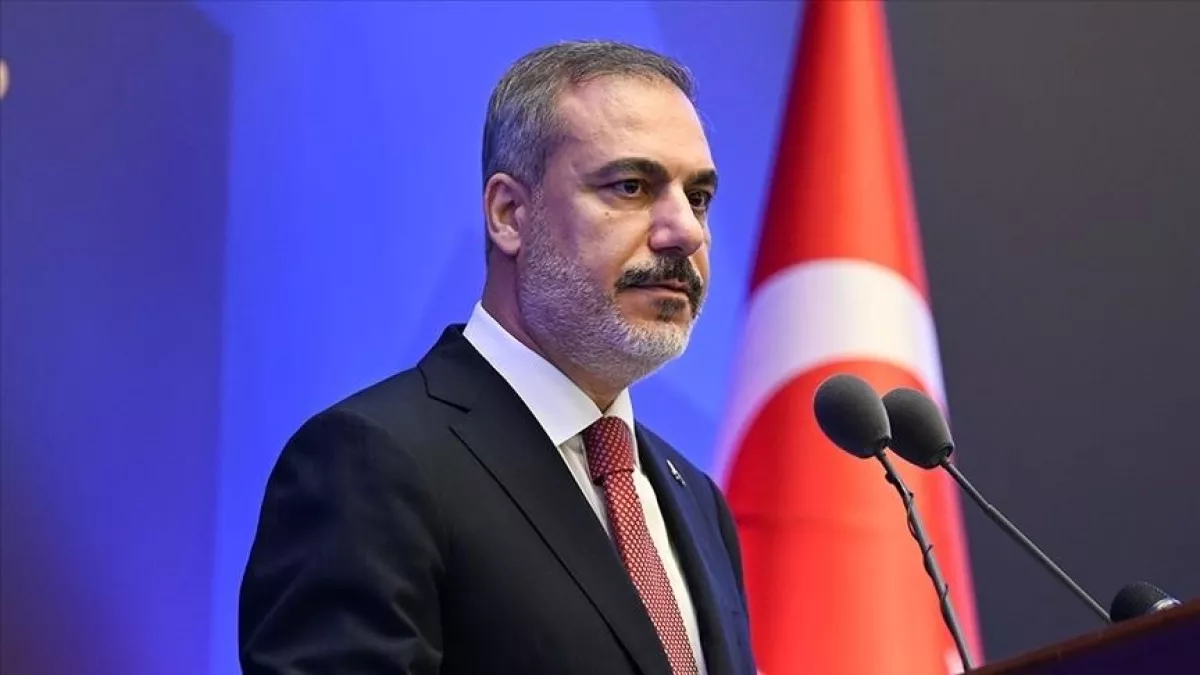
This fact was once again confirmed by Turkish Foreign Minister Hakan Fidan in his statements at a joint press conference with Austrian Foreign Minister Beate Meinl-Reisinger in Vienna.
In particular, the Turkish Foreign Minister emphasised that Türkiye’s accession to the European Union is delayed “not due to technical criteria, but due to a lack of political will, which was effectively destroyed by former French President Nicolas Sarkozy in 2007.” He stated: “The European political will, previously articulated by Schröder [former German Chancellor Gerhard Schröder] and Chirac [former French President Jacques Chirac], was dismantled with the arrival of Sarkozy.”
To support Hakan Fidan’s remarks, it is worth recalling the history of Turkish-French relations during Sarkozy’s presidency in 2007–2012. As head of state and leader of the Union for a Popular Movement (later The Republicans), he adopted a clearly radical position based on the slogan “No to Türkiye in the EU.” Under his leadership, France blocked the opening of 5 out of 33 key chapters in Türkiye’s accession negotiations with the European Union.
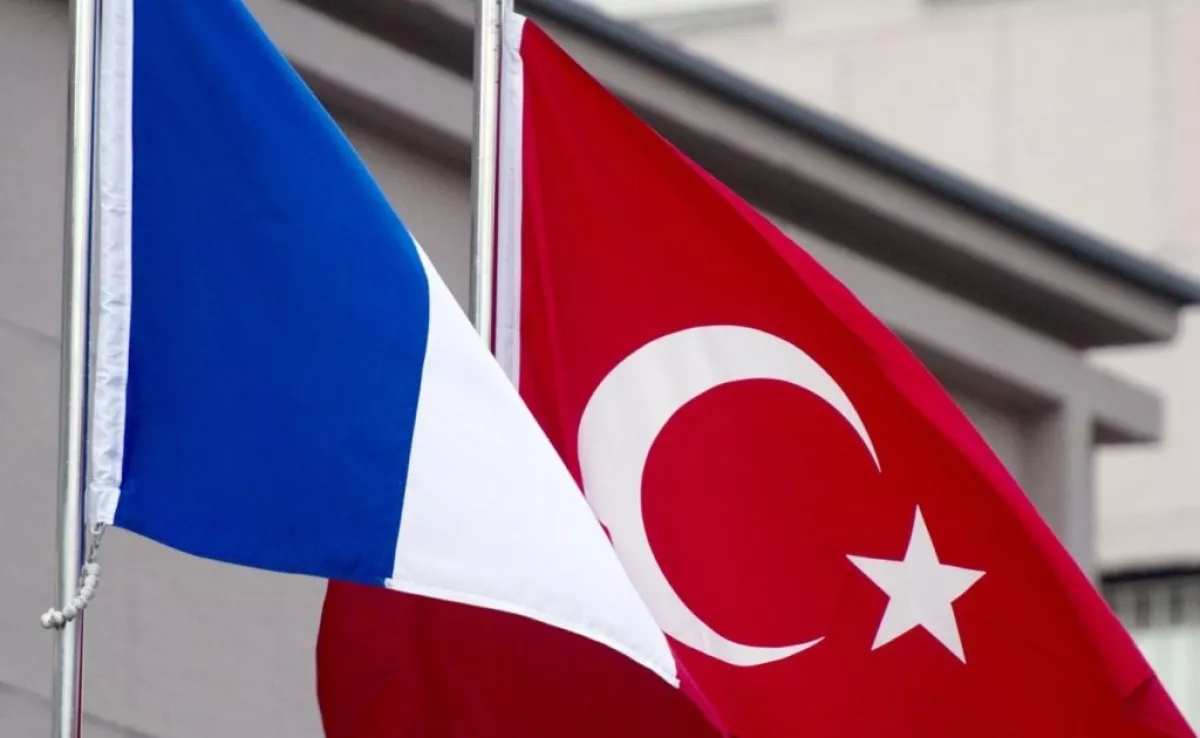
Instead of full membership, Sarkozy proposed an alternative of a “privileged partnership,” arguing that Türkiye belongs to Asia Minor rather than Europe, and also called on Ankara to open its ports to Cyprus vessels. As a result, the policies of the then-French leader led to the accession talks launched in 2005 becoming effectively deadlocked by 2010–2011 and ultimately being frozen by 2016.
The position of subsequent leaders of the Fifth Republic is also quite revealing in this regard. For example, François Hollande (2012–2017) adopted a more moderate stance; during the 2015–2016 migration crisis, he supported negotiations with Türkiye, but set strict conditions: visa liberalisation for Turkish citizens would only be possible if Ankara fulfilled all 72 technical EU criteria. In other words, he was not as categorical opponent of dialogue as Sarkozy, but neither was he an active supporter of Türkiye’s rapid accession.
The current President Emmanuel Macron has repeatedly expressed a sceptical attitude toward Türkiye’s accession to the European Union, openly stating that he sees no prospects for progress in this process and instead suggesting that full membership be replaced with a strategic partnership.
Referring back to Hakan Fidan’s statements, it is worth noting that he not only pointed to the lack of political will within the EU, but also delivered an important message to the “guardians of democratic values” that the need to reconsider the European security architecture is pushing Türkiye and Europe toward closer cooperation. As he stated: “Issues such as the Russian-Ukrainian war, developments in the Middle East, and energy security compel us to act together.”
So, what exactly does the European Union want from Türkiye, and what is truly obstructing the Turkish EU integration process? It can be assumed that, in this context, the most irritating factor for Brussels is Ankara’s independent foreign policy course, oriented toward national interests, as well as Türkiye’s multi-vector diplomacy, based on maintaining balanced relations with various global centres of power.
A second key aspect is undoubtedly Türkiye’s position on the Cyprus issue, where the EU adopts a diametrically opposite stance, supporting the Republic of Cyprus, which, notably, is already a member of the European Union.
Thirdly, a further obstacle for Ankara on its path toward EU membership is the sceptical and often biased stance not only of the Fifth Republic, but also of such EU heavyweights as Germany and Austria, which view with considerable reservations the prospect of a major representative of the Muslim world becoming a full member of the European family. In September 2023, Austrian Chancellor Karl Nehammer even called for the complete termination of Türkiye’s EU accession talks, stating that they “cannot imagine” full membership for Ankara.
Fourthly, both Brussels and the major European capitals—Paris, Berlin, and others—are increasingly concerned about Türkiye’s growing geopolitical significance. They clearly understand that in the event of escalating conflicts in the Black Sea region or the Middle East, Türkiye’s role within the European security architecture would increase dramatically. This is due to several factors: the country controls the strategically vital Bosphorus and Dardanelles straits, possesses one of the largest armies among NATO members, and serves as a key ally of the alliance on its southeastern flank. In addition, Türkiye functions as a buffer against migration flows originating from Syria, Africa, and Afghanistan and heading toward Europe.
Thus, taking the above factors into account, it can be assumed that in the short and medium term European countries will continue their current approach: keeping the doors of the European Union for Türkiye only half-open, while substituting full membership with the concept of “deepened partnership.”
However, today’s tectonic shifts in the international political system are unlikely to allow the Old Continent to maintain this approach for long. In turn, Ankara does not appear willing to remain in a state of endless waiting for a revival of “European political will,” especially as President Erdoğan stated in his address to parliament in 2023: “Türkiye will no longer accept the conditions and requirements for EU membership set by Brussels. We have fulfilled all the promises made to the EU, but they have failed to fulfil almost any of theirs.”







 editor@caliber.az
 +994 55 444-88-98
 Азербайджан, Баку, ул. Низами, 203, Af Business House, 5-й этаж