










Sovereignty in practice Postscript to President Zelenskyy’s visit to Azerbaijan
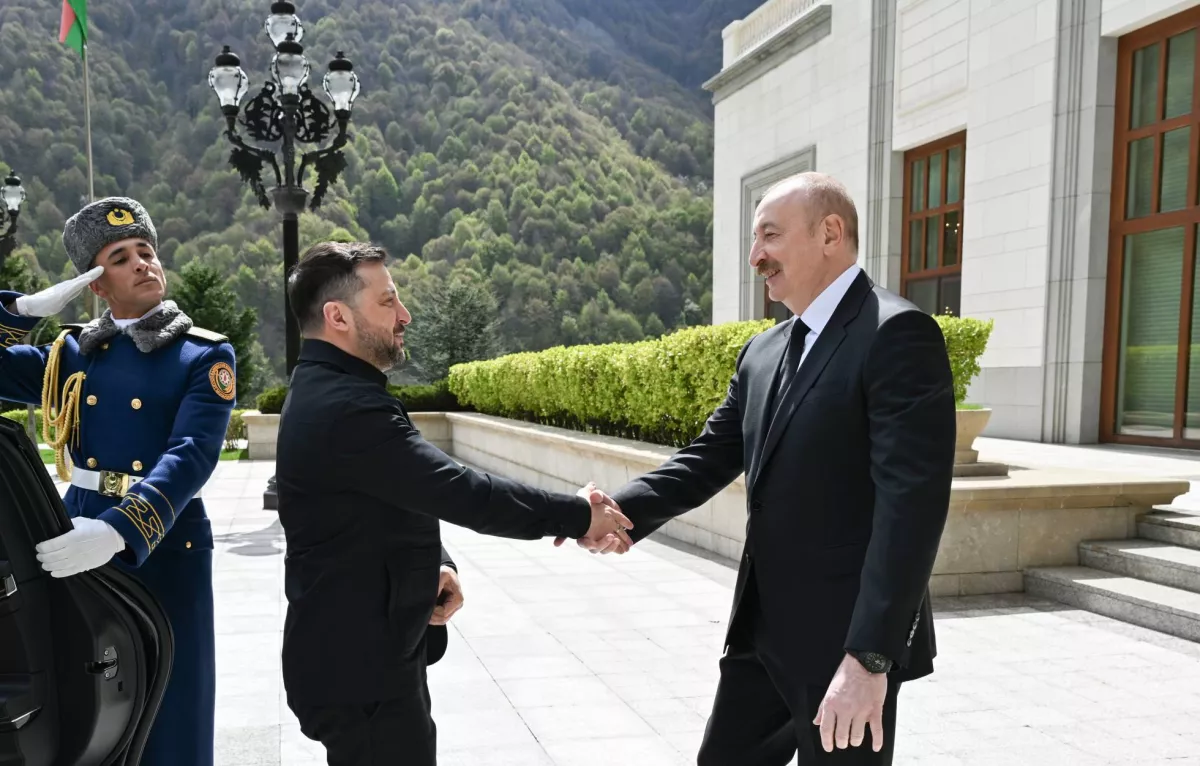
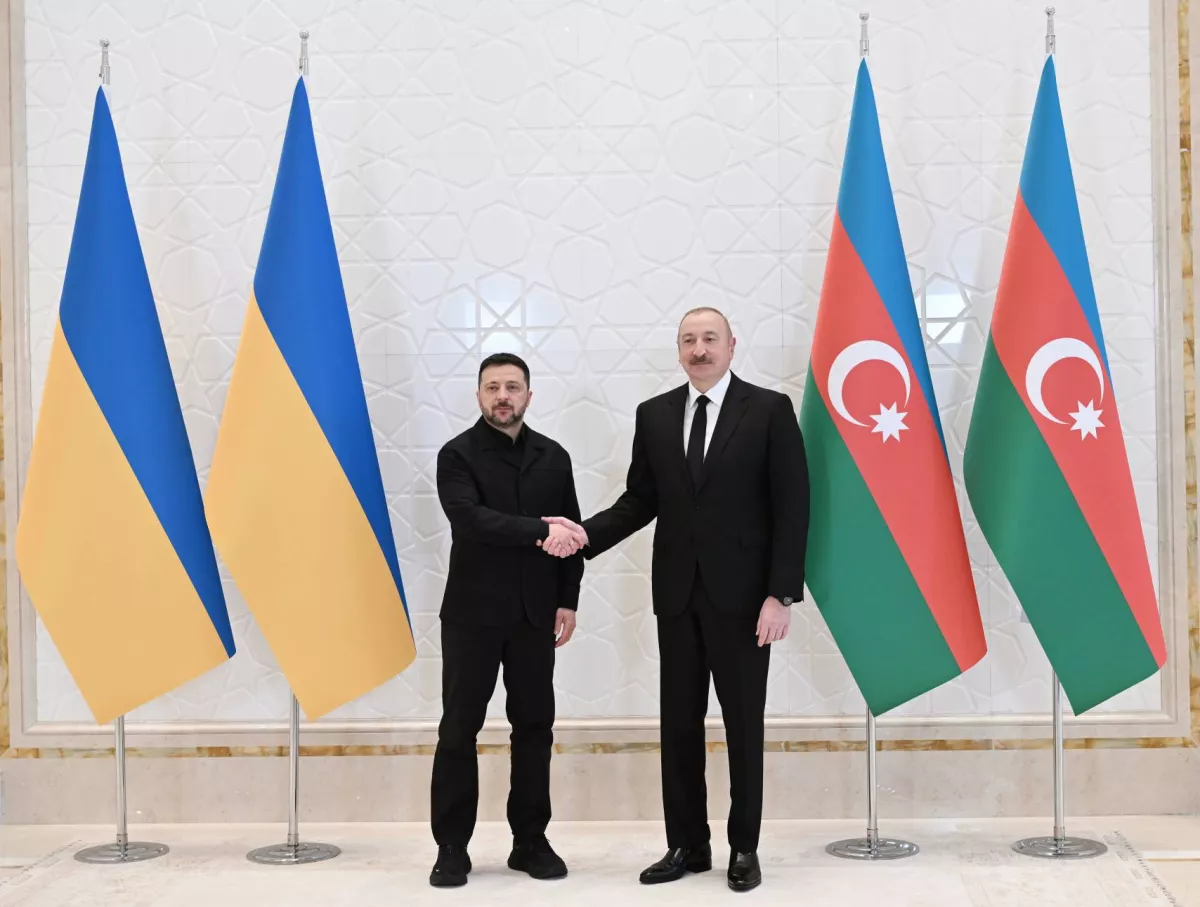
Gabala hosted Ukrainian President Volodymyr Zelenskyy in a working format. It was the seventh meeting between the two presidents over the past four years, Zelenskyy’s first visit to Azerbaijan since the start of the Russian-Ukrainian war, six documents signed in a single day, a one-on-one conversation, followed by expanded-format talks and a joint press statement. Outwardly — a routine protocol meeting. In substance — another confirmation of the course that Baku has been following for many years.
It is worth starting with what lies at the foundation. When Azerbaijani-Ukrainian relations are discussed today, some analysts get the impression that this is a partnership shaped by the current war and directed against third countries. This is a fundamentally incorrect approach. The strategic partnership between Baku and Kyiv was formed long ago: the relevant declaration was signed in Kyiv back in 2008, and a second basic document was signed in Baku in 2011. Eighteen years of institutional cooperation, during which the two sides have recognised a key principle in each other — sovereignty, territorial integrity, and the inviolability of borders. This is political capital accumulated through different periods.
When President Ilham Aliyev said in Gabala that the two countries have supported and will continue to support each other’s sovereignty in all international organisations, he was not voicing an intention, but describing an already established practice.
It is clear that the current meetings are taking place in a particularly sensitive period. It is also important to emphasise that since the start of the Russian-Ukrainian war, Azerbaijan has consistently pursued an independent course, avoiding alignment with either side of the conflict and resisting external pressure.
At the same time, the eleven packages of humanitarian aid provided to Ukraine — primarily directed towards the energy sector, the most vulnerable area for Kyiv amid systematic strikes on its infrastructure — have required serious political determination from Baku. More than five hundred Ukrainian children from frontline regions have found temporary shelter, rest, and rehabilitation in Azerbaijan. In peacetime, such a figure would be seen as mere statistics, but in the context of war it carries a different weight.
In Gabala, President Volodymyr Zelenskyy specifically expressed his gratitude to Azerbaijan for this support.
The economic fabric of relations also has very concrete substance. Trade turnover exceeding half a billion dollars, the long-standing presence of SOCAR on the Ukrainian market, and ongoing discussions on investment initiatives and energy projects — all of these are areas that, in the conditions of war, have not been rolled back but rather adapted and further expanded.
In Gabala, Ilham Aliyev spoke about significant opportunities for further growth, and behind these words lies a precise calculation: the economies of the two countries are complementary, and Ukraine’s energy dependence on reliable partners — after the destruction of a significant part of its infrastructure — will, in the coming years, only continue to increase.
The most delicate topic of the visit is military-technical cooperation. And here it is necessary to speak with particular precision, as this subject is likely to generate considerable political speculation, including deliberate distortions of the actual picture. Therefore, the essence should be clearly stated from the outset.
The military-technical interaction discussed in Gabala is being carried out on the territory of Azerbaijan. It is defensive in nature. Its central focus is countering unmanned aerial systems. Ukrainian specialists, as President Zelenskyy himself noted, are sharing expertise with their Azerbaijani counterparts; the sides are also considering possibilities for joint production in the defence-industrial sector.
There have been no supplies of Azerbaijani weapons to the Ukrainian front, nor is Azerbaijan involved in any military dimension of the Russian-Ukrainian war — neither has this been the case in the past, nor is it envisaged for the future. Baku is not a party to this conflict and has never assumed such a role.
Its position regarding the war is that of a country which consistently supports Ukraine’s territorial integrity within its internationally recognised borders, while at the same time maintaining good-neighbourly relations with Russia.
Within such a geopolitical configuration, if Azerbaijan develops an exchange of experience with Ukraine on countering drones — one of the most in-demand areas of modern defence today — it does so strictly on the basis of its own interests, which are not directed against any third country.
Here it is worth making another digression. In the Azerbaijani context, the issue of unmanned aerial vehicles has long ceased to be abstract: countering UAVs has become one of the priority tasks. Ukraine, in this regard, possesses a level of experience that few countries have today — continuously updated battlefield practice and real operational expertise across the entire spectrum of drone warfare, from intercepting “Shaheds” to electronic warfare systems.
The combination of Ukraine’s practical combat experience with Azerbaijan’s technological capabilities provides both sides with exactly what they need.
And here we come to the third cornerstone of the Gabala visit — a doctrine that President Aliyev has been formulating for years and which today sounds particularly clear.
Azerbaijan builds equal relations with all. With all — meaning even with states that are in conflict with one another. Equal relations are not a sum of concessions or a balancing act of appeasement. Rather, they are about engaging with each country based on one’s own national interests, with respect for the partner’s interests, but without accepting externally imposed exceptional demands.
This simple, in essence, formula of sovereign foreign policy provokes irritation among some observers precisely because it does not fit into the familiar logic of bloc confrontation. Azerbaijan has the sovereign, inalienable and non-delegated right to determine the circle of its partners and the nature of its engagement with them.
For a state that restored its territorial integrity through its own army and its own political will, this right carries particular weight.
Particularly telling was a fragment of President Zelenskyy’s press statement in which he touched upon the issue of mediation. He recalled that negotiation formats between the Ukrainian and Russian sides had taken place in Türkiye, while consultations with American partners were held in Geneva. He also expressed readiness to hold talks in Azerbaijan, should Moscow agree to such a format.
In effect, this is a public acknowledgment that Baku possesses those rare qualities that make a venue acceptable to all sides: neutrality, working relations with all relevant actors, institutional and infrastructural maturity, and a reputation as a country capable of facilitating serious dialogue.
Behind this lies something even more important — consistency of policy and predictability in the behaviour of official Baku. In contemporary international politics, this is a rare combination. And this is what sovereignty looks like in practice.







 editor@caliber.az
 +994 55 444-88-98
 Азербайджан, Баку, ул. Низами, 203, Af Business House, 5-й этаж