










Belarus in the crosshairs Analysis by Limansky
Tensions surrounding Belarus are mounting: opposition figure Sviatlana Tsikhanouskaya has paid a visit to Kyiv, while the commander of Ukraine’s drone forces has announced the existence of 500 targets on Belarusian territory.
The escalation of military rhetoric around Belarus continues unabated. At the same time, increasingly far-fetched accusations are being made against Minsk, while all Belarusian initiatives aimed at a peaceful settlement are being completely ignored.
A special train to escalation
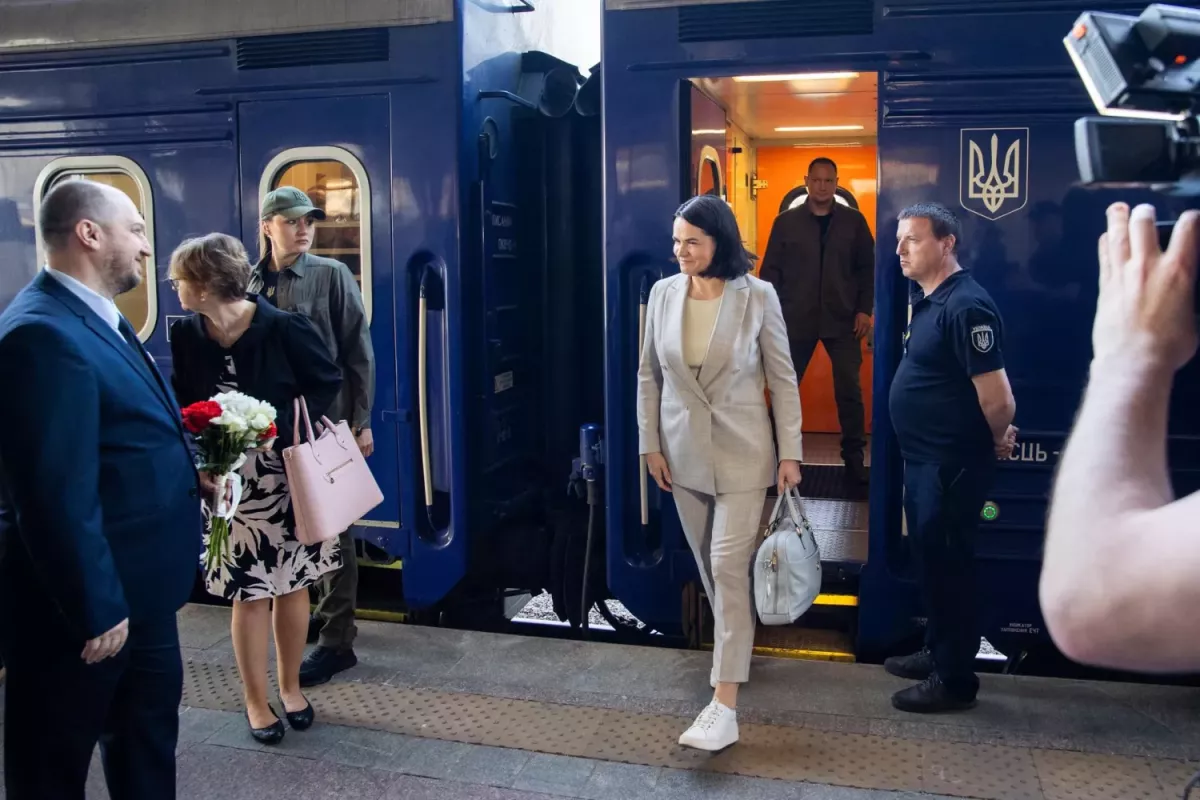
On May 25, Belarusian opposition politician Sviatlana Tsikhanouskaya, who refers to herself as the head of the “United Transitional Cabinet,” arrived in Kyiv aboard a special train.
The visit came shortly after Ukraine’s Foreign Ministry rejected Alexander Lukashenko’s proposal to meet with Volodymyr Zelenskyy “at any location in Ukraine or Belarus.” Instead, Kyiv demonstratively proceeded with Tsikhanouskaya’s visit, which had first been announced back in January.
Following President Volodymyr Zelenskyy’s address in Kyiv, the self-styled “democratic leader” also took the stage, where she proposed drawing up a somewhat fanciful “Marshall Plan for a New Belarus.”
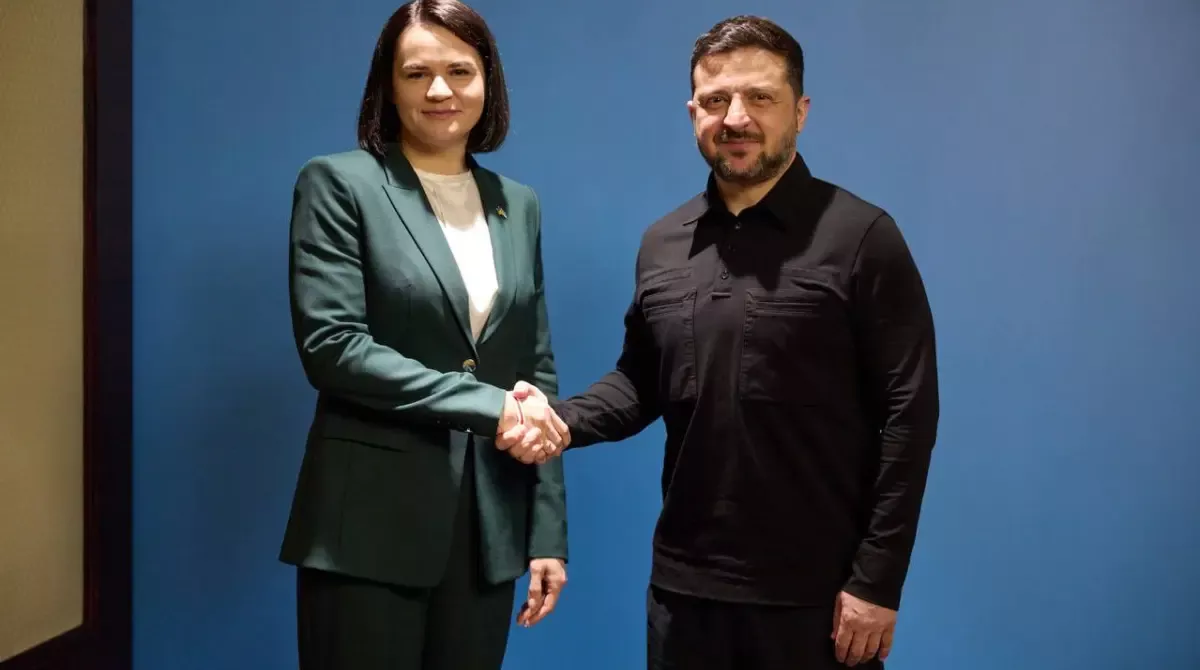
On May 26, at a meeting between Tsikhanouskaya and her accompanying team with Volodymyr Zelenskyy, more concrete issues were discussed. These included new sanctions against Belarus, the creation of an “interagency group” involving Ukrainian state bodies and Belarusian opposition structures, and questions regarding the legal status of Belarusian volunteers in the Armed Forces of Ukraine, among other topics.
Tsikhanouskaya and Zelenskyy strongly opposed U.S. President Donald Trump’s decision to lift sanctions on Belarusian potash and its transit through Lithuania. In addition, Belarusian nationalists proposed initiating a case against Belarus at the International Criminal Court. Video footage of the meeting shows that the faces of almost all participants appeared rather somber — only Tsikhanouskaya seemed cheerful and smiling.
The opposition émigré politician also held a closed-door meeting with Ukrainian Foreign Minister Andrii Sybiha. They reportedly discussed plans to overthrow the current government in Belarus, the creation of a special tribunal for Alexander Lukashenko, and other issues. It was also suggested that Belarus should, in the future, join the so-called “Lublin Triangle” — Poland, Ukraine, and Lithuania — which would effectively pave the way for a revival of the former Polish–Lithuanian Commonwealth. Sybiha also reportedly promised to promote new sanctions against Belarus through the EU.
The Ukrainian Foreign Ministry also presented Belarusian opposition representatives with documents from the times of the Belarusian People’s Republic (BNR) and the Ukrainian People’s Republic (UNR). Yet it is unlikely that they also recalled that in 1918, much of southern Belarus — including Gomel, Mazyr, Pinsk, and Brest — was attached, with the help of German occupation forces, to the UNR. What, then, are Belarusian nationalists prepared to “repay” for such “assistance” this time?
Tsikhanouskaya also inaugurated a permanent “Mission of Democratic Forces” in Kyiv. In addition, a special envoy on Belarus was officially appointed — the position going to the Foreign Ministry’s ambassador-at-large, Yaroslav Chornogor.
An ambiguous reception
For a long time, Kyiv — unlike Warsaw, Vilnius, and Brussels — did not host Sviatlana Tsikhanouskaya at an official level. This visit can therefore be seen as a significant breakthrough for the Belarusian opposition. However, there are nuances: the meeting between the “democratic leader” and Volodymyr Zelenskyy did not take place in the presidential residence, but in a hotel on the sidelines of a forum of cities.
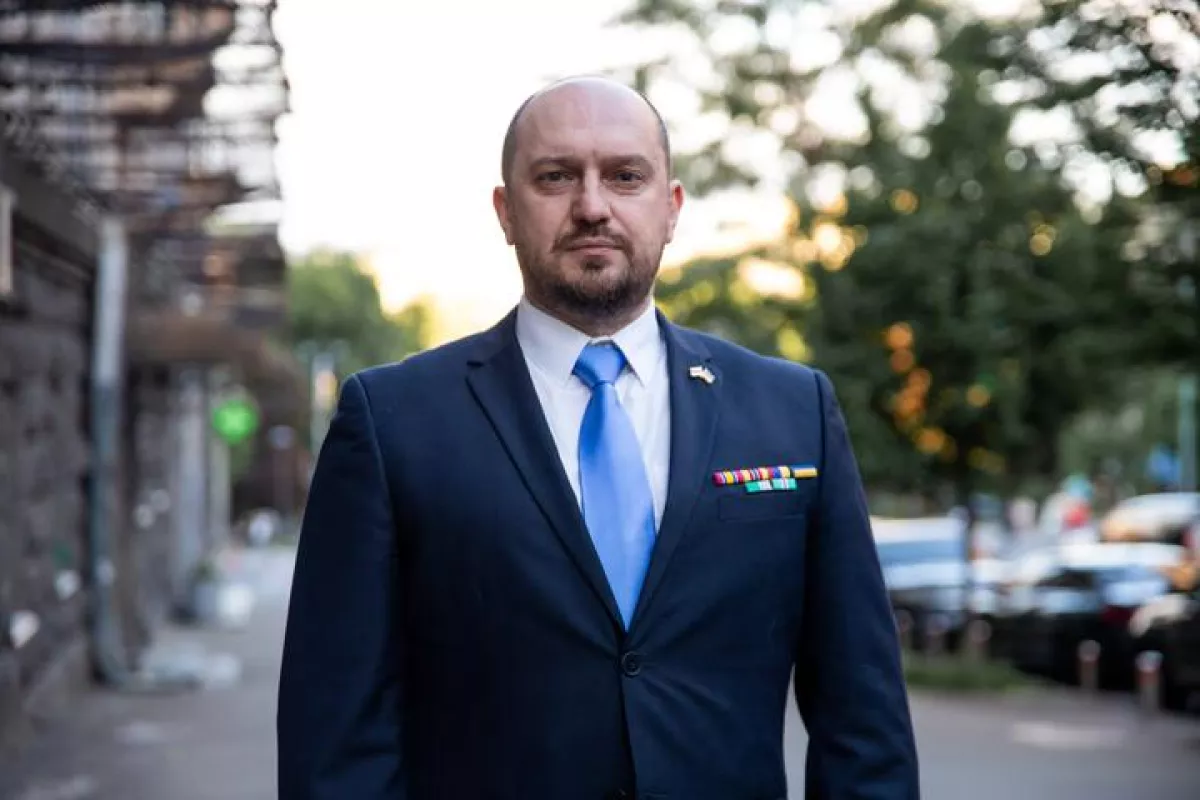
The “special envoy for Belarus” was not appointed by a presidential decree, but by an internal decision of the Ministry of Foreign Affairs. Yaroslav Chornogor previously served as the MFA ambassador-at-large for the “unfriendly countries” direction. Now it has simply been officially clarified that he will specifically deal with Belarus.
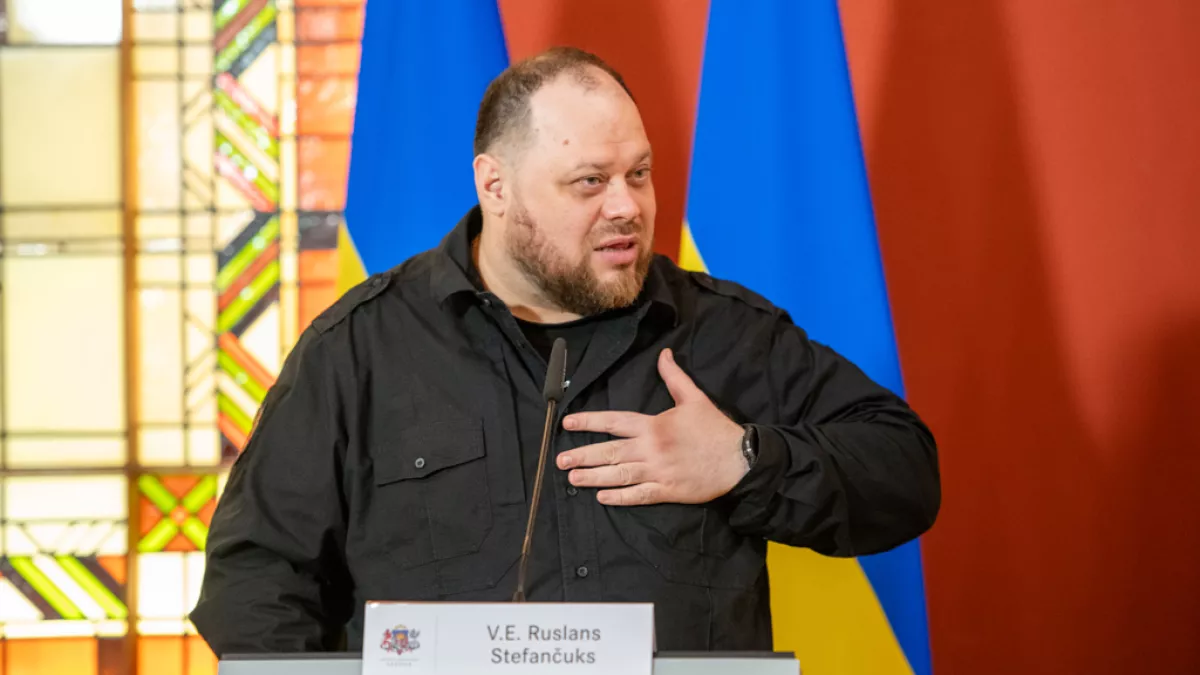
Meanwhile, the Speaker of the Verkhovna Rada, Ruslan Stefanchuk, even refused a scheduled meeting with Tsikhanouskaya, citing a busy schedule.
What could this indicate? That not everyone in Kyiv is willing to burn bridges? Yes and no.
Yes — because for a long time Belarus was not subjected to aggressive attacks from the Ukrainian side; it has served, and still serves, as a mediator between Russia and Ukraine. Through the “Novi Yarylovychi” border crossing in the Gomel region, exchanges of Russian and Ukrainian prisoners are carried out, and through the Ukrainian embassy operating in Minsk, technical issues of diplomatic relations between Kyiv and Moscow are being resolved.
Is it likely that there are still different approaches to Belarus within Ukraine’s leadership today?
No, because Kyiv is currently deliberately and without any particular pretext escalating relations with Belarus to an unprecedented level.

And the latest in a long series of bellicose statements is that the Commander of the Unmanned Systems Forces, Robert “Madyar” Brovdi, said that 500 targets have already been identified in Belarus for strikes, and personally issued threats against Lukashenko.
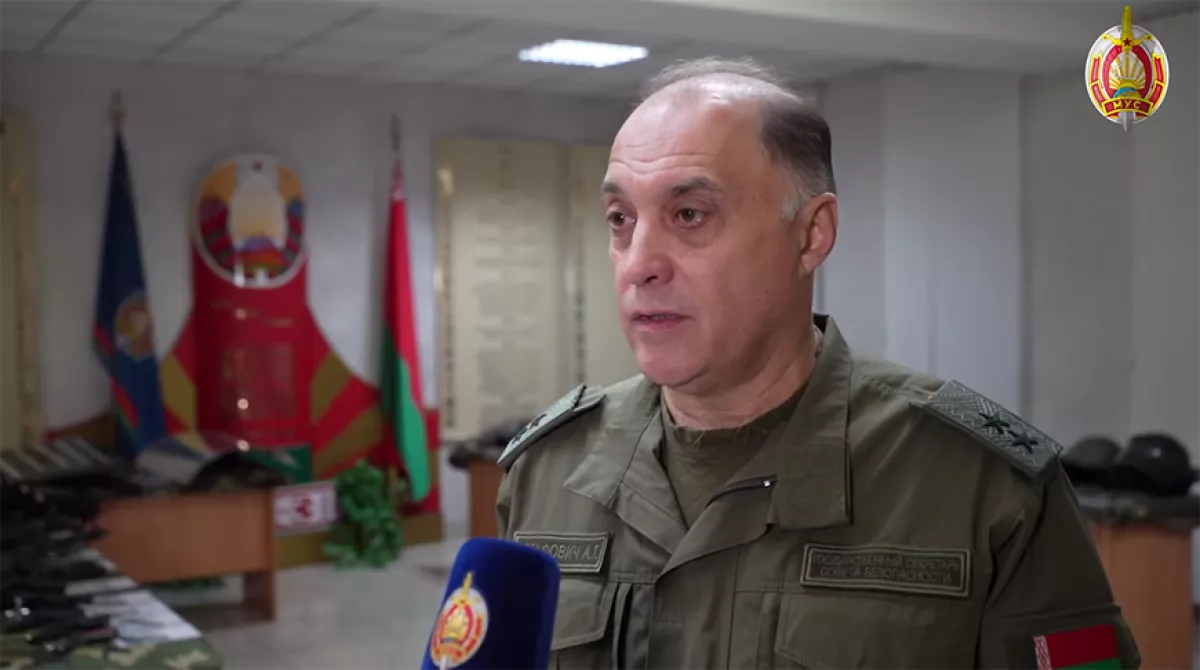
The State Secretary of the Security Council, Alexander Volfovich, reported that 116 attempts to cross the Belarusian border by Ukrainian UAVs were recorded over the past week.
Drones have previously occasionally entered Belarusian territory, but they were usually drones that had been diverted off course by electronic warfare systems or reconnaissance UAVs. Over the past week, however, there have been several attempts to strike border infrastructure and communication facilities. Belarusian air defence has responded to these incidents.
Representatives of the “United Transitional Cabinet” readily support even openly terrorist threats against the head of the Belarusian state. Belarus and its Armed Forces, however, are ready to deliver the harshest response to any aggression — including the use of “Polonez” multiple launch rocket systems.
Peace — or not?
The current visit by Tsikhanouskaya to Kyiv is also seen as a serious step towards rapidly escalating tensions. This chain of provocations is directly aimed at breaking diplomatic relations, followed by a transition to a “hot phase”.
So, what is the reason for such intensifying tensions, unprovoked from the Belarusian side? Some experts argue that this became possible after the resignation of the Head of the Presidential Office, Andriy Yermak, who held more moderate positions toward Belarus. But it appears that it is in fact a certain policy of Minsk that has triggered these hostile attacks.
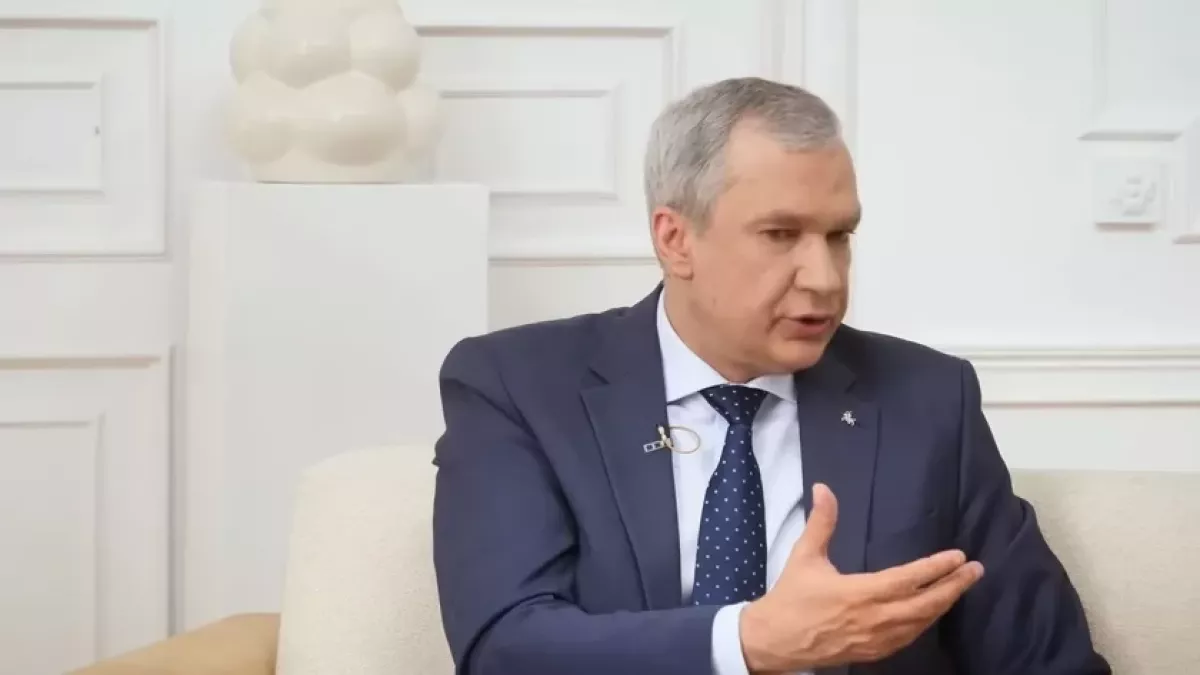
The cards were partly revealed by Tsikhanouskaya’s deputy, Pavel Latushko — a former Minister of Culture who defected in 2020 to the liberal opposition camp. On a Ukrainian television channel, Latushko stated that during the recent meeting, he warned Zelenskyy that Alexander Lukashenko allegedly wants to hold “Minsk-3” peace talks between Russia and Ukraine in Belarus. However, Zelenskyy’s refusal to negotiate with Lukashenko is, in Latushko’s view, “a good signal for the West.”
The deputy of Tsikhanouskaya is alarmed: in recent times, German, French and other diplomats have increasingly been visiting Minsk. They describe this as “technical contacts,” but Latushko — himself a former ambassador to France — does not believe this explanation and understands that the possibility of normalising relations with Belarus is being discussed.
The opposition figure also criticised the successful negotiations between Lukashenko and the administration of Donald Trump. According to him, the release of “political prisoners” is a positive step only if it is a purely humanitarian gesture. Otherwise, Latushko implied, the deal could be driven by Trump’s business interest in Belarusian potash.
Thus, it is precisely Belarus’s peaceful policy that has caused the current escalation around it. The Belarusian leadership seeks to uphold its sovereign positions in all circumstances, even the most difficult ones, and it is de-escalation that best serves the national interests of the country.
Belarus has no militaristic ambitions. It not only firmly resists external pressure but is also free from agents of foreign influence within the country; it never allows itself to be manipulated, drawn into dangerous adventures, or pushed onto the path of capitulation. Moreover, in recent times, Minsk’s peaceful course has begun to yield certain practical results: at least on the negotiation track with the United States, dialogue has potentially also become possible with part of the more pragmatic European political establishment. It is precisely this that has become a challenge for the “hawks” in the West, who see even the hypothetical possibility of normalisation of relations with Minsk as a dangerous precedent. Now these circles, for whom war and expansion are the main means of existence, are prepared to resort to any provocations against Belarus…







 editor@caliber.az
 +994 55 444-88-98
 Азербайджан, Баку, ул. Низами, 203, Af Business House, 5-й этаж