










Powering Nakhchivan: Inside Azerbaijan’s $152 million investment drive KHAZAR AKHUNDOV’S REVIEW
Comprehensive public administration reforms implemented across the Nakhchivan Autonomous Republic (NAR) over a condensed timeframe have restructured the region's economic architecture, providing a distinct catalyst for regional growth. Marking the next phase of this economic trajectory, Azerbaijani President Ilham Aliyev signed an executive decree allocating 258 million manats (approximately $151.7 million) aimed at accelerating the socio-economic development of the autonomous exclave.
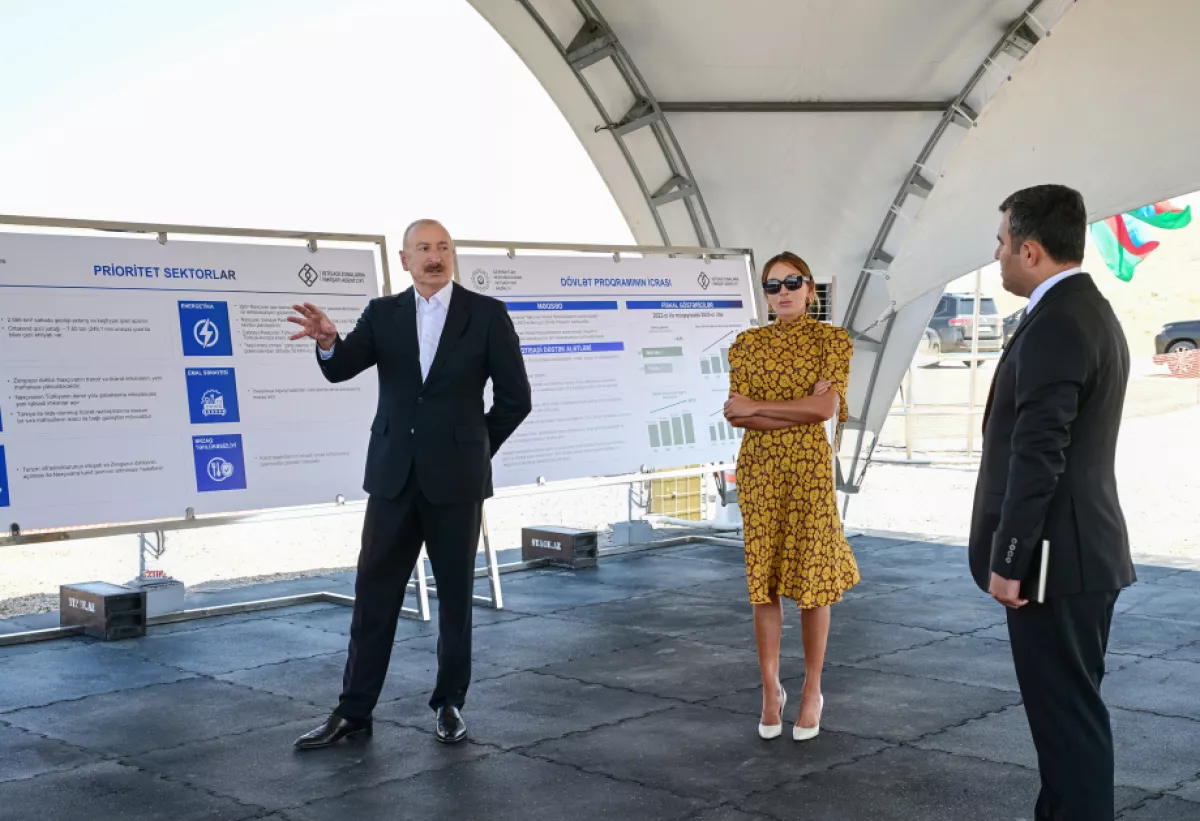
The president's recent working visit to the Nakhchivan Autonomous Republic highlighted the structural progress achieved in recent years and underscored the operational impact of regional administrative reforms.
During an interview with Azerbaijan Television (AzTV) during his visit, President Aliyev emphasised the continuity of state-led investment in the region.
"Over these years, many important projects have been implemented, and the overall development of Nakhchivan has been ensured. Today’s events are, in a sense, a continuation of the work accomplished, and naturally, the necessary decisions will continue to be made in the future to ensure the rapid socio-economic development of Nakhchivan," Aliyev said.
Macroeconomic indicators underscore the operational impact of these structural reforms. By the end of 2025, real GDP in the Nakhchivan Autonomous Republic (NAR) grew by 7.6 per cent, driven by a 4.6 per cent rise in industrial output and a 25.7 per cent surge in the transport and warehousing sectors. Momentum continued into the first half of 2026, with regional GDP reaching 835.460 million manats ($491.45 million), reflecting a 2.5 per cent year-on-year increase. Central to this growth trajectory is a targeted policy model prioritising private enterprise, improved capital accessibility, and regulatory streamlining.
A key driver of private-sector expansion has been targeted credit support. Between 2023 and mid-2026, the NAR Entrepreneurship Development Fund allocated 27.2 million manats ($16 million) in concessional loans across 342 small and medium-sized enterprise (SME) projects. Notably, 77 per cent of these funded ventures were launched over the last 18 months. These institutional mechanisms have expanded the total number of registered active SMEs in the region by more than 60 per cent over recent years.
Concurrently, fixed-asset investment has emerged as a cornerstone of regional expansion. Capital formation in the autonomous republic in 2025 grew 2.5-fold relative to 2023 levels, supported by a 2.1-fold increase in construction sector investment. Capital inflows accelerated further through the first seven months of 2026, with total fixed capital investment reaching 118.4 million manats ($69.65 million) between January and July — a 45.9 per cent increase compared to the corresponding period in 2025.
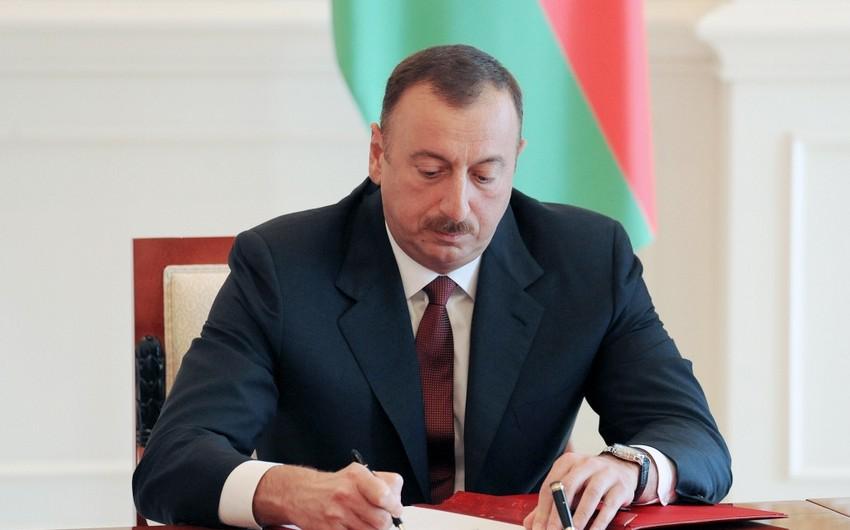
A major catalyst for regional infrastructure, municipal construction, and public welfare programs is the newly signed presidential decree allocating 258 million manats ($151.76 million) to accelerate socio-economic progress across the Nakhchivan Autonomous Republic (NAR). According to the preamble of the executive order, the autonomous republic continues to meet state program benchmarks while expanding its contribution to the nation's economic and intellectual capabilities—a trajectory the government aims to consolidate. Jointly financed through the state budget of Azerbaijan and the regional budget of the NAR, the funds are earmarked for several targeted development initiatives.
Green energy infrastructure represents a major funding priority, with 66 million manats ($38.82 million) designated for construction and assembly work at the 15.6 MW Tivi Hydroelectric Power Plant in the Ordubad District. In tandem, 70 million manats ($41.18 million) will fund capital overhauls across 420 kilometres of inter-village and municipal road networks spanning five cities and ten villages, directly improving transit connectivity for 26 settlements housing 156,300 residents.
Social infrastructure and urban housing projects will also receive substantial allocations across the region. Higher education investments include 25 million manats ($14.71 million) for a new 1,000-bed student dormitory complex at Nakhchivan State University. Urban housing modernisation will be supported by 15 million manats ($8.82 million) designated for the total reconstruction of 92 apartment blocks comprising 2,164 units across Nakhchivan, Sharur, Julfa, Ordubad, and Shahbuz, along with façade restorations on 70 additional residential structures.
Furthermore, early childhood education will receive 20 million manats ($11.76 million) dedicated to constructing five new preschool facilities accommodating 640 children across urban and rural municipalities. Local municipal utility support includes 9 million manats ($5.29 million) granted to local executive bodies to rehabilitate 45 central heating boiler plants servicing 5,335 apartments in 122 residential buildings across four major towns. Finally, public transit upgrades are backed by 53 million manats ($31.18 million) allocated to the Ministry of Digital Development and Transport to overhaul and modernise the fleet of regional intercity transit systems.
According to economic analyst Metin Kamal, the capital distribution outlined in the presidential decree delineates the core priorities of Nakhchivan’s next development phase. Kamal noted that targeted investments in transport infrastructure and energy production serve as the fundamental catalysts across all primary economic sectors. He further emphasised that the significant resources channelled into social infrastructure represent a long-term investment in human capital.
Concurrently, Member of Parliament Mushfig Mammadli noted that the modernisation of Nakhchivan extends beyond regional economic planning, forming an integral component of Azerbaijan’s overarching geopolitical and geoeconomic strategy. Mammadli highlighted the region's geographical positioning, observing that while its location "created certain limitations for many years, today it provides a significant strategic advantage."
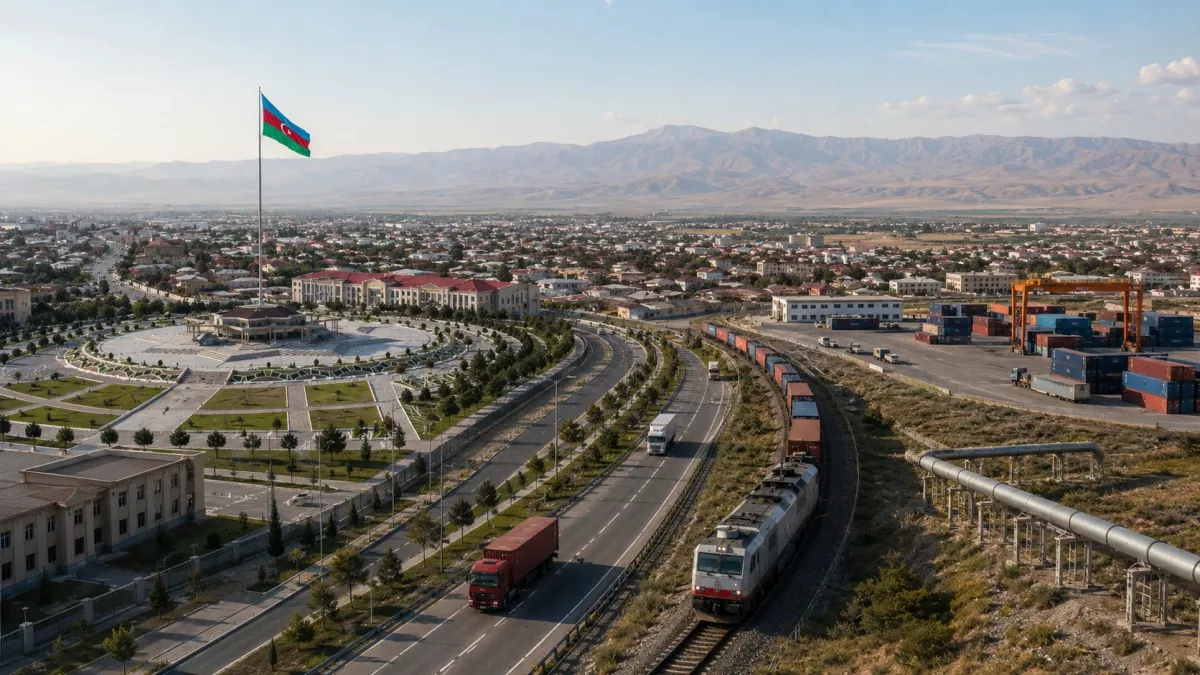
Positioned along the Central Asia–Europe trade axis, Nakhchivan is increasingly positioned as a key transit node in the evolving regional energy and transport architecture. State-backed investments in road networks, green energy capacity, and municipal utility networks directly support the region’s integration as a critical logistics hub along the Middle Corridor trade route.







 editor@caliber.az
 +994 55 444-88-98
 Азербайджан, Баку, ул. Низами, 203, Af Business House, 5-й этаж