










Washington wants to remake Cuba. The clock is already running ARTICLE BY MATANAT NASIBOVA
Along with the prolonged confrontation with Iran, where the pace of events resembles the steady tick of a metronome, Cuba remains a central focus of U.S. foreign policy — a topic on which American administration officials regularly deliver unambiguous statements.
Recently, U.S. Secretary of State Marco Rubio declared that the administration of President Donald Trump intends to achieve irreversible political transformation in Cuba before the end of its term. He added that dismantling the island's current system could mirror the post-Cold War democratic transitions seen across Eastern Europe, pointing to Poland as a prime model.
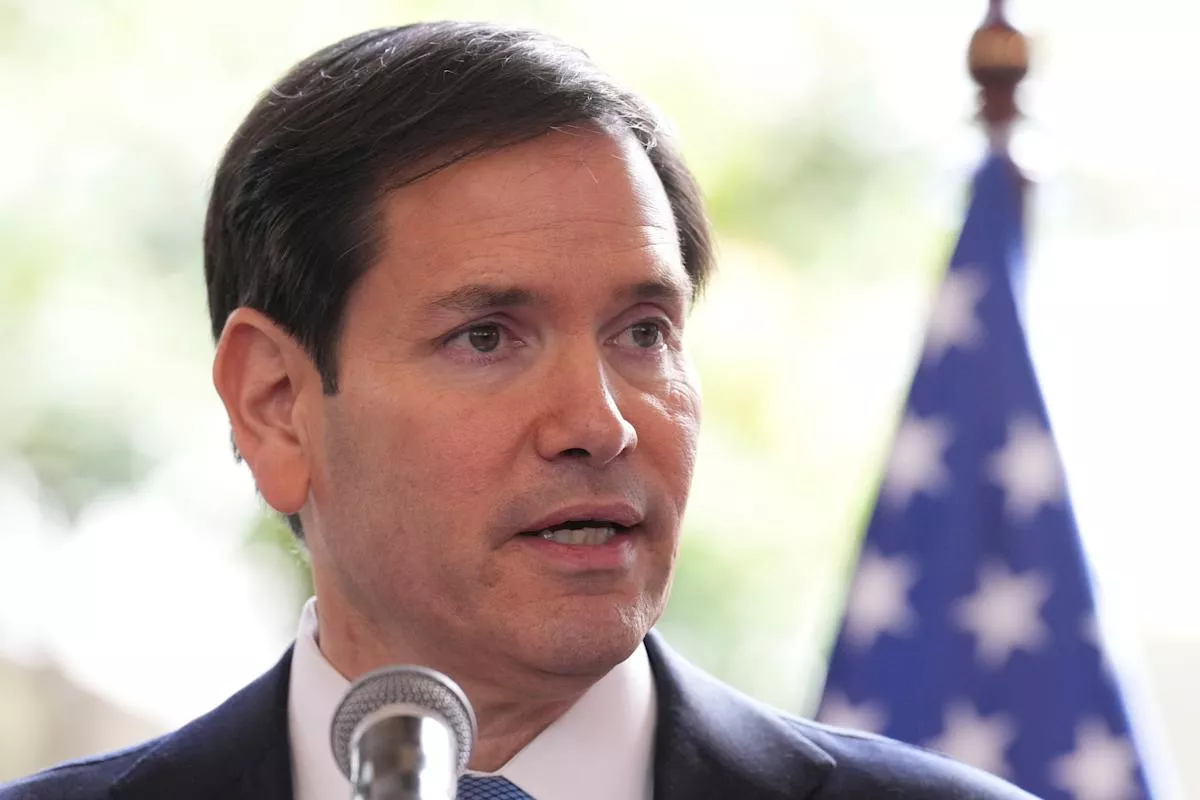
"It took three to five years for Eastern European countries to truly become the nations we know today. Poland is probably the best example. So I believe Cuba will take that path," Rubio noted, emphasising that Washington wants to see "Cuba safe, stable, and in harmony with the United States," as this directly serves American national interests.
This latest statement by the U.S. Secretary of State aligns fully with Washington's previous declarations and policy steps, demonstrating the White House's unchanged objectives regarding Havana. Crucially, it sets a clear timeline for transforming the political system on the Island of Freedom — establishing a deadline of January 2029, when President Donald Trump’s term expires.
The Secretary of State's strong emphasis on American national interests indicates that the United States is unlikely to deviate from its strategy. Beyond domestic considerations, Washington is driven by a broader geopolitical imperative: preventing Russia and China from leveraging Cuban territory to project power across the Caribbean Basin. Grounded in the spirit of the Monroe Doctrine, the U.S. remains committed to shielding the Western Hemisphere — its long-established sphere of influence — from rival global powers. Furthermore, American strategists view Cuba’s proximity, combined with its constitutional adherence to Marxism-Leninism and the ideology of José Martí, as a persistent risk to U.S. internal security.
Washington’s strategy hinges on two intertwined objectives: engineering a leadership transition in Havana and blocking the island from becoming a strategic foothold for Moscow and Beijing. Active measures are already underway, most notably through an effective energy blockade designed to exert maximum economic pressure on the regime.
Concurrently, Washington appears to be exploring potential interlocutors for Cuba's political transition. Recent reports suggest that U.S. officials have engaged in quiet discussions with Raúl Guillermo Rodríguez Castro, the grandson of Raúl Castro. Analysts note that despite the Castro family's formal exit from executive power in 2018, key figures within the lineage are re-emerging as pivotal players amid mounting American pressure and Cuba's worsening energy crisis.
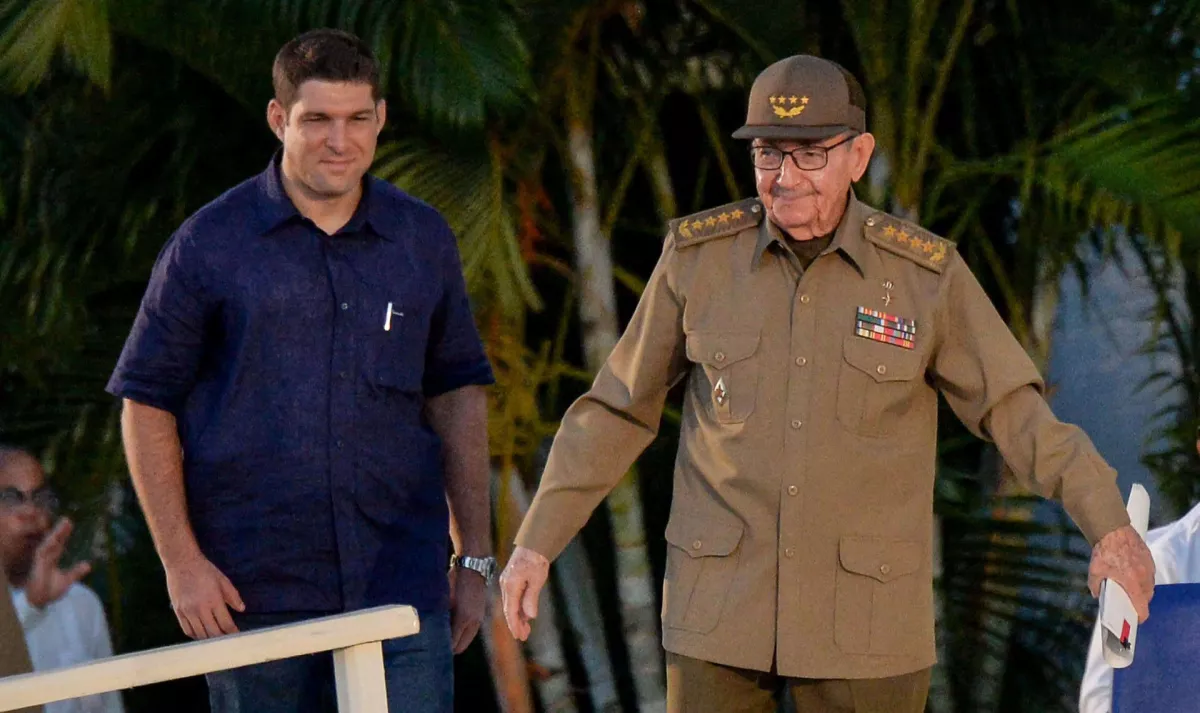
Raúl Guillermo Rodríguez Castro’s family exerts substantial influence over pivotal sectors of the Cuban economy, including tourism, imports, and critical infrastructure. Having launched his career in the security apparatus as the personal bodyguard of his famous grandfather, he gradually assumed control over the protective service system and consolidated authority over the state security framework. This strategic positioning enabled him to build a deep network of personal loyalty, solidifying his standing within the island’s ruling elite. Today, Rodríguez Castro effectively acts as the sole gatekeeper to his 94-year-old grandfather, who retains immense behind-the-scenes influence despite his advanced age, making the younger Castro an indispensable intermediary in elite communications. Furthermore, individuals close to Rodríguez Castro report that he makes no secret of his political ambitions to eventually assume the Cuban presidency.
These dynamics suggest that a broader political sequence has already been set in motion, raising a critical question: how does Washington plan to engineer the removal of President Miguel Díaz-Canel, and could the U.S. execute an operation similar to the one in Venezuela that resulted in the arrest and extradition of Nicolás Maduro?
In assessing this scenario, analysts emphasize a fundamental distinction: Cuba’s political architecture is vastly more rigid, ideologically cohesive, and resilient than Venezuela's regime. For decades, the Cuban party and security apparatus have systematically fortified itself against external influence — a reality well understood in Washington. It is no coincidence that The New York Times previously reported that specialised U.S. working groups are actively seeking fractures within the Cuban elite to identify potential figures to lead a transition.
Intriguingly, despite applying heavy diplomatic rhetoric and energy pressure on Cuba, the United States continues to leave a "window of opportunity" open for the island's private sector. Reuters reported recently that American fuel exports to private Cuban enterprises are already fostering a new market. This paradoxical tactic by Washington resembles less a traditional blockade and more a calculated attempt to restructure the nation's economic ecosystem — drastically minimizing the state's role in addressing acute domestic crises and delivering a severe blow to the standing of the current authorities.
Summing up these developments, the evidence suggests that the United States is currently betting primarily on internal destabilization, treating a direct military intervention as a secondary contingency plan. Exactly how events surrounding the Island of Freedom will unfold remains to be seen. However, one reality is undeniable: Washington will spare no effort to reformat Cuba’s internal political landscape while preventing Russia and China from entrenching their presence in the Western Hemisphere.







 editor@caliber.az
 +994 55 444-88-98
 Азербайджан, Баку, ул. Низами, 203, Af Business House, 5-й этаж