










Ukraine enters political storm Fedorov challenges Zelenskyy’s rule
Ukraine is once again being shaken by a series of high-profile developments, beginning on August 18, when former Defense Minister Mykhailo Fedorov addressed the Ukrainian public and effectively opened a new chapter in the country’s internal political struggle. He said there was a need to find a legal and safe mechanism for holding presidential and parliamentary elections even as the war continues.
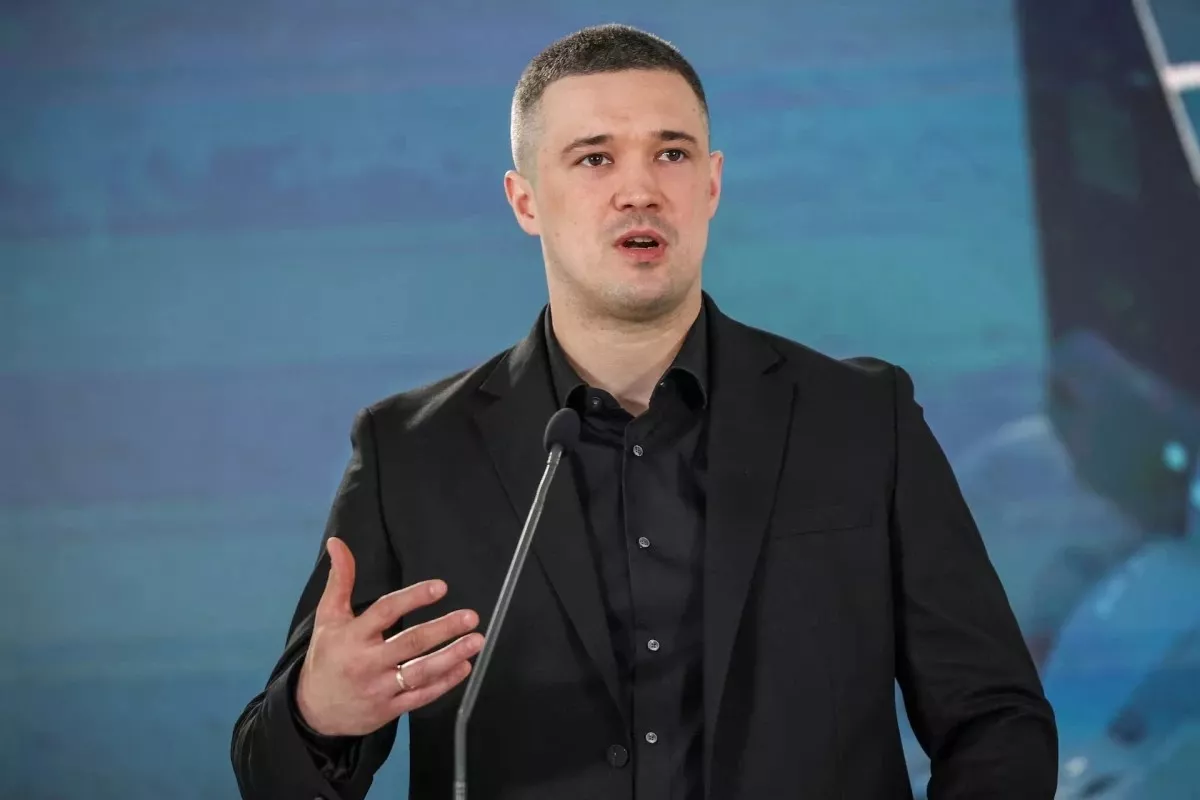
Naturally, his remarks were immediately met with objections: elections cannot be held during wartime, they would be dangerous, it would be impossible to ensure a normal electoral process, and the very discussion could allegedly play into Russia’s hands. Yet there is one detail that cannot be ignored. Fedorov raised the issue of elections precisely now, following a sharp rise in his popularity. According to a July poll by the Rating Group, the former minister’s approval rating reached 65%, compared with 59% for Volodymyr Zelenskyy. In another survey, Fedorov also ranked among the most popular potential political figures, while in several second-round election models, he was ahead of the incumbent president.
Given all of the above, it would be naive to view his statement simply as an abstract reflection on democracy. Fedorov knows perfectly well what he is saying and why he is saying it now. Moreover, in his address, he placed particular emphasis on the problem of corruption, the influence of private interests on government decision-making, and the need to restore genuine political competition. And literally the next day, an event unfolded that gave his words an entirely different meaning.
Ukraine’s National Anti-Corruption Bureau (NABU) and Specialized Anti-Corruption Prosecutor’s Office (SAPO) announced a special operation dubbed “Forrest Gump” — an investigation into the activities of an alleged criminal organization that, according to investigators, involves sitting and former members of parliament, senior officials from the Office of the President, and other individuals. One of the episodes centers on the laundering of UAH 150 million ($3.3 million), which was used to post bail for one of the suspects in the “Midas” case — former Energy Minister Herman Halushchenko.
And this is where things get particularly interesting. NABU released materials indicating that this was not simply a matter of finding money for bail. Investigators are examining a scheme to “bring to light” a huge sum of money through controlled companies and financial structures. According to the anti-corruption bureau, the operation involved a state-owned bank, accounts belonging to companies under the suspects’ control, and private individuals. Particular attention was drawn to recordings of conversations, one of which discusses the distribution of UAH 150 million among several individuals: “50” was to be provided by one person, “50” by another, and another “50” by a third. One of them says that the money would be distributed “among three cars.” Another recording discusses the need to meet with the chairman of the board at Sense Bank, as well as a direct payment of UAH 50 million.
The mere appearance of a state-owned bank in the case is serious enough that, on August 19, the Verkhovna Rada decided to summon National Bank Governor Andriy Pyshnyi to report on the situation surrounding Sense Bank. The motion was supported by 155 lawmakers. In other words, the story has ceased to be just another criminal case and has moved into the realm of the country’s financial system, state apparatus, and parliament, directly affecting people who until yesterday were considered among the most influential members of the country’s political establishment. And in this context, particular attention is drawn to Iryna Mudra, the now-former deputy head of the Office of the President, who was responsible for legal policy and international litigation.
On the very day information emerged about NABU investigative actions involving her, Volodymyr Zelenskyy signed a decree dismissing her. However, this did little to resolve the problem that had emerged for him personally, because Mudra was part of the president’s inner circle: she held a senior position and wielded considerable influence. Her swift dismissal looks like an attempt to distance Bankova from yet another source of political contamination as quickly as possible. Yet the reputational damage does not simply disappear.
Among other things, it was Petro Poroshenko who accused her of putting pressure on the court in the case concerning sanctions against the fifth president. According to available information, she also carried out an order to impose personal sanctions on Boryslav Bereza, Volodymyr Omelyan, and many other opponents of Ukraine’s current president.
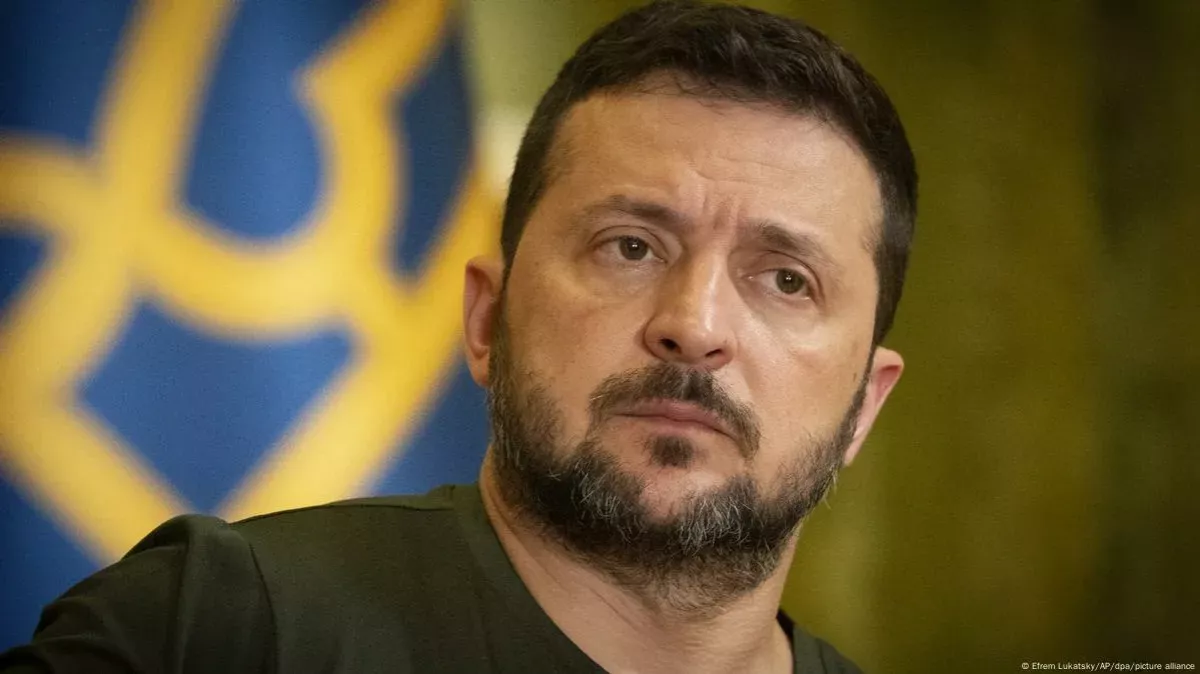
However, the most dangerous aspect for Zelenskyy lies not even in Mudra’s name itself, but in the scale of the problem. The “Midas” operation has long ceased to look like a story solely about Timur Mindich, the president’s longtime business partner who managed to flee Ukraine. The investigative materials and released recordings feature individuals linked to the state apparatus, the energy sector, the defense industry, and the political establishment.
Back in April, Ukrainska Pravda published recordings of conversations between Mindich, another longtime friend and business associate of Zelenskyy — former First Presidential Aide Serhii Shefir — and Rustem Umerov, who was then serving as defense minister. Now another layer has emerged: the story involving UAH 150 million for Halushchenko’s bail. Given this chain of events, one question inevitably arises — and it is political rather than legal: Where does the private initiative of individual corrupt actors end and political protection begin? And, to put it even more bluntly, who exactly was the main “roof” protecting this corruption network?
Against this backdrop, Fedorov’s statement is particularly interesting. He did not simply come out and say that “we need elections”; he effectively linked the issue to the state of the country, corruption, and the influence of private interests. This represents a serious political challenge, especially given his conflict with some of the influential figures in the defense sector.
In July, following his resignation, Fedorov told Ukrainska Pravda that the Defense Ministry had a serious problem with the influence of private business and law enforcement agencies on state processes. He declined to name the individuals he believed were behind the pressure on his reforms directly, but sources in political circles identified David Arakhamia, the head of the Servant of the People parliamentary faction, as one of the influential players.
However, the situation has now changed fundamentally. In his address, Fedorov effectively struck at Zelenskyy’s parliamentary power structure for the first time, speaking about the influence of private interests on the work of the Verkhovna Rada. That is why the appearance of Arakhamia in the visuals accompanying his address looks highly symbolic politically: a man who for years ensured the Bankova’s voting discipline has now come under the direct scrutiny of a potential new political player. This looks like the beginning of the formation of an alternative center of influence.
Thus, for the first time in a long while, Ukraine’s president has faced a rival from within his own political environment who combines a high level of public trust, experience working inside the system, and an understanding of its vulnerabilities. Most importantly, this rival no longer appears willing to quietly accept the rules set by Bankova. He has begun speaking openly about elections, corruption, and the need to restore the democratic process — doing so precisely at a time when his ratings are giving him the political space to go on the offensive.
Against this backdrop, it is becoming clear that the coming months are likely to be highly interesting in terms of Ukraine’s domestic political confrontation, unfolding alongside the ongoing Russian-Ukrainian war and expectations of what the authorities themselves describe as the toughest winter since the conflict began.







 editor@caliber.az
 +994 55 444-88-98
 Азербайджан, Баку, ул. Низами, 203, Af Business House, 5-й этаж