










The pull of conflict: Why Brussels and Tbilisi are once again clashing Article by Matanat Nasibova
Judging by the sequence of statements from both sides, relations between Brussels and Tbilisi seem unable to overcome the gravitational pull of negativity, repeatedly returning to the point where it all began.
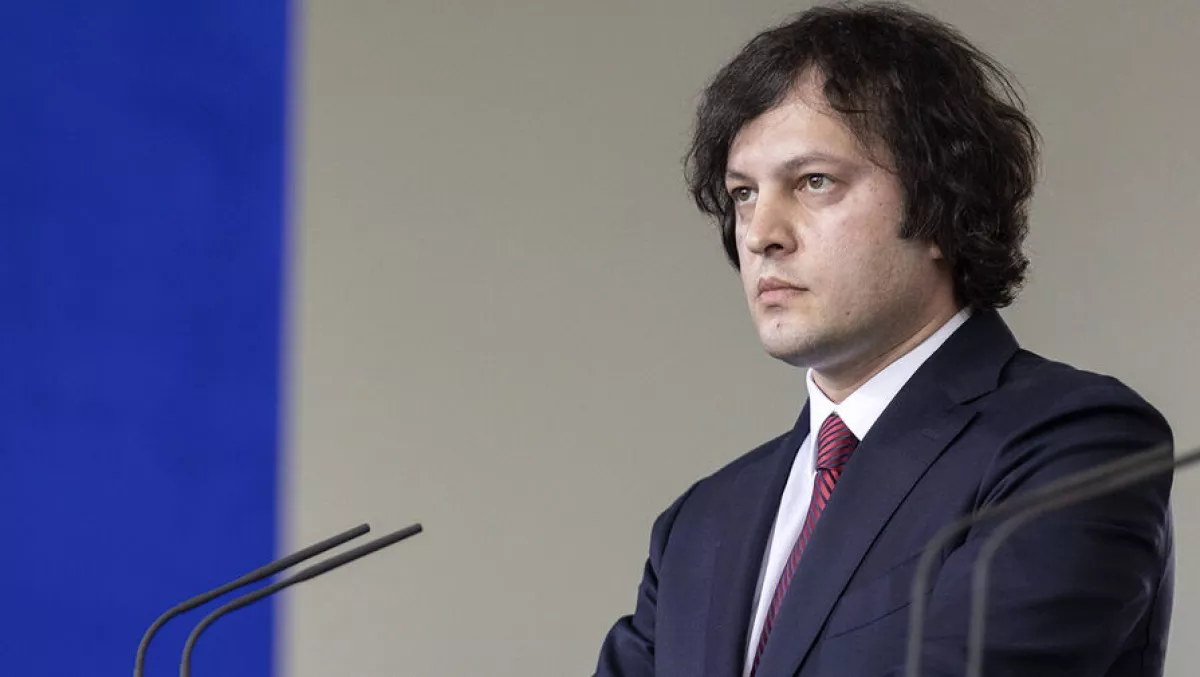
Just recently, Georgian Prime Minister Irakli Kobakhidze once again voiced a number of messages regarding the EU’s previously stated demands that Georgia repeal the Law on Transparency of Foreign Influence and the legislative package on Family Values and Protection of Minors: “The EU demanded that Georgia repeal the Law on Transparency, as well as the Law on Family Values and Protection of Minors — laws whose implementation is fundamentally important for protecting both our national identity and sovereignty.”
According to him, Brussels has also publicly demanded, and continues to insist today, that Tbilisi join the sanctions against Russia, “which would have devastating consequences for the Georgian economy.”
Thus, the head of the Georgian government once again reaffirmed the Georgian state’s commitment to the course it had previously chosen, as well as the fact that Brussels still considers Tbilisi’s foreign policy trajectory incompatible with democratic standards and the country’s obligations as an EU candidate. This raises a legitimate question: “Why have the two sides been unable, for such a long period of time, to find common ground for resolving their fundamental differences?”
To begin with, following the peak of the partnership, which came in December 2023 when Georgia was officially granted EU candidate status, the first storm clouds began to gather on the Tbilisi–Brussels track. This happened after the Georgian Dream party initiated the adoption of the aforementioned Law on Transparency of Foreign Influence. Brussels immediately declared that the law was incompatible with fundamental European values, and, as a retaliatory measure, the European Council officially announced that Georgia’s EU accession process had been de facto suspended. In addition, the EU froze the first financial tranches — around €30 million from the European Peace Facility earmarked for Georgia’s defense sector.
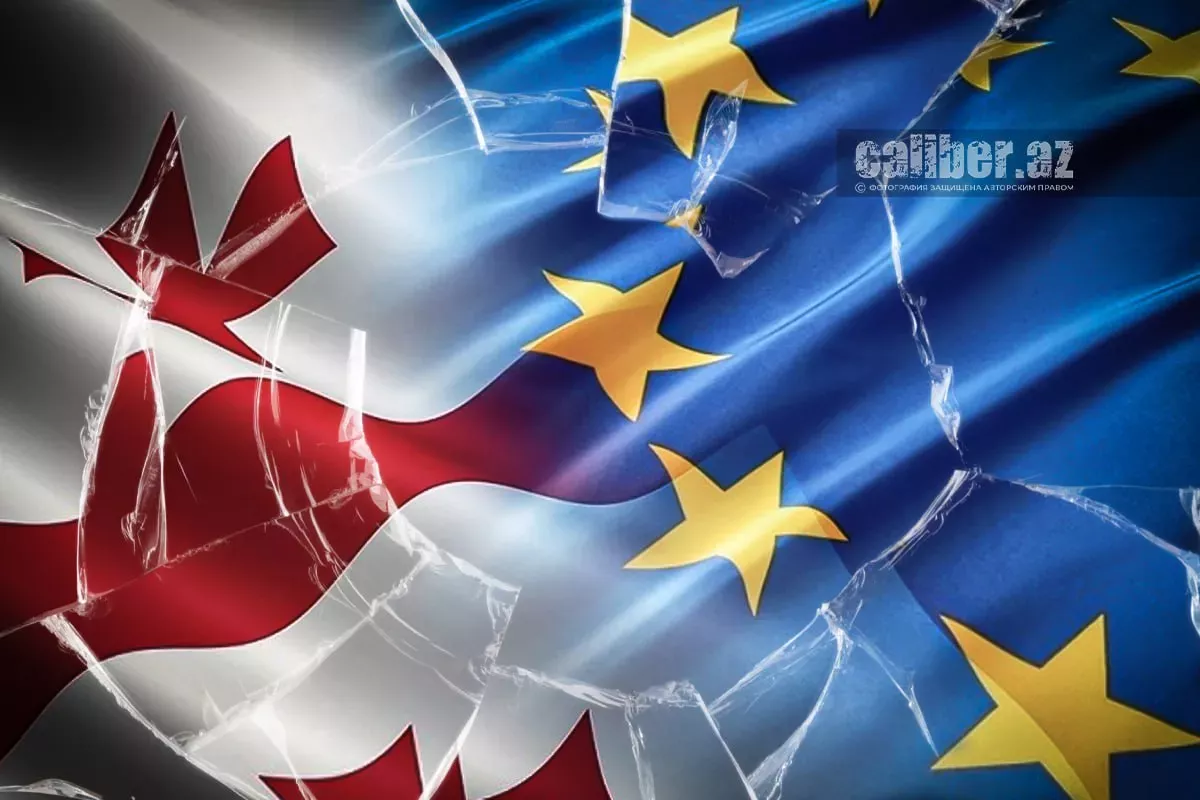
The events that followed unfolded according to a classic law of physics: the stronger the pressure, the more powerful the resistance. In other words, every hard-line step by Brussels inevitably prompted an even tougher response from Tbilisi, turning diplomacy into a dead end. The culmination of this unprecedented pressure from the European Union came when EU institutions categorically refused to recognize the results of the parliamentary elections held in Georgia on October 26, 2024. The European Parliament subsequently adopted a strongly worded resolution calling for personal sanctions against the Georgian leadership and new elections to be held.
Official Tbilisi viewed all these actions as an ultimatum and a direct infringement on Georgia’s sovereignty. As a result, on November 28 of the same year, the Georgian prime minister issued a statement accusing European politicians of using loans and grants as a tool of blackmail.
“Georgia is being asked not for reforms, but simply to take steps that would amount to abandoning its dignity. This means repealing the laws on NGO transparency and against LGBT propaganda, imposing sanctions, and destroying Georgia’s economy with its own hands. Given all of this, we have decided today not to put the issue of opening negotiations with the European Union on the agenda until the end of 2028. We are also refusing any EU budgetary grants until the end of 2028,” Kobakhidze said.
He particularly emphasized that Georgia would fulfill all the necessary obligations for EU membership using its own funding and would join the European Union not as a “poor” country, but “with dignity.”
It would seem that this drastic step by the Georgian side should have prompted the European Union to reconsider the hard-line position in which it had become firmly entrenched. But exactly the opposite happened — Brussels appears to be testing the resolve of the Georgian authorities to stick to the course they have chosen.
Thus, on March 6, the EU officially suspended the visa-free regime for holders of Georgian diplomatic, service, and official passports for a period of one year. Brussels warned that if Tbilisi failed to change its political course, a report would be prepared by the end of the year that could serve as the basis for fully suspending visa-free travel for all Georgian citizens in January 2027.
Meanwhile, in July, as part of the EU’s 21st package of sanctions against Russia, the bloc dealt a blow to Georgia’s energy sector. The Kulevi oil refinery was placed under restrictions amid suspicions that it was processing and re-exporting Russian oil. The facility was given a six-month grace period to completely cease operations involving Russian crude.
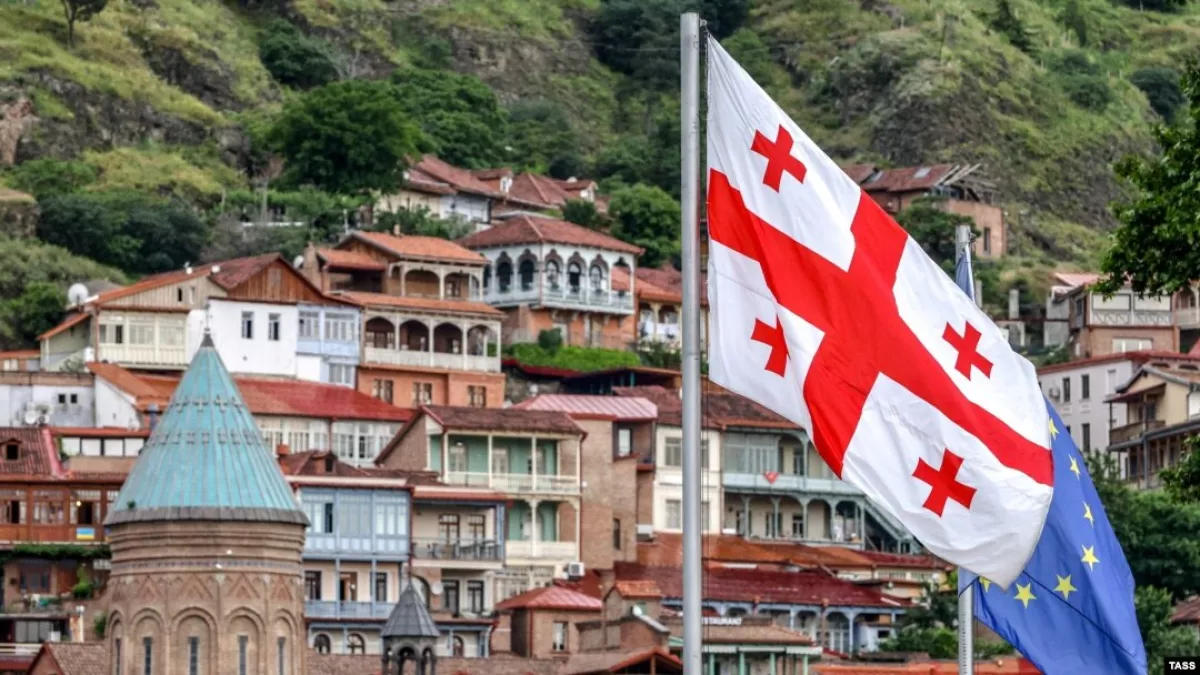
Such a targeted policy toward Georgia raises legitimate doubts as to whether Brussels’ objective is truly to “return this South Caucasus country to the path of ‘true democracy.’” Instead, it gives grounds to believe that the real issue is the Georgian authorities’ unwillingness to blindly follow the EU’s policy line.
Put simply, the EU appears to be deeply irritated by the independent, national-interest-driven course chosen by official Tbilisi — a course that, judging by Prime Minister Kobakhidze’s statements cited above, the Georgian government intends to pursue further.
Thus, in the foreseeable future, relations between the European Union and Georgia are likely to remain characterized by uncompromising antagonism, with Brussels continuing to increase pressure while Tbilisi remains determined to uphold the sovereign course it has chosen.







 editor@caliber.az
 +994 55 444-88-98
 Азербайджан, Баку, ул. Низами, 203, Af Business House, 5-й этаж