










Tehran vs. Washington: Myths and reality behind Georgia’s Iranian capital ARTICLE BY VLADIMIR TSKHVEDIANI
The US-Iranian military confrontation in the Persian Gulf and the Strait of Hormuz is taking a toll on Iran's foreign trade and the business activity of Iranian companies. As a result, Iranian commercial interests are increasingly shifting toward regions considered "quiet" in terms of military risks, notably Türkiye and the South Caucasus, including Georgia. However, Georgian opposition media and social media platforms view this growing presence of Iranian companies negatively, citing concerns over the potential circumvention of US sanctions against Iran.
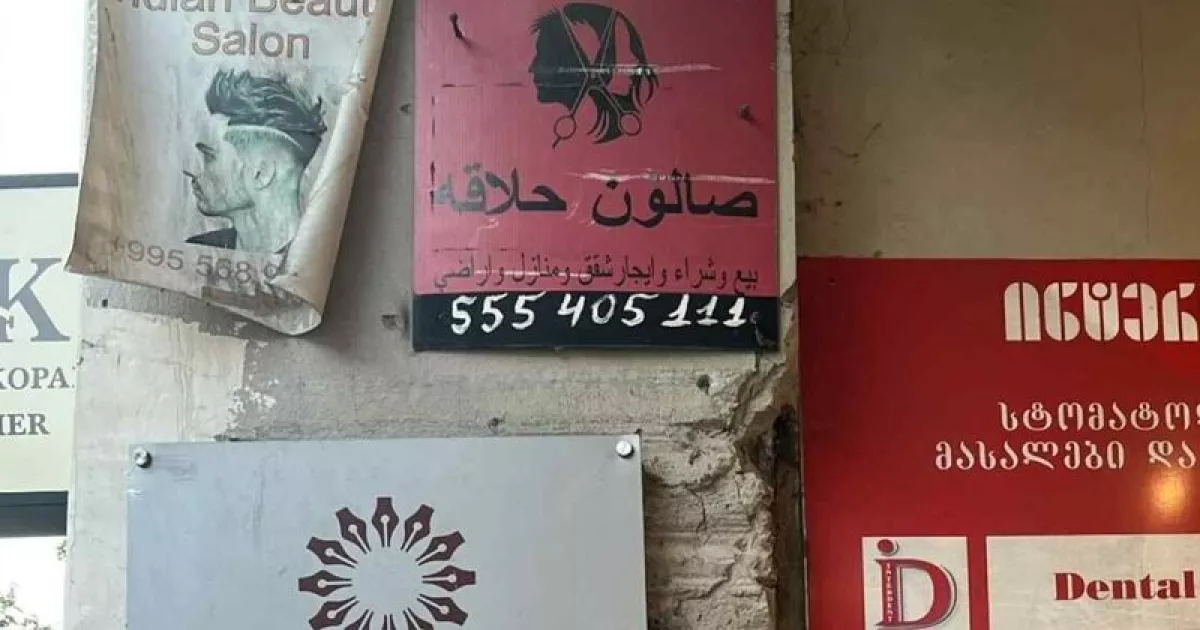
According to data from the opposition-supporting NGO Economic Policy Research Centre (EPRC), the number of companies with Iranian owners in Georgia has expanded by approximately 510% since 2012, surpassing 12.8 thousand in 2025–2026. These registered entities operate primarily in trade, real estate, services, construction, and logistics. Nevertheless, the mere growth in the number of Iranian companies does not imply that Iranian business is engaged in illegal activity.
Furthermore, against the backdrop of the US-Iranian military confrontation, Georgia's pro-Western opposition is attempting to seize on any news event to "prove" that the ruling "Georgian Dream" party is supposedly assisting Iran in evading sanctions. The obvious objective is to block a reboot in relations between Washington and Tbilisi. The latest such pretext was the decision on August 7, 2026, by the US Department of the Treasury's Office of Foreign Assets Control (OFAC) to include SHPS Shelbit, a company registered in Georgia, in a new sanctions package targeting cryptocurrency firms that fund Iran's Islamic Revolutionary Guard Corps (IRGC).
According to the U.S. Department of the Treasury’s Office of Foreign Assets Control (OFAC), SHPS Shelbit is linked to the cryptocurrency platform Shelbit Exchange. Its operations were coordinated by Siavash Keyvanpour, an Iranian national who also holds Dominican and Afghan citizenship and resides in the United Arab Emirates. As part of these new measures, Washington also designated UAE-registered Shelbit General Trading LLC — which operates as Shelbit Exchange — Poland-registered Shelbit Technologies Ltd, and two additional Keyvanpour-linked entities, Crypto Home DMCC and NFT Home DMCC. Keyvanpour himself was personally sanctioned. U.S. authorities noted that Dubai’s Virtual Assets Regulatory Authority (VARA) issued enforcement actions against Shelbit General Trading in January 2025 and July 2026, though the firm persisted in its activities. The Treasury Department stressed that these designations form part of the broader policy of maximum economic pressure on Iran.
As the data demonstrates, Georgia-registered SHPS Shelbit represents only one component of a global network of cryptocurrency firms established across multiple countries by Keyvanpour, a multi-passport holder from Iran. No evidence links Keyvanpour to Georgian state authorities in circumventing sanctions — just as no grounds exist to allege complicity by officials in the UAE or Poland simply because crypto entities were registered within their borders.

Despite these details, U.S. Congressman Joe Wilson, a vocal critic of "Georgian Dream," promptly characterized the designation of SHPS Shelbit as "proof" that Iran relies on Georgian companies to circumvent sanctions, alleging tacit support from the ruling party. Concurrently, the opposition United National Movement (UNM) moved quickly to associate SHPS Shelbit with "Georgian Dream," issuing a sharp condemnation. UNM member Lasha Parulava declared during a press briefing that "the Ivanishvili regime has turned Georgia into a crypto-laundromat for Russian and Iranian blood money."
Parulava further argued that because the National Bank of Georgia has regulated the cryptocurrency sector since 2023, "responsibility for all of this lies with Bidzina Ivanishvili and Natia Turnava, whom he placed at the National Bank."
Subsequent regulatory findings, however, indicate that the National Bank of Georgia maintained no oversight over SHPS Shelbit and had no record of its operations as a virtual asset provider. Corporate records reveal that SHPS Shelbit was registered in Georgia on April 29, 2025, listing its address within the Free Industrial Zone of the Tbilisi Technology Park. On June 26, 2026, the firm submitted a filing to liquidate its corporate registration, a process formally concluded on July 30, 2026—a week before OFAC issued its August 7, 2026 sanctions update. Throughout the entirety of its existence, SHPS Shelbit never submitted an application to the central bank for a license or registration to operate within the regulated cryptocurrency market.
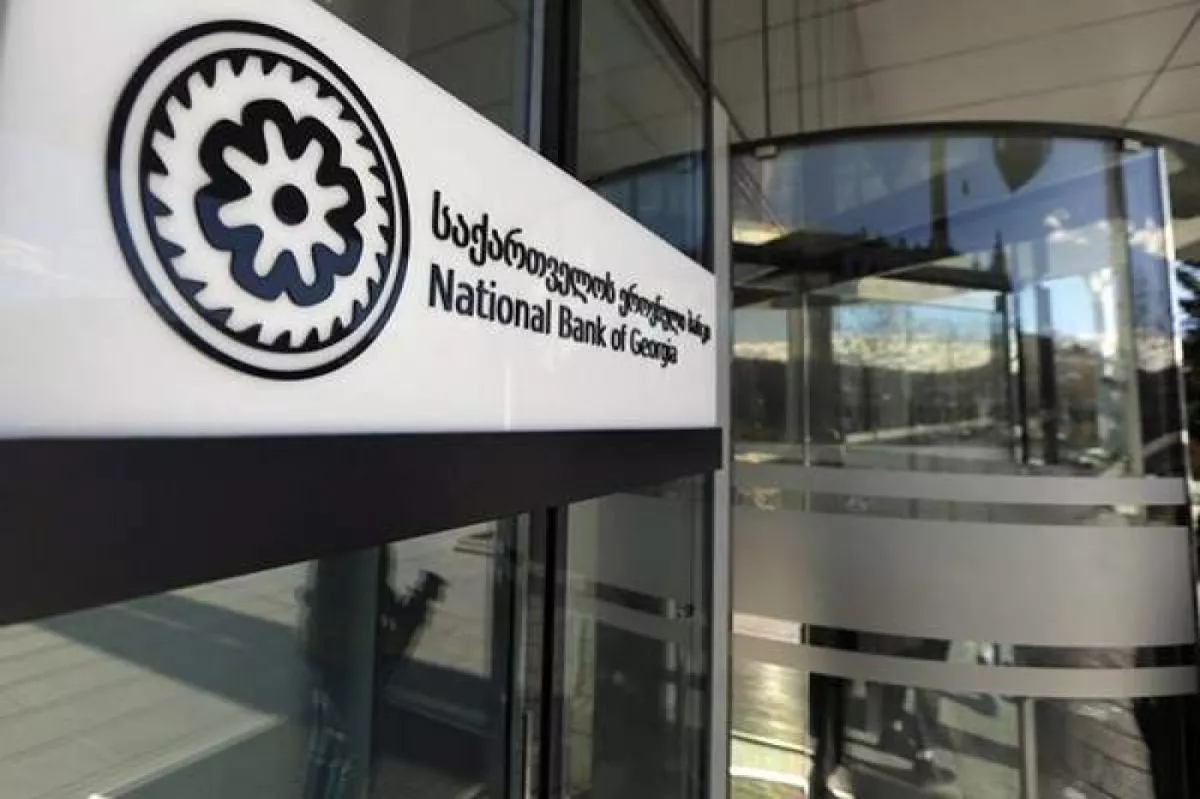
In an official response, the National Bank of Georgia clarified that SHPS Shelbit never sought registration as a Virtual Asset Service Provider (VASP). The central bank emphasised that operating a VASP in Georgia is subject to strict statutory requirements and mandatory regulatory approval. The regulator further stressed that Georgia's cryptocurrency framework fully aligns with Financial Action Task Force (FATF) standards, citing MONEYVAL's 2024 evaluation, which awarded Georgia a "largely compliant" rating on FATF Recommendation 15.
If SHPS Shelbit carried out virtual asset operations, it operated completely outside the legal framework. Georgia, however, has stepped up enforcement against illicit crypto activities. The Investigative Service of the Ministry of Finance recently detained the head of an unregistered crypto entity accused of facilitating tens of millions of dollars in unauthorised exchanges. According to law enforcement, the firm operated without central bank authorisation, executing transactions between digital assets and fiat currency.
Ultimately, assertions alleging official Georgian complicity in helping Iran evade U.S. sanctions fall flat against the regulatory and legal record. Nevertheless, political efforts to exploit such cases are likely to persist as long as Iran remains a significant regional trading partner.







 editor@caliber.az
 +994 55 444-88-98
 Азербайджан, Баку, ул. Низами, 203, Af Business House, 5-й этаж