










EU or EAEU? Moscow forces Yerevan into geopolitical "divorce" ANALYSIS BY MURAD ABIYEV
Recent statements from Moscow addressed to Yerevan have signalled a new phase in Russian-Armenian relations. Deputy Foreign Minister of the Russian Federation Mikhail Galuzin, in an interview with the TASS news agency, effectively issued a political deadline to Armenia, indicating that prior to the December summit of the Eurasian Economic Union (EAEU), the country must settle the issue of holding a referendum to choose between European integration and the EAEU.
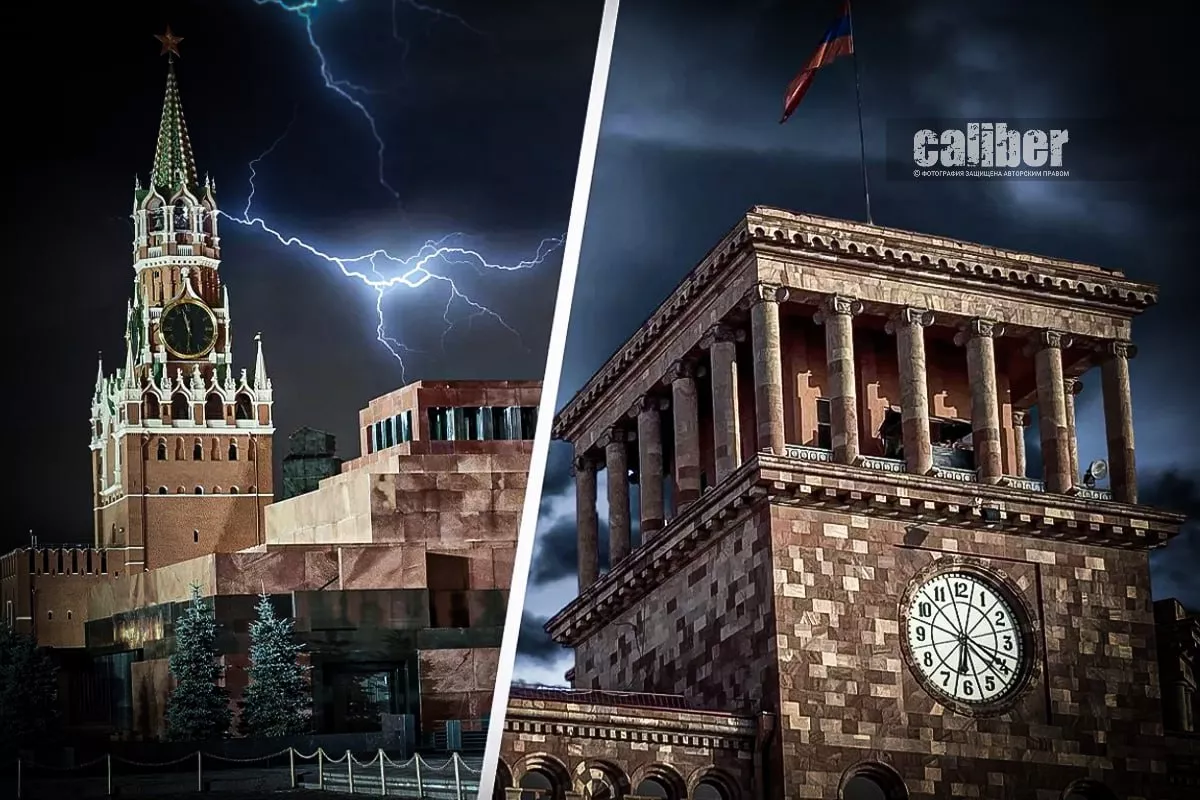
This ultimatum was delivered in a manner as diplomatic as it was firm:
"The May 29 joint statement by the Russian, Belarusian, Kazakh, and Kyrgyz presidents regarding Armenia’s Europe-wards aspirations points to the need for holding a nationwide referendum in that country on either joining the European Union or remaining within the EAEU as soon as possible, although it sets no concrete timelines. However, it was stated that this issue will again be discussed during a meeting of the Supreme Eurasian Economic Council in December, when the heads of state will hear a report about potential consequences of suspending Armenia’s membership in the EAEU Treaty of May 29, 2014. It is clear that if, by that point, the appeal for a referendum is not heeded, the leaders will take this into account when determining the appropriate next measures to be taken jointly."
Simultaneously, Moscow drew attention to another upcoming benchmark — the November summit of the Collective Security Treaty Organization (CSTO), where the issue of restricting Armenia’s rights within the organization may be considered due to accumulated membership fee arrears.
The current escalation represents the culmination of several years of gradual deterioration in bilateral relations. Following the 44-day war and the final restoration of Azerbaijan's sovereignty in 2023, Yerevan increasingly accused Russia and the CSTO of failing to fulfill their allied obligations, subsequently freezing its practical participation in the security bloc.
In parallel, Prime Minister Nikol Pashinyan’s administration pursued a strategy of deepening ties with the European Union, formalizing this direction by enacting the law "On the Start of the Process of Accession of the Republic of Armenia to the European Union."
During the 2026 election campaign, this foreign policy trajectory served as a primary cornerstone of the ruling party's platform. Following the victory of the Civil Contract party, disagreements with Moscow intensified significantly.
Diplomatic warnings have now given way to economic measures, including trade restrictions, active discussions regarding the potential revision of Armenia’s status within the EAEU, and explicit demands from Moscow for Yerevan to commit to a definitive geopolitical path.
Restrictions have already begun affecting supplies of Armenian goods to the Russian market, while Moscow is openly reminding Yerevan of its dependence on the benefits of EAEU membership, including access to one of its largest export markets, preferential trading conditions and significantly cheaper energy supplies.
Yet Armenia’s position is more complicated than a simple shift toward Europe. Prime Minister Nikol Pashinyan acknowledges that membership in the EAEU and the European Union cannot be combined. At the same time, he considers a referendum on EU membership pointless while Brussels has not even offered Armenia candidate status. This explains Yerevan’s effort to preserve room for manoeuvre: continuing its rapprochement with the European Union while retaining the economic advantages of Eurasian integration.
It is precisely this strategy that is now facing its toughest test. For several years, Armenia sought to balance between two centres of power, benefiting from its relations with both. But as the confrontation between Russia and the West has deepened, the space for such a policy has narrowed rapidly. For Moscow, Yerevan’s European trajectory is becoming increasingly difficult to reconcile with the preservation of the previous conditions of Armenia’s participation in the EAEU.
Armenia fully understands the cost of a definitive break. Its economy remains closely tied to Russia, while EU membership remains a long-term political objective. Yerevan is therefore seeking to buy time, whereas Moscow is trying to deprive it of that opportunity. By pushing Armenia to make its choice more quickly, Russia is seeking to prevent it from quietly sailing away from its geopolitical harbour.
An accelerated and forced legal formalisation of a “divorce” from the Russian economy would clearly risk triggering even tougher economic measures from Moscow. For Pashinyan and his government, that could become their biggest test since the 2020 war.







 editor@caliber.az
 +994 55 444-88-98
 Азербайджан, Баку, ул. Низами, 203, Af Business House, 5-й этаж