










Before the storm: Iran’s next confrontation with US and Israel What experts expect?
Iran is preparing for a new phase of confrontation with the United States and Israel that could be considerably broader in scope than the previous round of hostilities. According to The Wall Street Journal (WSJ), Tehran is drawing up plans for further escalation, tightening the Islamic Revolutionary Guard Corps’ (IRGC) control over the armed forces and expanding the production of missiles and drones.
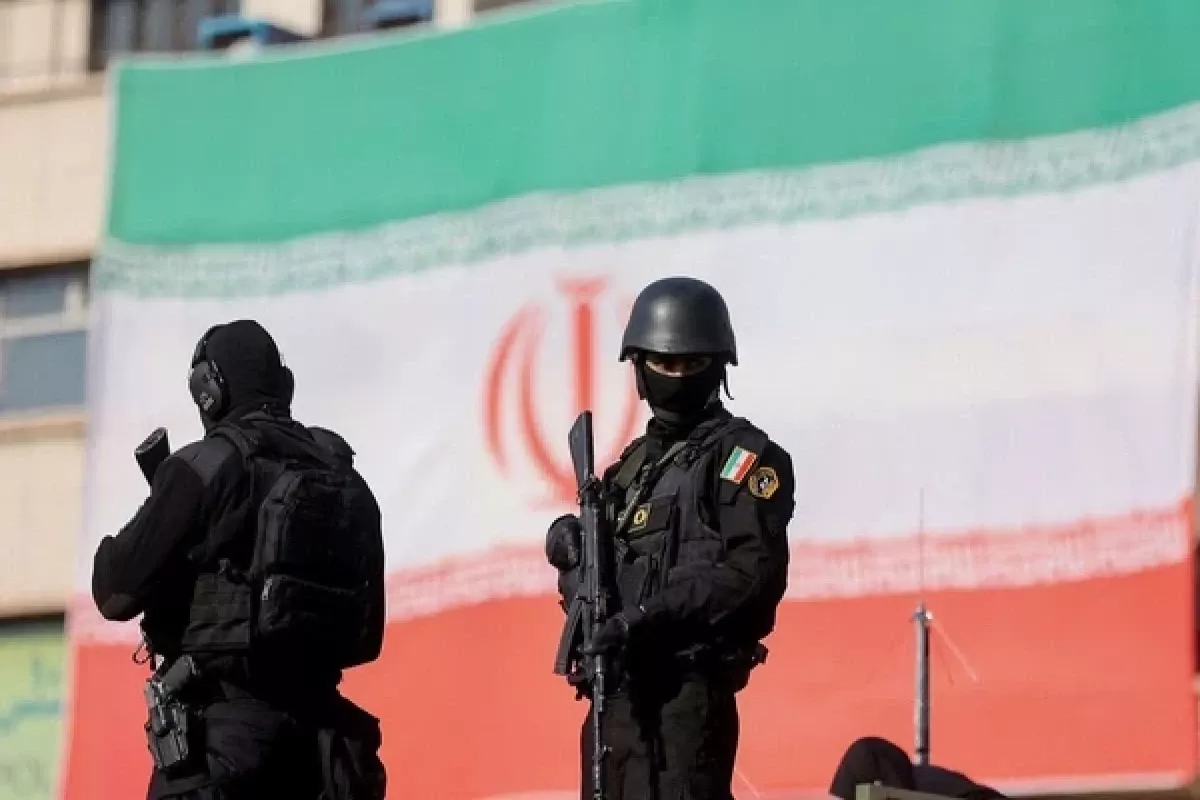
Potential scenarios under consideration reportedly include sabotage targeting internet cables in the Persian Gulf, efforts to destabilise the situation in Kuwait and Bahrain, and potentially even a ground operation in Kuwait. Tehran, meanwhile, reportedly views U.S. efforts to secure a ceasefire as an attempt to relieve pressure on the global economy, while regarding negotiations as little more than a temporary pause before another escalation.
Iranian authorities are also acutely aware of the risks associated with a renewed confrontation. Government officials are concerned that the next phase could extend beyond conventional military operations and include attempts to foment unrest inside Iran similar to the disturbances that erupted in early January amid mounting economic difficulties.
How realistic, then, is the prospect of another war in the Middle East, and what consequences could it produce? Caliber.Az asked prominent foreign experts to assess the potential trajectory of the confrontation.

American analyst and professor Grigory Ioffe said the scenarios described above appear entirely plausible.
“The Iranian assumptions regarding the motivation behind U.S. efforts to secure a ceasefire are also correct, although these concerns can be made even more specific. With congressional elections approaching in November, Trump needs to keep fuel prices under control, and in conditions as far removed from a planned economy as possible, this means refraining from escalating the conflict in the Persian Gulf, since the executive branch in the United States has no means of directly controlling prices. In addition, support for the war among the American public is low,” Ioffe said.
He also pointed to the severe damage sustained by the Iranian economy, while noting that Iran’s threshold for tolerating economic hardship is considerably higher than that of the United States.
“At the same time, the degree of consolidation of Iranian society in the face of an external enemy is completely unknown — at least to me. If it is not very high, then a change of power in the country could indeed occur, but if it is high, another stalemate is highly likely. And that stalemate consists in the fact that the enormous damage suffered by Iran has not translated into its geostrategic defeat, as reflected in the assessment of the war’s outcome in terms of public relations. If Republicans lose elections in both chambers of Congress, the liberal press will exacerbate this public-relations narrative even further,” Ioffe said.
In turn, Iran expert Vladimir Mesamed, a PhD at the Institute of Asian and African Studies at the Hebrew University of Jerusalem, agreed that a new round of conflict is indeed taking shape in the region and could be relatively close.
“To a large extent, this is linked to a redistribution of influence among Iran’s security institutions in recent times, with the Islamic Revolutionary Guard Corps (IRGC) emerging as the dominant force. Whereas it previously coexisted with the regular army, there is now a clear imbalance. The country’s new leadership, including Mojtaba Khamenei and the Supreme Leadership Council, which includes IRGC generals, is actively strengthening the Corps’ position. This is reviving the radicalism of the first years following the Islamic Revolution and contributing to growing anti-American sentiment. The IRGC is effectively assuming guardianship over the regular army, bringing back into power generals from the Iran-Iraq war era.
“In the diplomatic sphere, there is no genuine dialogue between Iran and the United States. Tehran rejects negotiations because there is no common ground on any of the key issues, including Washington’s demand that Iran terminate its nuclear program, whose roots date back to the era of the last shah. Today, Tehran openly asserts its claims to leadership in the Middle East and invokes the provisions of the Treaty on the Non-Proliferation of Nuclear Weapons (NPT) to justify its right to enrich uranium. An entire ideology has taken shape in the country promoting the necessity of nuclear technologies for medicine and industry, and Iran even holds an annual celebration dedicated to nuclear technology. However, the program has long since been transformed into an instrument for confronting external powers, with Israel being the principal potential target of Iran’s nuclear weapons," he noted.
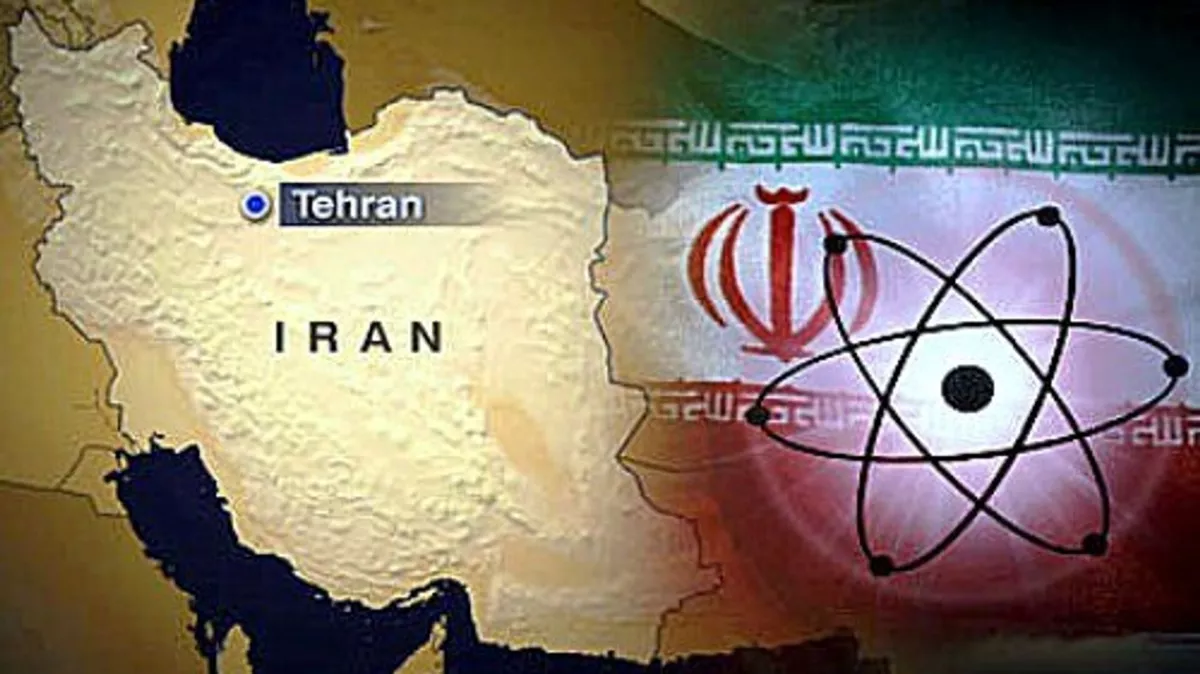
“Overall, for Tehran, preserving its nuclear program is a matter of survival, making concessions to the United States in this area impossible. Both sides recognise the high probability of a new conflict, while negotiations on extending the ceasefire regime are effectively not taking place. Iran accuses the Americans of violating the temporary agreements, while continuing to take steps to destabilise the region itself. A recent example was the visit of IRGC commander Esmail Qaani to Baghdad, where he reaffirmed Tehran’s refusal to disarm pro-Iranian groups in Iraq.
“In addition, Iran plans to escalate the situation in countries such as Bahrain, Kuwait and the UAE. The UAE is facing particular pressure because of its military cooperation with Israel and its territorial dispute over the Greater Tunb, Lesser Tunb and Abu Musa islands.
“The situation is further complicated by the appointment of Mohsen Rezaei as secretary of the Supreme National Security Council. He is known for his militaristic views and has previously advocated radical ideas, including taking American hostages for ransom. The presence of such figures in the leadership, against the backdrop of both sides accumulating weapons, creates a deadlock that could lead to a new phase of full-scale war in the region. If this process is not halted, the consequences for the world could be catastrophic,” Mesamed concluded.







 editor@caliber.az
 +994 55 444-88-98
 Азербайджан, Баку, ул. Низами, 203, Af Business House, 5-й этаж