










Revanchism on the home stretch Kocharyan’s pre-election bluff
With only five days left until the parliamentary elections in Armenia, the pre-election rhetoric has entered its final stage.
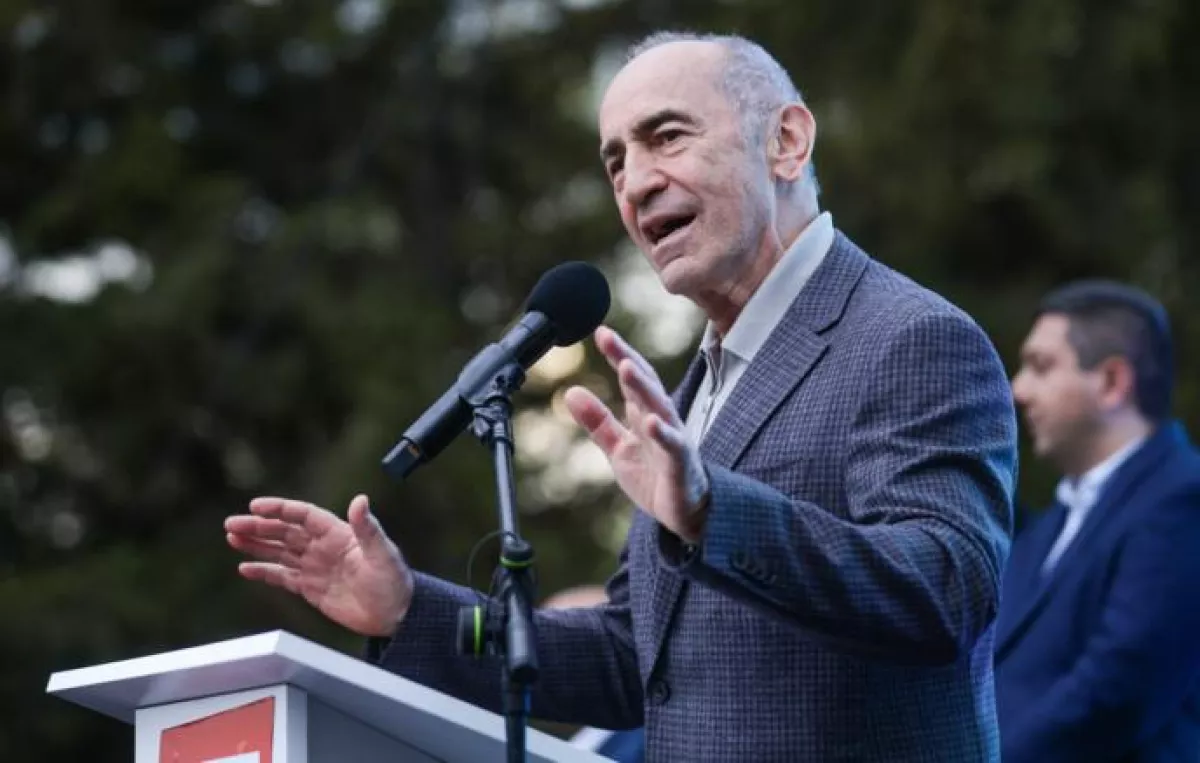
On May 31, supporters of former Armenian president and prime ministerial candidate of the opposition “Armenia” bloc, Robert Kocharyan, marched through the central streets of Yerevan. The event was preceded by a rally in Freedom Square, where the candidate himself made the following statement: “I know well the price of war and the price of peace. You can be sure that Aliyev will not attack an Armenia that I lead. This is a proven fact.”
In this statement, which could easily be awarded a perfect ten on a five-point absurdity scale, almost everything is noteworthy—first and foremost, the very direction of the pre-election messaging, in which an opposition candidate guarantees the electorate the foreign policy behaviour of a neighbouring state as a personal asset, and does so on the basis of his own biography, in which the real episodes of military confrontation with that country ended for Armenia in a rather and unmistakably painful manner.
In this context, one cannot ignore the striking asymmetry: the Azerbaijani factor is the number one issue in Armenia’s electoral campaign. Meanwhile, in Azerbaijani election cycles, the Armenian factor is practically absent. And there are solid reasons for this.
Baku's agenda is built around its own priorities: the reconstruction of the liberated territories, gas diplomacy, Turkic integration, infrastructure corridors, and investment policy. Yerevan, by contrast, has long since lost a meaningful degree of strategic autonomy. Any Armenian politician aspiring to power today is effectively required to explain to voters how they intend to coexist with Baku, and the outcome of the election depends more on the clarity of this “explanatory note” than on any purely domestic issue.
Azerbaijan does not choose to be the central theme of Armenia’s electoral campaign; it becomes so by virtue of its current regional weight. Every statement by President Aliyev, every press conference, every signal from Baku automatically feeds into Armenia’s internal political discourse. This is not a matter of propaganda—it is a matter of status. A state with significant political weight inevitably shapes the agendas of its neighbours by default, regardless of whether it explicitly seeks to do so.
Within this framework, Kocharyan’s bloc has occupied a clearly recognisable niche. There are no new ideas, no coherent foreign policy programme—only the promise that, under his leadership, there will be no war. And this promise is convenient precisely because it cannot be verified in advance: as long as Kocharyan is not in power, it remains a guarantee with deferred validation.
At the same time, one should not overlook the biography of the man making these promises, certain episodes of which the Armenian electorate may find worth revisiting.
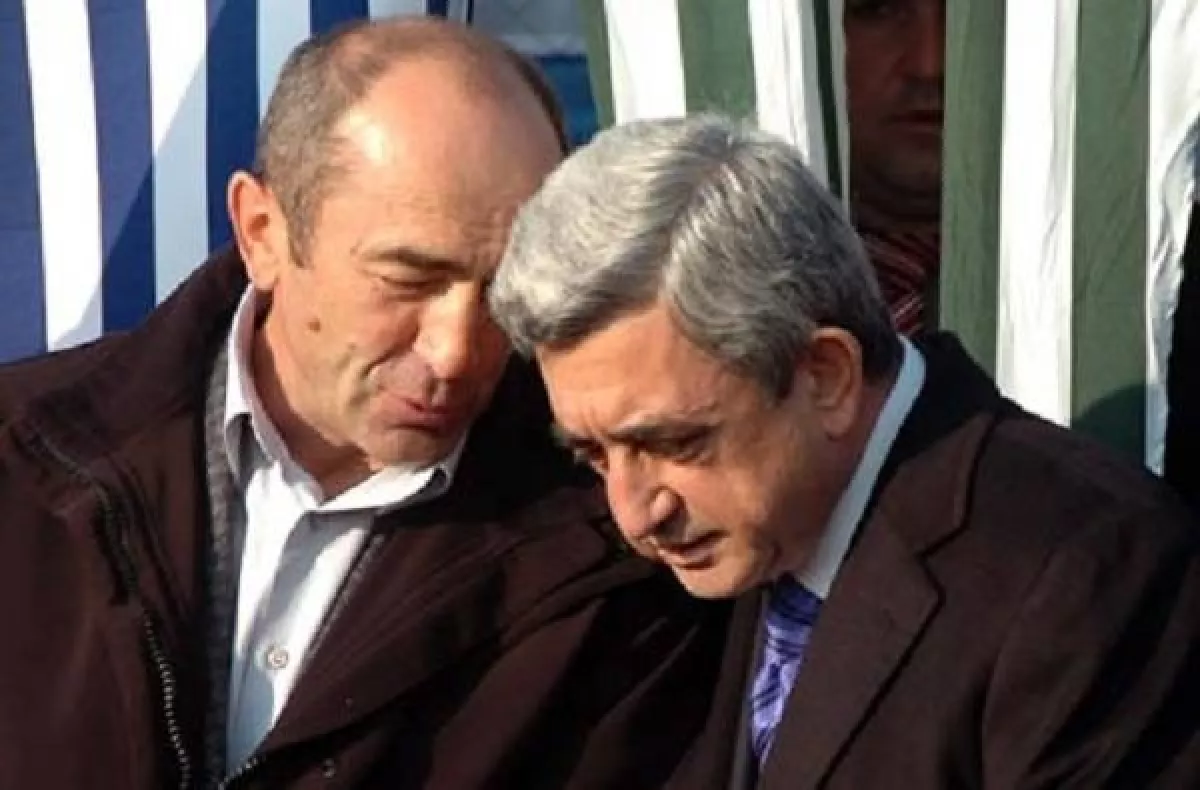
During the 44-day war in the autumn of 2020, Robert Kocharyan, Serzh Sargsyan, and Seyran Ohanyan—two former presidents and a former defence minister—arrived in the combat zone at a point when the trajectory of the confrontation had already been largely determined. The Azerbaijani side reportedly had information about their presence and was preparing appropriate countermeasures.
According to available reports, Kocharyan, apparently having received a warning through Russian intelligence channels, hastily returned to Armenia. Sargsyan followed him shortly thereafter. On the eve of the liberation of the city of Shusha, Ohanyan also left the area. This is not a narrative about personal courage; rather, it reflects the political reality of a specific moment: those who today promise the Armenian electorate peace on their own authority did not remain in place until the end in 2020.
Moreover, one cannot ignore Kocharyan’s political DNA, in which a scenario of the forcible seizure of Azerbaijani territory is embedded from the outset. He is one of the figures associated with the “miatsum” movement and, in 2003, while serving as President of Armenia, made statements that included references to what he described as the “genetic incompatibility of Azerbaijanis and Armenians,” language that has been widely criticised and associated by some observers with extremist ideological rhetoric.
This statement today becomes a political burden for Kocharyan himself, who appeals to voters with promises of peaceful coexistence. It is not possible to simultaneously argue that “we cannot live together” and that “there will be no war under my leadership”; these are two mutually exclusive political theses.
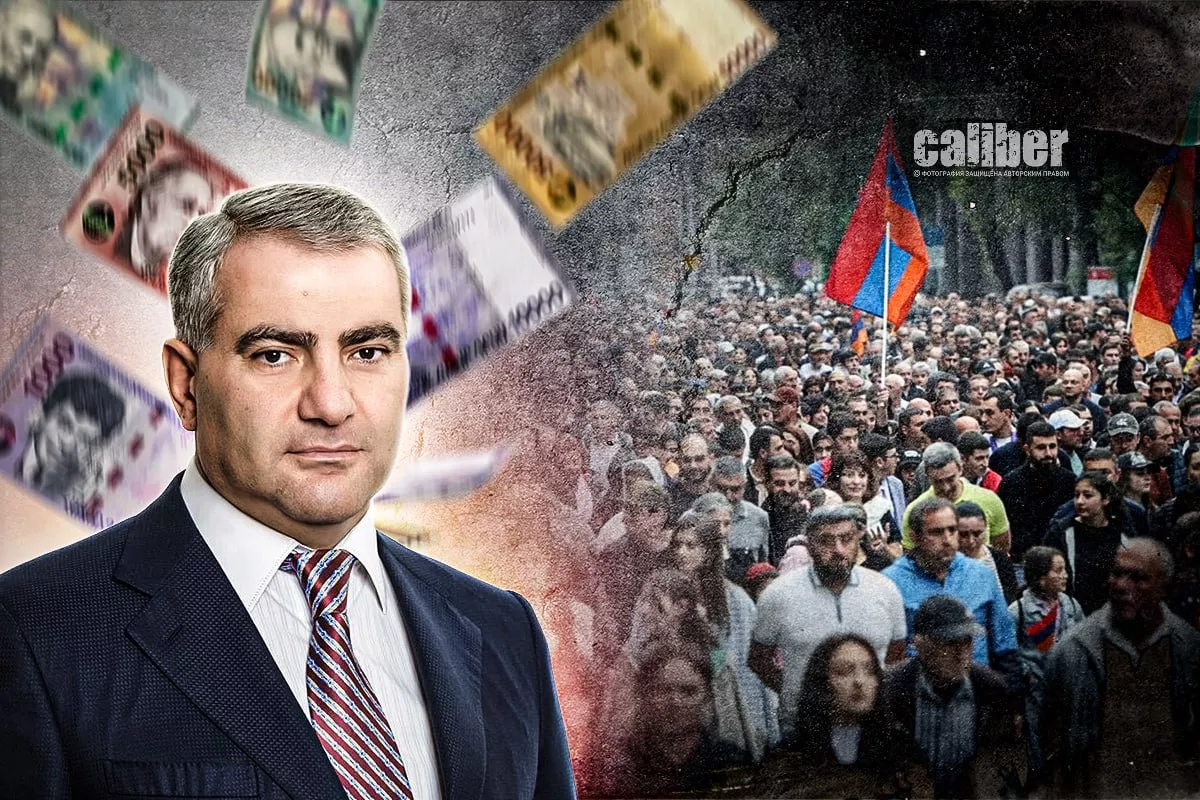
A parallel rhetorical front is being added to Kocharyan’s campaign narratives, driven by Russian oligarch of Armenian origin Samvel Karapetyan and a network of media outlets and lawyers associated with him. Within this discourse, anti-Azerbaijani sentiment is articulated more openly—as a narrative of collective threat allegedly posed by a neighbouring people, and as a form of mobilisation language in which every Azerbaijani is implicitly framed as a permanent adversary.
This language is familiar from Europe’s historical memory: it was used by certain far-right movements in the first half of the 20th century, when they mobilised their electorates against an ethnically defined “other.” The parallel is not drawn by Baku, but emerges from the structure of the statements produced by the revanchist bloc itself.
Within this rhetorical framework, Azerbaijan ceases to be a state with which negotiations are conducted and agreements are signed, and instead becomes a historical enemy against whom society is mobilised. It is a very particular way of presenting “peace” to the electorate.
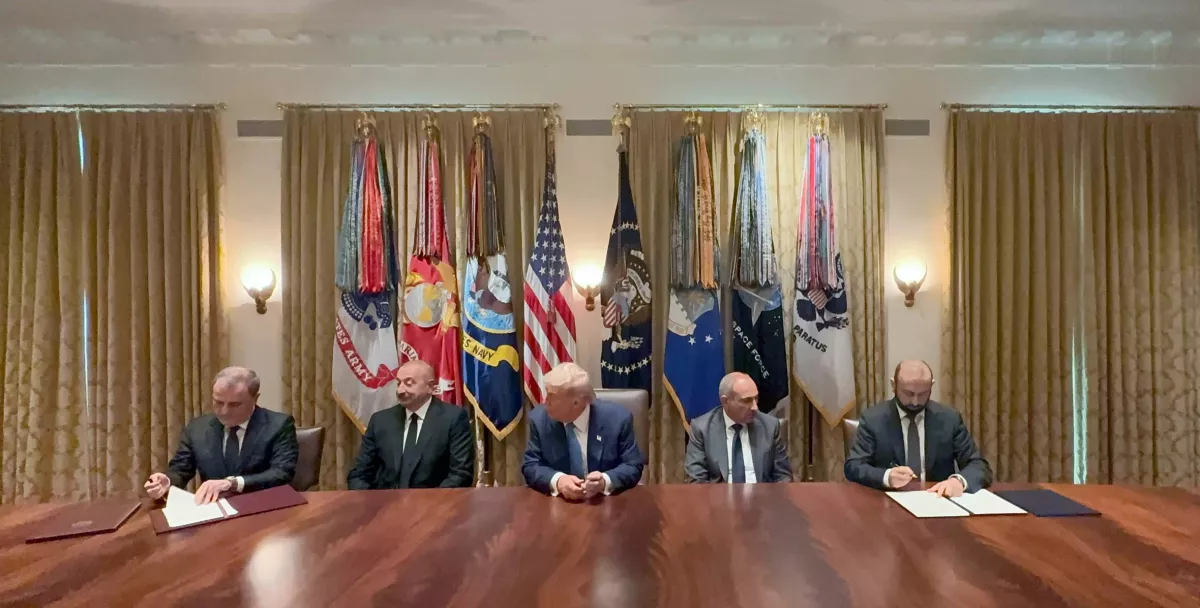
All of these rhetorical constructions—both the promise that “there will be no war under my leadership” and the parallel narrative of a collective threat—share a common weakness rooted in the factual reality of August 2025.
On August 8 of that year, in Washington, in the presence of Aliyev, Pashinyan, and Trump, the text of a peace agreement was initialled—the same document that is now being presented in the White House as the main foreign policy achievement of the American president on the Eurasian track, and within which the TRIPP corridor framework is embedded.
Any Armenian politician aspiring to power, in the event of electoral victory, would inherit precisely this negotiation framework, rather than one in which political bets can be placed on “things being different under me.” President Aliyev has repeatedly and publicly stated that Azerbaijan has no plans to conduct a military operation against Armenia.
In other words, Kocharyan’s “proven fact” is merely a repetition of what Baku already states openly, without any contribution from Kocharyan himself. The paradox of Armenia’s electoral campaign is that an opposition candidate presents as his personal achievement the position of a state which he simultaneously accuses of having aggressive intentions.

A biographical detail deserves particular attention, as it acquires additional significance in the electoral context. Kocharyan was born in Khankendi, on Azerbaijani territory, in an Azerbaijani city. Sargsyan and Ohanyan also originate from there. All three, who at different times promised to “defend Karabakh at any cost,” now live in Yerevan, far from the land that was never theirs, but which they held by force for three decades. And each of them today speaks about Karabakh as a category existing in their memory rather than in reality.
This trio—Kocharyan, Sargsyan, and Ohanyan—also has another dimension, more concrete from a legal perspective. All three are listed in Azerbaijani procedural records in connection with incidents spanning the thirty-year period of occupation, including war crimes against the civilian population.
The Second Karabakh War of 2020 and the counter-terrorism operation of September 2023 restored Azerbaijan’s full sovereignty over its territory; this sovereignty is recognised in the international legal framework, and work on establishing responsibility for specific individuals in relation to specific incidents is ongoing. Kocharyan may return to Khankendi, but not as a tourist—only in the status of a suspect in serious crimes. And following a judicial process, the remainder of his life would be spent where other leaders of the defunct separatist junta currently are—those accused under the same articles and convicted by the Baku Military Court.
Overall, the final phase of Armenia’s electoral campaign, in concentrated form, reflects what the region has been observing for several years: Armenia’s domestic politics are subordinated to an external narrative that is not shaped in Yerevan.
Kocharyan’s revanchist bloc offers voters emotional compensation instead of strategy, while Pashinyan’s governing team offers pragmatism accompanied by the heavy burden of military defeat. Between these two poles, the Armenian electorate will make its choice on June 7.
However, if the preference shifts toward Kocharyan or similar revanchists who, upon coming to power, return to the logic of confrontation, then the Azerbaijani state will remind them that the “Iron Fist” remains in place and has, over time, only grown stronger. In such a scenario, Kocharyan’s room for political rhetoric would end almost immediately.







 editor@caliber.az
 +994 55 444-88-98
 Азербайджан, Баку, ул. Низами, 203, Af Business House, 5-й этаж