










Requiem for Anchorage Rubio and Lavrov expose a growing US-Russia divide
Russian Foreign Minister Sergey Lavrov and U.S. Secretary of State Marco Rubio met on the sidelines of the ASEAN Summit in the Philippine capital of Manila. The talks lasted for approximately 35 minutes.
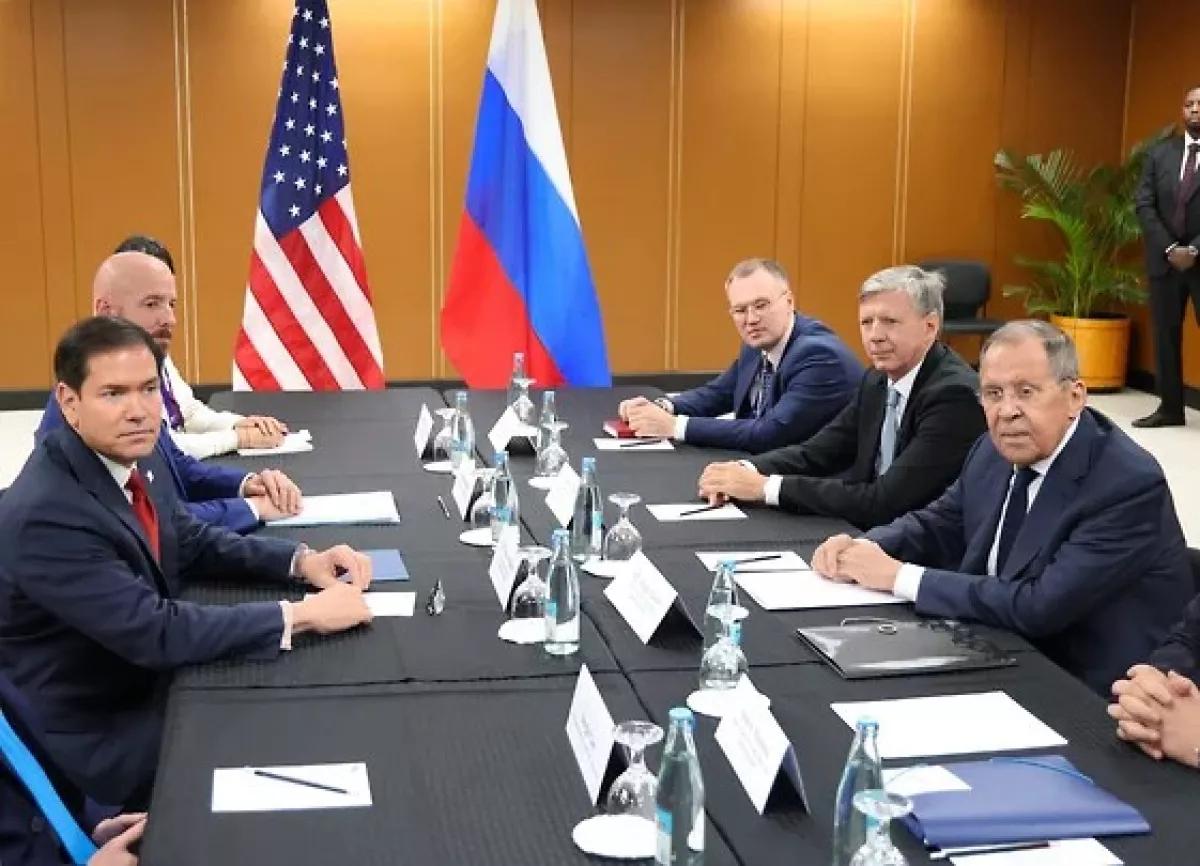
The very length of the meeting prompted many observers to question whether the two sides had managed to achieve any tangible progress. However, the first conclusions only became possible after the participants made their statements. Even before the talks began, Lavrov made it clear how Moscow viewed the main subject of discussion. According to him, the focus was to be on Ukraine and the Anchorage agreements, which the Kremlin claims were reached by Vladimir Putin and Donald Trump.
"We proceed from the assumption that, at least so far, our American colleagues have not rejected their own proposals that were put forward and are now well known to everyone," the Russian foreign minister said. In essence, this statement framed the central question surrounding the meeting: do the Anchorage agreements continue to serve as the foundation of the U.S.-Russian dialogue, or does Washington now regard them as a thing of the past?
Following the talks, the Russian side did not alter its position. Lavrov did not make any public remarks, but the Russian Foreign Ministry released an official statement. According to the ministry, the foreign minister once again reaffirmed Moscow's readiness for a political and diplomatic settlement of the conflict and its commitment to the proposals which, according to the Russian side, had been put forward by the Americans during the presidents' meeting in Anchorage. In addition, the statement said Lavrov presented Rubio with Russia's assessment of the situation on the battlefield, stressed the inadmissibility of further arms deliveries to Ukraine, and criticised the policies of European countries.
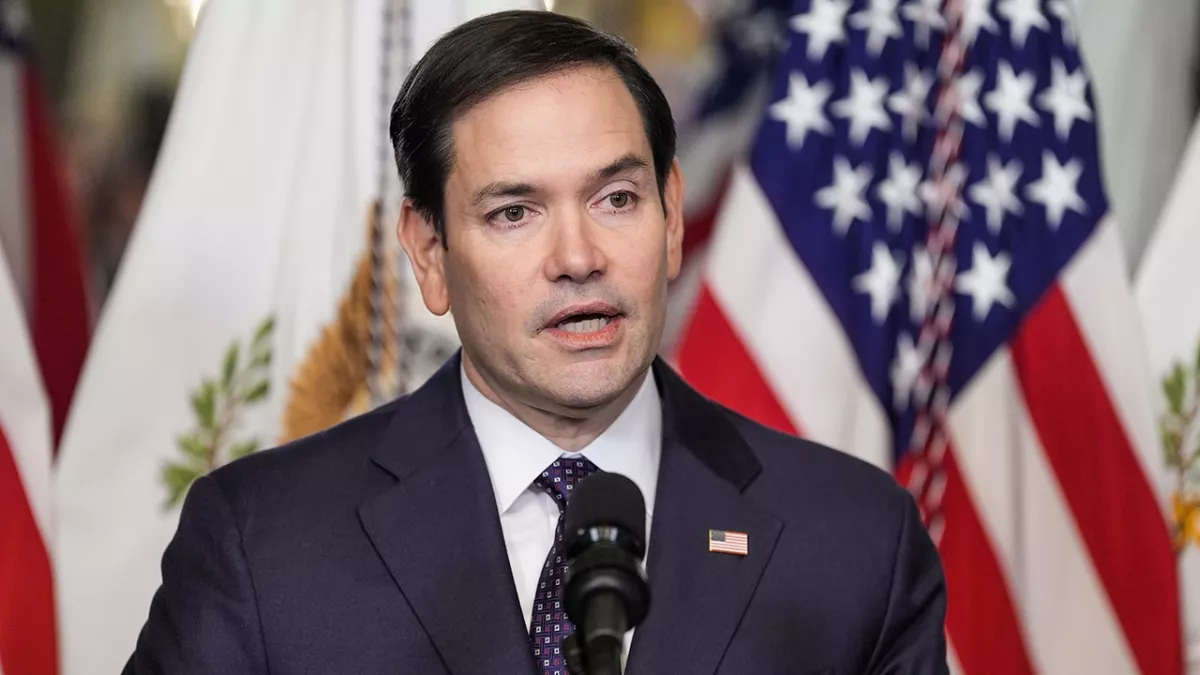
Marco Rubio provided a more detailed account of the outcome of the meeting. "The proposals that have been reported—they call it ‘3 + 2,’ the division of territories—these attempts have failed..." Those remarks by the U.S. secretary of state were enough to make one thing clear: Washington views the Anchorage discussions differently from Moscow. Exactly what is meant by the "3+2" formula has never been officially disclosed. However, most analysts associate it with a possible framework for a territorial settlement. It is believed that the proposal may have involved recognising Russian control over Crimea and the Donetsk and Luhansk regions, while potentially discussing compromise arrangements for the Kherson and Zaporizhzhia regions. However, there has been no official confirmation of this interpretation.
Rubio's subsequent remarks point to an even more significant conclusion. Apparently, Washington never regarded the Anchorage proposals as a finalised U.S.-Russian agreement. Rather, they were seen as a starting point for negotiations that would ultimately require the consent of both Moscow and Kyiv. Following Ukraine's rejection, the framework, from the U.S. perspective, lost its practical relevance. Rubio added that achieving a peace agreement would require "new ideas"—a solution acceptable to both Russia and Ukraine—and that the United States was prepared to play any constructive role within its capacity to help bring the war to an end.
Looking back, during the first months of Donald Trump's presidency, it appeared that the White House was prepared to exert far greater pressure on Kyiv. However, the overall situation subsequently changed. Russia's offensive progressed much more slowly than many observers had expected. Ukraine retained the ability to carry out significant strikes deep inside Russian territory, while European countries not only maintained their support for Kyiv but, in many respects, even stepped it up. Against this backdrop, judging by the administration's latest statements, the United States has gradually begun adjusting its negotiating strategy. In practical terms, this shift is evident in several ways. Washington continues to maintain sanctions pressure on Russia's oil and gas sector, supports a new mechanism for supplying weapons through its European allies, and at the same time emphasises that any further normalisation of relations with Moscow is directly contingent upon an end to the war.
It was therefore no coincidence that, even before meeting with Lavrov, Rubio stated that the conflict in Ukraine is currently preventing Russia and the United States from cooperating on a wide range of other issues. This message was likely directed not only at the Kremlin but also at those political and business circles in Russia that are interested in restoring relations with the West.
Against this backdrop, Bloomberg's report is particularly noteworthy. According to the publication, Moscow is prepared to return to negotiations only after establishing full control over the Donbas. Citing sources familiar with the matter, Bloomberg reported that the Russian Ministry of Defence has assured President Vladimir Putin that it will be able to secure complete control of the Donbas by the end of this year. At the same time, some of the agency's sources believe that achieving this objective will be extremely difficult and that the timeline could slip to 2027. If this information is even partially accurate, it helps explain the diplomatic activity of recent weeks. Each side is attempting to enter any future negotiations from the strongest possible position: Russia hopes to improve its position on the battlefield, while the United States is seeking to strengthen its negotiating leverage through sanctions and military-political pressure.
This is, in all likelihood, where the principal dividing line between Moscow and Washington now lies. The Russian side continues to invoke Anchorage as the political foundation for future negotiations, whereas the U.S. administration has effectively signalled that it considers that phase to be over and intends to build the next negotiating framework on different terms and with Ukraine's mandatory participation.







 editor@caliber.az
 +994 55 444-88-98
 Азербайджан, Баку, ул. Низами, 203, Af Business House, 5-й этаж