










China vs. America: The race for the intelligence of the future Analysis by Teymur Atayev
A few days ago, the global community learned about two Chinese mathematicians — the first citizens of the People’s Republic of China to receive the prestigious Fields Medal, which is awarded every four years to outstanding mathematicians under the age of 40. They managed to solve problems that had remained unresolved for more than a century.
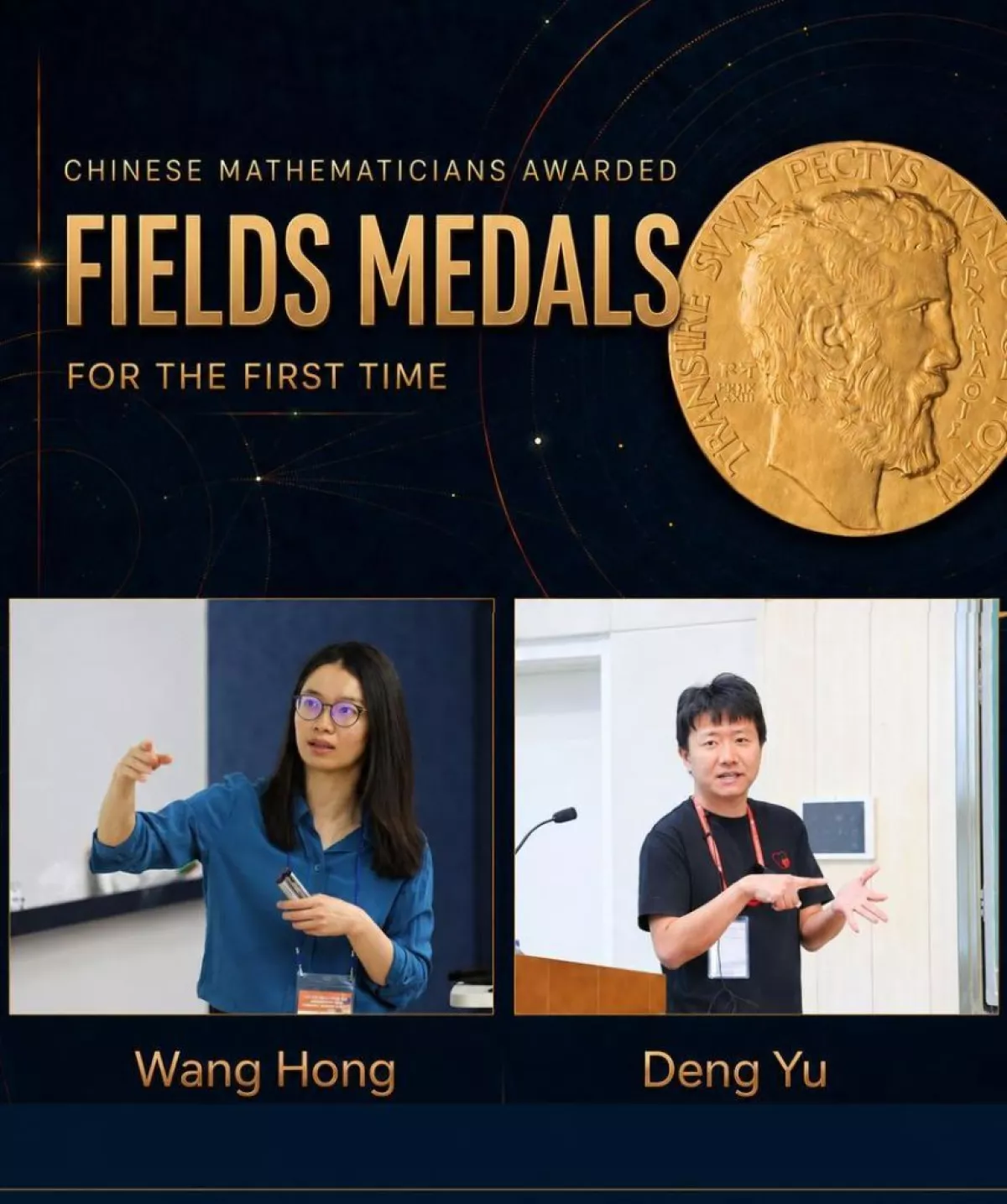
As a result, a number of analysts presented this achievement as yet another indication of China’s global leadership in science. Certainly, not everyone is ready to fully agree with such an assessment; however, one fact remains undeniable: today, China confidently holds one of the leading positions in scientific and technological development, alongside the country’s growing economic indicators.
On July 17, Chinese company Moonshot unveiled its new large language model, Kimi K3, which, according to its developers, is not inferior in terms of power and efficiency to leading American AI models. Experts note that Kimi K3 has 2.8 trillion parameters, while the flagship model of the US company Anthropic — Claude Opus 4.8 — is estimated to have no more than 1.5–2 trillion parameters.
In this context, one can also refer to statistics showing that China’s exports have increased significantly thanks to the rapid technological boom, particularly the surge in global demand for semiconductors.
While exports grew by more than 19% year-on-year in May, the figure reached 27% in June.

US Vice President J.D. Vance explains the current developments by arguing that Beijing is outpacing Washington in the field of AI solely because it faces fewer concerns when it comes to building new energy capacities. Given the growth of the environmental movement in the United States, American AI data centres could become the first victims of the confrontation between the construction of new energy infrastructure and the environmental agenda.
But is that really the only factor at play, considering that, according to the Critical Technology Tracker developed by the Australian Strategic Policy Institute’s (ASPI) International Cyber Policy Centre, China is the global leader in 69 out of 74 critical technologies?
Data from the June edition of the Nature Index, which analyses the scientific output of countries and leading research institutions worldwide, indicates that China remains the world’s leading hub for high-quality scientific research. In the seven major fields monitored by the index, including physical sciences and applied sciences, China ranked first.
The Chinese Academy of Sciences retained its status as the world’s leading research institution. At the same time, nine Chinese organisations made it into the global top ten rankings.
In the same context, data from the report “Global Electricity Development Index (2026)” presented on July 10 at the United Nations by the Global Energy Interconnection Development and Cooperation Organization (GEIDCO) shows that China also holds a leading position globally in the adoption of digital and intelligent grid technologies.
As a result, Chinese sources, which view high-quality development as an immutable law of the new era and an undeniable imperative, identify three key factors that have contributed to China’s transformation from the “world’s factory” into the “world’s market”: unlocking the potential of the domestic consumer market; the innovative development of the high-tech sector; and high-level openness.
Naturally, the economic dimension lies at the core of the phenomenon we are witnessing. According to the World Economic Outlook report published by the International Monetary Fund (IMF), China retains its position as the world’s largest economy in terms of GDP calculated by purchasing power parity (PPP), reaching $44.3 trillion.
Thus, today one of the main geopolitical rivalries — primarily between the United States and China — is centred around leadership in the field of artificial intelligence.
Moreover, AI is becoming a crucial factor both in the military sphere and in ensuring national security. Therefore, both sides are seeking to strengthen their influence over the global community, including through financial, economic, and ideological mechanisms.
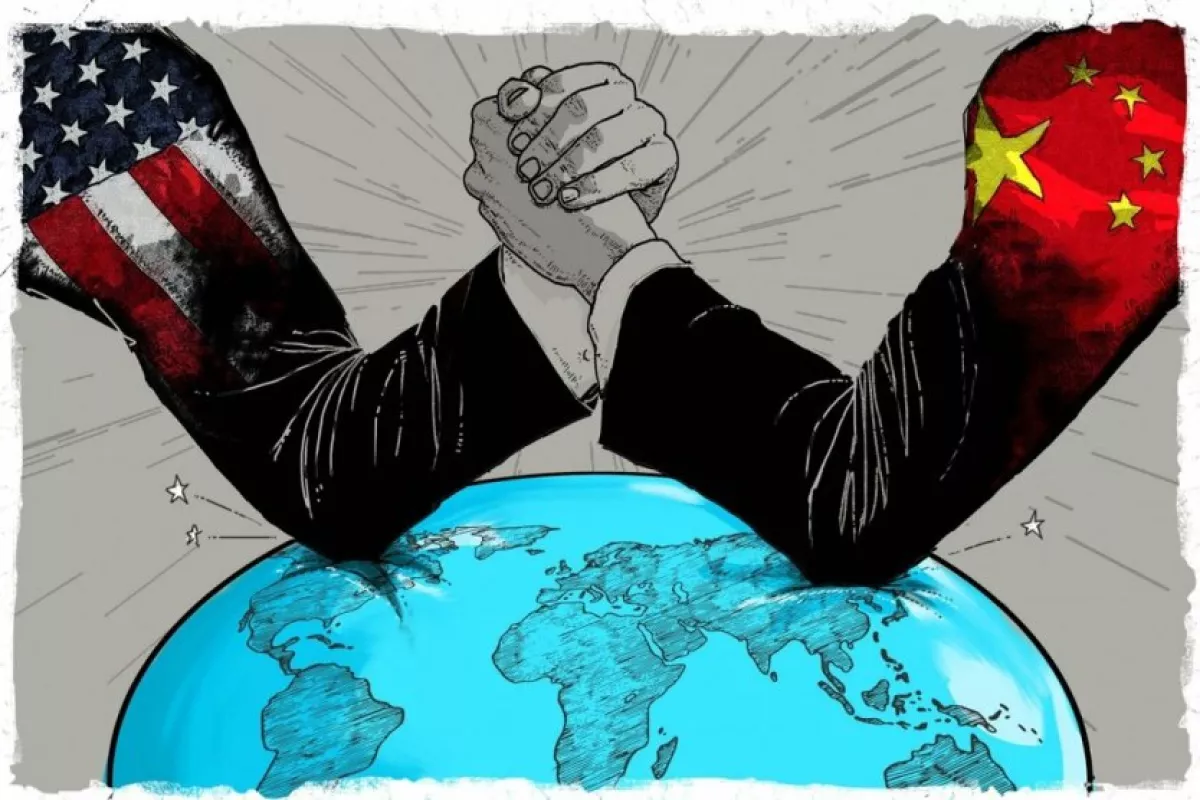
In this context, it is highly significant that less than a week ago, global media reported that China had overtaken the United States in terms of positive perceptions across many countries worldwide, according to data from the Pew Research Center. This marked the first time in the history of such surveys that China had achieved this result.
One possible reason for this may be the global initiatives put forward by Beijing. For example, at the beginning of this summer, the State Council of the People’s Republic of China published a White Paper titled “More Just and Equitable Global Governance: China's Principles, Proposals and Actions,” outlining Beijing’s approach to creating a new system of international relations in the context of a multipolar world.
Within this framework, China is consistently pursuing a course aimed at achieving technological progress on a global scale. This aligns with the ideas expressed earlier this month by Chinese President Xi Jinping, who, taking into account the challenges of the current era, once again emphasised the need to accelerate the achievement of scientific and technological self-reliance as the foundation for building a powerful science and technology powerhouse by 2035.
It is possible that a significant part of the expert community is convinced that the technological rivalry between China and the United States is a battle for survival.

However, a number of respected experts hold a different view. For example, Gary Dvorchak, managing director of the US-based consulting firm The Blueshirt Group, which specialises in investor relations (IR), capital markets advisory, and financial communications with the media, argues that neither China nor the United States is capable of shaping the global technological landscape on its own. In his view, artificial intelligence is simply too vast a field for either side to successfully develop independently.
Therefore, Dvorchak concludes: “We're competitors, but we're also human beings. We're actually on the same team.”
But will this message resonate?







 editor@caliber.az
 +994 55 444-88-98
 Азербайджан, Баку, ул. Низами, 203, Af Business House, 5-й этаж