










French rebellion inside NATO Review by Teymur Atayev
The end of May clearly signals that the world is still far from emerging from geopolitical turbulence. The relationship between France and the United States is a clear confirmation of this.
The leader of the parliamentary faction of the French right-wing party National Rally, Marine Le Pen, has once again raised the issue of France’s withdrawal from NATO’s integrated military command.

According to her, this would not affect either France’s membership in the Alliance or the interoperability of the French armed forces with those of its allies. In this context, she described Paris’s dependence on the decisions of Donald Trump as regrettable.

Le Pen’s statement was immediately countered by French Foreign Minister Jean-Noël Barrot, who described her position as irresponsible. However, Le Pen’s remarks concern not so much France’s relations with NATO as the growing Franco-American tensions. This is also reflected in the activity of President Emmanuel Macron himself, albeit so far mostly at the rhetorical level.
Stating that the United States is showing increasing indifference to European security, he compared the situation to an “elephant in the room” — something everyone is aware of but prefers not to acknowledge openly. Drawing attention to Europe’s dependence on the American security umbrella, Macron described the US president’s decision to withdraw troops from Germany as a signal to the entire continent and called on European countries to strengthen security by developing joint defence initiatives.
He also stressed that Paris has no plans to take part in a US operation to escort ships blocked in the Strait of Hormuz.

This line taken by Macron did not emerge spontaneously. Back at the Davos Forum in January of this year, he criticised the United States’ “increasingly aggressive competition,” which he said was aimed at weakening and subordinating Europe. In March, he described France’s project of an “advanced nuclear doctrine” as a value that would complement NATO initiatives “both technically and strategically.”
It is also worth noting that one of the key points in the programme of the leader of the left-wing party La France Insoumise, Jean-Luc Mélenchon, who has announced his readiness to take part in the 2027 presidential elections, is likewise a call for France to withdraw from NATO.
But is the White House prepared to passively observe such moves by the French political establishment? History suggests rather unfavourable developments for France in cases where Paris has openly voiced anti-American sentiments.

For example, in the mid-1960s, during the presidency of Charles de Gaulle, Paris announced its withdrawal from NATO’s military structures, while simultaneously sharply criticising US actions in Vietnam and opposing Israel’s policy during the Arab-Israeli war of 1967.

In 1968, France also faced a wave of student protests that escalated into large-scale left-wing unrest. As a result, de Gaulle resigned the following year.
In the same context, there is France’s refusal in 2003 to support Washington’s anti-Iraq campaign. Against this backdrop, The Washington Post popularised a programmatic slogan of the American political establishment: “Punish France, ignore Germany, and forgive Russia”, attributed at the time to then US National Security Advisor Condoleezza Rice.
As for Macron’s position, in his 2017 inaugural address, while listing the achievements of his predecessors, he particularly highlighted the role of de Gaulle, “thanks to whom France took a rightful place in the world,” and Jacques Chirac, who left “a country capable of saying ‘no’ to warmongers.” He then advocated the creation of a pan-European army capable of defending the continent by its own means, without fully relying on the United States.
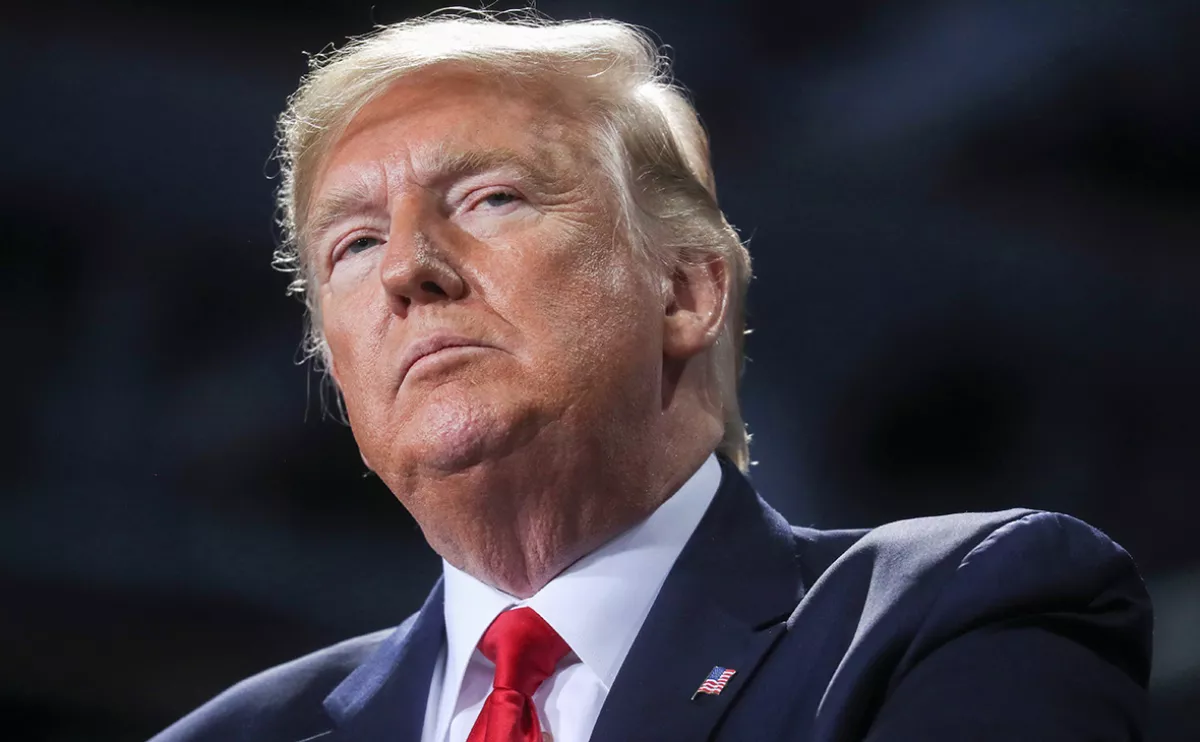
A few months later, during his first presidential term, Donald Trump posted a message calling on people not to forget the times of the First and Second World Wars, when the French “were starting to learn German in Paris before the U.S. came along.”
Macron, meanwhile, continued his rhetorical clashes with Washington in 2018, stating that certain forces were persistently trying to “push Europe out of the game.” At the same time, he said: “The United States is our ally in NATO. But can I, as President of the Republic, tell our citizens that I want to hand over all your security to the United States? No, because I believe in our sovereignty and in the sovereignty of Europe.”

Macron’s next statement — that “being an ally does not mean being a vassal” — immediately went viral worldwide. Three days later, the domestic French political scene was shaken by the emergence of the opposition movement “Yellow Vests,” which carried out protests lasting until the beginning of the COVID-19 pandemic.
In other words, every anti-American surge from official Paris has been accompanied by serious internal challenges for France. As a result, a number of analysts do not rule out that even at the current stage, albeit not immediately, Washington will not remain passive in response to Paris’s drift towards distancing itself from the White House. The only question is what form the American response will take today or tomorrow, and what scenario the French leadership is considering in this regard — if it is considering one at all.







 editor@caliber.az
 +994 55 444-88-98
 Азербайджан, Баку, ул. Низами, 203, Af Business House, 5-й этаж