










Diploma, connections and astrology How Ukraine’s power system works
The story surrounding the head of the National Bank of Ukraine, Andriy Pyshnyi, has become something of an X-ray of the Ukrainian state system, illuminating not so much the individual official as the mechanism through which people with highly questionable professional and reputational backgrounds rise to the top of Ukraine’s political, financial and administrative Olympus.
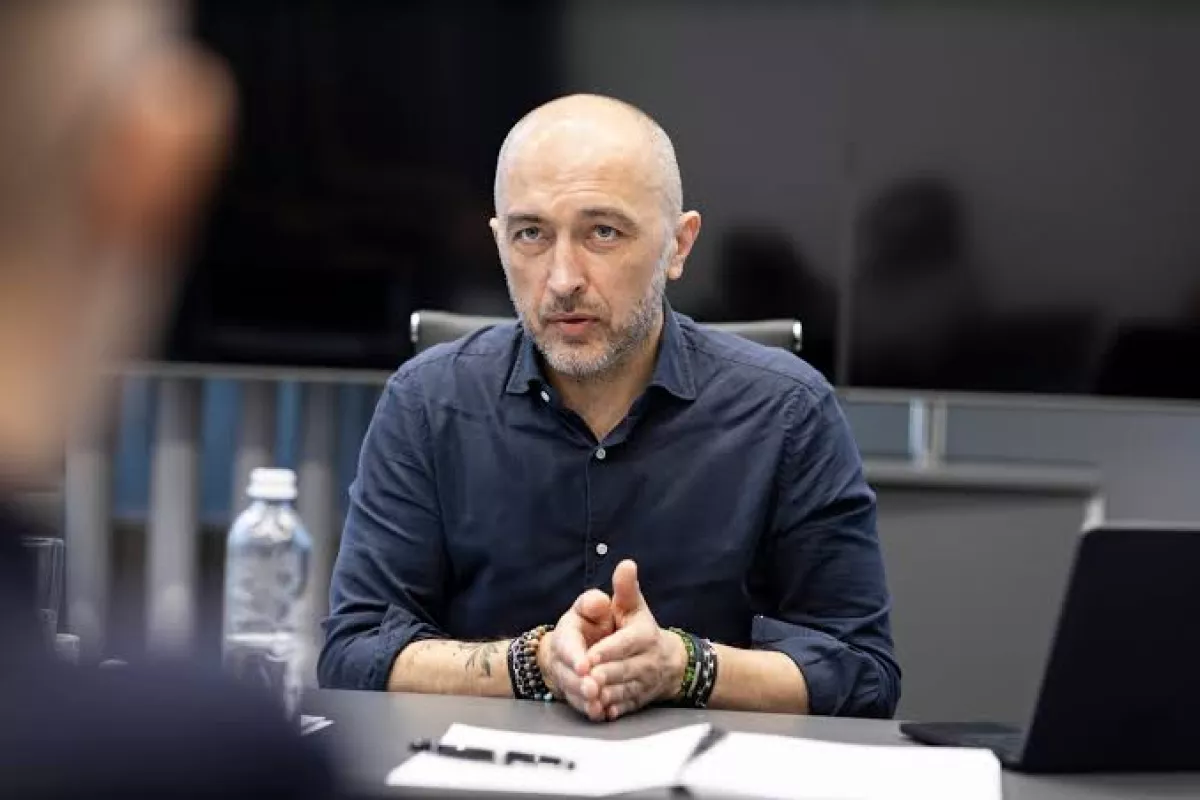
On August 5, 2026, the Shevchenkivskyi District Court of Kyiv ordered the State Bureau of Investigation (SBI) to open a case over the possible forgery of the diploma of the country’s central bank chief. The move was prompted by materials from an old criminal case concerning documents allegedly confirming his studies at the Sumy branch of the “University of Modern Knowledge.”
Here, however, an important distinction must be made from the outset. The existence of criminal proceedings does not mean that Andriy Pyshnyi’s guilt has been established. Moreover, investigators had previously examined the circumstances surrounding the documents, and in 2007 a decision was made not to prosecute him. Given these circumstances, any final conclusions can only be drawn following a new investigation and, if necessary, a court ruling.
But that is precisely why an even more uncomfortable question arises: “How could such a story have become possible in the biography of a man who today heads the National Bank of Ukraine?”
It should be recalled that Pyshnyi’s official biography states that he graduated from Chernivtsi State University in 1996 with a degree in Law, and in 2005 from the Ukrainian Academy of Banking of the National Bank of Ukraine with a degree in Banking. He also holds a Candidate of Legal Sciences degree. Thus, it would be fundamentally wrong to portray him as a person without an education. The dilemma, however, lies elsewhere.
The information cited by journalists describes circumstances in which Pyshnyi allegedly obtained documents certifying his education at the Sumy branch of the “University of Modern Knowledge,” which enabled him to be admitted directly to the fourth year of the Ukrainian Academy of Banking. This is the point that now requires a full and thorough investigation.
According to the investigative materials cited by Ukrainian media, one version is that the documents related to this education may have been issued in violation of the rules, since a criminal case was opened in 2006 against the head of the branch, Volodymyr Vasylenko, who was convicted in 2007. As noted above, Pyshnyi himself was not prosecuted at the time.
But if the court has now ordered the SBI to launch a new investigation, the public is entitled to receive answers to some very specific questions: “Did Pyshnyi actually study at this institution?”; “Who issued the relevant documents?”; and “On what grounds was he admitted directly to the fourth year?”
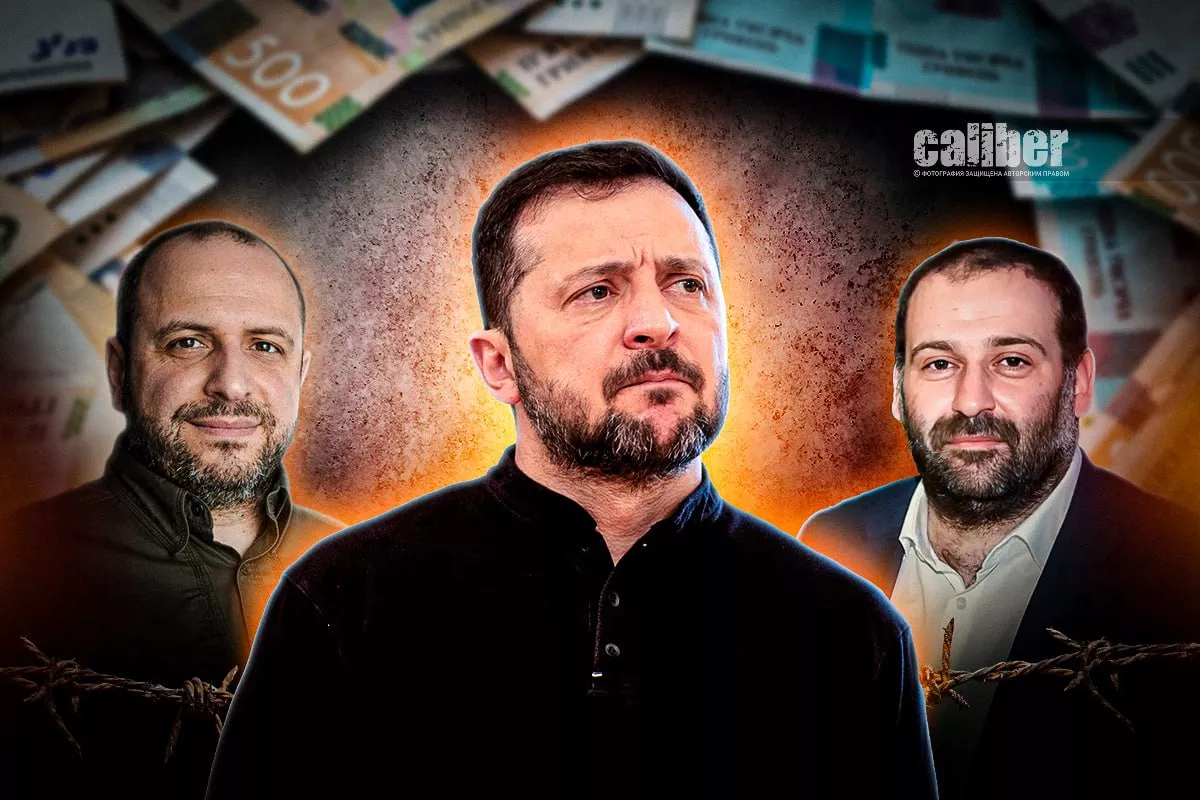
At the same time, this story becomes considerably more interesting when viewed in the context of another high-profile case — the case of Timur Mindich, since Pyshnyi’s name was mentioned in connection with it.
In the relevant materials, a conversation between Timur Mindich, a businessman who was a longtime business partner of President Zelenskyy and who eventually fled Ukraine, and Rustem Umerov, who was serving as defense minister at the time, concerns the allocation of budget funds for the purchase of products from Fire Point. In the released recordings, Mindich can be heard asking Umerov whether he had “called Pyshnyi.”
And here, a logical question arises: “Why does the head of the National Bank figure at all in conversations between people discussing the possibility of arranging matters related to state financing?” After all, the independence of the NBU is one of the most important safeguards of Ukraine’s financial stability.
On the other hand, the process of appointing Pyshnyi as head of the NBU also warrants closer scrutiny. It is well known that on October 7, 2022, 290 members of the Verkhovna Rada voted in favor of his candidacy, but that, as they say, is only the official side of the story.
There is another layer to it — Pyshnyi’s longstanding relationship with former Head of the Office of the President of Ukraine Andriy Yermak. In 2016, the two became co-founders of the NGO “Vidchui,” which worked on issues affecting people with hearing impairments.
In October 2021, Ukrainian media reported that Yermak was looking for a possible replacement for then-NBU Governor Kyrylo Shevchenko, with Pyshnyi reportedly among the potential candidates. In February 2022, reports emerged claiming that Yermak was lobbying for his candidacy, and in October of the same year, Volodymyr Zelenskyy submitted Pyshnyi’s nomination to parliament.
Thus, formally, everything happened entirely within the law. Yet now, against the backdrop of the scandal surrounding the NBU governor’s diploma, questions are being raised not only about the President of Ukraine, but also about the lawmakers who vetted his candidacy and voted for him.

However, given Yermak’s enormous influence during his time as head of the Office of the President, what happened should hardly come as a surprise. Still, it is worth asking a simple question: “Who is Andriy Yermak himself?”
Before entering Zelenskyy’s inner circle, his biography hardly read like that of a man destined to make key personnel decisions for the state. From 2007 to 2014, he served as an aide to Elbrus Tedeyev, a member of parliament from the Party of Regions — and did so on a voluntary, unpaid basis.
Then Zelenskyy appeared. According to Yermak himself, the two met around 2010–2011, when the future head of state was working as general producer of the Inter television channel. At the same time, Ukrainska Pravda, while examining Yermak’s biography, noted an intriguing detail: Valeriy Khoroshkovskyi, the former owner of Inter, and Serhiy Lyovochkin, one of its co-owners, could not recall Yermak working at the channel.
Whatever the case, this man, with a far from stellar professional record, ultimately found himself at the very center of Ukraine’s state system, gaining the ability to influence the appointment of people to key positions — including Pyshnyi.
The icing on this personnel cake is the fact that personnel decisions in Ukraine may have been discussed with… an astrologer. On May 13, a prosecutor from the Specialized Anti-Corruption Prosecutor’s Office named a woman who, according to investigators, was listed in Yermak’s contacts under the name “Veronika Feng Shui Office.” The media identified her as Veronika Anikievich, who also used the surname Danylenko. She presented herself as an astrology consultant and ran a Telegram channel called “Lunar Hours.” According to the prosecution, Yermak may have sent her the dates of birth of candidates for government positions in order to obtain advice on their appointments.
And the conclusion seems obvious: if a person who wielded real influence over the state’s personnel policy was sending an astrologer the birth dates of candidates in order to obtain recommendations, then that says something deeply troubling about the entire decision-making system. Under such circumstances, it is simply impossible to ignore the other questions surrounding the head of the NBU — from the circumstances surrounding his educational credentials to the appearance of his name in the Mindich case materials.
Each of these stories may have its own explanation when considered separately. But taken together, they raise a broader question about the quality of Ukraine’s state institutions. Ukraine is paying too high a price for a system in which professional scrutiny can give way to political patronage and experiments involving astrologers.







 editor@caliber.az
 +994 55 444-88-98
 Азербайджан, Баку, ул. Низами, 203, Af Business House, 5-й этаж