










Serbia’s balancing act enters new phase with Zelenskyy’s Belgrade visit Vucic’s “own chair”
A photograph of Serbian President Aleksandar Vucic embracing Ukrainian President Volodymyr Zelenskyy tightly spread across international media within hours, becoming almost as symbolic of the meeting as the talks themselves. For Balkan politics, the image carried particular weight: Zelenskyy made his first official visit to Serbia since coming to power, travelling to a country that Moscow has traditionally regarded as one of its closest partners in Europe.
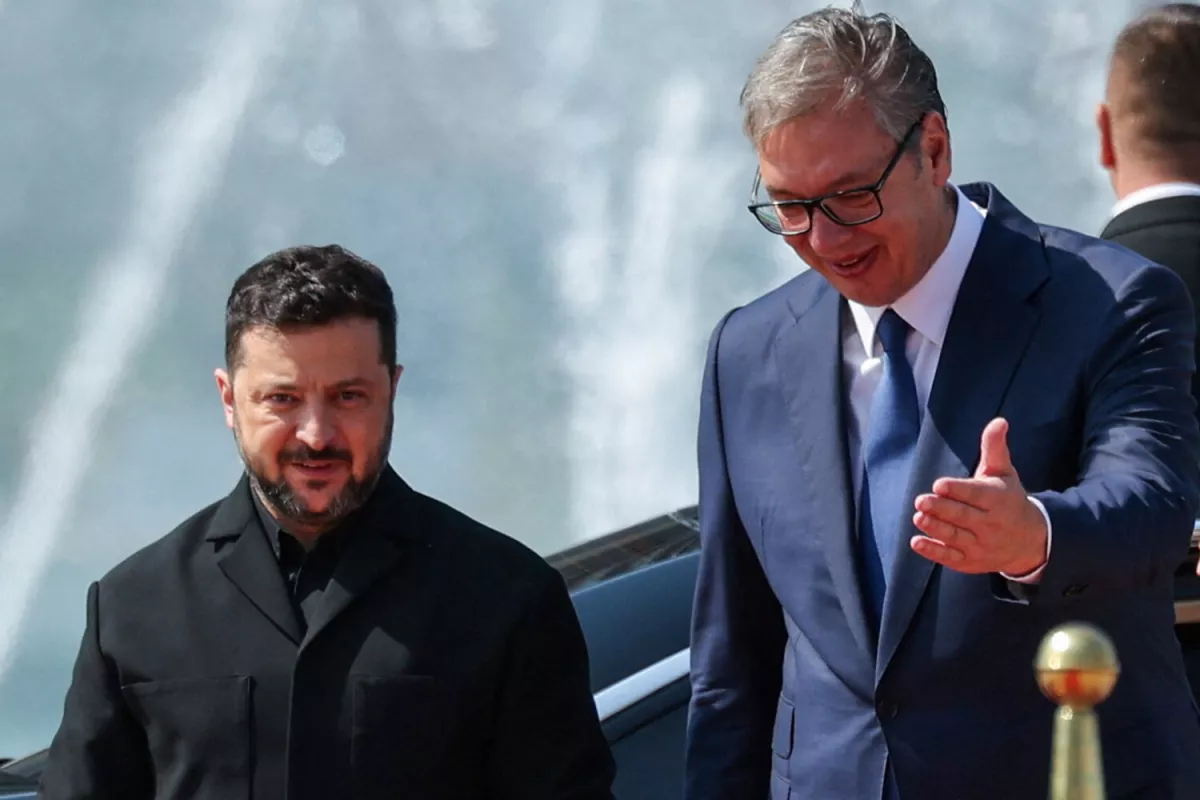
Only a few years ago, such a visit would have appeared almost unthinkable. Yet Zelenskyy was given a ceremonial welcome in Belgrade, while Vucic spoke about assistance to Ukraine, joint economic projects, European integration and the reconstruction of Ukrainian cities.
At the same time, almost immediately after the talks, the Serbian president moved to reassure both his domestic electorate and the Kremlin that the visit did not signal a fundamental shift in Belgrade’s foreign policy.
“Tell me exactly, did we impose sanctions on Russia? What did we lose? Absolutely nothing,” Vucic said several days later.
He then repeated a phrase that perhaps best captures the balancing act at the heart of modern Serbian foreign policy: “We have only our own chair.”
In formal terms, the immediate outcomes of the visit were relatively limited. Serbia and Ukraine signed a memorandum of cooperation in agriculture and reaffirmed plans to conclude negotiations on a free-trade agreement by the end of the year.
Belgrade also announced that it would provide Ukraine with €2 million to support its energy sector. Vucic confirmed Serbia’s readiness to take part in the reconstruction of one Ukrainian city, while Zelenskyy thanked Serbia for its humanitarian assistance.
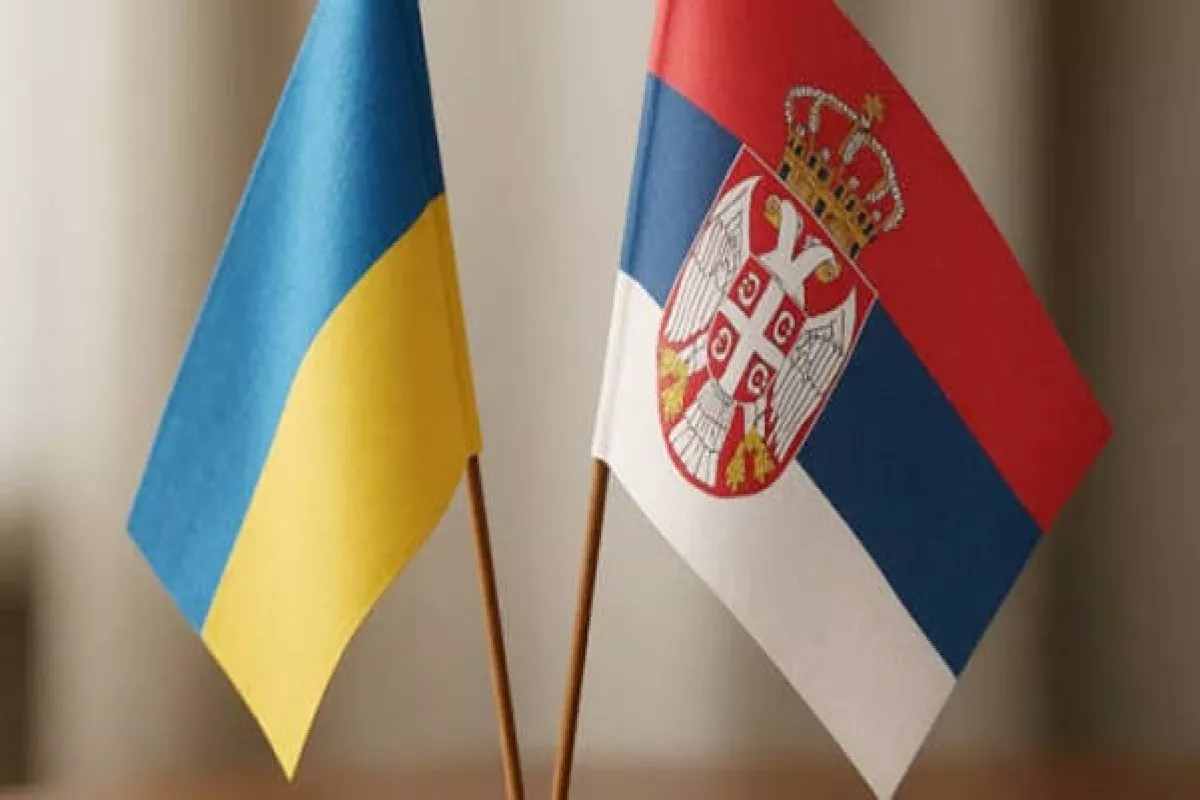
The political significance of the visit, however, went far beyond the documents signed in Belgrade. Above all, the two sides reaffirmed the foundation of their distinctive political compromise: Serbia continues to support Ukraine’s territorial integrity within its internationally recognized borders, while Kyiv does not recognize Kosovo’s independence. For Vucic, this reciprocity is of fundamental importance. Whenever he speaks about Serbia’s support for Ukraine, he points out that Kyiv maintains the same position on Kosovo. Zelenskyy reaffirmed that position during his visit to Belgrade.
For the Serbian president, this provided an important argument for a domestic audience. He was able to demonstrate to voters that hosting the Ukrainian leader did not amount to abandoning one of the central principles of Serbian foreign policy.
But the significance of the visit goes further. Virtually all observers agree on one point: the room for maneuver available to Belgrade is gradually changing.
Until recently, Serbian foreign policy was defined largely by what the country refused to do — impose sanctions on Russia, join NATO or sign on to anti-Russian declarations. Increasingly, however, the list of things Serbia does is becoming longer.
Belgrade votes at the United Nations in favor of resolutions supporting Ukraine’s territorial integrity, provides humanitarian assistance, discusses taking part in Ukraine’s reconstruction, expands economic ties with Kyiv and now receives Zelenskyy with full state honors.
The question is whether this represents a gradual shift in Belgrade’s foreign policy or simply a more sophisticated version of its long-standing balancing act. There is no consensus on that point.
Some experts believe Serbia is gradually moving closer to the West. This is not necessarily because Vucic has decided to distance himself from Moscow, but because the logic of European integration is increasingly pushing Belgrade in that direction. Serbia has been an EU candidate for more than a decade and fully understands that deeper ties with Brussels will be difficult to reconcile with its current relationship with Russia without at least some adjustment.
There is also a clear pragmatic calculation. Ukraine is already emerging as a major future market for post-war reconstruction, and Serbian construction, energy and industrial companies are seeking to secure a foothold in it. Belgrade has an opportunity to participate in that process even before the war ends, while avoiding direct involvement in military assistance to Kyiv.
In this context, many observers have also highlighted a new regional initiative proposed by Zelenskyy: bringing together several Central European and Balkan countries around projects focused on the reconstruction of Ukraine. For Serbia, such a framework could be particularly advantageous. It would allow Belgrade to participate in major economic projects without joining sanctions against Russia or becoming part of military coalitions.
The defense dimension is even more intriguing. Following his talks with Zelenskyy, Vucic stressed that military cooperation had not been discussed at all. Yet it was precisely this issue that became a major focus of expert commentary.
Moscow has for years accused Belgrade of allowing Serbian-made ammunition to reach Ukraine through intermediaries. Serbia denies this, while acknowledging only that it cannot always control the ultimate destination of products it exports.
The drone issue has added another, potentially more sensitive, layer to the story. Reports have surfaced that Serbia could host a new drone manufacturing facility based on Ukrainian technology and backed financially by the United Arab Emirates. Those reports remain unverified. Yet Vucic himself introduced the subject during his joint press conference with Zelenskyy, telling the Ukrainian president that Serbia was building a new drone plant with Israeli partners. He also went out of his way to praise the sophistication of Ukraine’s defense-industry expertise in the field.
The speculation surrounding the visit has not stopped there. Some Balkan media have drawn attention to the timing of recent high-level contacts between Belgrade and Moscow: Serbian officials had traveled to the Russian capital, while a senior Russian official visited Belgrade shortly before Zelenskyy’s arrival. That sequence has prompted a more intriguing question — whether Vucic is trying to preserve Serbia’s position as one of the few European countries capable of providing an informal channel between Moscow and Kyiv should such a channel become necessary.
The theory has gained an additional twist with renewed talk of a possible return to mediation efforts by Steve Witkoff. There is, however, no evidence that Belgrade is preparing to assume such a role. For now, the idea belongs more to the realm of political speculation than established fact.
What is considerably clearer is the political calculation behind Vucic’s balancing act. Whatever the competing interpretations of the visit, the Serbian president appears to have secured the outcome he wanted: he signaled to Brussels that Serbia is prepared to deepen its engagement with Ukraine and move closer to Europe, while making sure that the relationship with Moscow remains within his established “red lines.”
That formula could prove particularly valuable if Serbia heads toward early elections. Vucic can present the visit in Brussels as evidence of forward movement, while avoiding any step that would convince Moscow that Serbia has switched sides. At home, meanwhile, he can maintain the message that Belgrade has not surrendered its foreign-policy independence and continues to chart its own course.







 editor@caliber.az
 +994 55 444-88-98
 Азербайджан, Баку, ул. Низами, 203, Af Business House, 5-й этаж