










TRIPP to tomorrow: Zangezur Corridor and strategic transformation of Nakhchivan Key takeaways from Ilham Aliyev’s interview
Azerbaijani President Ilham Aliyev’s interview with Azerbaijan Television following his visit to Nakhchivan effectively presented his vision of the Autonomous Republic’s role in the future transport architecture of the South Caucasus, with particular attention focused on the Zangezur Corridor.
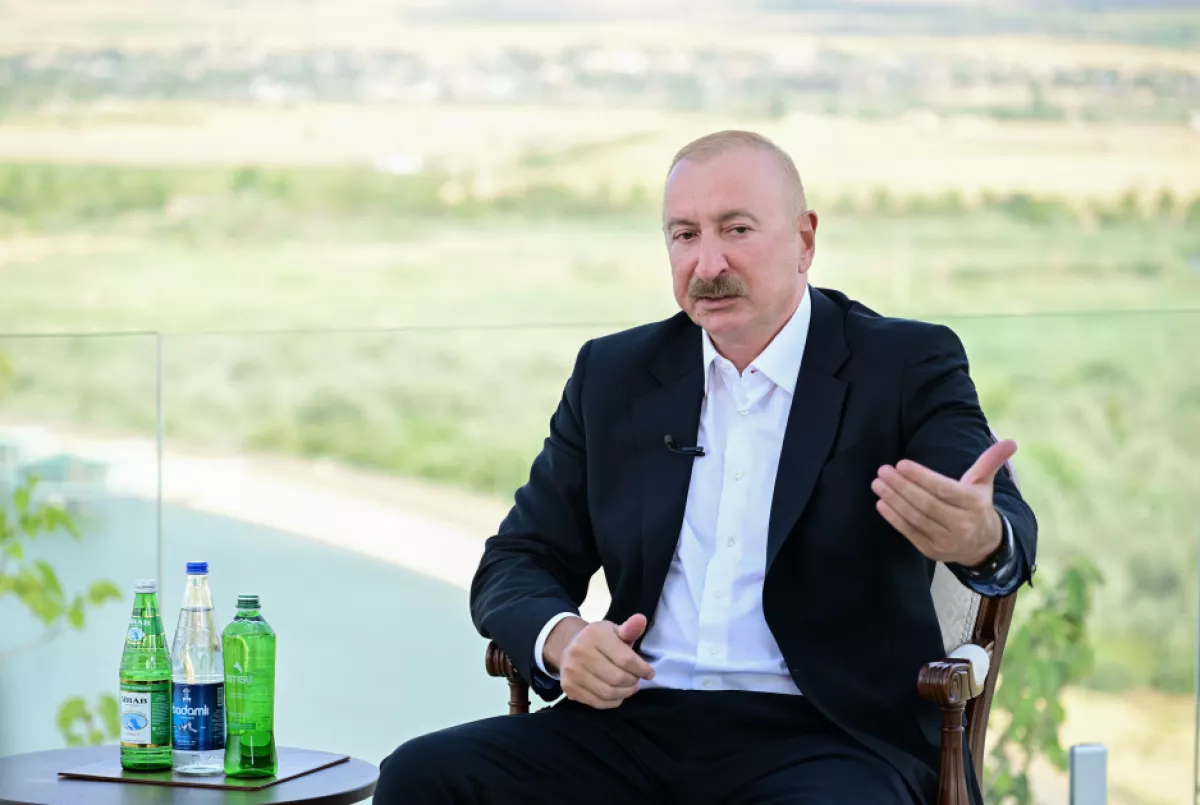
It is notable that the president returned in detail to the history of the issue, recalling that the idea of the Zangezur Corridor originated as an Azerbaijani initiative and that its inclusion in the November 10, 2020, trilateral statement resulted from Yerevan’s understanding that there was little point in resisting Baku’s demands against the backdrop of the encirclement of Armenian forces in Karabakh.
Nevertheless, Aliyev noted that the following five years brought virtually no progress. Yerevan delayed the process, while Russia, for one reason or another, was unable to ensure the implementation of the relevant provision of the agreement.
According to the president, the turning point came only after the United States became involved. Aliyev said that Washington began actively participating in the normalisation process between Azerbaijan and Armenia in the spring of last year, culminating in the Washington summit of Aug. 8, 2025, where the TRIPP project was launched — a route connecting mainland Azerbaijan with Nakhchivan through Armenian territory.
Moreover, the president specifically emphasised that he had discussed the issue with U.S. President Donald Trump again only a few days earlier, and that the two leaders had reaffirmed their confidence that the route would be implemented soon.
This detail is of fundamental importance. Whereas previously Armenia, despite its obligations under the trilateral statement, had sought to present the corridor issue as a matter of dispute between Baku and Yerevan, the Zangezur Corridor now appears as an international project with U.S. political guarantees.
This not only provides for Baku’s legitimate demand to restore a land connection with Nakhchivan. TRIPP is becoming part of a broader architecture involving the United States, other potential international investors and major logistics players. At the same time, Aliyev stresses that the implementation of the project serves not only Azerbaijan’s interests but also those of Armenia, which, he says, will be able to benefit from the opening of new transport links and the expansion of economic ties.
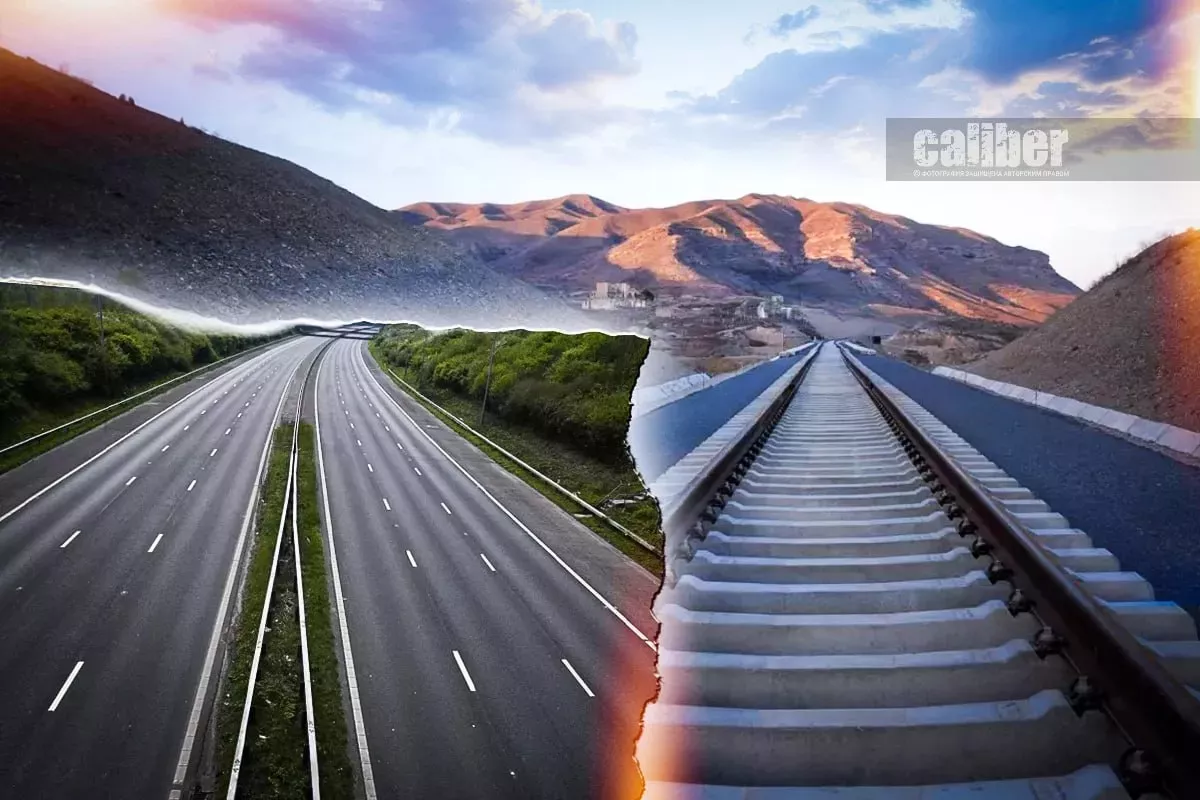
The president makes clear that the project can no longer be viewed solely as a transport initiative. Alongside a highway and railway, it is expected to include power transmission lines and fibre-optic infrastructure and, in the future, potentially oil and gas pipelines. In effect, this means the creation of a full-fledged Eurasian infrastructure corridor.
Aliyev pays particular attention to the energy component. According to him, the project for a high-voltage transmission line through Armenian territory has already been fully prepared, while a converter substation has been built in Jabrayil specifically for the future energy corridor.
At the same time, the president points out that the energy component of TRIPP will also benefit Armenia. Following the expected future closure of the Metsamor nuclear power plant for various reasons, Armenia will be able to use the new energy corridor to import electricity.
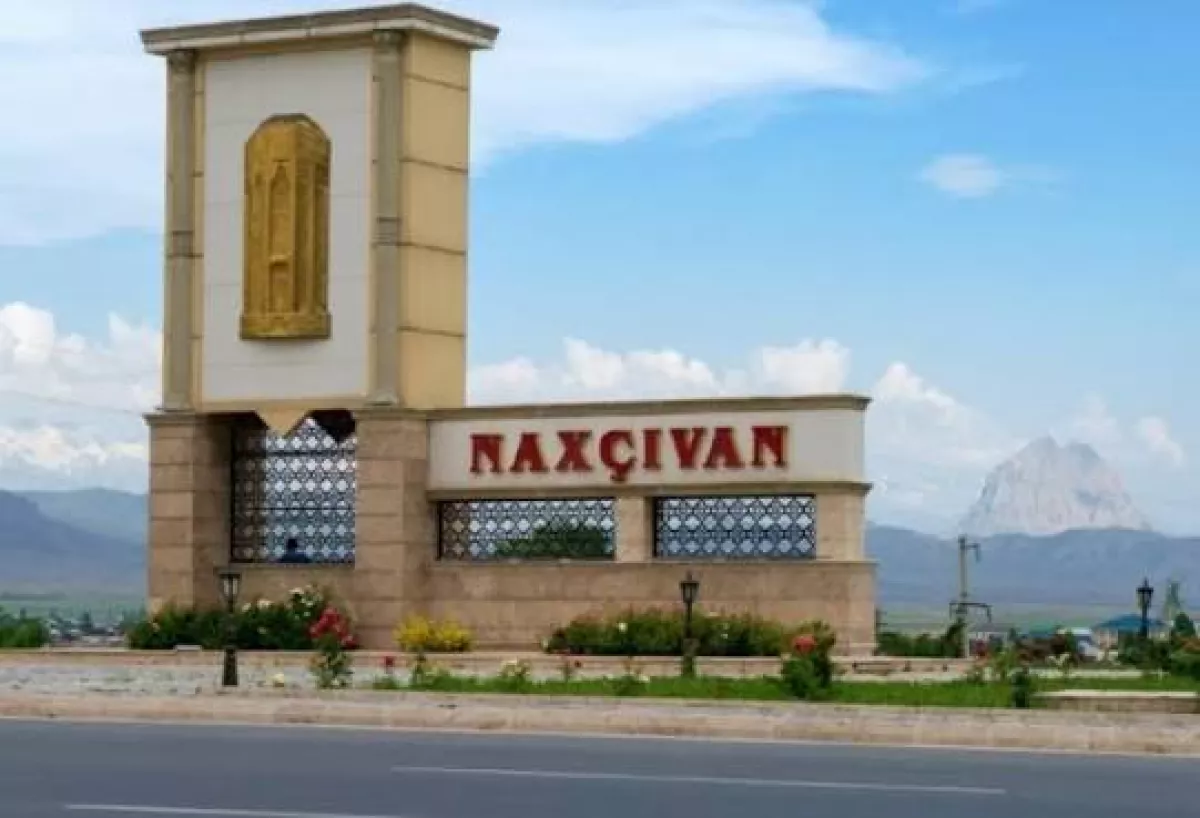
The transformation in Nakhchivan’s own role is no less significant. For decades, the Autonomous Republic was viewed primarily as an isolated exclave whose security required special measures. Aliyev attributes the large-scale investment in Nakhchivan’s defense, as well as the creation of the Separate Combined Arms Army, an integral part of Azerbaijan’s Armed Forces, precisely to this reality. Today, however, those same measures are also helping Nakhchivan assume new global functions.
According to the president’s vision, Nakhchivan is to become the largest transport, energy and industrial hub in the South Caucasus. Aliyev has set specific targets, including increasing the capacity of the Nakhchivan railway to 15 million tonnes of cargo. The objective is no longer limited to establishing a connection between Azerbaijan and Nakhchivan. The route is also expected to become part of both the East-West and North-South corridors. In this way, the Autonomous Republic is moving from the position of an isolated exclave toward that of a key transport node in the region.
Of particular note is Aliyev’s detailed description, for the first time, of a second route for the North-South corridor. Alongside the traditional route through Astara, an alternative railway branch would run through Zangezur, Nakhchivan and Iran’s Julfa. In effect, Azerbaijan is proposing an additional route that would make the region’s logistics network more flexible while further enhancing Nakhchivan’s strategic importance.
Another important element of Aliyev’s remarks was his proposal to establish an international consortium for the reconstruction of the Nakhchivan railway. The president, however, immediately set out the key condition: the Azerbaijani state must retain a controlling stake. Baku is therefore signalling its readiness to attract foreign capital while retaining political control over infrastructure it regards as strategic.
The European Union’s involvement is also noteworthy. EU representatives have already visited Nakhchivan and expressed interest in participating in the project. Given that the EU has been actively promoting alternative transport routes between Europe and Central Asia, this signal appears entirely logical. Alongside U.S. support for TRIPP, it gives the emerging transit routes through Azerbaijan and Armenia another potential international pillar.
The main conclusion from the interview lies not so much in the details of road construction or energy projects as in the changing logic of Azerbaijan’s policy itself. Aliyev is effectively signaling the end of the first stage of political disputes over the opening of the Zangezur route. If previous years were dominated by disagreements over the very principle of unblocking transport links, Baku is now talking about construction timelines, international consortia, cargo volumes and the integration of energy networks.
The Zangezur Corridor is ceasing to be merely part of the post-war settlement between Azerbaijan and Armenia. It is becoming an independent geo-economic project that will strengthen the South Caucasus’ integration into Eurasian transport and energy networks. Within this framework, Nakhchivan is no longer viewed as a peripheral exclave but as a future junction of several international corridors, while Azerbaijan is positioning itself as a country capable of controlling several key routes linking Europe, Türkiye, Central Asia, Iran and the Indian Ocean.







 editor@caliber.az
 +994 55 444-88-98
 Азербайджан, Баку, ул. Низами, 203, Af Business House, 5-й этаж