










From blockade to geopolitical hub: How President Aliyev is rewriting Nakhchivan’s role in Eurasia REVIEW BY TEYMUR ATAYEV
Following his visits to Germany and Kyrgyzstan in July, Azerbaijani President Ilham Aliyev travelled to the Nakhchivan Autonomous Republic (NAR), a move that effectively gives the visit broader international significance. During an extensive program, the president inspected ongoing work to rehabilitate the NAR’s railway infrastructure and solar power plants in Nakhchivan. He also attended ceremonies to present battle flags to newly established commando units of the Separate Combined Arms Army and laid the foundation stone for the Nakhchivan Industrial Park, among other events.
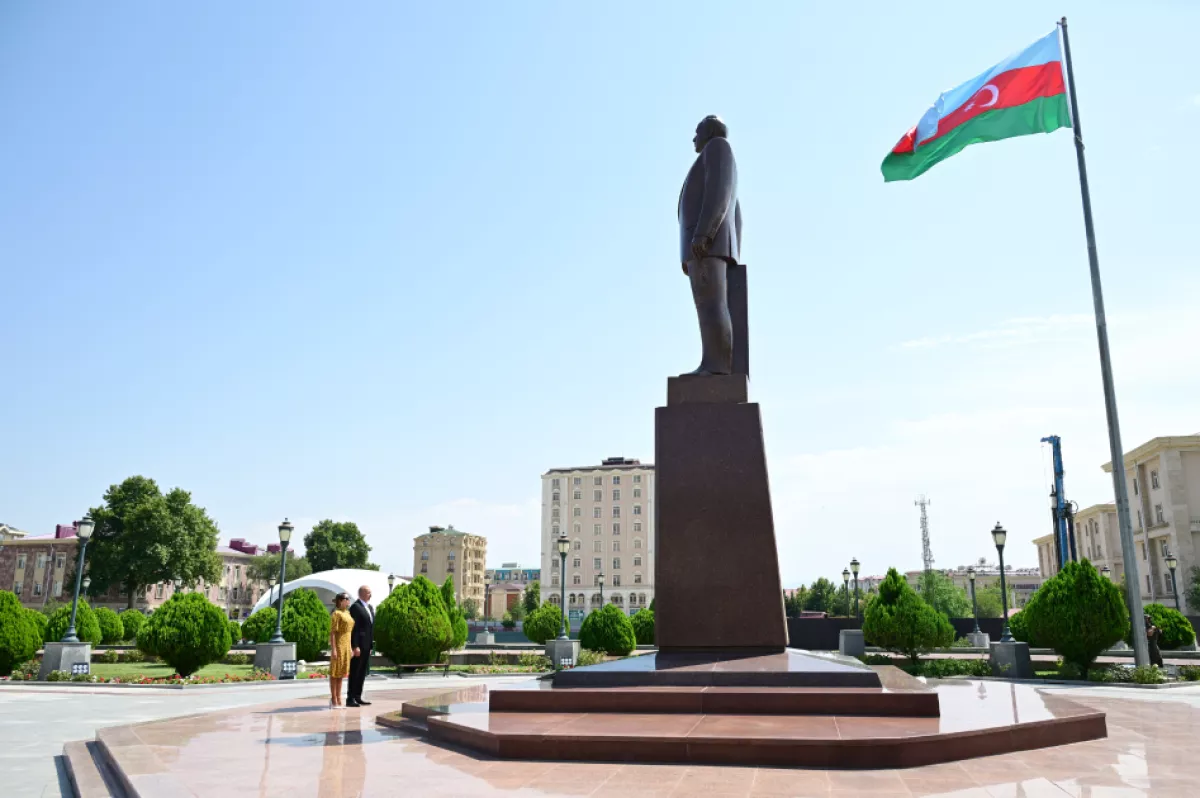
In this context, it is difficult not to be struck by the strongly positive emotions evoked by the video footage accompanying reports on President Aliyev’s visit to the Autonomous Republic. Alongside showcasing the beauty of this unique corner of Azerbaijan, the footage also highlights Nakhchivan’s geopolitical significance.
Against this backdrop, the words of National Leader Heydar Aliyev are particularly relevant. He repeatedly emphasized that throughout history, this region had been an important territory, owing in no small measure to its location in Azerbaijan — “between East and West, at the crossroads of caravan and trade routes.”
As Heydar Aliyev explained, after being elected chairman of the Supreme Majlis of the Nakhchivan Autonomous Republic in the autumn of 1991, he regarded the region’s geopolitical position as a factor that had consistently contributed to its development. However, following the transfer of the Zangezur region to Armenia, Nakhchivan became cut off from the rest of Azerbaijan. The most difficult period in the Autonomous Republic’s history was one that, as he put it, “I experienced together with the people of Nakhchivan — from 1990 to 1993,” during the First Karabakh War and the beginning of the blockade of Nakhchivan.
Describing the conditions at the time, the National Leader recalled: “There was no electricity, no gas, we froze from the cold at night, and in the mornings we could not find water even to wash our faces. We lived under such difficult conditions, but Nakhchivan did not bow.”
Against this backdrop, President Ilham Aliyev has emphasized that Armenia’s plans included the occupation of Nakhchivan. Under the leadership of National Leader Heydar Aliyev, however, “all the people of Nakhchivan mobilized their efforts to defend Nakhchivan, protect their native lands, and push the occupiers back.”
The uniqueness of that period was also reflected in the measures taken by Heydar Aliyev to find a way out of the situation. Electricity transmission lines were brought into Nakhchivan from Turkey and Iran; air links between Baku and Nakhchivan were expanded; and road traffic through Iranian territory to Nakhchivan — and from there to various regions of Azerbaijan — was secured.
As a result, Heydar Aliyev noted that, despite the continuing blockade, Nakhchivan had begun to emerge as a well-developed and well-maintained region as early as 1994–1995. Its development proceeded at a remarkable pace. In 2009, Nakhchivan hosted the 9th Summit of Heads of State of Turkic-speaking countries, where the Agreement on the Establishment of the Cooperation Council of Turkic-Speaking States (CCTS) was signed.
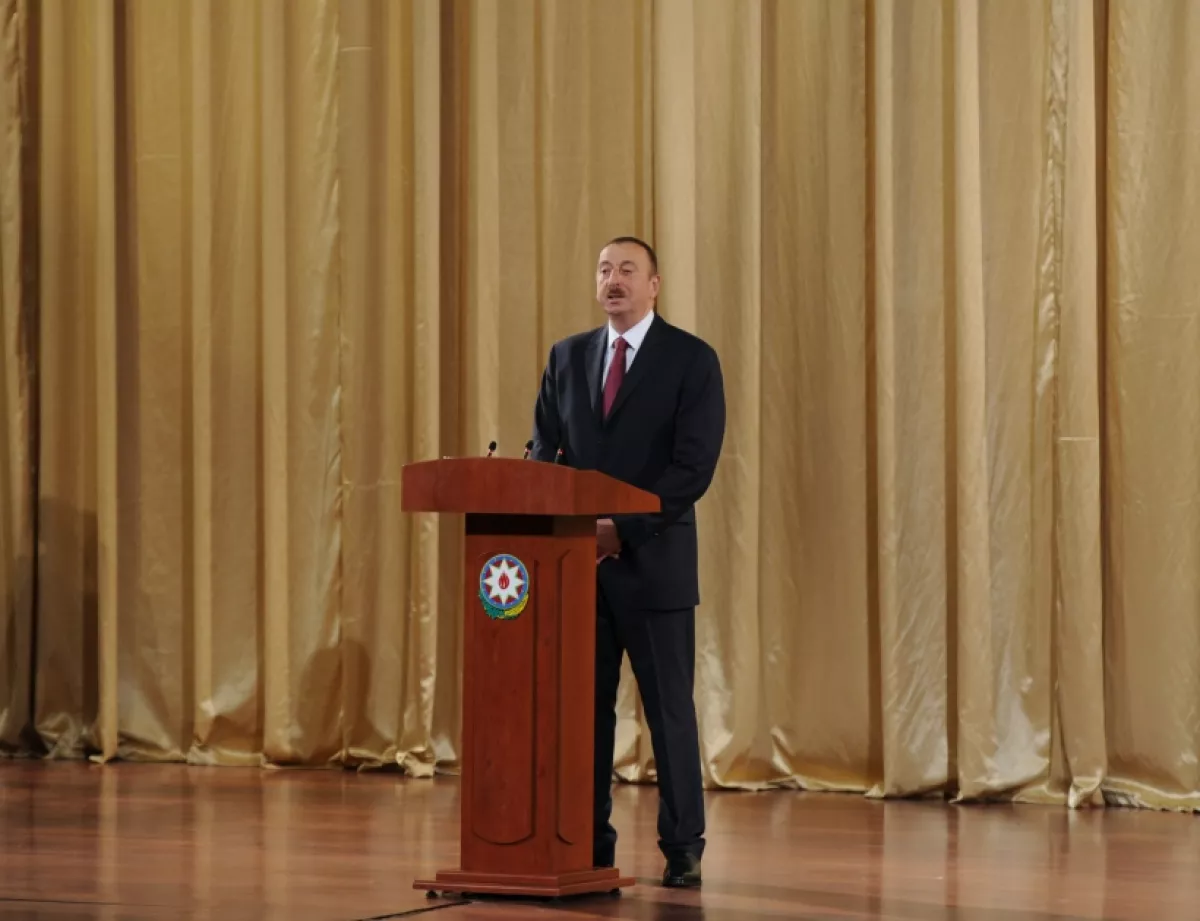
In 2014, speaking at celebrations marking the 90th anniversary of the Nakhchivan Autonomous Republic, Ilham Aliyev framed the transfer of the historically Azerbaijani region of Zangezur to Armenia through a geopolitical lens. He noted that the division of Azerbaijan into two parts had, geographically, effectively separated “the great Turkic world.” He went on to highlight the region’s achievements, including the resolution of energy-security issues and the provision of 100% gas coverage across Nakhchivan. Moreover, in terms of electricity supplies, the Autonomous Republic had gained the capacity to export energy.
Three years later, President Aliyev stated that he was continuing Heydar Aliyev’s policy toward the Nakhchivan Autonomous Republic. This was reflected in projects aimed at ensuring the region’s supply of electricity, natural gas and drinking water, as well as the construction and improvement of roads. These efforts also included the operation of the Nakhchivan–Tabriz–Mashhad railway route.
Following Azerbaijan’s victory in the 2020 Patriotic War, President and Supreme Commander-in-Chief Ilham Aliyev emphasized that bringing Nakhchivan “out of encirclement” would open a new transport artery, allowing mainland Azerbaijan to be connected with its integral Nakhchivan Autonomous Republic. He expanded on this vision at the 8th Summit of the Cooperation Council of Turkic-Speaking States in 2021, saying that the opening of the Zangezur Corridor would create new opportunities across the entire region by restoring the disrupted geographical link between the Turkic world. “The Zangezur corridor is a project that can unite the Turkic world, Europe and our neighbors, and active work is currently underway to realize this project,” he said. Significantly, it was at this same forum that the organization was institutionalized as the Organization of Turkic States (OTS).
The culmination came on August 8, 2025, when historic agreements reached between Azerbaijan and Armenia at the world’s most prominent diplomatic venue formally underscored Nakhchivan’s new geopolitical role within the framework of the Trump Route for International Peace and Prosperity (TRIPP). Under the arrangement, Baku will receive “full access to its Nakhchivan region.”
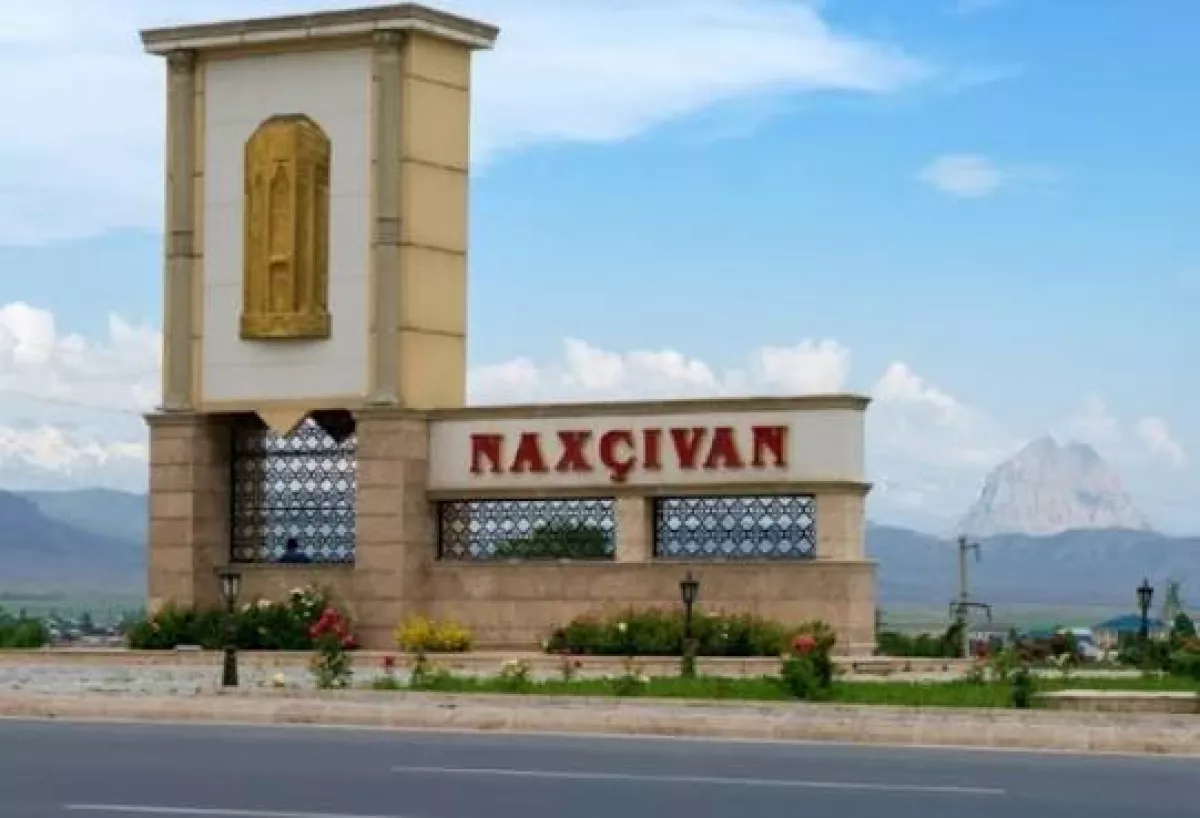
It is remarkable how, within just a few decades — no more than a moment by historical standards — Nakhchivan has moved from grappling with profound challenges across virtually every sphere to acquiring a new level of international significance. The details of President Ilham Aliyev’s current visit to the region illustrate how systematically the ideas advanced by both the National Leader and the current head of state have been implemented in this direction. This includes the objective of turning Nakhchivan, together with Karabakh and East Zangezur, into a “green energy” zone.
President Aliyev has also noted that the Iğdır–Nakhchivan gas pipeline will strengthen the region’s energy security. Regarding the Zangezur Corridor, the president has described it as an indispensable link connecting a number of countries, underscoring its international significance. In particular, the corridor could open another route within the North–South initiative, running through East Zangezur to Iran and onward to Türkiye.
A day earlier, President Aliyev developed this point further, adding that Nakhchivan lies at the center of the North–South corridor oriented toward the Persian Gulf, from where the route could potentially extend to Pakistan. At the same time, Kyrgyz President Sadyr Japarov’s observation that the emerging Zangezur Corridor would constitute a logical continuation of the China–Kyrgyzstan–Uzbekistan railway project pointed to new prospects under the East–West initiative as well.
President Aliyev echoed that assessment, saying that Nakhchivan’s participation in the creation of new international connections “will create a completely new situation.” The corridor running from Azerbaijan through Armenia and onward to European countries has considerable potential in terms of freight volumes, particularly because it would give the Middle Corridor two branches passing through Azerbaijan. This, in turn, would serve the interests of the West, the East and, unequivocally, the countries of the South Caucasus.
The Nakhchivan Autonomous Republic’s geopolitical significance has also been outlined by European Council President António Costa, who has pointed to the international prospects associated with completing the Baku–Nakhchivan railway line. European Commission President Ursula von der Leyen, meanwhile, emphasized that under the EU’s Global Gateway investment program, not only the Port of Baku but also rail connectivity through Nakhchivan could gain particular prominence.
President Ilham Aliyev confirmed Brussels’ interest in the region yesterday, saying that EU representatives had been dispatched to Nakhchivan, where “they familiarized themselves with the situation on the ground and also want to become participants in this corridor.”
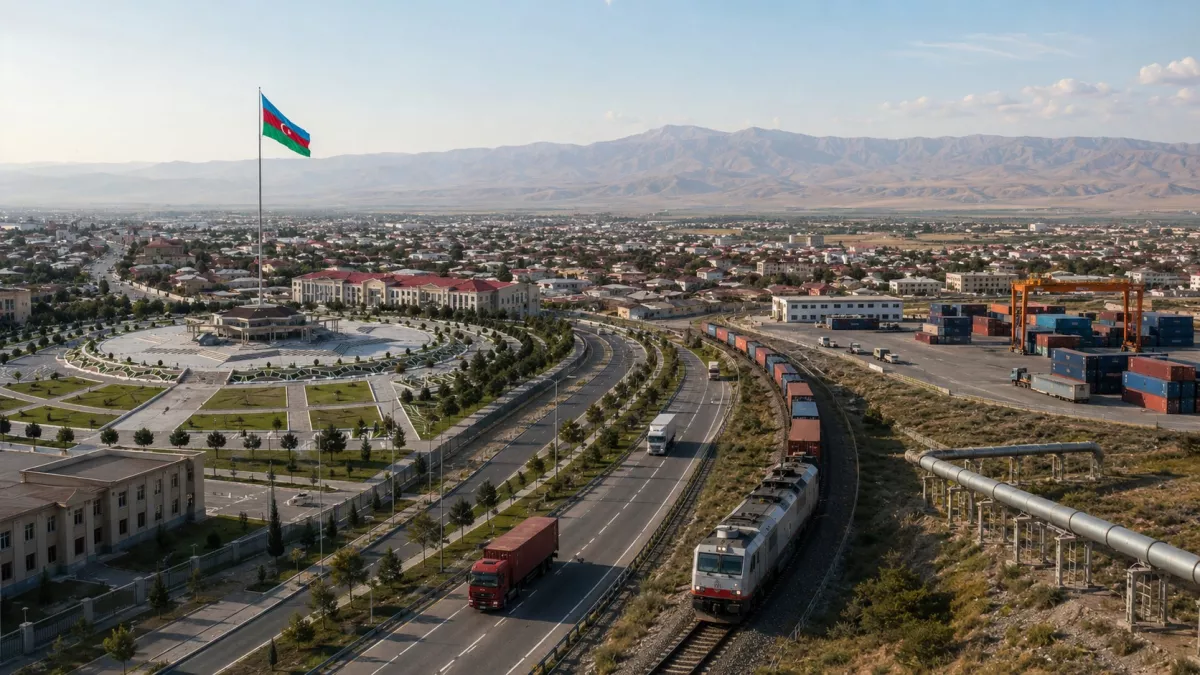
Nakhchivan is therefore emerging as one of the most important geopolitical players in the transport and logistics landscape, extending well beyond the South Caucasus. This is shaping new elements of the region’s transport architecture, with Nakhchivan increasingly positioned to become a strategic backbone with significance on a global scale. In effect, a historical geopolitical pattern that for thousands of years made Nakhchivan a pivotal region is being restored, particularly given its access to major international trade markets.
Put differently, Nakhchivan is increasingly emerging as a territory that naturally belongs among the influential geopolitical nodes of the Eurasian space. On the eve of his current visit, President Ilham Aliyev described the Nakhchivan Autonomous Republic as “one of the indispensable transport hubs.”
This positioning brings clear political and economic dividends for Nakhchivan, creating conditions for the steady growth of freight flows while expanding road and rail connectivity alongside energy infrastructure. These developments illustrate how the position articulated by President Ilham Aliyev at the 80th session of the UN General Assembly is being translated into reality on the global map: Azerbaijan’s approach combines the achievement of a Great Victory on the battlefield with the establishment of peace, while the model Baku advocates on a global scale is unequivocally one of “peace and development.”
This approach was clearly reflected yesterday when the president outlined plans to build electricity transmission lines from mainland Azerbaijan to Nakhchivan through Armenian territory. The project would further expand Azerbaijan’s electricity-export potential, with Nakhchivan identified as “the most favourable place” in the country for electricity generation.
In 2009, President Ilham Aliyev stated that “a strong Nakhchivan is a strong Azerbaijan” and stressed that, given its strategic location, the region has “very great political and strategic importance.” The president’s current visit to the Nakhchivan Autonomous Republic has provided compelling confirmation of those words, spoken 17 years ago, under a new set of circumstances that have become a historical reality as a result of what Baku considers the precise and consistent steps of its state policy.







 editor@caliber.az
 +994 55 444-88-98
 Азербайджан, Баку, ул. Низами, 203, Af Business House, 5-й этаж