










Sovereignty versus Atlanticism Marine Le Pen and the old idea of a new France
Amid tectonic shifts in the global political arena, the United States’ National Security Strategy and the doctrine of “America First,” French President Emmanuel Macron has been consistently promoting the concept of “European strategic autonomy” in order to reduce European states’ dependence on the American security umbrella and the North Atlantic Alliance in matters of defence and security.
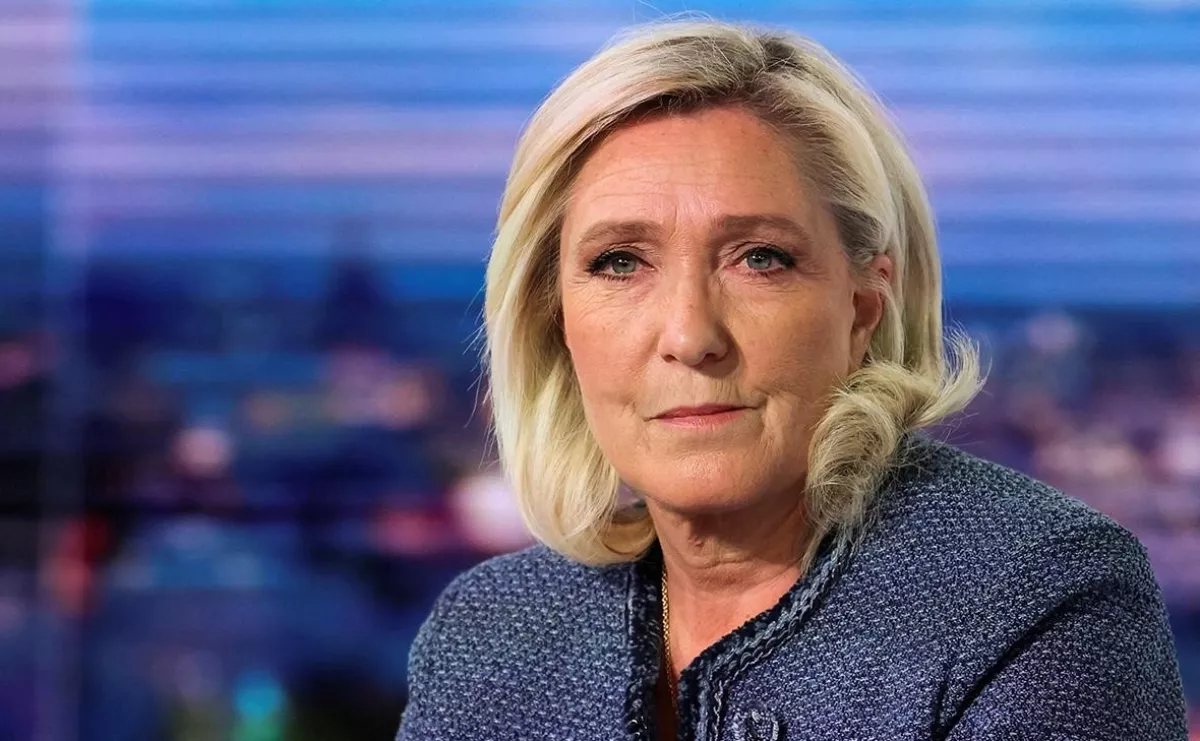
However, France’s right-wing forces take a more radical position — they advocate the country’s withdrawal from NATO’s integrated military command. In particular, this view was recently expressed by the leader of the right-wing populist party National Rally, Marine Le Pen, who stated that if she wins the upcoming presidential elections, she would pursue this goal.
“We must leave NATO’s integrated command. We must remain in NATO, but leaving the command would not prevent cooperation with allied forces. In reality, we depend on the decisions of Donald Trump, which is regrettable,” she said, criticising Europe’s “dependence on the United States.”
It should be recalled that NATO’s integrated military command (NATO Command Structure — NCS) is the alliance’s permanent command system designed to ensure that the armed forces of its 32 member states can act swiftly as a unified force. It is also worth noting that France, under right-wing influence, had previously left this structure: in 1966, President Charles de Gaulle withdrew French forces from the NCS and demanded the closure of alliance bases on French territory. In 2009, under Nicolas Sarkozy, the Fifth Republic returned to NATO’s military command, a move that remains a subject of sharp criticism from the far right.

One of the most consistent and principled opponents of Atlanticism in modern France was Jean-Marie Le Pen — founder of the National Front and father of Marine Le Pen — who throughout his political career persistently advocated the dismantling of this system. He called not merely for reducing France’s participation, but for a full withdrawal of the Fifth Republic from NATO’s military structures in order to prevent the subordination of the French army to American command.
A similarly positioned figure was the prominent representative of the Gaullist and conservative right, Charles Pasqua, who, as Interior Minister, consistently criticised France’s integration into the military machinery of the North Atlantic Alliance and argued for protecting “true France” from globalist and Atlanticist trends.
As for Marine Le Pen herself and her supporters, their position is less radical: they do not call for a complete break with the bloc nor support the idea of dissolving it. Instead, they focus primarily on withdrawing from NATO’s military command structure. According to this approach, France should remain in NATO to maintain political dialogue, but transform its participation into a format similar to the one that existed prior to 2009.

Le Pen’s call faced strong rejection from Macron’s team, which was, in principle, expected. In particular, France’s Foreign Minister Jean-Noël Barrot described the idea as “unfounded and completely irresponsible,” thereby confirming the deep ideological divide between the current authorities and the right-wing forces, which remain in constant and sharp opposition to Macron and his policies.
However, the position of the National Rally leader on withdrawing from NATO’s integrated military command is supported not only by her political circle and Eurosceptics, but also by a segment of the electorate that advocates sovereignty and limits on American influence in European politics.
Supporters of Le Pen argue that membership in this structure of the alliance restricts the independence of the French armed forces and draws Paris into geopolitical conflicts of the United States, which, in their view, is a fairly serious argument that the right can leverage against the authorities if necessary. In this context, the following question appears entirely justified: “What benefits would France gain if it left the NCS?”
Thus, according to international analysts, one of the positive aspects of such a development is that the country would retain control over its nuclear arsenal and avoid automatic involvement in conflicts whose decisions are effectively shaped under U.S. leadership. In other words, leaving the military structure while remaining a political member would allow Paris to independently decide whether or not to participate in overseas operations conducted by the French Armed Forces. In addition, since France would remain a party to the North Atlantic Treaty, Article 5 on collective defence would continue to apply to it. These are the advantages.
As for the drawbacks that Paris would face alongside a withdrawal from NATO’s integrated military command, analysts believe that certain coordination and interoperability challenges would emerge with other alliance members, as French military personnel would no longer hold positions in NATO’s permanent headquarters.
Meanwhile, the question of whether the Fifth Republic will leave the NCS will only be translated into concrete political action if right-wing forces come to power, for example, in the form of Marine Le Pen. It should be remembered that the leader of the National Rally, despite her defeats in the 2012, 2017 and 2022 presidential elections, does not intend to give up. In May of this year, she confirmed her intention to run in the upcoming 2027 presidential election, although her status remains uncertain due to ongoing legal proceedings over the alleged misuse of European Parliament funds. Whether Marine Le Pen will succeed in achieving her goal and securing the presidency remains to be seen, as will the future role of the French Republic within the North Atlantic Treaty Organisation.







 editor@caliber.az
 +994 55 444-88-98
 Азербайджан, Баку, ул. Низами, 203, Af Business House, 5-й этаж