










TRIPP as a route of change: Armenia at the centre of new regional dynamic Article by Matanat Nasibova
The headline news of the day in the context of the South Caucasus was the signing of a framework agreement between Armenia and the United States on TRIPP, as announced by Armenian Foreign Minister Ararat Mirzoyan.

“Dear citizens, a few seconds ago, before your eyes, I signed a framework agreement on TRIPP between the United States and Armenia. As you remember, a few days ago, it was initialled by me and U.S. Secretary of State Marco Rubio during his visit to Armenia (May 26, 2026 – ed. note). And now Secretary Rubio has put his signature on the document; the document was sent to Armenia, and I have now signed on behalf of the Armenian side. Thus, the remote signing process has been completed, and the agreement is ready for ratification,” the minister said.
Before assessing the significance of this development for the region as a whole and for Armenia in particular, it is worth recalling that the Declaration on the implementation of the Trump Route for International Peace and Prosperity (TRIPP) transit corridor project – a 42-kilometre section of the Zangezur corridor intended to pass through Armenian territory and connect mainland Azerbaijan with Nakhchivan – was signed on August 8, 2025 in Washington and became one of the key elements of the agreements between the Azerbaijani and Armenian sides.
Against this backdrop, the framework agreement on the said project, signed on June 4, can be regarded as an important component of the region’s post-conflict architecture. It has been integrated into the peace process between Baku and Yerevan and is aimed at unblocking regional communications, which is expected to bring participants in the transport route certain advantages – geopolitical, political, and economic alike.

In particular, for Azerbaijan, this project opens up the possibility of restoring overland communication with Nakhchivan, which in turn will further strengthen ties with fraternal Türkiye and enhance Baku’s role as a hub of the Eurasian transport and logistics network.
From the perspective of U.S. interests, the implementation of this route would allow Washington to consolidate its presence in the South Caucasus and strengthen its position along Eurasian transit corridors. In other words, by assuming a role in logistical geopolitics, the United States gains an additional instrument to influence regional processes through transport infrastructure.
Equally important for the United States is the fact that Armenia is currently led by a figure pursuing a consistently pro-Western policy. Against this backdrop, the signing of the TRIPP framework agreement on the eve of parliamentary elections in the country carries particular significance for the American side, as the outcome of the vote will determine Yerevan’s future foreign policy trajectory.

For Armenia, this transport route offers both advantages and risks. On the positive side, it promises investments, the unblocking of communications, and the strengthening of ties with the West. At the same time, it also carries potential risks, such as increased tensions on the Armenia–Russia and Armenia–Iran tracks.
In this context, it is worth noting that the TRIPP agreement aligns closely with the election strategy of Nikol Pashinyan’s team, which is centred on achieving peace with Azerbaijan. It also serves as a significant political bonus for the incumbent prime minister, potentially boosting his approval ratings among voters.
All of this suggests that the framework agreement on the “Trump Route” is becoming part of Pashinyan’s electoral campaign, intended to demonstrate that his policy of rapprochement with the West brings not only economic benefits but also international backing from the United States, while opening prospects for elevating political dialogue with the EU to a higher level. This is quite logical, given that representatives of the European Union have previously expressed interest in participating in the TRIPP project.
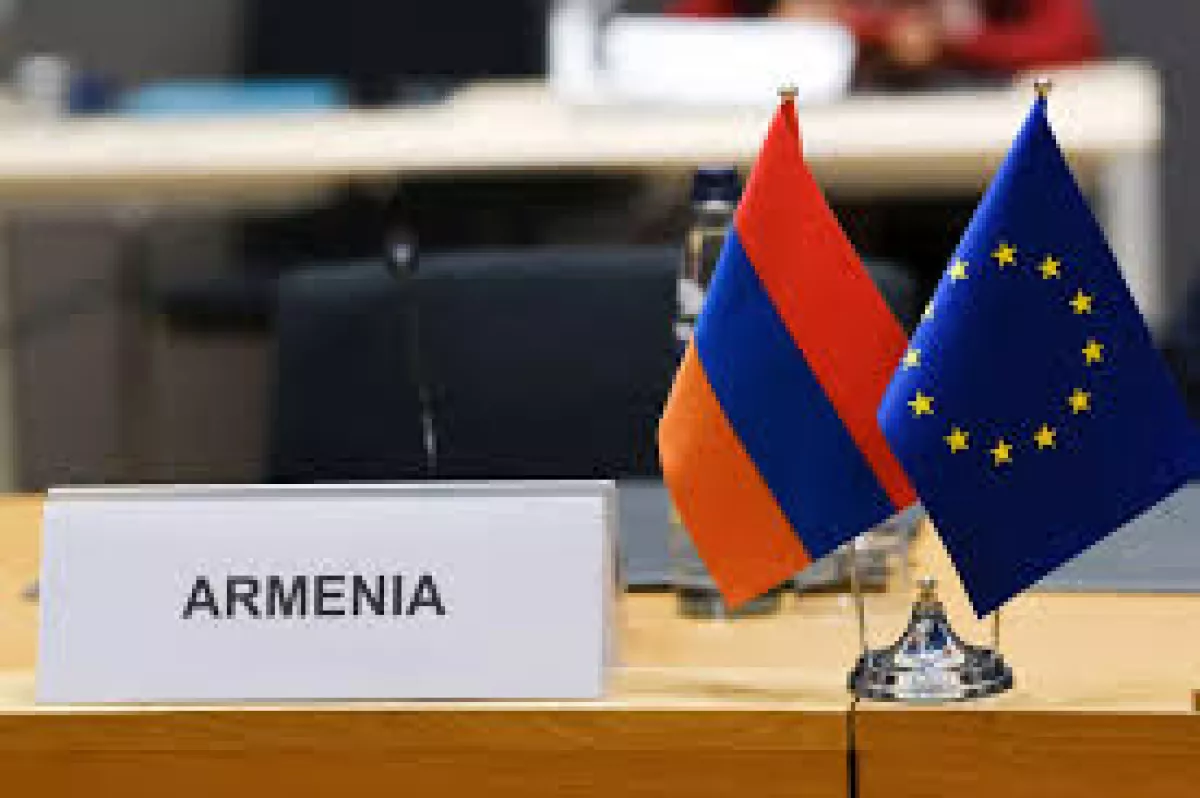
In this sense, Armenia is becoming an important element for Brussels in the emerging transport routes between Europe and Asia. Against this backdrop, it is particularly noteworthy that the European Union is discussing additional economic support for Yerevan, including an emergency financial assistance package of over 50 million euros, as well as measures to facilitate access for Armenian agricultural products to the European market. These steps are intended to shield Armenia’s economy from restrictions imposed by Russia. In addition, on June 1, 2026, the European Union launched a two-year programme worth 2.2 million euros aimed at supporting dialogue on visa liberalisation with the country.
Summing up these developments, it can be stated with a high degree of probability that the signing of the TRIPP framework agreement is yet another indicator of Yerevan’s foreign policy pivot towards the West.
Thus, the key political dividend for Armenia from the “Trump Route” lies in its transformation into one of the participants in the Western strategy in the South Caucasus. The only open question is whether the Armenian authorities will be able to withstand the pressure that inevitably accompanies a country positioned at the centre of intense competition between global centres of power.







 editor@caliber.az
 +994 55 444-88-98
 Азербайджан, Баку, ул. Низами, 203, Af Business House, 5-й этаж