










Echoes of an invisible war: Baku won't let the world forget the mine threat Analysis by Teymur Atayev
Another landmine incident has occurred in Azerbaijan's territories liberated from occupation, this time near the village of Chardagli in the Aghdara district. As a result, several employees of the Azerbaijan National Agency for Mine Action (ANAMA) sustained injuries of varying severity while carrying out their official duties.
Such incidents continue to occur, though they are better described as human tragedies—lives cut short or permanently scarred in peacetime by the silent terror of landmines.
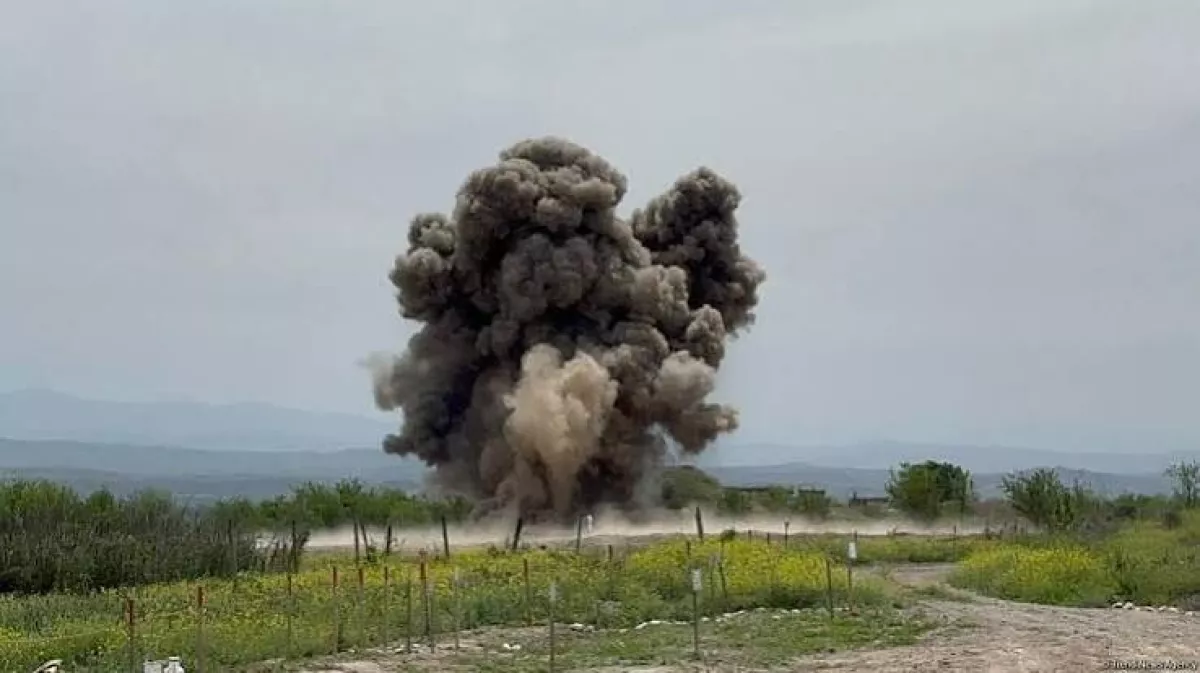
Since November 2020, a grim set of figures has once again underscored the scale of the tragedy. According to Azerbaijan's Prosecutor General's Office, a total of 430 people have fallen victim to Armenian landmine terror, with 73 killed and 357 injured to varying degrees.
The Office stressed that the latest landmine explosion in the Aghdara district serves as a stark reminder of the enduring humanitarian consequences of landmines and the danger that "innocent people face every day." Against this backdrop, it emphasised the urgent need for stronger international support for comprehensive demining efforts, noting that "a future free of landmines is an essential prerequisite for sustainable peace, development, and human security."
Yet the double—if not triple—standards applied to Azerbaijan remain firmly in place. After all, this is far from the first time that Baku has drawn attention to these realities. Earlier this spring, the Azerbaijan National Agency for Mine Action (ANAMA) reported that more than 3,500 Azerbaijanis have fallen victim to landmines over the past 30 years.
At the time, the agency stated that 421 people had been affected by 259 landmine explosions since the end of the Patriotic War, including 72 fatalities and 349 injuries. Those figures have since risen to 423 victims, with 72 killed and 351 wounded.

This aspect was also discussed during the XIII session of the World Urban Forum (WUF13) at the event titled “Post-Conflict Urban Reconstruction: The Critical Role of Humanitarian Mine Action,” where data was presented showing that, from November 2020 to May 2026, more than 250,000 mines and unexploded ordnance had been detected and neutralised. This work continues uninterrupted. According to ANAMA, between July 20 and 26, 2026 alone, 173 anti-personnel mines, 39 anti-tank mines, and 753 pieces of unexploded ordnance were detected and cleared in the territories liberated from occupation.
In this context, Baku has repeatedly raised the issue of international support to accelerate the resolution of the mine problem, which directly affects public safety and hinders the return of Azerbaijanis to their native lands, as well as reconstruction and rehabilitation efforts in the territories liberated from occupation. Thus, at the April 2024 meeting of the “Mine Action Support Group,” a coordination platform for donor countries in the field of mine clearance, it was emphasised that such assistance can contribute to development, peace, and reconciliation as an expression of humanitarian solidarity.
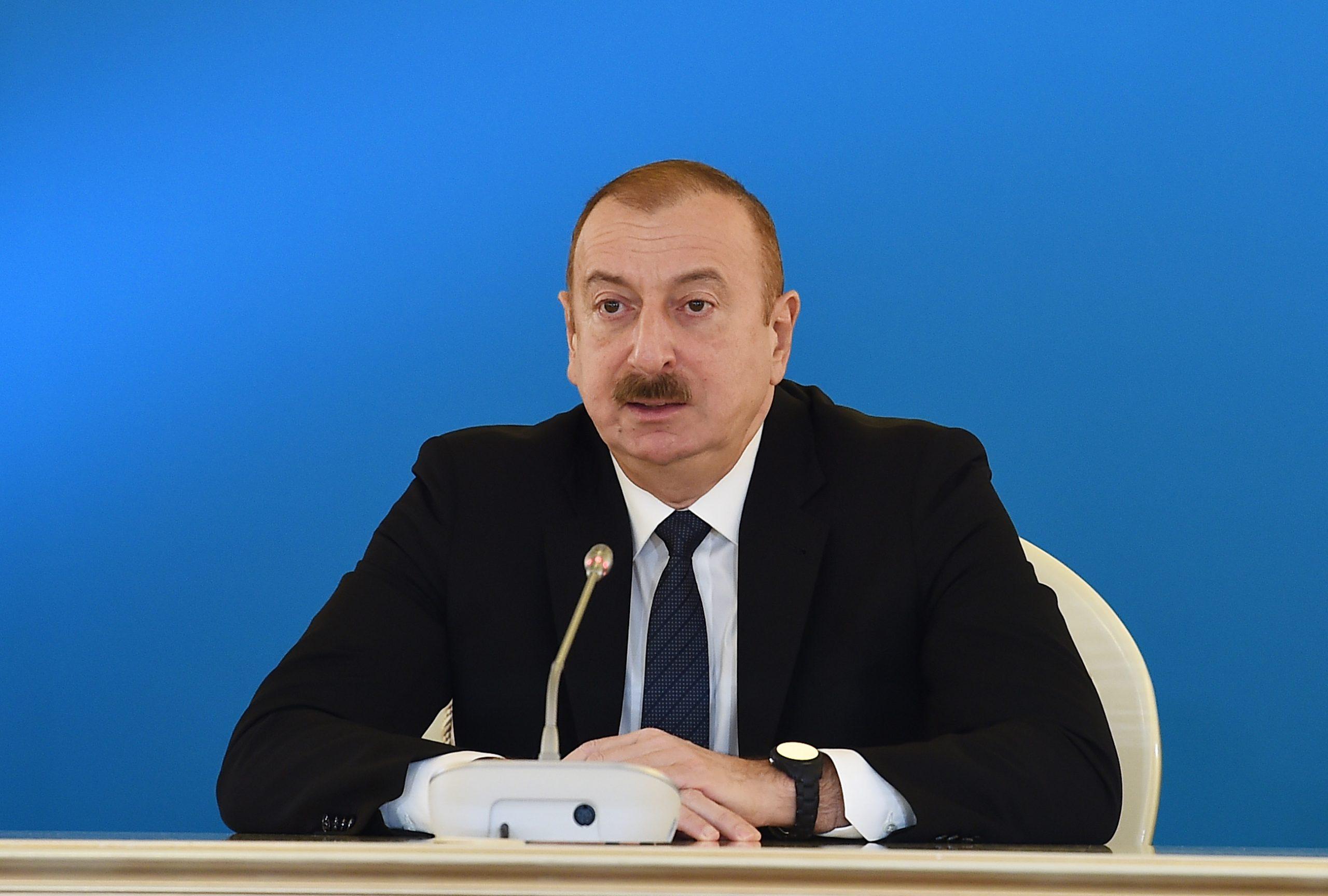
But… there has been emptiness… silence… from the international community. Yet Azerbaijani President Ilham Aliyev has pointed out that, after the end of the Second Karabakh War and before the establishment of the Lachin border checkpoint, mines were illegally transported from Armenia and planted in the Karabakh region. The Azerbaijani Armed Forces discovered these mines and presented them to representatives of the Russian peacekeeping contingent and the Russian-Turkish Joint Monitoring Centre. They were urged to take decisive action. Since the mines had been manufactured in Armenia in 2021, it became evident that they had been deliberately transported after the Second Karabakh War to carry out terrorist acts against Azerbaijan.
However, once again, there has been silence. The same applies to the international community’s response to information circulated by Azerbaijan’s Ministry of Foreign Affairs, which stated that although Armenia provided some minefield maps, they covered only a small portion of the mined areas and were accurate only to 25%. According to the ministry, more than 55% of the “recent landmine cases have occurred outside the areas covered by these maps.” At the same time, it was emphasised that while Armenia’s maps indicated the placement of approximately 400,000 mines on Azerbaijani territory, “the actual figure was closer to 1.5 million.”
As noted, Armenia’s approach to the issue of mine threats represents another step backwards in efforts to build peace and confidence in the region during the post-conflict period. In this regard, Baku considers it critically important for the international community to take consistent measures to condemn the mine threat emanating from Armenia, while expecting Azerbaijan to receive accurate maps of all mined areas.

The mine terror situation targeting Azerbaijan remains tense. Civilians continue to be killed and injured. It is hoped that the statement by the country’s Foreign Ministry, mentioned at the beginning of this article, will prompt a fair and appropriate response from international organisations.







 editor@caliber.az
 +994 55 444-88-98
 Азербайджан, Баку, ул. Низами, 203, Af Business House, 5-й этаж